
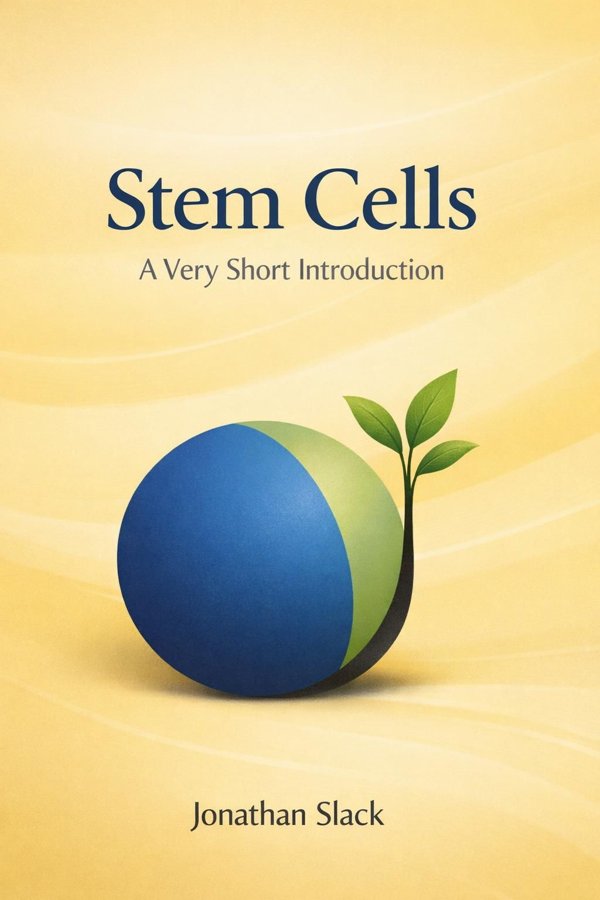
Stem Cells: A Very Short Introduction: Summary & Key Insights
 10 min10 chaptersAudio available
Key Takeaways from Stem Cells: A Very Short Introduction
This dual capacity, called self-renewal and differentiation, is the defining feature of stem cells.
The story of development is, in one sense, the gradual narrowing of options.
Scientific revolutions often begin with a change in language: once you can name a hidden process, you can start to study it.
Few cells have generated as much hope and controversy as embryonic stem cells.
The body is not a finished structure; it is an ongoing maintenance project.
What Is Stem Cells: A Very Short Introduction About?
Stem Cells: A Very Short Introduction by Jonathan Slack is a life_science book spanning 10 pages. Stem cells sit at the crossroads of biology, medicine, and ethics. In Stem Cells: A Very Short Introduction, developmental biologist Jonathan Slack explains why these remarkable cells have become one of the most important subjects in modern science. The book introduces the core biology of stem cells, showing how they differ from ordinary cells through their ability to both renew themselves and develop into specialized tissues. From embryos to adult organs, Slack traces how stem cells help build the body, maintain it, and, potentially, repair it. What makes this book especially valuable is its balance. It does not simply celebrate the promise of regenerative medicine; it also explains the technical barriers, the risk of overhyped therapies, and the ethical controversies that have shaped public debate. Slack brings authority to the topic as a leading developmental biologist and gifted science communicator, making complex ideas accessible without oversimplifying them. For readers curious about tissue engineering, disease treatment, cloning, or the future of personalized medicine, this short book offers a clear and reliable foundation. It is an ideal guide to a field that inspires both hope and caution in equal measure.
This FizzRead summary covers all 10 key chapters of Stem Cells: A Very Short Introduction in approximately 10 minutes, distilling the most important ideas, arguments, and takeaways from Jonathan Slack's work. Also available as an audio summary and Key Quotes Podcast.
Stem Cells: A Very Short Introduction
Stem cells sit at the crossroads of biology, medicine, and ethics. In Stem Cells: A Very Short Introduction, developmental biologist Jonathan Slack explains why these remarkable cells have become one of the most important subjects in modern science. The book introduces the core biology of stem cells, showing how they differ from ordinary cells through their ability to both renew themselves and develop into specialized tissues. From embryos to adult organs, Slack traces how stem cells help build the body, maintain it, and, potentially, repair it.
What makes this book especially valuable is its balance. It does not simply celebrate the promise of regenerative medicine; it also explains the technical barriers, the risk of overhyped therapies, and the ethical controversies that have shaped public debate. Slack brings authority to the topic as a leading developmental biologist and gifted science communicator, making complex ideas accessible without oversimplifying them. For readers curious about tissue engineering, disease treatment, cloning, or the future of personalized medicine, this short book offers a clear and reliable foundation. It is an ideal guide to a field that inspires both hope and caution in equal measure.
Who Should Read Stem Cells: A Very Short Introduction?
This book is perfect for anyone interested in life_science and looking to gain actionable insights in a short read. Whether you're a student, professional, or lifelong learner, the key ideas from Stem Cells: A Very Short Introduction by Jonathan Slack will help you think differently.
- ✓Readers who enjoy life_science and want practical takeaways
- ✓Professionals looking to apply new ideas to their work and life
- ✓Anyone who wants the core insights of Stem Cells: A Very Short Introduction in just 10 minutes
Want the full summary?
Get instant access to this book summary and 100K+ more with Fizz Moment.
Get Free SummaryAvailable on App Store • Free to download
Key Chapters
A stem cell matters not because it is mysterious, but because it can do two things most cells cannot do at once: keep making more of itself and also give rise to specialized descendants. This dual capacity, called self-renewal and differentiation, is the defining feature of stem cells. A skin cell can divide, but it normally only produces more skin cells. A nerve cell is highly specialized, but it is poor at regenerating. Stem cells occupy a unique biological middle ground: they preserve future possibilities.
Slack begins by clearing away common confusion. Not every immature cell is a stem cell, and not every stem cell has the same powers. Some stem cells can form many tissue types, while others are restricted to maintaining a specific organ such as blood, skin, or intestine. Their significance lies in their role as a renewable source of cells during development, tissue maintenance, and repair.
A practical example is the bone marrow stem cell, which continuously replenishes red blood cells, white blood cells, and platelets throughout life. Without these stem cells, the blood system would collapse in days or weeks. In laboratories, researchers exploit the same logic by growing stem cells to study disease or test new drugs.
The key lesson is simple but profound: when evaluating any stem cell claim, ask two questions. Can the cell self-renew, and what can it become? Those two tests cut through hype and help you understand what kind of promise a stem cell truly holds.
The story of development is, in one sense, the gradual narrowing of options. At the beginning of life, a fertilized egg is totipotent, meaning it can generate every cell type in the body as well as supporting tissues such as the placenta. Very soon, cells become pluripotent: still capable of making all body cell types, but no longer able to form the whole organism on their own. Later still, many cells become multipotent, restricted to a family of related cell types.
Slack uses this hierarchy of potency to explain how one cell becomes a complex organism. Potency is not a vague measure of youthfulness; it is a precise description of developmental potential. Embryonic stem cells are prized because they are pluripotent. Adult stem cells, by contrast, are usually more limited, but that limitation is part of their usefulness. Blood stem cells reliably make blood. Intestinal stem cells maintain intestine. Their specialization keeps tissues functioning predictably.
This idea has major applications in medicine. If researchers want to repair spinal cord damage, they need cells capable of becoming the relevant neural types. If they want to restore blood after chemotherapy, hematopoietic stem cells are the appropriate tool. Matching potency to therapeutic goal is essential.
A useful takeaway is to think of potency as a map of options. The broader the potency, the more flexible the cell, but often the greater the challenge of controlling it safely. In stem cell science, possibility is powerful, but precision is what turns possibility into treatment.
Scientific revolutions often begin with a change in language: once you can name a hidden process, you can start to study it. The concept of the stem cell emerged gradually from work in embryology, blood biology, and cancer research. Scientists first inferred the existence of special progenitor cells because tissues like blood had to be constantly renewed, even though mature blood cells are short-lived. Later experiments provided clearer proof that some cells could reconstitute entire tissue systems.
Slack places stem cell research in this historical context to show that the field did not appear overnight with media excitement around embryos. It grew from decades of careful observation and experimental ingenuity. Bone marrow transplantation became one of the earliest major clinical demonstrations of stem cell function. Developmental biology contributed another crucial insight: cells do not simply mature on a fixed clock; their fate is regulated by signals, genes, and environment.
The later isolation of embryonic stem cells transformed the field by giving scientists a renewable laboratory model of pluripotency. This opened doors to studying development in a dish, understanding disease mechanisms, and imagining regenerative therapies. But the history also shows a recurring pattern of optimism followed by technical reality checks.
The practical lesson is that stem cell breakthroughs rest on cumulative science, not sudden miracles. When new discoveries are announced, it helps to ask what earlier work made them possible. Understanding the history of the field makes you a more informed reader of both scientific progress and exaggerated headlines.
Few cells have generated as much hope and controversy as embryonic stem cells. Derived from the inner cell mass of a very early embryo, these cells are pluripotent, meaning they can become nearly any cell type in the body. That makes them extraordinarily valuable for research. They offer scientists a model for the earliest stages of development and a potential source of replacement cells for damaged tissues.
Slack explains why this promise was so electrifying. If a stable supply of pluripotent cells can be grown in the lab, researchers may be able to generate insulin-producing pancreatic cells for diabetes, dopamine-producing neurons for Parkinson’s disease, or heart muscle cells for cardiac injury. In principle, embryonic stem cells provide the raw material for regenerative medicine.
Yet their power is paired with difficulty. These cells must be guided carefully into the right cell type, purified to avoid unwanted contaminants, and tested rigorously because undifferentiated pluripotent cells can form tumors called teratomas. Their derivation from embryos also triggered moral and political conflict in many countries, shaping funding rules and public attitudes.
Practical applications today often center first on research rather than immediate cures: modeling early development, studying genetic disorders, and screening drugs. These uses are less dramatic than science-fiction visions of organ regrowth, but they are already scientifically important.
The actionable takeaway is to separate potential from readiness. Embryonic stem cells remain one of biology’s most powerful tools, but their true value lies in disciplined, evidence-based progress rather than sweeping promises.
The body is not a finished structure; it is an ongoing maintenance project. Adult stem cells are the quiet workforce behind that maintenance, replenishing tissues that experience constant wear, turnover, or injury. Unlike embryonic stem cells, they are usually confined to particular tissues and generate a narrower set of cell types. But this restriction is exactly what makes them central to normal physiology.
Slack shows that adult stem cells are found in several renewing systems, including bone marrow, skin, intestine, and perhaps parts of the brain. Hematopoietic stem cells in the marrow continuously generate the cellular components of blood. Skin stem cells replace lost outer layers. Intestinal stem cells replenish one of the fastest-turnover tissues in the body. In each case, stem cells reside in a niche, a local microenvironment that provides signals controlling whether they stay dormant, divide, or differentiate.
Clinically, adult stem cells already have a more established track record than many more glamorous stem cell types. Bone marrow transplantation, for instance, has long been used to treat leukemia and other blood disorders. Researchers are also exploring tissue-specific stem cells for repairing corneal damage, cartilage injury, and other localized problems.
The takeaway here is practical realism. Adult stem cells may not offer unlimited plasticity, but they are often safer, more understood, and closer to clinical use. When considering stem cell medicine, remember that the most effective therapies may come not from the most versatile cells, but from the ones best adapted to a specific tissue and purpose.
One of the most startling discoveries in modern biology is that a mature cell does not always stay committed to its identity. Scientists found that by introducing a small set of regulatory factors, they could reprogram ordinary adult cells, such as skin cells, into induced pluripotent stem cells, or iPS cells. These cells resemble embryonic stem cells in their ability to produce many different tissues.
Slack presents this breakthrough as both a conceptual and practical turning point. Conceptually, it shows that cell identity is not fixed beyond recall. The genes needed for pluripotency are not lost during differentiation; they are largely switched off. Reprogramming switches them back on. Practically, iPS cells offered a way to generate patient-specific pluripotent cells without using embryos, reducing one major ethical objection.
The applications are powerful. Researchers can take cells from a patient with a genetic disorder, convert them into iPS cells, and then create disease-relevant tissues in the lab, such as neurons or heart cells, to study what goes wrong. This enables personalized disease modeling and drug testing. In the longer term, iPS technology may support autologous therapies, where a patient’s own cells are used for repair.
Still, reprogramming is not a magic shortcut. It can introduce genetic or epigenetic abnormalities, and iPS-derived cells face many of the same control and safety issues as embryonic stem cells.
The useful takeaway is to see reprogramming as a platform, not a finished cure. Its greatest value may lie first in understanding disease and tailoring research to individuals before it matures into widespread therapy.
The dream of regenerative medicine is often described as replacing damaged parts the way mechanics replace faulty components. But living tissues are not machine parts, and stem cells alone rarely solve the problem. Slack emphasizes that successful regeneration depends on the right cells, in the right numbers, at the right stage, placed in the right environment, with the right signals.
This is why the path from stem cell biology to therapy is so challenging. For example, replacing blood-forming cells is comparatively straightforward because blood is naturally mobile and stem cells already circulate or engraft in marrow. Rebuilding heart muscle after a heart attack is far harder because the implanted cells must survive, integrate electrically and mechanically, and contribute to coordinated contraction. Repairing the spinal cord or generating a whole organ is harder still.
Regenerative medicine often requires scaffolds, growth factors, immune management, and precise control of differentiation. In tissue engineering, scientists may combine stem cells with biomaterials to guide structure and healing. In ophthalmology, stem-cell-based treatments for the cornea have shown promise because the anatomy is relatively accessible and the relevant cell population is better defined.
The important lesson is that a stem cell is not a therapy by itself. It is one component of a complex biological system. If you want to judge whether a treatment sounds plausible, look beyond the source of the cells and ask how they will survive, organize, connect, and function in the body. Real regeneration depends on systems thinking, not just cell supply.
The more hope a field inspires, the greater the danger that hope outruns evidence. Stem cell science has repeatedly faced this problem. Because stem cells suggest repair, renewal, and even reversal of disease, they attract public excitement, venture capital, and, unfortunately, fraudulent clinics. Slack is careful to explain that the biology itself imposes serious limits that cannot be bypassed by enthusiasm.
One major challenge is control. Pluripotent cells can become many tissues, but directing them reliably is difficult. If the resulting cell population is mixed, some cells may fail to perform the intended function or, worse, form tumors. Another issue is immune rejection, especially when transplanted cells come from donors rather than the patient. There are also manufacturing obstacles: producing large numbers of safe, standardized cells under clinical-grade conditions is expensive and technically demanding.
Some tissues are simply much harder to repair than others. Diseases caused by widespread degeneration, complex circuitry, or inflammatory damage may not respond to simple cell replacement. Even when transplanted cells survive, they may not integrate properly into existing tissue.
This has practical consequences for patients. Not every stem-cell-labeled treatment is legitimate, and some unproven interventions can cause infection, blindness, or worse. The field advances through controlled trials, long follow-up, and transparent evidence.
The actionable takeaway is skepticism with curiosity. Be excited about the science, but judge therapies by peer-reviewed data, regulatory approval, and demonstrated outcomes rather than testimonials or dramatic claims.
Stem cell science is not conducted in a moral vacuum. The ethical debates around the field reveal how biology, politics, religion, and public values intersect. Slack addresses these issues with clarity, especially the controversy over embryonic stem cells. Because deriving these cells typically involves the destruction of early embryos, people disagree sharply about the moral status of the embryo and whether such research is justified by potential medical benefits.
These disagreements have had real consequences. In some countries, embryonic stem cell research has been heavily restricted; in others, it has been permitted under regulated conditions. Laws have shaped what kinds of cell lines can be created, funded, imported, or used clinically. This means that scientific progress does not depend only on experimental skill, but also on public trust and institutional legitimacy.
Ethics also extends beyond embryos. There are questions about informed consent for tissue donation, commercialization of cell-based products, equitable access to expensive therapies, and the temptation to market treatments before they are proven. Even iPS cells, often presented as ethically cleaner, raise issues about ownership of biological materials and the handling of genetic information.
A practical way to approach these debates is to reject false simplicity. Ethical disagreement does not automatically block science, nor does scientific promise automatically settle ethical questions. The takeaway is to evaluate stem cell policies by asking whether they protect human dignity, encourage responsible research, and prevent exploitation while still allowing genuine medical progress.
The future of stem cell biology will likely be less about dramatic universal cures and more about precise, targeted advances. Slack’s forward-looking message is optimistic, but disciplined. The field is moving toward a deeper understanding of how genes, signaling pathways, and cellular environments govern fate decisions. As that knowledge improves, scientists will get better at producing exactly the kinds of cells they need, in safer and more reproducible ways.
One promising direction is disease modeling. Patient-derived stem cells can be turned into miniature tissue systems, sometimes called organoids, that mimic aspects of the brain, gut, retina, or other organs. These models allow researchers to study human disease more directly than many animal experiments permit. Another major direction is combining stem cells with gene editing to correct mutations before transplantation. Personalized medicine may emerge not from a single revolutionary treatment, but from integrating cell biology, genomics, and bioengineering.
The future will also depend on careful regulation and honest communication. Some conditions may prove highly amenable to cell therapy, while others will benefit more from insights gained through stem cell research than from direct transplantation itself. In that sense, the field’s impact may spread far beyond classic regenerative medicine.
The final takeaway is to expect progress through refinement. Stem cell biology is transforming science not because it promises instant cures, but because it provides a powerful framework for understanding development, disease, and repair with increasing precision.
All Chapters in Stem Cells: A Very Short Introduction
About the Author
Jonathan Slack is a British developmental biologist and Professor Emeritus at the University of Bath, widely respected for his research on embryonic development, cell differentiation, and regenerative biology. Over the course of his academic career, he has contributed to the understanding of how complex organisms develop from simple beginnings and how cells acquire and sometimes change their identities. His work has helped shape conversations around stem cells and their role in both basic science and medicine. Beyond the laboratory, Slack is known for making sophisticated biological concepts accessible to general readers. His writing combines scientific authority with clarity and balance, making him particularly well suited to explain a field as scientifically rich and publicly debated as stem cell research.
Get This Summary in Your Preferred Format
Read or listen to the Stem Cells: A Very Short Introduction summary by Jonathan Slack anytime, anywhere. FizzRead offers multiple formats so you can learn on your terms — all free.
Available formats: App · Audio · PDF · EPUB — All included free with FizzRead
Download Stem Cells: A Very Short Introduction PDF and EPUB Summary
Key Quotes from Stem Cells: A Very Short Introduction
“A stem cell matters not because it is mysterious, but because it can do two things most cells cannot do at once: keep making more of itself and also give rise to specialized descendants.”
“The story of development is, in one sense, the gradual narrowing of options.”
“Scientific revolutions often begin with a change in language: once you can name a hidden process, you can start to study it.”
“Few cells have generated as much hope and controversy as embryonic stem cells.”
“The body is not a finished structure; it is an ongoing maintenance project.”
Frequently Asked Questions about Stem Cells: A Very Short Introduction
Stem Cells: A Very Short Introduction by Jonathan Slack is a life_science book that explores key ideas across 10 chapters. Stem cells sit at the crossroads of biology, medicine, and ethics. In Stem Cells: A Very Short Introduction, developmental biologist Jonathan Slack explains why these remarkable cells have become one of the most important subjects in modern science. The book introduces the core biology of stem cells, showing how they differ from ordinary cells through their ability to both renew themselves and develop into specialized tissues. From embryos to adult organs, Slack traces how stem cells help build the body, maintain it, and, potentially, repair it. What makes this book especially valuable is its balance. It does not simply celebrate the promise of regenerative medicine; it also explains the technical barriers, the risk of overhyped therapies, and the ethical controversies that have shaped public debate. Slack brings authority to the topic as a leading developmental biologist and gifted science communicator, making complex ideas accessible without oversimplifying them. For readers curious about tissue engineering, disease treatment, cloning, or the future of personalized medicine, this short book offers a clear and reliable foundation. It is an ideal guide to a field that inspires both hope and caution in equal measure.
You Might Also Like
The Selfish Gene
Richard Dawkins
10 min
Awakenings
Oliver Sacks
10 min
Parasite Rex: Inside the Bizarre World of Nature's Most Dangerous Creatures
Carl Zimmer
10 min
The Atlas of Life on Earth
Various
10 min
The Book of Humans: The Story of How We Became Us
Adam Rutherford
10 min
The Horse
Wendy Williams
10 minBrowse by Category
Ready to read Stem Cells: A Very Short Introduction?
Get the full summary and 100K+ more books with Fizz Moment.