
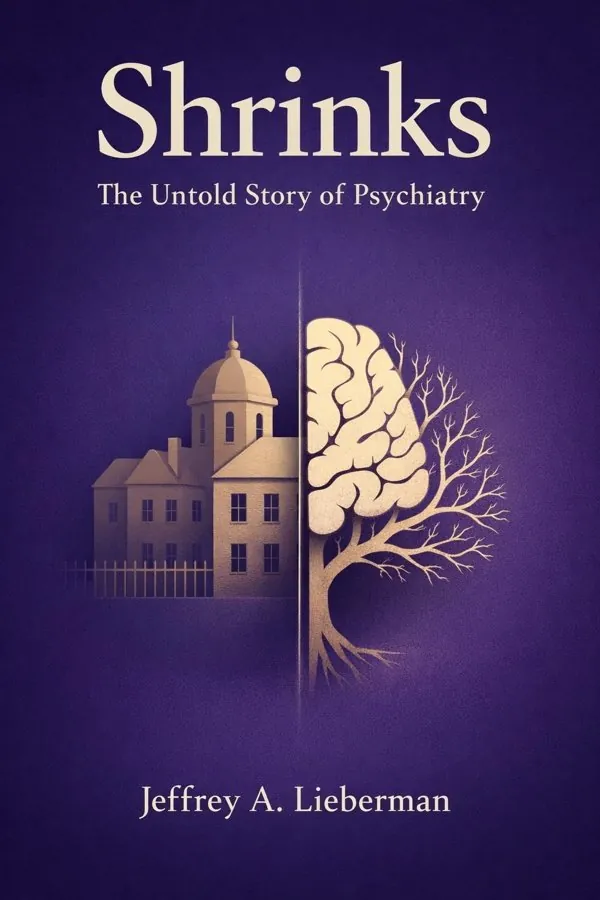
Shrinks: The Untold Story of Psychiatry: Summary & Key Insights
 10 min9 chaptersAudio available
What Is Shrinks: The Untold Story of Psychiatry About?
Shrinks: The Untold Story of Psychiatry by Jeffrey A. Lieberman is a mental_health book spanning 9 pages. Shrinks: The Untold Story of Psychiatry offers a comprehensive history of psychiatry, tracing its evolution from early asylums and controversial treatments to modern neuroscience and psychopharmacology. Written by psychiatrist Jeffrey A. Lieberman, the book explores the field’s struggles for legitimacy, its scientific breakthroughs, and the ethical challenges that have shaped mental health care. It provides an insider’s perspective on how psychiatry has transformed from a stigmatized discipline into a vital branch of medicine.
This FizzRead summary covers all 9 key chapters of Shrinks: The Untold Story of Psychiatry in approximately 10 minutes, distilling the most important ideas, arguments, and takeaways from Jeffrey A. Lieberman's work. Also available as an audio summary and Key Quotes Podcast.
Shrinks: The Untold Story of Psychiatry
Shrinks: The Untold Story of Psychiatry offers a comprehensive history of psychiatry, tracing its evolution from early asylums and controversial treatments to modern neuroscience and psychopharmacology. Written by psychiatrist Jeffrey A. Lieberman, the book explores the field’s struggles for legitimacy, its scientific breakthroughs, and the ethical challenges that have shaped mental health care. It provides an insider’s perspective on how psychiatry has transformed from a stigmatized discipline into a vital branch of medicine.
Who Should Read Shrinks: The Untold Story of Psychiatry?
This book is perfect for anyone interested in mental_health and looking to gain actionable insights in a short read. Whether you're a student, professional, or lifelong learner, the key ideas from Shrinks: The Untold Story of Psychiatry by Jeffrey A. Lieberman will help you think differently.
- ✓Readers who enjoy mental_health and want practical takeaways
- ✓Professionals looking to apply new ideas to their work and life
- ✓Anyone who wants the core insights of Shrinks: The Untold Story of Psychiatry in just 10 minutes
Want the full summary?
Get instant access to this book summary and 100K+ more with Fizz Moment.
Get Free SummaryAvailable on App Store • Free to download
Key Chapters
In the beginning, there were asylums. The eighteenth and nineteenth centuries marked an age when those suffering from mental illness were hidden from view — housed in grim institutions that called themselves hospitals but acted more like prisons. Early psychiatry, if one can call it that, was less a science than a form of social control. The insane were shackled, exposed to cold baths, and often treated as curiosities rather than patients.
Yet even amid this darkness, seeds of reform began to sprout. In France, Philippe Pinel removed the chains from patients at the Bicêtre and Salpêtrière hospitals, ushering in what came to be known as moral treatment. In England, William Tuke founded the York Retreat, emphasizing kindness, environment, and dignity. For the first time, the mentally ill were seen as human beings deserving of care. These efforts, though not scientific by modern standards, were revolutionary acts of empathy.
Asylums began to expand across Europe and America, housing growing numbers of patients. The hope was that humane treatment would heal minds. But as populations soared and resources dwindled, these asylums devolved back into warehouses of despair. The doctors who worked there — then known as alienists — struggled with both skepticism and the absence of a theoretical foundation. They sought legitimacy in a medical world that saw them as little more than custodians of madness. Still, their presence marked the birth of a new discipline — psychiatry — born out of compassion, sustained by institutions, and still searching for its scientific soul.
When Sigmund Freud entered the scene in the late nineteenth century, psychiatry was desperately in need of a framework — any framework — to explain the mysteries of the mind. Freud supplied it. With his ideas about the unconscious, repression, and infantile conflict, he transformed psychiatry from custodial observation into a narrative of inner life. For decades, psychoanalysis dominated Western thought, shaping art, literature, and culture as much as it did therapy.
As I reflect on this era, I see it as both a triumph and a diversion. Freud’s insight — that mental suffering arises from unconscious struggles — introduced compassion and narrative into mental health care. For the first time, psychiatrists listened instead of restrained; they sought meaning rather than madness. Psychoanalytic training became the gold standard. In mid‑century America, an aspiring psychiatrist was expected to lie on the couch as a patient before sitting beside it as a doctor.
But analysis often lost touch with evidence. Its language was lyrical but untestable. Schizophrenia, depression, and bipolar disorder were reconceived in metaphor rather than mechanism. Neurosis replaced neurons, and the laboratory gave way to the consulting room. Psychiatry gained cultural prestige but risked scientific isolation.
Even so, Freud and his followers humanized the profession. They invited empathy and conversation into treatment and acknowledged the mind’s complexity. For all its flaws, psychoanalysis kept psychiatry alive in a period when other medical specialties dismissed it. It was a prelude — a necessary detour that forced psychiatry to ask the right questions, even if it offered the wrong tools to answer them.
+ 7 more chapters — available in the FizzRead app
All Chapters in Shrinks: The Untold Story of Psychiatry
About the Author
Jeffrey A. Lieberman is an American psychiatrist and academic known for his research in schizophrenia and leadership in psychiatric organizations. He served as Chair of Psychiatry at Columbia University and as President of the American Psychiatric Association. His work focuses on advancing the scientific understanding and treatment of mental illness.
Get This Summary in Your Preferred Format
Read or listen to the Shrinks: The Untold Story of Psychiatry summary by Jeffrey A. Lieberman anytime, anywhere. FizzRead offers multiple formats so you can learn on your terms — all free.
Available formats: App · Audio · PDF · EPUB — All included free with FizzRead
Download Shrinks: The Untold Story of Psychiatry PDF and EPUB Summary
Key Quotes from Shrinks: The Untold Story of Psychiatry
“When Sigmund Freud entered the scene in the late nineteenth century, psychiatry was desperately in need of a framework — any framework — to explain the mysteries of the mind.”
Frequently Asked Questions about Shrinks: The Untold Story of Psychiatry
Shrinks: The Untold Story of Psychiatry by Jeffrey A. Lieberman is a mental_health book that explores key ideas across 9 chapters. Shrinks: The Untold Story of Psychiatry offers a comprehensive history of psychiatry, tracing its evolution from early asylums and controversial treatments to modern neuroscience and psychopharmacology. Written by psychiatrist Jeffrey A. Lieberman, the book explores the field’s struggles for legitimacy, its scientific breakthroughs, and the ethical challenges that have shaped mental health care. It provides an insider’s perspective on how psychiatry has transformed from a stigmatized discipline into a vital branch of medicine.
You Might Also Like
Big Feelings: How to Be Okay When Things Are Not Okay
Liz Fosslien, Mollie West Duffy
10 min
Creative Arts Therapies Handbook: Art, Music and Dance Therapy Practices for Wellbeing
Susan I. Buchalter
10 min
Emotional First Aid: Healing Rejection, Guilt, Failure, and Other Everyday Hurts
Guy Winch
10 min
Lost Connections: Why You're Depressed and How to Find Hope
Johann Hari
10 min
No Time to Panic: How to Stop Worrying and Embrace Life
Matt Gutman
10 min
Overcoming Mobbing: A Recovery Guide for Workplace Aggression and Bullying
Maureen Duffy, Len Sperry
10 minBrowse by Category
Ready to read Shrinks: The Untold Story of Psychiatry?
Get the full summary and 100K+ more books with Fizz Moment.