
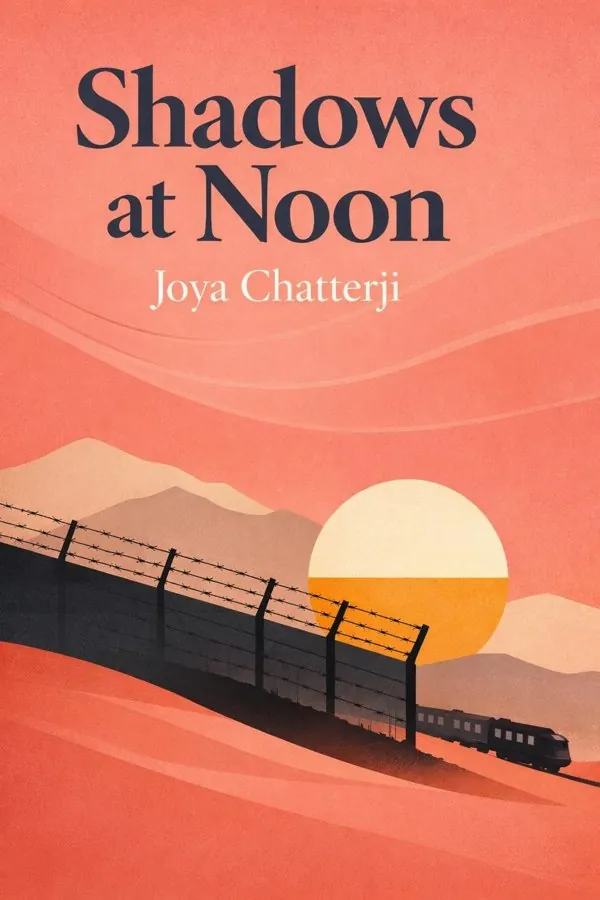
Shadows at Noon: The South Asian Twentieth Century: Summary & Key Insights
 10 min10 chaptersAudio available
What Is Shadows at Noon: The South Asian Twentieth Century About?
Shadows at Noon: The South Asian Twentieth Century by Joya Chatterji is a world_history book spanning 10 pages. A sweeping history of South Asia in the twentieth century, exploring how the region’s peoples, politics, and identities were shaped by colonialism, partition, and the struggles of independence. Joya Chatterji examines the social transformations, migrations, and cultural shifts that defined India, Pakistan, and Bangladesh, offering a deeply human account of the subcontinent’s modern experience.
This FizzRead summary covers all 10 key chapters of Shadows at Noon: The South Asian Twentieth Century in approximately 10 minutes, distilling the most important ideas, arguments, and takeaways from Joya Chatterji's work. Also available as an audio summary and Key Quotes Podcast.
Shadows at Noon: The South Asian Twentieth Century
A sweeping history of South Asia in the twentieth century, exploring how the region’s peoples, politics, and identities were shaped by colonialism, partition, and the struggles of independence. Joya Chatterji examines the social transformations, migrations, and cultural shifts that defined India, Pakistan, and Bangladesh, offering a deeply human account of the subcontinent’s modern experience.
Who Should Read Shadows at Noon: The South Asian Twentieth Century?
This book is perfect for anyone interested in world_history and looking to gain actionable insights in a short read. Whether you're a student, professional, or lifelong learner, the key ideas from Shadows at Noon: The South Asian Twentieth Century by Joya Chatterji will help you think differently.
- ✓Readers who enjoy world_history and want practical takeaways
- ✓Professionals looking to apply new ideas to their work and life
- ✓Anyone who wants the core insights of Shadows at Noon: The South Asian Twentieth Century in just 10 minutes
Want the full summary?
Get instant access to this book summary and 100K+ more with Fizz Moment.
Get Free SummaryAvailable on App Store • Free to download
Key Chapters
To understand twentieth-century South Asia, we must begin with the deeply entrenched structures of the British Empire. The Raj was not a single monolith imposed overnight; it was assembled slowly, through conquest, negotiation, and the co-option of local elites. I wanted to show how colonial rule reached into the smallest details of life—from the way villages were taxed to how schools taught language, loyalty, and order. British governance prided itself on rational administration, yet it relied heavily on local hierarchies of caste, religion, and class. Zamindars collected taxes; policemen enforced discipline; landlords and clerks translated British authority into native practice.
Colonial modernity came wrapped in contradictions. Railways, canals, census-taking, and law courts promised progress but also deepened surveillance and control. The British state claimed to rule for the welfare of its subjects while ensuring that India’s economy remained tied to imperial interests. Cotton from Bombay clothed the English worker, just as British mills drove Indian weavers to ruin. Through education, a new middle class emerged—lawyers, teachers, clerks—who learned to think in the language of the colonizer even as they yearned for freedom. In this paradox lay the seeds of both collaboration and resistance.
What I found compelling was how empire operated not merely as a political order but as an everyday experience. Ordinary people navigated colonial power with pragmatism and ingenuity. Some aligned themselves with it to secure livelihood; others subverted it through hidden transcripts of defiance. The colonial world thus set the stage for the ambitions and anxieties that would later define independence.
When we look beyond the foreshortened view of empire from above, we begin to see its textures from within. The vast machinery of British administration touched every domain—agriculture, industry, religion, family life. But what did that feel like for those who lived under it? In 'Shadows at Noon,' I explore this question through the rhythms of work, worship, and survival that defined early twentieth-century South Asia.
Peasant families felt the pressure of cash crops and land settlements that turned ancestral soil into a commodity. Factory workers in Bengal and Bombay learned to navigate the discipline of the clock, an alien rhythm to agrarian life. Servants in colonial households saw firsthand the moral ambiguities of their masters. Missionary schools introduced new ideas of self and salvation even as they reinforced imperial hierarchies.
Women’s lives, too, were transformed. Reformers debated education, marriage, and the 'woman question,' often framing women as symbols of national virtue or decay. Yet, women carved their own forms of agency—organizing for labor rights, founding schools, managing households that straddled tradition and modernity. I wanted to capture these small acts of negotiation through which ordinary South Asians made empire habitable, even as they strained against its confines.
Everyday life under colonial rule was neither static nor wholly subordinated. It was dynamic, creative, and deeply human. By listening to oral histories, one hears tones of irony, resilience, and humor—the languages through which people survived imperial modernity.
+ 8 more chapters — available in the FizzRead app
All Chapters in Shadows at Noon: The South Asian Twentieth Century
About the Author
Joya Chatterji is a historian and professor emerita of South Asian history at the University of Cambridge. Her research focuses on modern South Asia, particularly the social and political consequences of partition, migration, and decolonization.
Get This Summary in Your Preferred Format
Read or listen to the Shadows at Noon: The South Asian Twentieth Century summary by Joya Chatterji anytime, anywhere. FizzRead offers multiple formats so you can learn on your terms — all free.
Available formats: App · Audio · PDF · EPUB — All included free with FizzRead
Download Shadows at Noon: The South Asian Twentieth Century PDF and EPUB Summary
Key Quotes from Shadows at Noon: The South Asian Twentieth Century
“To understand twentieth-century South Asia, we must begin with the deeply entrenched structures of the British Empire.”
“When we look beyond the foreshortened view of empire from above, we begin to see its textures from within.”
Frequently Asked Questions about Shadows at Noon: The South Asian Twentieth Century
Shadows at Noon: The South Asian Twentieth Century by Joya Chatterji is a world_history book that explores key ideas across 10 chapters. A sweeping history of South Asia in the twentieth century, exploring how the region’s peoples, politics, and identities were shaped by colonialism, partition, and the struggles of independence. Joya Chatterji examines the social transformations, migrations, and cultural shifts that defined India, Pakistan, and Bangladesh, offering a deeply human account of the subcontinent’s modern experience.
You Might Also Like
The Age of Capital
Eric Hobsbawm
10 min
The Gulag Archipelago
Aleksandr Solzhenitsyn
10 min
Jerusalem: The Biography
Simon Sebag Montefiore
10 min
The Anglo-Saxons
James Campbell
10 min
The Boer War
Thomas Pakenham
10 min
The Industrial Revolutionaries: The Making of the Modern World 1776–1914
Gavin Weightman
10 minBrowse by Category
Ready to read Shadows at Noon: The South Asian Twentieth Century?
Get the full summary and 100K+ more books with Fizz Moment.