
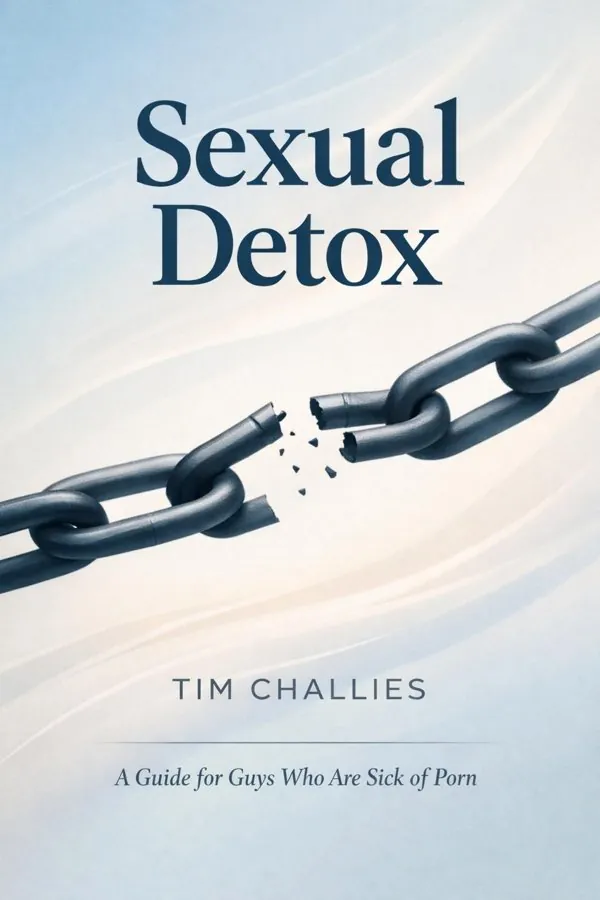
Sexual Detox: A Guide for Guys Who Are Sick of Porn: Summary & Key Insights
by Tim Challies
 10 min9 chaptersAudio available
Key Takeaways from Sexual Detox: A Guide for Guys Who Are Sick of Porn
What if pornography’s greatest damage is not what a man sees in the moment, but what it slowly trains him to become?
The struggles that feel most private often become the ones that gain the most power.
A person’s habits reveal what he believes will satisfy him.
Many men want freedom from porn as long as freedom does not disrupt convenience.
Freedom from pornography is not only about avoiding explicit content; it is about rebuilding patterns of attention.
What Is Sexual Detox: A Guide for Guys Who Are Sick of Porn About?
Sexual Detox: A Guide for Guys Who Are Sick of Porn by Tim Challies is a mental_health book. Sexual Detox: A Guide for Guys Who Are Sick of Porn is a short but direct book about breaking pornography’s grip on the mind, habits, and heart. Tim Challies writes for men who feel trapped in a cycle of lust, secrecy, guilt, and repeated failure, and he approaches the issue not as a distant commentator but as a pastorally minded Christian author who understands how deeply pornography can shape desire and behavior. Rather than offering vague inspiration or shame-based warnings, Challies argues that porn use is not just a bad habit to manage but a spiritual and moral problem that requires honest repentance, renewed thinking, and practical action. The book matters because it addresses pornography as both intensely personal and culturally widespread, showing how private consumption affects character, relationships, and one’s view of other people. Its message is especially compelling for readers looking for a faith-centered framework that combines conviction with hope. Challies offers a clear call: lasting freedom begins when men stop minimizing porn, confront what it is doing to them, and pursue a deeper transformation than mere behavior control.
This FizzRead summary covers all 9 key chapters of Sexual Detox: A Guide for Guys Who Are Sick of Porn in approximately 10 minutes, distilling the most important ideas, arguments, and takeaways from Tim Challies's work. Also available as an audio summary and Key Quotes Podcast.
Sexual Detox: A Guide for Guys Who Are Sick of Porn
Sexual Detox: A Guide for Guys Who Are Sick of Porn is a short but direct book about breaking pornography’s grip on the mind, habits, and heart. Tim Challies writes for men who feel trapped in a cycle of lust, secrecy, guilt, and repeated failure, and he approaches the issue not as a distant commentator but as a pastorally minded Christian author who understands how deeply pornography can shape desire and behavior. Rather than offering vague inspiration or shame-based warnings, Challies argues that porn use is not just a bad habit to manage but a spiritual and moral problem that requires honest repentance, renewed thinking, and practical action. The book matters because it addresses pornography as both intensely personal and culturally widespread, showing how private consumption affects character, relationships, and one’s view of other people. Its message is especially compelling for readers looking for a faith-centered framework that combines conviction with hope. Challies offers a clear call: lasting freedom begins when men stop minimizing porn, confront what it is doing to them, and pursue a deeper transformation than mere behavior control.
Who Should Read Sexual Detox: A Guide for Guys Who Are Sick of Porn?
This book is perfect for anyone interested in mental_health and looking to gain actionable insights in a short read. Whether you're a student, professional, or lifelong learner, the key ideas from Sexual Detox: A Guide for Guys Who Are Sick of Porn by Tim Challies will help you think differently.
- ✓Readers who enjoy mental_health and want practical takeaways
- ✓Professionals looking to apply new ideas to their work and life
- ✓Anyone who wants the core insights of Sexual Detox: A Guide for Guys Who Are Sick of Porn in just 10 minutes
Want the full summary?
Get instant access to this book summary and 100K+ more with Fizz Moment.
Get Free SummaryAvailable on App Store • Free to download
Key Chapters
What if pornography’s greatest damage is not what a man sees in the moment, but what it slowly trains him to become? One of Tim Challies’ central insights is that porn is never a neutral form of entertainment. It does not simply provide temporary pleasure and then disappear. Instead, it shapes habits of thought, expectations of sex, and the way men look at women, intimacy, and themselves. In Challies’ view, pornography feeds selfishness by teaching a person to seek sexual gratification without commitment, sacrifice, or love. It turns people into products and trains the viewer to consume rather than to honor.
This matters because many men minimize their struggle by thinking, “It’s only online,” or, “At least I’m not acting out in real life.” Challies pushes back against that logic. What happens in secret begins to affect public character. A man who repeatedly turns to porn may find it harder to cultivate patience, tenderness, and faithfulness in real relationships. He may compare his spouse or future spouse to fantasy. He may begin to view women in everyday life through a lens of consumption rather than dignity.
A practical application is to stop treating porn as an isolated issue. If someone notices increased secrecy, reduced satisfaction in relationships, or a wandering imagination, those may not be separate problems. They may all be connected to what pornography is training the mind to expect. Another useful step is to examine triggers honestly: boredom, loneliness, stress, entitlement, and digital isolation often create the environment where temptation grows.
Actionable takeaway: Write down three ways pornography has affected your thinking, relationships, or habits, and use that list to motivate real change rather than denial.
The struggles that feel most private often become the ones that gain the most power. Challies emphasizes that pornography thrives in darkness because secrecy protects it from challenge. A hidden habit can continue for years when a person maintains a split identity: outwardly responsible, inwardly compromised. Shame then deepens the cycle. The user feels disgusted, promises to stop, fails again, and becomes even less willing to tell anyone. Silence becomes part of the addiction’s structure.
Challies’ point is not merely that confession feels relieving, but that secrecy distorts reality. A man alone with his temptation often becomes a poor judge of his own condition. He may rationalize, rename, or reduce the seriousness of what he is doing. He may think he still has control when the pattern already controls him. Bringing the struggle into the light breaks some of porn’s power because it replaces fantasy with truth and isolation with accountability.
In practical terms, this means choosing one or two trustworthy people and speaking plainly. Not hinting. Not joking. Not offering partial truths. A friend, pastor, counselor, or accountability partner can ask direct questions, notice patterns, and help build protective habits. For married men, honesty with a spouse may also be part of the healing process, though it should be approached with humility and responsibility rather than unloading guilt carelessly.
Challies also implies that confession without change is incomplete. Telling someone is a beginning, not a full strategy. Real openness should lead to practical barriers, regular check-ins, and a willingness to accept inconvenience.
Actionable takeaway: Tell one trusted person this week exactly what your struggle is, when it usually happens, and how you want them to hold you accountable.
A person’s habits reveal what he believes will satisfy him. Challies frames pornography not only as a behavioral issue but as a worship issue: men return to porn because, in that moment, they trust it to deliver comfort, excitement, escape, or relief. That insight changes the conversation. If porn is approached only as a bad routine, the solution may focus narrowly on willpower. But if porn functions as a false promise of satisfaction, then deeper heart-level change is necessary.
This is a defining feature of the book’s Christian perspective. Challies argues that lust is not random. It grows from disordered desire, from wanting pleasure on one’s own terms apart from love, holiness, and self-giving. Porn becomes attractive because it offers instant reward without vulnerability or responsibility. Yet what it gives is shallow and corrosive. It can momentarily numb pain or boredom, but it leaves guilt, spiritual dullness, and stronger cravings behind.
Practically, this means men should ask better questions than “How do I stop looking?” They should also ask, “What am I seeking when I turn to porn?” For one person the answer may be stress relief. For another it may be loneliness, anger, insecurity, or a hunger for affirmation. Identifying the emotional and spiritual appeal of porn helps expose its lies. A man who recognizes, “I go there when I feel rejected,” can begin building healthier responses such as prayer, exercise, calling a friend, or addressing the relationship pain directly.
Challies’ framework encourages replacement, not just removal. Freedom grows when a person learns to seek comfort, joy, and identity in healthier and holier ways rather than merely trying to suppress desire.
Actionable takeaway: The next time temptation hits, pause and name the deeper need beneath it—comfort, escape, validation, control, or relief—then choose one healthy response before you touch a screen.
Many men want freedom from porn as long as freedom does not disrupt convenience. Challies challenges that contradiction by arguing that serious problems require serious measures. If pornography has become entrenched, half-hearted resistance will rarely be enough. A man cannot expect lasting change while keeping unlimited private access, predictable triggers, and unexamined routines. Radical action is not legalism in this context; it is wisdom.
This idea becomes practical quickly. A person may need to move devices out of private spaces, install filtering or accountability software, disable browsers, stop using certain apps, or abandon late-night screen time entirely. Some may need to replace smartphones with simpler devices for a season. Others may need structured schedules because temptation flourishes in unplanned, isolated time. Challies’ emphasis is that inconvenience is often a small price compared with the damage porn causes.
The principle applies beyond technology. Radical action may also involve changing sleep habits, exercise routines, media intake, or social patterns. If stress and exhaustion repeatedly lower resistance, then rest is part of the battle plan. If suggestive entertainment fuels fantasy, then media choices matter. If loneliness drives relapse, then community is not optional.
Importantly, Challies is not suggesting that external controls alone can transform the heart. But he does insist that sincere repentance expresses itself in concrete steps. A man who says he wants freedom but refuses every practical safeguard may be protecting access more than pursuing change.
Actionable takeaway: Identify the two easiest pathways you currently have to pornography and remove them today, even if doing so costs money, convenience, or comfort.
Freedom from pornography is not only about avoiding explicit content; it is about rebuilding patterns of attention. Challies recognizes that even after someone stops viewing porn, mental images, fantasy loops, and ingrained reactions may continue. This is why external abstinence, though essential, is not the whole goal. The mind has been conditioned, and conditioning must be replaced with new habits of thought.
This matters because many people become discouraged when temptation persists after they have taken practical steps. They assume failure is inevitable because the battle still feels intense. Challies’ approach suggests a more realistic view: deep habits often weaken gradually as the mind is retrained. That retraining involves refusing to entertain lustful thoughts, redirecting attention quickly, and feeding the mind with better inputs.
In practical terms, retraining the mind can include memorizing meaningful truths, limiting media that stirs fantasy, cultivating focused work, and practicing immediate mental redirection. For example, if an image appears in memory, a man can learn not to linger, elaborate, or negotiate with it. He can stand up, move, pray, start a task, or contact someone. Over time, this teaches the brain a new pathway: temptation no longer automatically leads to indulgence.
Challies also points toward the importance of seeing people rightly. One of pornography’s deepest distortions is that it trains the eye to fragment the person and focus only on sexual availability. Mental renewal means relearning to view others with dignity, not consumption.
Actionable takeaway: Create a personal redirect plan with three immediate actions—such as leaving the room, reciting a chosen truth, and texting an accountability partner—to use the moment lustful thoughts begin.
Pornography survives by reducing human beings to bodies, and Challies insists that this dehumanization is one of its most serious moral costs. The issue is not only that porn stimulates lust; it also trains men to see women through a distorted, transactional lens. Instead of recognizing personhood, history, pain, dignity, and agency, porn invites viewers to consume images for private gratification. This is a profound ethical shift, not a minor visual habit.
That insight matters because many users think of pornography mainly in terms of personal purity or private guilt. Challies broadens the frame. Porn affects how men interpret beauty, respond to vulnerability, and engage in relationships. It can foster entitlement, impatience, and comparison. It may also make real intimacy feel less compelling because real intimacy requires mutuality, respect, and sacrifice, while porn offers one-sided control.
A practical application is to intentionally practice honorable ways of seeing. This can mean refusing to let the eyes linger, but it also means changing inner language. Instead of mentally categorizing a woman by attractiveness, a man can remind himself: this is a whole person with a life, fears, gifts, and worth beyond my passing desire. In relationships, this principle leads to better listening, more respect, and less objectifying humor or conversation.
Challies’ emphasis is especially important in a culture where sexual imagery is normalized. Men need to understand that objectification does not begin and end on porn sites; it can seep into entertainment choices, workplace interactions, and social media habits.
Actionable takeaway: For one week, consciously interrupt objectifying thoughts by replacing them with one humanizing statement: “This person bears dignity and is not here for my consumption.”
People rarely change through shame alone. Challies writes with moral seriousness, but he does not present freedom as something earned by self-punishment. A major strength of the book is its insistence that men must face their sin honestly without concluding that they are beyond hope. In a Christian framework, grace is not permission to continue; it is the power and promise that make repentance possible.
This distinction matters because many men bounce between two extremes. One is casualness: “Everybody does it, so it’s not that serious.” The other is despair: “I’ve failed too many times, so I’ll never change.” Challies rejects both. He treats pornography as a serious corruption of sexuality and character, but he also presents forgiveness and renewal as real possibilities. That combination is crucial. Conviction without hope leads to paralysis. Hope without conviction leads to excuses.
Practically, this means a relapse should never become an argument for surrender. Instead, failure should be examined carefully. What happened before it? What lies were believed? What safeguards were bypassed? What emotions were ignored? A man can repent sincerely, seek forgiveness, and still treat the event as data for wiser future action. Grace allows honesty because identity is not reduced to the latest failure.
This perspective is especially useful for readers who have made many unsuccessful promises to themselves. Challies encourages persistence. Lasting change may involve repeated battles, but repeated battles do not mean change is impossible.
Actionable takeaway: If you fail, respond within 24 hours by confessing it, identifying the trigger sequence, and adding one new safeguard instead of collapsing into self-hatred or denial.
Many single men assume that sexual struggle will disappear once they marry, but Challies strongly warns against this illusion. Pornography is not merely the result of unmet sexual opportunity. It is tied to fantasy, selfishness, secrecy, and habits of escape. Because of that, marriage does not automatically solve the problem. In fact, if left unaddressed, pornography can damage marriage by importing unrealistic expectations and patterns of self-centered desire into the relationship.
This is an important corrective. A man who sees marriage as the cure may postpone responsibility and underestimate the depth of the issue. He may also set up future disappointment, expecting a spouse to eliminate temptation or meet every desire perfectly. Challies insists that this is unfair and spiritually immature. A wife is not a treatment plan for lust, and intimacy cannot flourish where entitlement and hidden porn use remain active.
In practical terms, single men should treat purity as a present calling, not a future reward. Married men should understand that protecting their marriage includes confronting pornography directly, not assuming love alone will fix it. For couples, healing may involve honest conversations, rebuilding trust, and in some cases seeking pastoral or professional counseling to process betrayal and create new relational patterns.
The broader lesson is that porn teaches a person to receive sexual gratification without serving another person. Marriage, by contrast, requires patience, empathy, self-control, and mutual giving. The habits formed in one realm affect the other.
Actionable takeaway: Stop linking your freedom to a future relationship; make a concrete plan for change that assumes the battle must be fought now, with your current habits and choices.
Good intentions are weakest where systems are absent. Challies values accountability, but his logic suggests that vague accountability rarely works. Saying “check in on me sometime” is not the same as building a structure that interrupts relapse patterns. Effective accountability is specific, regular, and honest enough to expose what is really happening.
This matters because many men technically have support while functionally remaining alone. They mention the struggle in broad terms, but no one asks direct questions. Or they confess only after repeated failures, once the pattern is already entrenched again. Challies’ practical emphasis points toward a more disciplined model. Accountability should include agreed-upon questions, scheduled conversations, and objective tools where appropriate.
For example, two friends might commit to a weekly call with clear questions: Did you view pornography? What triggered temptation? Were you alone at vulnerable times? Did you bypass safeguards? How are you doing emotionally and spiritually? Software reports can help, but they should support conversation rather than replace it. A man may also benefit from tracking patterns in a journal, noting time of day, emotional state, and location of temptation. Over time, this reveals repeatable vulnerabilities.
Accountability works best when it is joined to encouragement, not mere surveillance. The goal is not to catch someone but to strengthen him. A trustworthy partner tells the truth, prays, challenges rationalizations, and celebrates progress without becoming naive.
Actionable takeaway: Set up a recurring weekly accountability meeting with one person and agree on five exact questions they will ask every time, without exception.
All Chapters in Sexual Detox: A Guide for Guys Who Are Sick of Porn
About the Author
Tim Challies is a Canadian Christian author, speaker, and widely read blogger known for engaging cultural and spiritual issues with clarity and conviction. He is the founder of Challies.com, a long-running website where he writes about theology, discernment, technology, productivity, books, and everyday Christian life. Over the years, he has built a strong readership among evangelicals through his thoughtful commentary and practical, Scripture-informed approach. Challies is also the author of several books that address faith, habits, and modern challenges facing believers. In Sexual Detox, he brings his pastoral concern and direct writing style to the subject of pornography, offering men a concise guide to repentance, accountability, and renewed patterns of desire.
Get This Summary in Your Preferred Format
Read or listen to the Sexual Detox: A Guide for Guys Who Are Sick of Porn summary by Tim Challies anytime, anywhere. FizzRead offers multiple formats so you can learn on your terms — all free.
Available formats: App · Audio · PDF · EPUB — All included free with FizzRead
Download Sexual Detox: A Guide for Guys Who Are Sick of Porn PDF and EPUB Summary
Key Quotes from Sexual Detox: A Guide for Guys Who Are Sick of Porn
“What if pornography’s greatest damage is not what a man sees in the moment, but what it slowly trains him to become?”
“The struggles that feel most private often become the ones that gain the most power.”
“A person’s habits reveal what he believes will satisfy him.”
“Many men want freedom from porn as long as freedom does not disrupt convenience.”
“Freedom from pornography is not only about avoiding explicit content; it is about rebuilding patterns of attention.”
Frequently Asked Questions about Sexual Detox: A Guide for Guys Who Are Sick of Porn
Sexual Detox: A Guide for Guys Who Are Sick of Porn by Tim Challies is a mental_health book that explores key ideas across 9 chapters. Sexual Detox: A Guide for Guys Who Are Sick of Porn is a short but direct book about breaking pornography’s grip on the mind, habits, and heart. Tim Challies writes for men who feel trapped in a cycle of lust, secrecy, guilt, and repeated failure, and he approaches the issue not as a distant commentator but as a pastorally minded Christian author who understands how deeply pornography can shape desire and behavior. Rather than offering vague inspiration or shame-based warnings, Challies argues that porn use is not just a bad habit to manage but a spiritual and moral problem that requires honest repentance, renewed thinking, and practical action. The book matters because it addresses pornography as both intensely personal and culturally widespread, showing how private consumption affects character, relationships, and one’s view of other people. Its message is especially compelling for readers looking for a faith-centered framework that combines conviction with hope. Challies offers a clear call: lasting freedom begins when men stop minimizing porn, confront what it is doing to them, and pursue a deeper transformation than mere behavior control.
You Might Also Like
Big Feelings: How to Be Okay When Things Are Not Okay
Liz Fosslien, Mollie West Duffy
10 min
Creative Arts Therapies Handbook: Art, Music and Dance Therapy Practices for Wellbeing
Susan I. Buchalter
10 min
Emotional First Aid: Healing Rejection, Guilt, Failure, and Other Everyday Hurts
Guy Winch
10 min
Lost Connections: Why You're Depressed and How to Find Hope
Johann Hari
10 min
No Time to Panic: How to Stop Worrying and Embrace Life
Matt Gutman
10 min
Overcoming Mobbing: A Recovery Guide for Workplace Aggression and Bullying
Maureen Duffy, Len Sperry
10 minBrowse by Category
Ready to read Sexual Detox: A Guide for Guys Who Are Sick of Porn?
Get the full summary and 100K+ more books with Fizz Moment.