
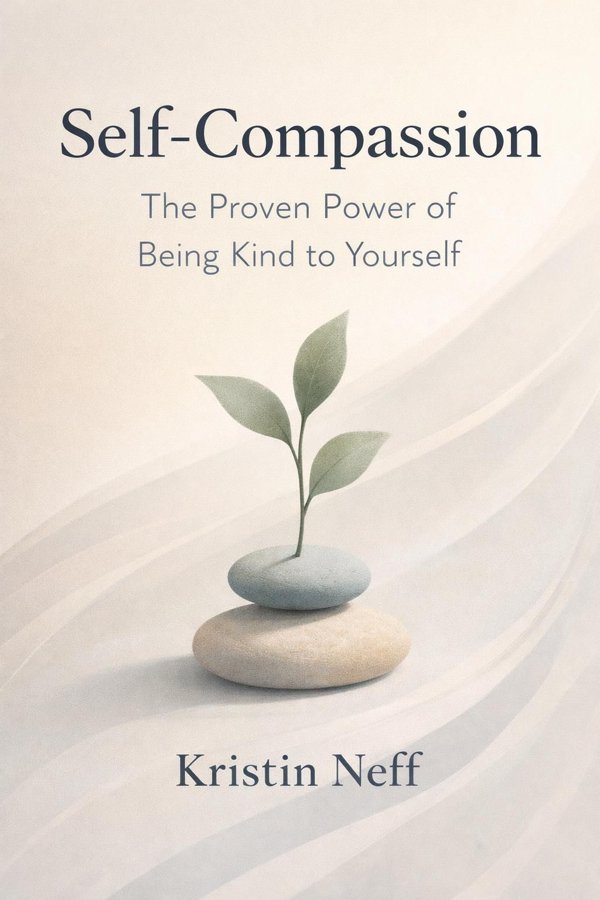
Self-Compassion: The Proven Power of Being Kind to Yourself: Summary & Key Insights
by Kristin Neff
 10 min8 chaptersAudio available
What Is Self-Compassion: The Proven Power of Being Kind to Yourself About?
Self-Compassion: The Proven Power of Being Kind to Yourself by Kristin Neff is a positive_psych book spanning 8 pages. In this groundbreaking book, psychologist Kristin Neff, Ph.D., presents the concept of self-compassion as a powerful alternative to self-criticism. Drawing on years of research, she explains how being kind to oneself can lead to greater emotional resilience, motivation, and well-being. Through practical exercises and personal stories, Neff shows readers how to cultivate self-compassion to improve relationships, reduce anxiety, and live a more fulfilling life.
This FizzRead summary covers all 8 key chapters of Self-Compassion: The Proven Power of Being Kind to Yourself in approximately 10 minutes, distilling the most important ideas, arguments, and takeaways from Kristin Neff's work. Also available as an audio summary and Key Quotes Podcast.
Self-Compassion: The Proven Power of Being Kind to Yourself
In this groundbreaking book, psychologist Kristin Neff, Ph.D., presents the concept of self-compassion as a powerful alternative to self-criticism. Drawing on years of research, she explains how being kind to oneself can lead to greater emotional resilience, motivation, and well-being. Through practical exercises and personal stories, Neff shows readers how to cultivate self-compassion to improve relationships, reduce anxiety, and live a more fulfilling life.
Who Should Read Self-Compassion: The Proven Power of Being Kind to Yourself?
This book is perfect for anyone interested in positive_psych and looking to gain actionable insights in a short read. Whether you're a student, professional, or lifelong learner, the key ideas from Self-Compassion: The Proven Power of Being Kind to Yourself by Kristin Neff will help you think differently.
- ✓Readers who enjoy positive_psych and want practical takeaways
- ✓Professionals looking to apply new ideas to their work and life
- ✓Anyone who wants the core insights of Self-Compassion: The Proven Power of Being Kind to Yourself in just 10 minutes
Want the full summary?
Get instant access to this book summary and 100K+ more with Fizz Moment.
Get Free SummaryAvailable on App Store • Free to download
Key Chapters
Self-compassion is made up of three interrelated components: self-kindness, common humanity, and mindfulness. Together, they form a powerful framework for emotional healing.
Self-kindness means that instead of judging ourselves harshly when we fail or suffer, we treat ourselves with understanding and patience. People often confuse self-kindness with self-indulgence, but true kindness arises from wisdom—it compassionately acknowledges pain without being ruled by it. I like to tell readers to imagine what it would be like to respond to their own pain as they would to a dear friend: Would you criticize your friend for being imperfect, or would you hold space for their struggle? That same gesture of acceptance becomes transformative when directed inward.
The second pillar, common humanity, reminds us that imperfection and suffering are universal. When we fail, it’s easy to feel isolated—like we’re uniquely broken. But everyone struggles. Recognizing our shared human condition dissolves the illusion of separateness and replaces shame with connection. This awareness doesn’t minimize personal pain; it contextualizes it. It tells us, "You are not alone."
Finally, mindfulness grounds self-compassion in present-moment awareness. To be compassionate, we must first notice our pain clearly, without exaggerating or suppressing it. Mindfulness allows us to hold our suffering gently, to see it for what it is without letting it define us. The balance that mindfulness brings prevents self-compassion from drifting into self-pity or denial—it helps us respond with perspective and care.
Our culture trains us to measure worth by success. From childhood, we are rewarded for achievement and punished, sometimes subtly, for failure. These early experiences cultivate an inner critic—a voice that lashes out whenever we fall short. Many of us believe that self-criticism keeps us motivated. Yet research demonstrates the opposite.
In my work, I’ve seen how self-criticism activates the body’s threat system. When you attack yourself verbally, your brain releases cortisol and adrenaline, the same hormones triggered by physical danger. Emotionally, you enter fight-or-flight mode against your own mind. Over time, this constant stress erodes well-being, fuels depression, and kills motivation.
Self-compassion offers a healthier alternative. When you respond to failure with understanding rather than contempt, your parasympathetic nervous system activates, promoting safety and calm. From this state, learning becomes possible. Compassion creates an inner environment where growth is sustainable. You still notice mistakes, but you approach them constructively instead of destructively. Self-compassion doesn’t let you off the hook—it simply recognizes that growth thrives on encouragement, not fear.
+ 6 more chapters — available in the FizzRead app
All Chapters in Self-Compassion: The Proven Power of Being Kind to Yourself
About the Author
Kristin Neff, Ph.D., is an associate professor of educational psychology at the University of Texas at Austin and a pioneering researcher in the field of self-compassion. She has published numerous academic articles and is recognized internationally for her work on mindfulness and emotional well-being.
Get This Summary in Your Preferred Format
Read or listen to the Self-Compassion: The Proven Power of Being Kind to Yourself summary by Kristin Neff anytime, anywhere. FizzRead offers multiple formats so you can learn on your terms — all free.
Available formats: App · Audio · PDF · EPUB — All included free with FizzRead
Download Self-Compassion: The Proven Power of Being Kind to Yourself PDF and EPUB Summary
Key Quotes from Self-Compassion: The Proven Power of Being Kind to Yourself
“Self-compassion is made up of three interrelated components: self-kindness, common humanity, and mindfulness.”
“Our culture trains us to measure worth by success.”
Frequently Asked Questions about Self-Compassion: The Proven Power of Being Kind to Yourself
Self-Compassion: The Proven Power of Being Kind to Yourself by Kristin Neff is a positive_psych book that explores key ideas across 8 chapters. In this groundbreaking book, psychologist Kristin Neff, Ph.D., presents the concept of self-compassion as a powerful alternative to self-criticism. Drawing on years of research, she explains how being kind to oneself can lead to greater emotional resilience, motivation, and well-being. Through practical exercises and personal stories, Neff shows readers how to cultivate self-compassion to improve relationships, reduce anxiety, and live a more fulfilling life.
More by Kristin Neff
You Might Also Like
Don't Sweat the Small Stuff... and It's All Small Stuff
Richard Carlson
10 min
Option B
Sheryl Sandberg & Adam Grant
10 min
Hallelujah Anyway: Rediscovering Mercy
Anne Lamott
10 min
I Can Do It: How to Use Affirmations to Change Your Life
Louise Hay
10 min
The Coffee Bean: A Simple Lesson to Create Positive Change
Jon Gordon, Damon West
10 min
The Happiness Hypothesis: Finding Modern Truth in Ancient Wisdom
Jonathan Haidt
10 minBrowse by Category
Ready to read Self-Compassion: The Proven Power of Being Kind to Yourself?
Get the full summary and 100K+ more books with Fizz Moment.