
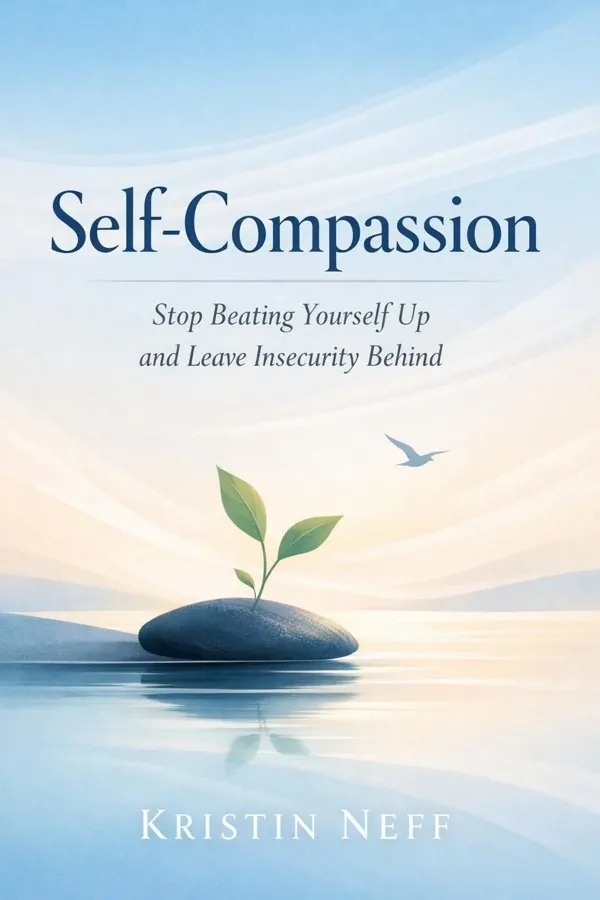
Self-Compassion: Stop Beating Yourself Up and Leave Insecurity Behind: Summary & Key Insights
by Kristin Neff
 10 min9 chaptersAudio available
Key Takeaways from Self-Compassion: Stop Beating Yourself Up and Leave Insecurity Behind
One of the book’s most unsettling insights is that many people mistake self-criticism for responsibility.
Self-compassion is not a vague feeling; it is a practical way of relating to pain through three connected elements: self-kindness, common humanity, and mindfulness.
A major barrier to self-compassion is the fear that kindness toward ourselves will weaken our standards.
Many people think resilience means being tough, detached, or unaffected.
Insecurity thrives where comparison rules.
What Is Self-Compassion: Stop Beating Yourself Up and Leave Insecurity Behind About?
Self-Compassion: Stop Beating Yourself Up and Leave Insecurity Behind by Kristin Neff is a positive_psych book spanning 5 pages. What if the voice inside your head did not have to be your harshest critic? In Self-Compassion, psychologist Kristin Neff argues that many of us have built our lives around a damaging belief: that self-judgment is the price of success, discipline, and worthiness. Instead of helping us grow, this inner hostility often fuels anxiety, shame, perfectionism, and emotional exhaustion. Neff offers a radical but deeply practical alternative: learning to treat ourselves with the same kindness, balance, and understanding we would offer a close friend. Drawing on pioneering research in psychology, Buddhist thought, and her own personal struggles, Neff shows that self-compassion is not self-pity, complacency, or weakness. It is a trainable skill that supports resilience, motivation, healthier relationships, and a more stable sense of self-worth. The book combines scientific evidence with exercises, reflective questions, and everyday examples that make the ideas immediately usable. For anyone trapped in cycles of insecurity, overachievement, or harsh self-criticism, Self-Compassion offers a wiser way to respond to failure, pain, and imperfection—and a more sustainable path to emotional well-being.
This FizzRead summary covers all 9 key chapters of Self-Compassion: Stop Beating Yourself Up and Leave Insecurity Behind in approximately 10 minutes, distilling the most important ideas, arguments, and takeaways from Kristin Neff's work. Also available as an audio summary and Key Quotes Podcast.
Self-Compassion: Stop Beating Yourself Up and Leave Insecurity Behind
What if the voice inside your head did not have to be your harshest critic? In Self-Compassion, psychologist Kristin Neff argues that many of us have built our lives around a damaging belief: that self-judgment is the price of success, discipline, and worthiness. Instead of helping us grow, this inner hostility often fuels anxiety, shame, perfectionism, and emotional exhaustion. Neff offers a radical but deeply practical alternative: learning to treat ourselves with the same kindness, balance, and understanding we would offer a close friend.
Drawing on pioneering research in psychology, Buddhist thought, and her own personal struggles, Neff shows that self-compassion is not self-pity, complacency, or weakness. It is a trainable skill that supports resilience, motivation, healthier relationships, and a more stable sense of self-worth. The book combines scientific evidence with exercises, reflective questions, and everyday examples that make the ideas immediately usable. For anyone trapped in cycles of insecurity, overachievement, or harsh self-criticism, Self-Compassion offers a wiser way to respond to failure, pain, and imperfection—and a more sustainable path to emotional well-being.
Who Should Read Self-Compassion: Stop Beating Yourself Up and Leave Insecurity Behind?
This book is perfect for anyone interested in positive_psych and looking to gain actionable insights in a short read. Whether you're a student, professional, or lifelong learner, the key ideas from Self-Compassion: Stop Beating Yourself Up and Leave Insecurity Behind by Kristin Neff will help you think differently.
- ✓Readers who enjoy positive_psych and want practical takeaways
- ✓Professionals looking to apply new ideas to their work and life
- ✓Anyone who wants the core insights of Self-Compassion: Stop Beating Yourself Up and Leave Insecurity Behind in just 10 minutes
Want the full summary?
Get instant access to this book summary and 100K+ more with Fizz Moment.
Get Free SummaryAvailable on App Store • Free to download
Key Chapters
One of the book’s most unsettling insights is that many people mistake self-criticism for responsibility. We often assume that if we stop judging ourselves, we will become lazy, self-indulgent, or mediocre. Kristin Neff explains that this belief is deeply reinforced by modern culture, which ties worth to performance, comparison, and achievement. From an early age, many of us learn that praise is conditional: we are valued when we succeed, behave, win, or impress. Over time, this creates an inner system in which self-esteem rises and falls depending on outcomes.
The problem is that self-esteem built on comparison is inherently unstable. If your value depends on being above average, attractive enough, productive enough, or admired enough, then every setback threatens your identity. This makes failure feel unbearable and criticism feel dangerous. In response, people often become perfectionistic, defensive, or ashamed. They may work harder, but with far more fear than freedom.
Neff distinguishes this pattern from self-compassion. Instead of asking, “How do I prove I’m good enough?” self-compassion asks, “How do I care for myself when life is hard?” This shift matters because suffering is universal, and a healthy inner life cannot depend on always winning. A student who fails an exam, for example, can respond with “I’m useless” or with “This hurts, but mistakes are part of learning. What support do I need now?” The second response is more emotionally honest and more helpful.
Actionable takeaway: Notice one recurring self-critical thought this week and ask what fear lies beneath it—fear of failure, rejection, or not being enough. Then replace judgment with one compassionate sentence you would say to a friend in the same situation.
Self-compassion is not a vague feeling; it is a practical way of relating to pain through three connected elements: self-kindness, common humanity, and mindfulness. Neff presents these components as the foundation of emotional balance. When one is missing, our response to suffering becomes distorted.
Self-kindness means responding to our struggles with warmth rather than attack. Instead of calling yourself pathetic after a breakup or incompetent after a mistake at work, self-kindness says, “This is painful, and I deserve care in this moment.” It does not deny accountability. It simply removes cruelty from the equation.
Common humanity reminds us that imperfection is part of being human, not evidence that something is uniquely wrong with us. When people suffer, they often feel isolated: “Why am I the only one who can’t handle this?” Neff shows that recognizing shared human struggle softens shame. Whether it is parenting stress, body insecurity, burnout, or grief, difficulty is not a personal defect.
Mindfulness is the third element and keeps compassion grounded in reality. It means acknowledging pain without exaggerating it or suppressing it. If mindfulness is absent, we may become overwhelmed by emotion or pretend we are fine. Mindfulness creates enough space to say, “This is hard right now,” without becoming the pain.
Together, these elements transform setbacks into moments of healing and growth. A parent who snaps at their child, for instance, can mindfully admit the mistake, recognize that all parents struggle, and respond with self-kindness while making amends.
Actionable takeaway: In your next stressful moment, pause and name all three elements directly: “Be kind to yourself. This happens to many people. Notice what you feel without pushing it away.”
A major barrier to self-compassion is the fear that kindness toward ourselves will weaken our standards. Neff tackles this myth head-on. Many people believe that inner harshness is what keeps them ambitious, ethical, and disciplined. But the research and examples in the book suggest the opposite: people are often more motivated when they feel safe rather than attacked.
Self-criticism may create short bursts of urgency, but it also generates anxiety, avoidance, resentment, and burnout. If every mistake triggers humiliation, the mind learns to fear failure so intensely that it may procrastinate or give up entirely. Self-compassion, by contrast, creates a stable emotional environment in which people can admit mistakes, learn from them, and try again without collapsing into shame.
Neff also clarifies that self-compassion is not self-pity. Self-pity narrows attention around “poor me” and can exaggerate how uniquely difficult our situation is. Self-compassion includes perspective. It acknowledges pain while remembering that suffering is part of life for everyone. Nor is self-compassion selfish. In fact, people who are less consumed by self-judgment often have more emotional resources available for others.
Consider someone trying to exercise regularly. A self-critical approach says, “You’re lazy. No wonder you never change.” A self-compassionate approach says, “You missed a week. That’s frustrating. What got in the way, and how can you restart gently?” The compassionate voice is far more likely to support long-term consistency.
Actionable takeaway: The next time you hear yourself using criticism as motivation, ask, “Is this helping me improve, or is it making me afraid?” Then rewrite that inner message in a firm but supportive tone.
Many people think resilience means being tough, detached, or unaffected. Neff offers a different picture: resilience grows when we can stay present with pain without being destroyed by it. Self-compassion strengthens this capacity because it gives us emotional support from the inside. In difficult moments, instead of adding a second layer of suffering through shame or self-attack, we respond with care.
This matters in everything from heartbreak to illness to career setbacks. A person who loses a job may already be dealing with fear, grief, and uncertainty. If they then pile on thoughts like “I’m a failure” or “I should have seen this coming,” distress intensifies. Self-compassion interrupts that spiral. It says, “This is deeply hard. Many people face setbacks like this. Let me take the next step with steadiness.” That stance does not erase pain, but it prevents pain from becoming identity.
Neff links self-compassion to mindfulness because resilience depends on emotional balance. Mindfulness helps us notice feelings before they flood us. Self-kindness soothes the nervous system. Common humanity reduces isolation. Together, these responses make it easier to recover from adversity and continue moving forward.
The book also shows that compassion promotes healthier coping. Rather than numbing out, blaming others, or obsessing over the past, self-compassionate people are more likely to seek support, reflect honestly, and make constructive changes. Resilience, then, is not stoicism. It is flexible strength.
Actionable takeaway: When facing a setback, try a three-step resilience pause: name what hurts, remind yourself that struggle is universal, and ask, “What is the kindest helpful next step I can take today?”
Insecurity thrives where comparison rules. Neff shows that much of our suffering comes not from what is happening to us, but from how we measure ourselves against others. Social comparison can become so automatic that we barely notice it: who is more successful, more attractive, more confident, more accomplished, more admired. Even when comparison temporarily boosts self-esteem, it creates fragility because someone else can always seem better.
This dynamic fuels a relentless inner treadmill. We chase achievement not only because we value growth, but because we hope success will finally quiet feelings of inadequacy. Yet the relief rarely lasts. A promotion leads to new pressure. Praise leads to fear of losing status. External validation becomes addictive because it never produces lasting security.
Self-compassion offers a way off this treadmill by grounding worth in our humanity rather than our ranking. You do not need to be exceptional to deserve care. You do not need to outperform others to be enough. This does not mean abandoning goals. It means pursuing them without tying your basic value to the outcome.
Practical examples appear everywhere. A parent comparing their family to curated images online can pause and remember that every household is messy in unseen ways. An employee who feels inferior to a high-performing colleague can acknowledge envy without turning it into self-hatred. A teenager struggling with body image can practice speaking to themselves with respect rather than contempt.
Actionable takeaway: When you catch yourself comparing, shift the question from “How do I measure up?” to “What do I need right now to feel grounded, supported, and real?” That single pivot can reduce insecurity and restore perspective.
A powerful lesson in the book is that emotional pain becomes more manageable when we stop fighting it. Neff explains that many people respond to difficult feelings in one of two unhelpful ways: they either suppress them or overidentify with them. Suppression says, “I shouldn’t feel this way,” while overidentification says, “This feeling is everything I am.” Self-compassion creates a middle path.
Mindfulness is crucial here. It invites us to notice thoughts and emotions as they arise without immediately believing, dramatizing, or rejecting them. If you feel shame after making an embarrassing mistake, mindfulness helps you observe, “Shame is here.” Self-kindness adds, “It’s understandable that I feel exposed.” Common humanity reminds you, “Everyone has awkward, painful moments.” This sequence reduces emotional fusion and opens the possibility of wise action.
Neff also emphasizes the role of the body. Compassion is not only cognitive; it can be physical and soothing. A hand on the heart, slower breathing, a softer tone of voice, or a moment of stillness can calm the threat system in the brain. This is especially useful during conflict, rejection, anxiety, or grief, when the body often reacts before the mind catches up.
For example, after receiving harsh feedback, you might feel a rush of defensiveness. Rather than firing off an impulsive reply or spiraling into self-loathing, you could pause, breathe, feel your feet on the floor, and say, “This hurts. Let me take this in without attacking myself.” That response protects both dignity and clarity.
Actionable takeaway: Create a short self-compassion ritual for emotional overwhelm: pause, place a hand on your chest, take three slow breaths, and label the feeling with kindness rather than judgment.
One of the quieter but important contributions of Neff’s work is her argument that how we treat ourselves shapes how we relate to others. People who are chronically self-critical often bring hidden fear into relationships: fear of rejection, fear of being exposed as inadequate, fear of not being lovable. These fears can lead to defensiveness, people-pleasing, jealousy, emotional withdrawal, or an excessive need for reassurance.
Self-compassion creates more emotional stability, which in turn supports healthier connection. When your worth is not constantly under threat, you do not need to protect your ego so aggressively. You can apologize without collapsing, hear feedback without becoming hostile, and support others without comparing their success to your failure.
Neff also notes that self-compassion helps during conflict. If your partner criticizes you, for example, a shame-based reaction might be to counterattack or shut down. A self-compassionate response is more balanced: “This is painful to hear, but pain does not mean I am worthless. Let me listen, regulate myself, and respond honestly.” That inner steadiness improves communication.
Importantly, compassion for self and compassion for others are not competing forces. People sometimes worry that focusing on their own needs will make them self-absorbed. But when we stop spending so much energy battling ourselves, we often become more patient, generous, and emotionally available. The book suggests that kindness inward and kindness outward tend to reinforce each other.
Actionable takeaway: In your next interpersonal conflict, silently offer yourself one compassionate phrase before responding. Regulate first, then communicate. You will likely be clearer, less defensive, and more open.
Few areas trigger self-judgment as intensely as caring for others. Parents, partners, teachers, and caregivers often believe they must be endlessly patient, giving, and competent. When reality inevitably falls short, guilt can become chronic. Neff shows that self-compassion is especially vital in these roles because caregiving already involves exhaustion, unpredictability, and emotional strain.
In parenting, for instance, many adults react to mistakes with disproportionate shame: yelling once becomes “I’m a terrible parent,” feeling resentful becomes “I must be selfish,” struggling becomes “Everyone else handles this better.” Such thoughts make repair harder because they turn a specific problem into a global identity verdict. Self-compassion allows people to take responsibility without drowning in it. “I lost my temper. That matters. I can apologize, learn, and try again.”
The same is true for anyone supporting aging parents, children with special needs, sick partners, or demanding teams. Constant giving without self-kindness leads to depletion. Neff’s message is not that caretakers should lower their love, but that they must include themselves within the circle of care. Burnout is not noble when it leaves everyone more fragile.
A compassionate caregiver can still set boundaries, ask for help, and admit limits. In fact, these behaviors often reflect greater wisdom and long-term care. The perfectionistic fantasy of endless self-sacrifice is less humane than a realistic commitment to sustained, imperfect love.
Actionable takeaway: If you are caring for others, write down one recent moment you judged yourself harshly. Reframe it in compassionate language that includes accountability, humanity, and rest: “I’m struggling, I’m not alone, and support is part of responsible care.”
Neff’s book is not only conceptual; it is a manual for practice. Self-compassion becomes transformative when it moves from an idea we admire to a habit we embody. That requires repetition, especially because self-criticism is often deeply conditioned. The goal is not to become endlessly positive, but to build a new default response to suffering.
The book includes practical exercises such as writing a compassionate letter to yourself, identifying your inner critic’s tone, recalling how you would comfort a close friend, and using mindful awareness during moments of stress. These practices reveal something important: most people already know how to be compassionate. They simply do not direct that compassion inward.
Daily life offers constant opportunities to practice. When you wake up anxious, you can acknowledge the anxiety without shaming it. When you miss a deadline, you can respond with honesty and support instead of contempt. When your body disappoints your expectations, you can choose appreciation over attack. When you feel lonely, you can remind yourself that longing for connection is profoundly human.
Consistency matters more than intensity. Small compassionate moments gradually reshape identity. Over time, the inner voice becomes less hostile, the nervous system less reactive, and setbacks less catastrophic. You do not have to master self-compassion perfectly for it to help; in fact, struggling to practice it is itself a chance to be compassionate.
Actionable takeaway: Choose one daily cue—such as making coffee, checking email, or getting into bed—and pair it with a 20-second self-compassion check-in: “What am I feeling? What do I need? Can I meet this moment with kindness?”
All Chapters in Self-Compassion: Stop Beating Yourself Up and Leave Insecurity Behind
About the Author
Kristin Neff, Ph.D., is a psychologist, researcher, and one of the world’s leading authorities on self-compassion. She is widely recognized for pioneering academic research on the topic and helping bring it into mainstream psychology. Neff has served as an associate professor of educational psychology at the University of Texas at Austin, where her work explored how self-compassion affects emotional well-being, resilience, motivation, and mental health. Drawing from both scientific evidence and personal experience, she has written influential books and developed practical exercises that make her research accessible to a broad audience. Her work has been featured in academic journals, popular media, workshops, and therapeutic settings around the world. Through her writing and teaching, Neff has helped redefine how people understand self-worth, emotional healing, and personal growth.
Get This Summary in Your Preferred Format
Read or listen to the Self-Compassion: Stop Beating Yourself Up and Leave Insecurity Behind summary by Kristin Neff anytime, anywhere. FizzRead offers multiple formats so you can learn on your terms — all free.
Available formats: App · Audio · PDF · EPUB — All included free with FizzRead
Download Self-Compassion: Stop Beating Yourself Up and Leave Insecurity Behind PDF and EPUB Summary
Key Quotes from Self-Compassion: Stop Beating Yourself Up and Leave Insecurity Behind
“One of the book’s most unsettling insights is that many people mistake self-criticism for responsibility.”
“Self-compassion is not a vague feeling; it is a practical way of relating to pain through three connected elements: self-kindness, common humanity, and mindfulness.”
“A major barrier to self-compassion is the fear that kindness toward ourselves will weaken our standards.”
“Many people think resilience means being tough, detached, or unaffected.”
“Insecurity thrives where comparison rules.”
Frequently Asked Questions about Self-Compassion: Stop Beating Yourself Up and Leave Insecurity Behind
Self-Compassion: Stop Beating Yourself Up and Leave Insecurity Behind by Kristin Neff is a positive_psych book that explores key ideas across 9 chapters. What if the voice inside your head did not have to be your harshest critic? In Self-Compassion, psychologist Kristin Neff argues that many of us have built our lives around a damaging belief: that self-judgment is the price of success, discipline, and worthiness. Instead of helping us grow, this inner hostility often fuels anxiety, shame, perfectionism, and emotional exhaustion. Neff offers a radical but deeply practical alternative: learning to treat ourselves with the same kindness, balance, and understanding we would offer a close friend. Drawing on pioneering research in psychology, Buddhist thought, and her own personal struggles, Neff shows that self-compassion is not self-pity, complacency, or weakness. It is a trainable skill that supports resilience, motivation, healthier relationships, and a more stable sense of self-worth. The book combines scientific evidence with exercises, reflective questions, and everyday examples that make the ideas immediately usable. For anyone trapped in cycles of insecurity, overachievement, or harsh self-criticism, Self-Compassion offers a wiser way to respond to failure, pain, and imperfection—and a more sustainable path to emotional well-being.
More by Kristin Neff
You Might Also Like
Don't Sweat the Small Stuff... and It's All Small Stuff
Richard Carlson
10 min
Option B
Sheryl Sandberg & Adam Grant
10 min
Hallelujah Anyway: Rediscovering Mercy
Anne Lamott
10 min
I Can Do It: How to Use Affirmations to Change Your Life
Louise Hay
10 min
The Coffee Bean: A Simple Lesson to Create Positive Change
Jon Gordon, Damon West
10 min
The Happiness Hypothesis: Finding Modern Truth in Ancient Wisdom
Jonathan Haidt
10 minBrowse by Category
Ready to read Self-Compassion: Stop Beating Yourself Up and Leave Insecurity Behind?
Get the full summary and 100K+ more books with Fizz Moment.