

Sarah Canary: Summary & Key Insights
 10 min9 chaptersAudio available
Key Takeaways from Sarah Canary
Sometimes the most unsettling figure in a story is not the one who acts violently or speaks loudly, but the one who cannot be easily explained.
By centering these figures, she shifts the lens of frontier America away from conquest and toward exclusion.
The line between madness and nonconformity is often drawn by whoever holds institutional power.
We like to believe that communication is mostly a matter of vocabulary, but Sarah Canary argues that the real barrier is interpretation.
Journeys in novels often promise transformation, but Sarah Canary uses travel less as a path to revelation than as a way of assembling competing versions of America.
What Is Sarah Canary About?
Sarah Canary by Karen Joy Fowler is a bestsellers book spanning 4 pages. What happens when a novel refuses to explain itself—and in doing so reveals how little we truly understand one another? Karen Joy Fowler’s Sarah Canary, set in the Pacific Northwest in 1873, begins with a strange encounter between Chin Ah Kin, a Chinese railway laborer living at the edge of American society, and an enigmatic woman who speaks in sounds no one can fully decipher. Known only as Sarah Canary, she moves through frontier towns, mining camps, prisons, and asylums like a riddle each person tries to solve according to their own fears and desires. Around her gathers a cast of outsiders: immigrants, inmates, drifters, and women resisting the roles assigned to them. Fowler blends historical fiction, feminist insight, and speculative ambiguity to create a novel that is both haunting and intellectually rich. More than a mystery, Sarah Canary is a meditation on language, prejudice, power, and perception. Fowler, celebrated for her ability to fuse literary depth with imaginative reach, turns the American frontier into a laboratory for misunderstanding, asking not simply who Sarah Canary is, but why everyone needs her to mean something.
This FizzRead summary covers all 9 key chapters of Sarah Canary in approximately 10 minutes, distilling the most important ideas, arguments, and takeaways from Karen Joy Fowler's work. Also available as an audio summary and Key Quotes Podcast.
Sarah Canary
What happens when a novel refuses to explain itself—and in doing so reveals how little we truly understand one another? Karen Joy Fowler’s Sarah Canary, set in the Pacific Northwest in 1873, begins with a strange encounter between Chin Ah Kin, a Chinese railway laborer living at the edge of American society, and an enigmatic woman who speaks in sounds no one can fully decipher. Known only as Sarah Canary, she moves through frontier towns, mining camps, prisons, and asylums like a riddle each person tries to solve according to their own fears and desires. Around her gathers a cast of outsiders: immigrants, inmates, drifters, and women resisting the roles assigned to them. Fowler blends historical fiction, feminist insight, and speculative ambiguity to create a novel that is both haunting and intellectually rich. More than a mystery, Sarah Canary is a meditation on language, prejudice, power, and perception. Fowler, celebrated for her ability to fuse literary depth with imaginative reach, turns the American frontier into a laboratory for misunderstanding, asking not simply who Sarah Canary is, but why everyone needs her to mean something.
Who Should Read Sarah Canary?
This book is perfect for anyone interested in bestsellers and looking to gain actionable insights in a short read. Whether you're a student, professional, or lifelong learner, the key ideas from Sarah Canary by Karen Joy Fowler will help you think differently.
- ✓Readers who enjoy bestsellers and want practical takeaways
- ✓Professionals looking to apply new ideas to their work and life
- ✓Anyone who wants the core insights of Sarah Canary in just 10 minutes
Want the full summary?
Get instant access to this book summary and 100K+ more with Fizz Moment.
Get Free SummaryAvailable on App Store • Free to download
Key Chapters
Sometimes the most unsettling figure in a story is not the one who acts violently or speaks loudly, but the one who cannot be easily explained. Sarah Canary enters Chin Ah Kin’s life in exactly this way. Chin, a Chinese railway worker surviving in a nation that treats him as disposable, is accustomed to caution. He knows that every misunderstanding can become danger. When he meets Sarah, he encounters someone even more unreadable than the world finds him. She sings or speaks in sounds that feel meaningful but remain undeciphered, and her presence disrupts the fragile routines by which he navigates prejudice and isolation.
This opening encounter matters because Fowler immediately frames identity as something relational. Chin is already “othered” by white society, but Sarah’s strangeness creates a new hierarchy of uncertainty. He cannot fully understand her, yet he is drawn to her. That dynamic turns the novel into an exploration of what happens when one outsider meets another outsider whose difference is even less legible.
In practical terms, the scene mirrors real life more closely than it may first appear. We often assume that if we cannot categorize a person, we must either fear them, dismiss them, or turn them into a symbol. Workplaces, schools, and communities do this constantly with newcomers, immigrants, neurodivergent people, or anyone who resists familiar scripts. The first impulse is interpretation; the wiser response is attention.
Fowler uses this encounter to challenge the reader’s hunger for clarity. Sarah does not arrive to provide answers. She arrives to expose how dependent everyone is on labels.
Actionable takeaway: When meeting someone you do not immediately understand, resist the urge to define them too quickly; start instead with observation, patience, and curiosity.
History is often told through generals, presidents, and industrialists, but novels like Sarah Canary remind us that a nation is more truthfully measured by how it treats those at its margins. Fowler builds her story around people who are routinely ignored by official narratives: Chinese laborers, institutionalized women, eccentric drifters, and those whose speech, gender, or behavior falls outside social norms. By centering these figures, she shifts the lens of frontier America away from conquest and toward exclusion.
Chin Ah Kin is especially important in this design. His experience exposes the racial hostility embedded in the development of the American West. He helps build the world others celebrate, yet he remains unwelcome within it. This contradiction is not incidental; it is structural. The same society that depends on exploited labor also insists on defining that labor as foreign. Sarah’s arrival intensifies this pattern because every major character reads her through their own assumptions, proving that prejudice is often an act of interpretation before it becomes an act of policy.
This idea has contemporary applications. Modern organizations frequently praise diversity while still expecting people to conform to dominant communication styles, cultural habits, or professional norms. Inclusion fails when difference is welcomed only if it can be translated into what the majority already understands.
Fowler’s frontier is therefore not just historical scenery. It is a pressure chamber where social ranking becomes visible. The people with the least authority are often the ones most alert to injustice, because they cannot afford the illusions that privilege sustains.
Actionable takeaway: To understand any system—whether a country, company, or community—look first at how it treats those who are hardest to categorize and easiest to dismiss.
The line between madness and nonconformity is often drawn by whoever holds institutional power. In Sarah Canary, the asylum becomes one of the novel’s most revealing settings because it dramatizes how societies classify discomforting behavior as pathology. Here Fowler shows that confinement is not merely a response to illness; it can also be a tool for disciplining those who fail to meet social expectations. The asylum is grotesque, but it is also familiar. It magnifies the everyday habit of punishing difference by calling it disorder.
Sarah’s presence inside this world is especially destabilizing because she cannot be easily diagnosed. She does not fit ordinary categories of sanity, femininity, or communication. That makes her threatening to institutional logic. A system built on naming and sorting loses confidence when faced with a person who resists all available labels. Around her, inmates and caretakers alike reveal their own dependence on rigid definitions.
Fowler also suggests that the asylum contains a dark parody of freedom. Some characters trapped there are more honest, imaginative, or emotionally alive than those outside. The institution claims to restore order, but often what it restores is obedience. This makes the setting more than a historical detail. It becomes a metaphor for any environment—family, school, workplace, or political culture—that equates conformity with wellness.
Readers can apply this idea by questioning the language used to describe difficult people. Are terms like unstable, irrational, dramatic, or disruptive naming a real problem, or are they policing behavior that others find inconvenient? Not every norm is neutral, and not every deviation is dysfunction.
Actionable takeaway: When a person or institution labels someone as “crazy” or “unreasonable,” ask what social rule is being defended before accepting the label at face value.
We like to believe that communication is mostly a matter of vocabulary, but Sarah Canary argues that the real barrier is interpretation. Sarah makes sounds that seem full of intention, yet no stable translation emerges. The people around her hear what they are prepared to hear: prophecy, nonsense, music, threat, innocence. Fowler’s point is profound. Meaning does not simply travel from speaker to listener; it is filtered through fear, desire, culture, memory, and power.
This is why the novel feels so haunting. Sarah’s speech is not just mysterious; it becomes a mirror. Each character projects onto it a private need. Chin seeks connection. Others seek control, salvation, spectacle, or proof of their own theories. In that sense, miscommunication in the novel is not an accident. It is the default condition of human life unless humility intervenes.
The idea extends well beyond fiction. In personal relationships, people often assume they are listening when they are actually translating the other person into familiar emotional terms. In politics, groups talk past one another because they assign motives before they hear arguments. In multicultural settings, misunderstanding deepens when one side treats its own style of expression as normal and the other’s as deficient.
Fowler does not offer a simple fix. Complete understanding may be impossible. Yet the novel suggests that ethical communication begins when we recognize this limitation. Empathy is not mastering another person’s meaning; it is accepting that some part of them may remain inaccessible.
Practical examples include paraphrasing before responding, asking clarifying questions, and distinguishing what someone said from what you inferred. These habits do not eliminate misunderstanding, but they reduce the violence of certainty.
Actionable takeaway: In your next difficult conversation, replace one assumption with one genuine question and notice how quickly the tone changes.
Journeys in novels often promise transformation, but Sarah Canary uses travel less as a path to revelation than as a way of assembling competing versions of America. As Chin, Sarah, and others move through the Pacific Northwest, the road becomes a chorus of voices: laborers, townspeople, reformers, prisoners, miners, and women seeking room to breathe. No single perspective dominates for long. Instead, Fowler builds a fragmented national portrait in which every stop exposes another fault line in the culture.
This mobility matters because frontier mythology usually celebrates expansion, self-making, and opportunity. Fowler revises that mythology by showing movement as instability. People travel not only because they are free, but because they are displaced, excluded, searching, or pursued. The road is less a symbol of limitless possibility than a record of who belongs nowhere. Sarah herself intensifies this instability. She passes through spaces without settling into any readable role, and that refusal unsettles everyone who expects the journey to produce a clear destination or explanation.
The novel’s many voices also teach a practical lesson about perspective. Social reality is rarely grasped through one narrative. If you want to understand a workplace conflict, a political issue, or a family history, listening to a single account will nearly always produce a distorted picture. Fowler’s structure encourages readers to hold contradiction without rushing to resolve it.
In daily life, this can mean deliberately seeking different kinds of testimony before forming conclusions: the employee and the manager, the official record and the lived experience, the majority view and the dissenting one. Complexity is not confusion; it is often the beginning of accuracy.
Actionable takeaway: When confronting a complicated issue, gather at least three perspectives before deciding what the story means.
One of the novel’s quietest but strongest arguments is that femininity in frontier America is itself a contested performance. Women in Sarah Canary are expected to be legible: sensible, domestic, compliant, attractive in approved ways, and above all understandable to men and institutions. Those who fail at these expectations become suspect. Fowler uses this pressure to show how gender operates as a system of enforced readability.
Sarah is the most radical challenge to that system because she does not perform womanhood in recognizable terms. She is physically present as a woman, yet socially she refuses every script that would make her manageable. She is not properly nurturing, seductive, articulate, or submissive. Her refusal is not an ideological speech; it is a mode of being. Other female characters, including reformers and those caught in restrictive systems, reveal different strategies for living under the same gaze. Some comply strategically, some rebel openly, and some suffer under labels imposed on them by family and authority.
Fowler’s insight remains strikingly relevant. Women today are still judged by contradictions they cannot win: be assertive but not abrasive, warm but not weak, distinctive but not strange. Anyone who falls outside expected behavior may be treated as difficult, unstable, or suspect. The novel helps readers see that these judgments are not personal failures; they are symptoms of a narrow social script.
Practically, this invites reflection on how we respond to women who do not make themselves easily readable. Do we ask for clarity because we need understanding, or because we need comfort? Do we trust women only when they fit a familiar type?
Actionable takeaway: Notice the next time you judge a woman as “too much,” “cold,” or “hard to read,” and ask whether the issue is her behavior or your expectation of legibility.
Many readers approach Sarah Canary wanting an answer: Is Sarah human, alien, symbolic, mad, holy, or something else entirely? Fowler’s genius is that she never lets one explanation fully conquer the others. The speculative dimension of the novel is not a gimmick but a structural principle. By preserving ambiguity, she forces readers to confront their own interpretive habits. We do not merely wonder who Sarah is; we reveal what kinds of answers we find most comforting.
This matters because certainty can become a way of avoiding the book’s deeper challenge. If Sarah is reduced to a solved puzzle, then the reader is spared from sitting with uncertainty, projection, and the limits of knowledge. Fowler instead creates a narrative space where historical realism and speculative possibility coexist. The result is not confusion for its own sake, but a disciplined refusal of premature closure.
In practical terms, this teaches an important intellectual skill: not every valuable question yields a definitive answer. In leadership, research, relationships, and creative work, there are moments when forcing certainty too soon leads to bad decisions. Ambiguity can be productive if it keeps inquiry alive. The trick is to distinguish between paralysis and openness.
Examples are easy to find. A team may misread incomplete data as a final trend. A person may misdiagnose a relationship problem before enough evidence exists. A society may cling to simplistic explanations for complex conflicts because uncertainty feels intolerable. Fowler encourages a more patient mode of attention.
Actionable takeaway: The next time you face an unresolved question, list multiple plausible interpretations before committing to one, and treat uncertainty as information rather than failure.
Sarah Canary is set in a richly specific historical moment, yet Fowler never treats history as a stable backdrop. Instead, she shows that history is made of stories told by unequal voices. Official accounts of the American West often celebrate progress, settlement, and rugged individualism. Fowler counters that version by highlighting racial exclusion, institutional cruelty, gendered restrictions, and the fragile lives hidden beneath triumphal myths. The past, in her hands, becomes contested terrain.
This is one of the novel’s most valuable contributions. By blending archival texture with imaginative disruption, Fowler reminds readers that realism itself can conceal ideology. A “realistic” version of the frontier that leaves out Chinese workers, institutionalized women, and social castoffs is not more objective; it is simply narrower. Sarah’s unexplained presence deepens this critique by making history feel unstable and haunted, as though the past contains meanings it has not yet learned how to articulate.
The lesson extends to how we consume narratives today. Whether reading news, company histories, school textbooks, or family lore, we should ask whose account has been preserved and whose has been omitted. Historical literacy is not memorizing dates; it is learning to detect absence.
Practical applications include comparing multiple sources, seeking first-person testimony, and questioning celebratory narratives that seem too smooth. If a story of progress contains no victims, no exclusions, and no dissenters, it is probably functioning as myth rather than history.
Fowler’s novel does not replace one master story with another. It multiplies perspectives until certainty frays, allowing the reader to see how history is always both record and argument.
Actionable takeaway: Whenever you encounter a neat historical narrative, ask which people had the least power to tell their side and seek out their perspective.
We tend to think of “the other” as someone fundamentally different from us, but Sarah Canary shows that the stranger is often a surface onto which we project ourselves. Every major character interprets Sarah in a revealing way. Some see innocence, some menace, some wonder, some madness. These responses tell us less about Sarah’s essence than about each observer’s fears, longings, and assumptions. The novel’s deepest psychological insight is that misunderstanding is not always failure to see another person; often it is refusal to see how much of ourselves we bring into the act of perception.
This idea helps explain why the book resonates beyond its historical setting. In social life, people regularly turn others into symbols: immigrants become threats or heroes, leaders become saviors or villains, partners become solutions to old wounds, and strangers become carriers of our inherited biases. Once projection begins, genuine encounter becomes difficult.
Fowler does not suggest that objectivity is fully possible. Human beings always interpret through personal experience. But she insists that we can become more responsible interpreters by noticing our own habits of projection. In practical terms, this means asking what emotional need a particular judgment is serving. Why does this person provoke fascination, irritation, fear, or idealization? What part of my own story is shaping what I think I see?
This is useful in relationships, management, teaching, and public discourse. A difficult employee may trigger an authority issue from the past. A mysterious person may invite romantic fantasy. A social group may carry stereotypes we absorbed long before we met any individual within it.
Actionable takeaway: When someone feels unusually threatening or captivating, pause to ask what you might be projecting onto them before deciding who they are.
All Chapters in Sarah Canary
About the Author
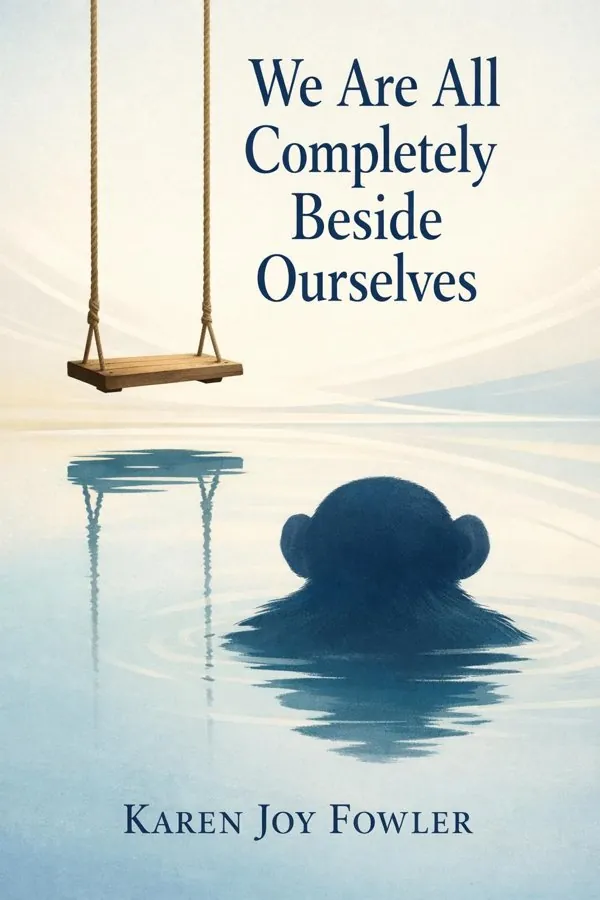
Karen Joy Fowler is an American author celebrated for fiction that crosses the boundaries between literary, historical, and speculative writing. Born in 1950 in Bloomington, Indiana, she built a distinguished career through novels and short stories marked by wit, emotional intelligence, and formal originality. She is best known for The Jane Austen Book Club and We Are All Completely Beside Ourselves, which won the PEN/Faulkner Award and brought her wide international recognition. Fowler’s work often examines identity, gender, social ritual, memory, and the hidden assumptions shaping human relationships. She is also admired for her ability to use unusual premises to illuminate real psychological and political tensions. In Sarah Canary, those strengths come together in a haunting novel about otherness, misunderstanding, and the stories history leaves behind.
Get This Summary in Your Preferred Format
Read or listen to the Sarah Canary summary by Karen Joy Fowler anytime, anywhere. FizzRead offers multiple formats so you can learn on your terms — all free.
Available formats: App · Audio · PDF · EPUB — All included free with FizzRead
Download Sarah Canary PDF and EPUB Summary
Key Quotes from Sarah Canary
“Sometimes the most unsettling figure in a story is not the one who acts violently or speaks loudly, but the one who cannot be easily explained.”
“History is often told through generals, presidents, and industrialists, but novels like Sarah Canary remind us that a nation is more truthfully measured by how it treats those at its margins.”
“The line between madness and nonconformity is often drawn by whoever holds institutional power.”
“We like to believe that communication is mostly a matter of vocabulary, but Sarah Canary argues that the real barrier is interpretation.”
“Journeys in novels often promise transformation, but Sarah Canary uses travel less as a path to revelation than as a way of assembling competing versions of America.”
Frequently Asked Questions about Sarah Canary
Sarah Canary by Karen Joy Fowler is a bestsellers book that explores key ideas across 9 chapters. What happens when a novel refuses to explain itself—and in doing so reveals how little we truly understand one another? Karen Joy Fowler’s Sarah Canary, set in the Pacific Northwest in 1873, begins with a strange encounter between Chin Ah Kin, a Chinese railway laborer living at the edge of American society, and an enigmatic woman who speaks in sounds no one can fully decipher. Known only as Sarah Canary, she moves through frontier towns, mining camps, prisons, and asylums like a riddle each person tries to solve according to their own fears and desires. Around her gathers a cast of outsiders: immigrants, inmates, drifters, and women resisting the roles assigned to them. Fowler blends historical fiction, feminist insight, and speculative ambiguity to create a novel that is both haunting and intellectually rich. More than a mystery, Sarah Canary is a meditation on language, prejudice, power, and perception. Fowler, celebrated for her ability to fuse literary depth with imaginative reach, turns the American frontier into a laboratory for misunderstanding, asking not simply who Sarah Canary is, but why everyone needs her to mean something.
More by Karen Joy Fowler

You Might Also Like

The Godfather
Mario Puzo
10 min
The Handmaid's Tale
Margaret Atwood
10 min
The Hunger Games
Suzanne Collins
10 min
The Nightingale
Kristin Hannah
10 min
The Seven Husbands of Evelyn Hugo
Taylor Jenkins Reid
10 min
Backwater Justice
Fern Michaels
10 minBrowse by Category
Ready to read Sarah Canary?
Get the full summary and 100K+ more books with Fizz Moment.