
Rise from Darkness: Summary & Key Insights
 10 min8 chaptersAudio available
Key Takeaways from Rise from Darkness
One of the most dangerous truths in life is that suffering often looks ordinary from the outside.
Some decisions take seconds to make and years to understand.
People often imagine survival as a clean turning point, but Anderson’s memoir shows that staying alive is only the beginning.
Hope rarely returns all at once; more often, it enters quietly.
Real transformation begins when we stop spending all our energy wishing reality were different.
What Is Rise from Darkness About?
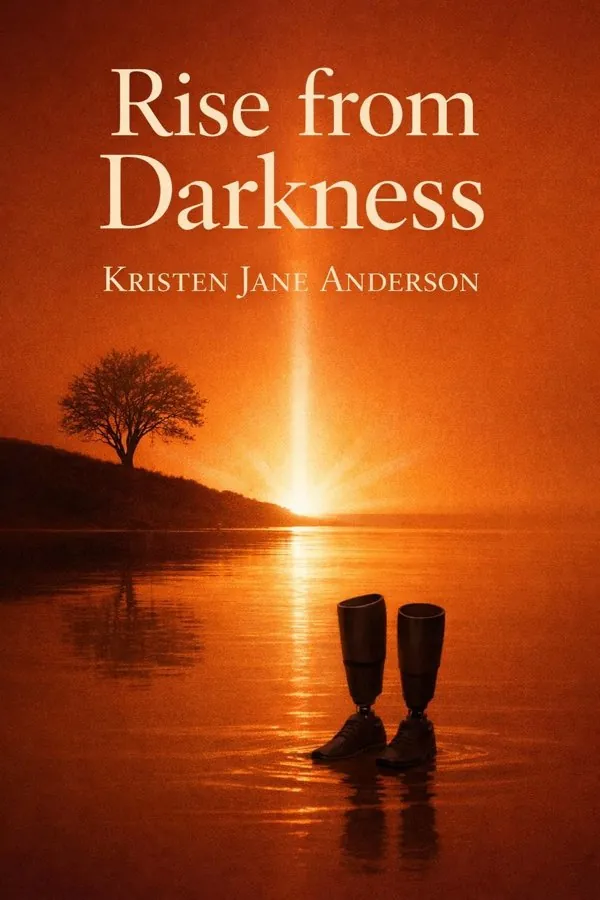
Rise from Darkness by Kristen Jane Anderson is a biographies book spanning 7 pages. Rise from Darkness is a deeply personal memoir by Kristen Jane Anderson, written with Tricia Goyer, that traces one young woman’s journey from depression and a suicide attempt to survival, spiritual renewal, and a life of purpose. As a teenager, Anderson appeared to have a normal life, yet beneath the surface she carried emotional pain she could not fully explain or express. One night, that hidden despair led her to step in front of a train, a decision that left her alive but permanently without her legs. What follows is not only a story of medical recovery, but also an honest account of shame, grief, anger, faith, and the slow rebuilding of identity. The book matters because it speaks to the private suffering many people hide, especially young people who feel isolated even when surrounded by others. Anderson writes with the authority of lived experience: she is not theorizing about hopelessness, trauma, or resilience, but testifying to what it means to endure them. Her memoir offers readers both warning and hope, showing that even after devastating choices, healing and meaning remain possible.
This FizzRead summary covers all 8 key chapters of Rise from Darkness in approximately 10 minutes, distilling the most important ideas, arguments, and takeaways from Kristen Jane Anderson's work. Also available as an audio summary and Key Quotes Podcast.
Rise from Darkness
Rise from Darkness is a deeply personal memoir by Kristen Jane Anderson, written with Tricia Goyer, that traces one young woman’s journey from depression and a suicide attempt to survival, spiritual renewal, and a life of purpose. As a teenager, Anderson appeared to have a normal life, yet beneath the surface she carried emotional pain she could not fully explain or express. One night, that hidden despair led her to step in front of a train, a decision that left her alive but permanently without her legs. What follows is not only a story of medical recovery, but also an honest account of shame, grief, anger, faith, and the slow rebuilding of identity. The book matters because it speaks to the private suffering many people hide, especially young people who feel isolated even when surrounded by others. Anderson writes with the authority of lived experience: she is not theorizing about hopelessness, trauma, or resilience, but testifying to what it means to endure them. Her memoir offers readers both warning and hope, showing that even after devastating choices, healing and meaning remain possible.
Who Should Read Rise from Darkness?
This book is perfect for anyone interested in biographies and looking to gain actionable insights in a short read. Whether you're a student, professional, or lifelong learner, the key ideas from Rise from Darkness by Kristen Jane Anderson will help you think differently.
- ✓Readers who enjoy biographies and want practical takeaways
- ✓Professionals looking to apply new ideas to their work and life
- ✓Anyone who wants the core insights of Rise from Darkness in just 10 minutes
Want the full summary?
Get instant access to this book summary and 100K+ more with Fizz Moment.
Get Free SummaryAvailable on App Store • Free to download
Key Chapters
One of the most dangerous truths in life is that suffering often looks ordinary from the outside. In Rise from Darkness, Kristen Jane Anderson reflects on a childhood and adolescence that seemed, by many measures, normal. She grew up in suburban Illinois, loved sports, enjoyed friendships, and belonged to a family that cared for her. Yet beneath that familiar surface, she experienced confusion, loneliness, and a deepening sadness that she struggled to name. Her story reminds readers that emotional pain does not always announce itself dramatically. Sometimes it appears as withdrawal, numbness, impulsive behavior, or the quiet belief that no one would understand.
This idea matters because many people assume that crisis comes only after obvious warning signs. Anderson’s life shows that despair can build gradually through disappointments, fractured relationships, poor choices, shame, and unresolved emotional wounds. When pain stays unspoken, it gains power. A teenager who jokes with friends may still be collapsing internally. An adult who keeps functioning may still feel hopeless. Her memoir exposes the gap between appearance and reality.
Practically, this insight encourages a more attentive way of living. Parents can look beyond behavior and ask deeper questions. Friends can notice changes in mood, isolation, or risky choices. Individuals can learn to treat their own sadness seriously before it becomes overwhelming. Naming pain early through conversation, journaling, counseling, or prayer can interrupt the cycle of secrecy.
Actionable takeaway: do not wait for emotional pain to become a crisis before addressing it. Choose one trusted person today and speak honestly about something you have been carrying in silence.
Some decisions take seconds to make and years to understand. Anderson recounts the January night when, overwhelmed by despair, she walked to nearby railroad tracks believing death would end her pain. In that moment, what felt like escape became the defining event of her life. She survived, but the train severed both of her legs, forever changing her body, her future, and the story she would have to tell herself about who she was.
The power of this chapter lies in its honesty. Anderson does not romanticize the moment, nor does she reduce it to a neat lesson. Instead, she reveals how impulsive decisions made under emotional darkness can create irreversible consequences. Her account is a sobering reminder that suicidal thoughts often promise relief while hiding devastation. The mind in crisis narrows possibilities until one terrible action feels final and logical. Yet survival exposes what that moment could not see: pain can change, help can come, and life can continue in ways once unimaginable.
For readers, this idea has practical urgency. It emphasizes the importance of pause, intervention, and immediate support during moments of emotional crisis. If someone is spiraling, reducing access to means of self-harm, contacting a trusted adult, calling a crisis line, seeking emergency support, or simply refusing to be alone can create life-saving space between feeling and action.
Actionable takeaway: create a crisis plan before you need it. Write down three people to contact, one emergency resource, and one safe place to go if dark thoughts begin to feel overwhelming.
People often imagine survival as a clean turning point, but Anderson’s memoir shows that staying alive is only the beginning. After the accident, she entered a world of hospitals, surgeries, physical pain, and emotional chaos. She had to confront the reality of her injuries while also facing the fact that she had caused them herself. Recovery was not a triumphant montage; it was a grueling process marked by shock, humiliation, dependence, grief, and the exhausting task of learning how to live in a radically altered body.
This idea is important because it challenges simplistic narratives about resilience. Trauma survivors do not instantly become grateful, wise, or hopeful. They often move through confusion, anger, denial, and shame. Anderson’s account gives dignity to that messy middle. She had to relearn daily routines, adapt to physical limitations, and wrestle with questions like: Who am I now? Will anyone accept me? Can I ever forgive myself? Her emotional rehabilitation mattered just as much as her medical care.
In practical terms, this chapter teaches readers to respect recovery as a long-term process. Families can support healing by replacing pressure with patience. Survivors can permit themselves to grieve what was lost instead of pretending to be fine. Counselors, pastors, and friends can understand that trauma recovery requires repeated acts of compassion, structure, and truth-telling.
Actionable takeaway: if you are recovering from loss or trauma, stop measuring progress only by dramatic breakthroughs. At the end of each day, write down one small sign of healing, whether physical, emotional, or relational.
Hope rarely returns all at once; more often, it enters quietly. In Anderson’s story, faith did not appear as instant certainty but as a small and growing awareness that her life might still have meaning. In the aftermath of her suicide attempt, when shame and brokenness could have defined her completely, she began encountering the possibility of grace. Through the support of others, spiritual reflection, and her own internal searching, she started to believe that God had not abandoned her, even in the darkest moment of her life.
What makes this idea compelling is its realism. Many memoirs present faith as a dramatic turning point, but Anderson’s experience feels more gradual and believable. Faith becomes not the denial of pain but a way of carrying it. It offers language for forgiveness, suffering, dignity, and purpose. It allows her to reinterpret survival not as punishment alone, but as an invitation to live differently. Even readers who are not religious can recognize the psychological power of believing that one’s life is still valuable and one’s future still open.
In daily life, this principle can be applied by making room for small sources of light. That might mean reading something spiritually grounding, attending a supportive community, praying honestly instead of perfectly, or allowing another person’s belief in you to hold you up when your own is weak. Healing often begins not with certainty, but with willingness.
Actionable takeaway: identify one practice that reconnects you to hope, whether prayer, meditation, reading, or conversation, and commit to it for ten minutes a day this week.
Real transformation begins when we stop spending all our energy wishing reality were different. After losing both legs, Anderson had to face an unimaginably difficult truth: her life would not return to what it had been. Acceptance did not mean liking what happened or minimizing the tragedy. It meant recognizing that resisting reality would only deepen her suffering. From that point, she could begin the hard work of adaptation, rehabilitation, and identity rebuilding.
Anderson’s journey toward walking again, using prosthetics, and navigating daily life illustrates the difference between resignation and acceptance. Resignation says, "My life is over." Acceptance says, "This is my reality, and I will learn how to live within it." That shift is powerful. It opens space for courage, training, and new possibilities. She had to relearn balance, movement, and confidence, but she also had to accept being seen, helped, and redefined. Her strength was not simply physical; it was emotional and spiritual.
This lesson applies far beyond catastrophic injury. People face changed realities through divorce, illness, disability, grief, unemployment, and broken dreams. The impulse is often to deny, compare, or cling to the past. Yet growth begins when people ask, "Given what is true now, what kind of life can I still build?" That question turns loss into a starting point rather than an ending.
Actionable takeaway: name one reality you keep resisting. Then write two columns: what I cannot change, and what I can build from here. Let that second column guide your next step.
The experiences that nearly destroy us can also become the source of our deepest calling. In Rise from Darkness, Anderson eventually moves beyond survival and rehabilitation into public witness. Rather than hiding her past, she begins sharing it with others as a warning, a testimony, and an invitation to hope. Her pain does not disappear, but it gains direction. The story she once feared becomes the means by which she reaches struggling teenagers, families, and faith communities.
This idea is central to the memoir’s emotional power. Anderson does not claim that suffering is good in itself. Instead, she demonstrates that suffering can be redeemed when it is offered in service to others. By speaking openly about suicide, shame, and healing, she breaks the isolation that often traps people in darkness. Her honesty gives others permission to admit their own pain. Her life becomes evidence that a catastrophic mistake does not have to have the final word.
In practical terms, this principle encourages readers to reconsider the role of vulnerability. Many people assume they must hide their failures in order to be respected. Anderson’s story suggests the opposite: when shared wisely, personal scars can become a bridge of credibility and compassion. A recovering addict mentoring others, a grief survivor supporting the bereaved, or someone with mental health struggles speaking honestly to a friend can all turn pain into usefulness.
Actionable takeaway: think of one part of your story you have only viewed as damage. Ask how that experience might help someone else, then share it in a safe and purposeful setting.
No one climbs out of darkness entirely alone. Although Rise from Darkness centers on Anderson’s inner journey, it also shows how much healing depends on the presence of others. Family members, caregivers, friends, and people of faith all play a role in helping her endure what would have been impossible by sheer willpower. Their support does not erase her suffering, but it helps contain it. Their presence becomes a practical form of grace.
This is a crucial corrective to individualistic ideas about resilience. Popular culture often praises those who "overcome" as if they did so through private determination alone. Anderson’s memoir reveals a more humane truth: resilience is relational. People heal through encouragement, accountability, tenderness, truth, and shared hope. Sometimes what keeps a person alive is not personal strength but borrowed strength from those who refuse to give up on them.
The applications are immediate. If you love someone in pain, you do not need perfect answers. You can listen without rushing, help with practical needs, accompany them to appointments, check in consistently, and remind them that their life still matters. If you are the one suffering, receiving help is not weakness. It is often the bravest step. Healing communities are built when people stop pretending self-sufficiency is the highest virtue.
Actionable takeaway: strengthen your support network intentionally. Reach out to one person you trust and make a concrete plan for ongoing connection, such as a weekly call, shared meal, or regular check-in.
When someone is depressed, the future can feel closed, fixed, and hopeless. Anderson’s memoir exposes this illusion with extraordinary force. In her darkest moment, she believed death was the only escape from pain. Yet the life that unfolded afterward, though marked by suffering, was fuller and more meaningful than she could have imagined. She became not only a survivor, but a speaker, author, and source of hope for others. Her story proves that despair is persuasive, but not truthful.
This idea matters because suicidal thinking often rests on distorted certainty: nothing will change, no one understands, I am beyond help, the pain will never lift. Anderson’s life contradicts each of these assumptions. Change did come, though slowly. People did care, even when she could not fully receive it. Help was available. Pain did not vanish, but it became survivable and meaningful. Her story does not deny the intensity of depression; it reveals that depression is not a reliable narrator.
Readers can apply this lesson by learning to challenge emotionally absolute thoughts. Mental health professionals often encourage people to separate feelings from facts. "I feel hopeless" is not the same as "there is no hope." Practices like therapy, cognitive reframing, prayer, support groups, and emergency intervention can help interrupt despair’s false authority. The goal is not to deny pain, but to question its conclusions.
Actionable takeaway: the next time you have a thought beginning with "always," "never," or "no one," write it down and ask: what evidence challenges this belief? Create one sentence that is more honest and more hopeful.
All Chapters in Rise from Darkness
About the Author
Kristen Jane Anderson is an American author and motivational speaker best known for sharing her story of survival after a suicide attempt that left her without both legs. As a teenager, she experienced deep emotional pain that culminated in a life-altering encounter with a train. Her long recovery involved not only physical rehabilitation, but also profound spiritual and emotional transformation. Through her memoir Rise from Darkness, co-written with Tricia Goyer, Anderson offers an honest account of despair, consequence, faith, and redemption. She has since spoken to audiences about hope, mental health, healing, and the possibility of rebuilding a meaningful life after trauma. Her work continues to encourage readers who feel trapped by shame, suffering, or hopelessness.
Get This Summary in Your Preferred Format
Read or listen to the Rise from Darkness summary by Kristen Jane Anderson anytime, anywhere. FizzRead offers multiple formats so you can learn on your terms — all free.
Available formats: App · Audio · PDF · EPUB — All included free with FizzRead
Download Rise from Darkness PDF and EPUB Summary
Key Quotes from Rise from Darkness
“One of the most dangerous truths in life is that suffering often looks ordinary from the outside.”
“Some decisions take seconds to make and years to understand.”
“People often imagine survival as a clean turning point, but Anderson’s memoir shows that staying alive is only the beginning.”
“Hope rarely returns all at once; more often, it enters quietly.”
“Real transformation begins when we stop spending all our energy wishing reality were different.”
Frequently Asked Questions about Rise from Darkness
Rise from Darkness by Kristen Jane Anderson is a biographies book that explores key ideas across 8 chapters. Rise from Darkness is a deeply personal memoir by Kristen Jane Anderson, written with Tricia Goyer, that traces one young woman’s journey from depression and a suicide attempt to survival, spiritual renewal, and a life of purpose. As a teenager, Anderson appeared to have a normal life, yet beneath the surface she carried emotional pain she could not fully explain or express. One night, that hidden despair led her to step in front of a train, a decision that left her alive but permanently without her legs. What follows is not only a story of medical recovery, but also an honest account of shame, grief, anger, faith, and the slow rebuilding of identity. The book matters because it speaks to the private suffering many people hide, especially young people who feel isolated even when surrounded by others. Anderson writes with the authority of lived experience: she is not theorizing about hopelessness, trauma, or resilience, but testifying to what it means to endure them. Her memoir offers readers both warning and hope, showing that even after devastating choices, healing and meaning remain possible.
You Might Also Like

An American Marriage
Tayari Jones
10 min
Benjamin Franklin: An American Life
Walter Isaacson
10 min
I Know Why The Caged Bird Sings
Maya Angelou
10 min
Long Walk to Freedom
Nelson Mandela
10 min
Persepolis
Marjane Satrapi
10 min
Surely You're Joking, Mr. Feynman!
Richard P. Feynman
10 minBrowse by Category
Ready to read Rise from Darkness?
Get the full summary and 100K+ more books with Fizz Moment.