
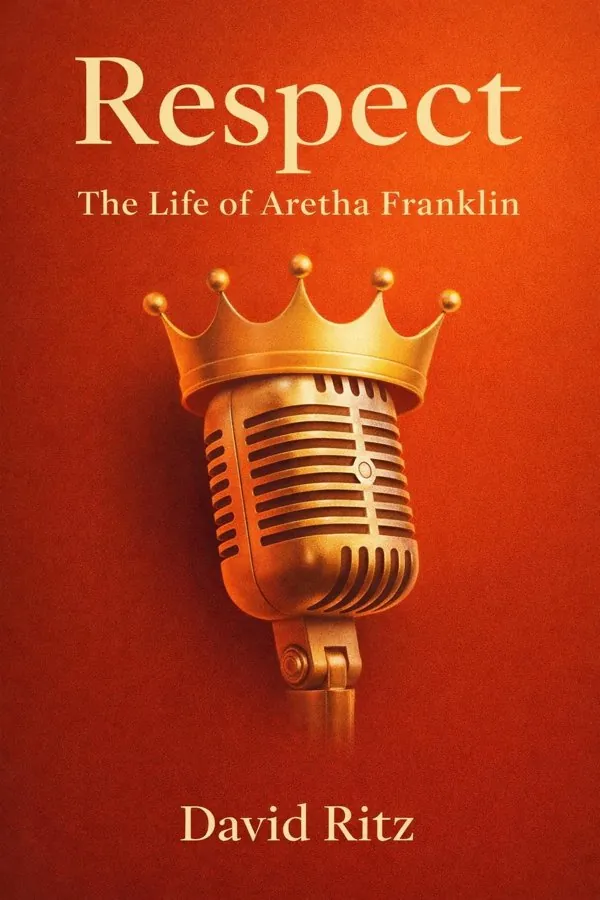
Respect: The Life of Aretha Franklin: Summary & Key Insights
by David Ritz
 10 min9 chaptersAudio available
Key Takeaways from Respect: The Life of Aretha Franklin
Great artists are rarely born in isolation; they are formed by environments that train their instincts before the world ever hears their gifts.
Talent can open doors early, but early recognition often brings pressures a young person is unequipped to manage.
Failure is not always a sign of limited talent; sometimes it is evidence of a mismatch between a person’s essence and the system trying to package them.
Sometimes transformation does not require becoming someone new; it requires entering the right room.
A great performance can outgrow its original context and become a public language for private longing.
What Is Respect: The Life of Aretha Franklin About?
Respect: The Life of Aretha Franklin by David Ritz is a biographies book spanning 7 pages. Respect: The Life of Aretha Franklin is far more than a standard celebrity biography. David Ritz tells the story of a singular American artist whose voice transformed popular music while her life reflected the tensions of fame, faith, family, race, gender, and power. Beginning with Aretha Franklin’s childhood in the orbit of her father, the famous preacher C.L. Franklin, the book traces her rise from gospel prodigy to global icon and shows how that ascent was shaped by both extraordinary talent and deep personal struggle. Ritz is uniquely qualified to tell this story. As a longtime music writer and collaborator who worked closely with Franklin on her autobiography, he combines intimate access, extensive interviews, and a deep understanding of Black music history. The result is a portrait that is admiring without being simplistic. It captures Franklin as a genius, a daughter, a mother, a woman of faith, and a fiercely private public figure. The book matters because it reveals how one artist could embody both vulnerability and authority—and why Aretha Franklin’s life remains essential to understanding American culture.
This FizzRead summary covers all 9 key chapters of Respect: The Life of Aretha Franklin in approximately 10 minutes, distilling the most important ideas, arguments, and takeaways from David Ritz's work. Also available as an audio summary and Key Quotes Podcast.
Respect: The Life of Aretha Franklin
Respect: The Life of Aretha Franklin is far more than a standard celebrity biography. David Ritz tells the story of a singular American artist whose voice transformed popular music while her life reflected the tensions of fame, faith, family, race, gender, and power. Beginning with Aretha Franklin’s childhood in the orbit of her father, the famous preacher C.L. Franklin, the book traces her rise from gospel prodigy to global icon and shows how that ascent was shaped by both extraordinary talent and deep personal struggle. Ritz is uniquely qualified to tell this story. As a longtime music writer and collaborator who worked closely with Franklin on her autobiography, he combines intimate access, extensive interviews, and a deep understanding of Black music history. The result is a portrait that is admiring without being simplistic. It captures Franklin as a genius, a daughter, a mother, a woman of faith, and a fiercely private public figure. The book matters because it reveals how one artist could embody both vulnerability and authority—and why Aretha Franklin’s life remains essential to understanding American culture.
Who Should Read Respect: The Life of Aretha Franklin?
This book is perfect for anyone interested in biographies and looking to gain actionable insights in a short read. Whether you're a student, professional, or lifelong learner, the key ideas from Respect: The Life of Aretha Franklin by David Ritz will help you think differently.
- ✓Readers who enjoy biographies and want practical takeaways
- ✓Professionals looking to apply new ideas to their work and life
- ✓Anyone who wants the core insights of Respect: The Life of Aretha Franklin in just 10 minutes
Want the full summary?
Get instant access to this book summary and 100K+ more with Fizz Moment.
Get Free SummaryAvailable on App Store • Free to download
Key Chapters
Great artists are rarely born in isolation; they are formed by environments that train their instincts before the world ever hears their gifts. Aretha Louise Franklin was born in 1942 in Memphis and raised in Detroit within a world shaped by Black church culture, traveling revival circuits, and the commanding presence of her father, Reverend C.L. Franklin. He was not just a preacher but a phenomenon—an orator whose sermons filled churches and attracted celebrities, activists, and musicians. In that atmosphere, Aretha absorbed music as language, prayer, drama, and emotional truth.
The church was her first conservatory. She learned phrasing from gospel cadences, power from testimony, and emotional timing from watching congregations respond in real time. At home, she was surrounded by major voices such as Mahalia Jackson, Clara Ward, and Sam Cooke, all of whom moved between sacred and secular influence. Yet her childhood was not simply blessed and orderly. Her mother’s departure and early death left emotional wounds that would echo throughout her life. The combination of spiritual grounding and personal instability helped shape the intensity people later heard in her singing.
This background explains why Franklin never sounded manufactured. Even in pop settings, her voice carried the weight of lived feeling and communal tradition. For readers, the practical lesson is clear: excellence often comes from deep immersion in a demanding culture of practice, not from raw talent alone. If you want to understand mastery in any field, study the ecosystem that formed it. Actionable takeaway: identify the formative influences in your own life and use them deliberately rather than treating them as accidental history.
Talent can open doors early, but early recognition often brings pressures a young person is unequipped to manage. By her teenage years, Aretha Franklin’s vocal brilliance was already undeniable. She recorded gospel, toured with her father, and developed a reputation that extended well beyond church audiences. But her path into adulthood was marked by complexity. She became a mother very young, and the burdens of domestic responsibility, emotional uncertainty, and public expectation arrived long before she had stable personal freedom.
David Ritz presents these years not as gossip but as essential context. Franklin was growing into womanhood while the adults around her were trying to shape her career. Her father protected her in some ways, yet he also functioned as a forceful manager whose ambitions influenced her decisions. This tension between guidance and control would recur throughout her life. She was gifted enough to command attention, but still vulnerable enough to be managed by stronger personalities.
This phase of her life matters because it challenges the myth that genius naturally produces confidence and control. Franklin’s early years show that a person can possess extraordinary ability while still lacking safety, autonomy, and emotional support. In careers, relationships, and leadership, timing matters as much as talent. Young high performers often need structure that protects rather than exploits them.
For readers, this is a reminder to look beyond visible achievement when evaluating success. Someone may appear powerful while privately carrying enormous strain. Actionable takeaway: if you are guiding a talented young person—or are one yourself—build support systems around emotional health and decision-making, not just performance and opportunity.
Failure is not always a sign of limited talent; sometimes it is evidence of a mismatch between a person’s essence and the system trying to package them. When Aretha Franklin signed with Columbia Records in the early 1960s, the label recognized her ability but struggled to understand how to present her. Producers placed her in polished pop-jazz settings meant to make her broadly marketable, but the recordings often diluted the raw gospel force that made her unique.
The problem was not that Franklin lacked versatility. She could sing standards, blues, ballads, and pop with remarkable skill. The deeper issue was identity. Columbia tried to fit her into an elegant, mainstream mold rather than building around the emotional authority of her church-rooted style. As a result, the records displayed competence without unleashing revelation. She had moderate success, but not the artistic breakthrough her talent promised.
This period is especially useful because it shows how institutions often reward conformity over authenticity. Labels, employers, and even well-meaning mentors may push a talented person toward an acceptable version of themselves instead of the truest one. Franklin’s Columbia years were not wasted, though. She learned studio discipline, expanded her repertoire, and developed resilience. Most importantly, the frustration clarified what was missing.
In modern work life, many people experience a similar phase: they are productive but miscast, praised but not fully seen. The lesson is to distinguish between opportunity and alignment. Actionable takeaway: if your work feels technically successful but emotionally false, ask whether the environment is amplifying your strengths—or merely using your skills in a convenient but limiting way.
Sometimes transformation does not require becoming someone new; it requires entering the right room. Aretha Franklin’s move to Atlantic Records in 1966 changed everything because producer Jerry Wexler and the Atlantic team understood that her greatness did not need refinement so much as release. In sessions at Muscle Shoals and elsewhere, Franklin sat at the piano, drew on gospel instincts, and sang with a freedom that had been held back. The result was explosive.
Songs like "I Never Loved a Man (The Way I Love You)," "Do Right Woman, Do Right Man," and especially "Respect" did more than become hits. They announced a new artistic authority. Franklin was no longer a promising vocalist in search of material; she was a force reshaping songs from the inside. Her interpretations made lyrics sound lived rather than performed. Rhythm, phrasing, improvisation, and emotional precision came together in a way that felt both spontaneous and definitive.
Ritz shows that this breakthrough was not accidental. It happened because environment, collaborators, and self-possession finally aligned. Franklin was given space to be earthy, commanding, church-inflected, sensual, and rhythmically daring. That is a lesson with broad application. Peak performance often comes when skill meets trust and context. The right collaborators do not erase your identity; they draw it out.
For readers pursuing creative or professional breakthroughs, Franklin’s Atlantic period offers a powerful model. Do not only ask whether you are working hard. Ask whether the conditions around you allow your strongest qualities to emerge. Actionable takeaway: seek people and environments that recognize your deepest strengths and build around them rather than smoothing them away.
A great performance can outgrow its original context and become a public language for private longing. Otis Redding wrote "Respect," but Aretha Franklin transformed it into something larger: a declaration of dignity, self-possession, and reciprocal recognition. Her version was not simply a cover; it was a reinterpretation that shifted the center of gravity. With sharper demands, changed emphasis, and unforgettable spelling and vocal interplay, she turned a man’s plea into a woman’s terms.
That shift resonated far beyond radio. The song became an anthem for women asserting worth, for Black Americans demanding equality, and for anyone tired of being granted talent without being granted humanity. Ritz situates this not as an abstract symbol imposed after the fact but as part of Franklin’s natural authority. She sang from a place where personal feeling and social meaning were inseparable. Her voice carried the emotional intelligence to make listeners feel both struggle and command.
The enduring power of "Respect" lies in its combination of accessibility and depth. It is catchy, danceable, and direct, yet it opens onto questions of labor, love, gender, race, and power. That is one reason Franklin’s artistry remains relevant: she made complexity feel immediate.
In daily life, respect is often discussed vaguely, but Franklin’s example makes it concrete. Respect means recognition, fairness, listening, and mutual accountability. It must be audible in action, not just stated in principle. Actionable takeaway: in your work and relationships, define what respect looks like behaviorally—clear boundaries, fair credit, honest communication—and ask for it with confidence rather than apology.
Public power often coexists with private fragility, and one of David Ritz’s most important contributions is showing how fiercely Aretha Franklin guarded that contradiction. Despite her fame, she remained deeply rooted in faith. Gospel was not merely an origin story or a stylistic influence; it was a living spiritual vocabulary that sustained her through grief, heartbreak, fear, and exhaustion. Even as she conquered secular music, church remained a source of identity and replenishment.
At the same time, Franklin was intensely private. She controlled access to her inner world, sometimes frustrating journalists, collaborators, and even friends. Ritz presents this not as mere diva behavior but as a survival strategy. Franklin had grown up around charisma, scrutiny, family complication, and male authority. Privacy gave her a way to preserve selfhood in a life where the public constantly demanded confession.
This tension helps explain her complexity. She could sound utterly transparent in song while remaining elusive in conversation. Her performances felt emotionally naked, but her life remained carefully defended. That separation allowed her art to function as expression without turning her into public property.
For modern readers living in an age of constant exposure, Franklin’s example feels especially timely. Authenticity does not require full disclosure. You can be sincere without being unguarded, expressive without surrendering your boundaries. Faith, ritual, and chosen privacy can create the conditions for sustainable public work.
Actionable takeaway: decide what parts of your life are meant for public sharing, what parts belong to trusted circles, and what parts must remain sacred if you are to stay whole.
Some artists reflect their era; others help define its moral sound. Aretha Franklin belonged to the second category. Her career unfolded alongside the civil rights movement, and her music became inseparable from the struggle for Black dignity and self-determination. This connection was not incidental. She had been raised in a household where religion, politics, and Black leadership naturally overlapped. Her father was close to major civil rights figures, and Martin Luther King Jr. was part of her world from an early age.
Franklin’s contribution to the movement extended beyond symbolic association. She performed at benefit events, supported activists, and lent her stature to causes larger than entertainment. Her songs—especially those centered on freedom, respect, pain, endurance, and triumph—gave emotional force to the broader cultural transformation taking place. She did not need to become a speechmaker to matter politically. Her voice itself carried authority.
Ritz helps readers see that cultural influence is not always exercised through direct argument. Art can legitimize feelings a movement needs: pride, anger, sorrow, resilience, and hope. Franklin’s music gave people language for internal liberation even as legal and political battles continued outside the concert hall.
This matters today because many people underestimate the civic role of artists, storytellers, and cultural leaders. Not every contribution to justice comes through policy expertise. Some come through shaping what a community feels it is allowed to believe about itself. Actionable takeaway: consider how your own work—whether creative, managerial, educational, or social—might strengthen dignity and possibility for others, even if it is not overtly political.
Achievement can magnify unresolved pain rather than heal it. Even after becoming one of the most celebrated singers in the world, Aretha Franklin continued to wrestle with difficult relationships, professional pressures, loneliness, grief, and self-protection. Ritz does not flatten her into a triumphalist legend. Instead, he shows how fame intensified the challenge of trust. The more powerful Franklin became, the more she had to navigate unreliable men, family tensions, financial concerns, changing music trends, and the emotional costs of being both needed and misunderstood.
Her romantic life was often turbulent. So were some of her professional alliances. Meanwhile, the demands of sustaining a career across decades required constant adaptation. The industry shifted, younger stars emerged, and public taste changed, yet Franklin still had to defend her place without betraying her musical identity. There were periods of commercial decline, health concerns, and personal hardship. But there were also moments of renewal, comeback, and artistic reaffirmation.
This complexity is one of the biography’s strongest lessons. There is no final stage at which success permanently solves the human condition. Confidence, money, status, and admiration do not automatically create peace. What matters is the capacity to recover, re-center, and return to what is essential.
For readers, this reframes resilience. Resilience is not looking unshaken; it is finding ways to continue with integrity after being shaken repeatedly. Franklin’s life demonstrates that setbacks do not cancel greatness. Actionable takeaway: when facing recurring challenges, stop measuring your worth by uninterrupted momentum and start measuring it by your ability to regroup without losing your core.
The true measure of an artist is not only what they sold in their lifetime but what they make possible after they are gone. Aretha Franklin’s legacy reaches far beyond chart success, awards, or iconic performances. She changed the standards by which vocal expression, emotional honesty, and artistic command are judged. Singers across genres learned from her phrasing, her use of melisma, her rhythmic elasticity, her piano-driven instincts, and her ability to make every line feel personally inhabited.
Yet Ritz makes clear that her influence is not purely technical. Franklin expanded what a Black woman could signify in American public life. She was regal without being distant, spiritual without being narrow, commercial without being trivial. Her voice carried both refinement and grit. In doing so, she offered an image of authority that did not require imitation of male models or surrender to market expectations.
Her final years and public remembrances reinforced this stature. She came to represent continuity between the church, civil rights, soul music, and American cultural memory itself. To engage with Aretha Franklin is therefore to engage with a much larger story about art, race, gender, and the uses of power.
For readers and listeners, legacy is also a personal question. What do you leave behind in the people you influence? Not everyone will shape history, but everyone teaches others how to remember them. Actionable takeaway: build your legacy not only through visible achievements but through the standards, courage, and generosity you normalize for those who come after you.
All Chapters in Respect: The Life of Aretha Franklin
About the Author
David Ritz is an American author, critic, and biographer widely known for his work on the lives of major music legends. Over several decades, he has written or co-written acclaimed books involving artists such as Ray Charles, Marvin Gaye, B.B. King, and Aretha Franklin. Ritz has earned a strong reputation for combining intimate collaboration with careful reporting, allowing him to produce biographies that are emotionally rich, historically informed, and attentive to the deeper cultural meaning of music. His writing often explores the intersections of race, spirituality, celebrity, suffering, and artistic greatness. In Respect: The Life of Aretha Franklin, Ritz brings both insider access and long experience as a chronicler of American music, making him especially well suited to interpret Franklin’s singular life and legacy.
Get This Summary in Your Preferred Format
Read or listen to the Respect: The Life of Aretha Franklin summary by David Ritz anytime, anywhere. FizzRead offers multiple formats so you can learn on your terms — all free.
Available formats: App · Audio · PDF · EPUB — All included free with FizzRead
Download Respect: The Life of Aretha Franklin PDF and EPUB Summary
Key Quotes from Respect: The Life of Aretha Franklin
“Great artists are rarely born in isolation; they are formed by environments that train their instincts before the world ever hears their gifts.”
“Talent can open doors early, but early recognition often brings pressures a young person is unequipped to manage.”
“Failure is not always a sign of limited talent; sometimes it is evidence of a mismatch between a person’s essence and the system trying to package them.”
“Sometimes transformation does not require becoming someone new; it requires entering the right room.”
“A great performance can outgrow its original context and become a public language for private longing.”
Frequently Asked Questions about Respect: The Life of Aretha Franklin
Respect: The Life of Aretha Franklin by David Ritz is a biographies book that explores key ideas across 9 chapters. Respect: The Life of Aretha Franklin is far more than a standard celebrity biography. David Ritz tells the story of a singular American artist whose voice transformed popular music while her life reflected the tensions of fame, faith, family, race, gender, and power. Beginning with Aretha Franklin’s childhood in the orbit of her father, the famous preacher C.L. Franklin, the book traces her rise from gospel prodigy to global icon and shows how that ascent was shaped by both extraordinary talent and deep personal struggle. Ritz is uniquely qualified to tell this story. As a longtime music writer and collaborator who worked closely with Franklin on her autobiography, he combines intimate access, extensive interviews, and a deep understanding of Black music history. The result is a portrait that is admiring without being simplistic. It captures Franklin as a genius, a daughter, a mother, a woman of faith, and a fiercely private public figure. The book matters because it reveals how one artist could embody both vulnerability and authority—and why Aretha Franklin’s life remains essential to understanding American culture.
You Might Also Like

An American Marriage
Tayari Jones
10 min
Benjamin Franklin: An American Life
Walter Isaacson
10 min
I Know Why The Caged Bird Sings
Maya Angelou
10 min
Long Walk to Freedom
Nelson Mandela
10 min
Persepolis
Marjane Satrapi
10 min
Surely You're Joking, Mr. Feynman!
Richard P. Feynman
10 minBrowse by Category
Ready to read Respect: The Life of Aretha Franklin?
Get the full summary and 100K+ more books with Fizz Moment.