
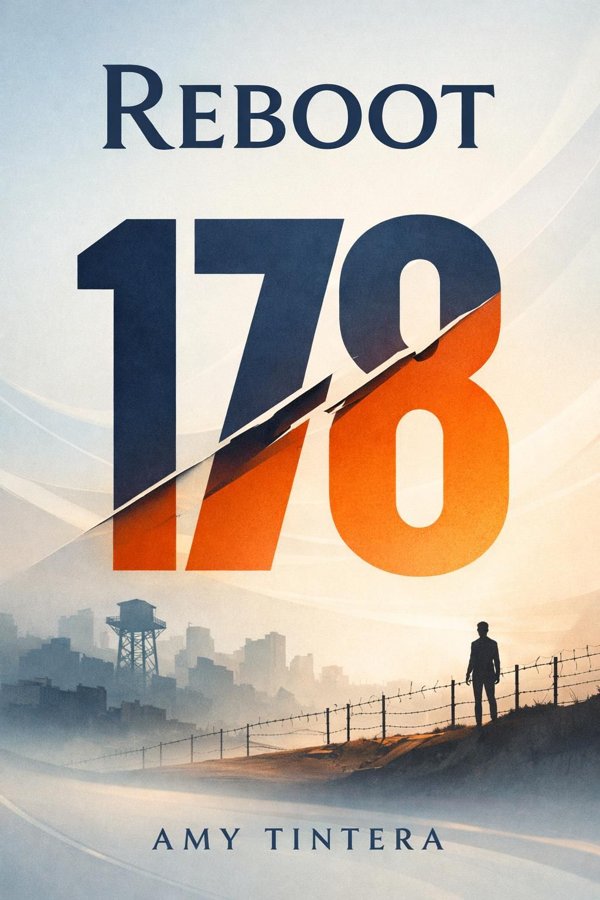
Reboot: Summary & Key Insights
by Amy Tintera
 10 min8 chaptersAudio available
Key Takeaways from Reboot
A society reveals its deepest fears by what it does with the people it cannot fully understand.
Strength can become a prison when it is built on emotional numbness.
Sometimes change begins not with a revolution, but with one inconvenient person who refuses to fit the system’s logic.
Humanity is rarely recovered through abstract ideas; it is usually restored through relationship.
The most dangerous systems are often the ones that present exploitation as order.
What Is Reboot About?
Reboot by Amy Tintera is a scifi_fantasy book spanning 4 pages. What if surviving death cost you your softness, your trust, and eventually your freedom? That chilling question drives Reboot, Amy Tintera’s fast-paced young adult dystopian science fiction novel set in a brutal future Texas where some people who die come back stronger, faster, and far less human. These revived teens, called Reboots, are turned into living weapons by HARC, the government-like organization that controls the crumbling cities. At the center is Wren Connolly, a legendary 178-minute Reboot whose long time spent dead has made her feared, efficient, and emotionally sealed off. But everything begins to change when she is assigned to train Callum Reyes, a newly rebooted boy whose short death leaves him unusually warm, funny, and compassionate. Tintera uses a gripping premise to explore identity, trauma, power, and the danger of systems that reward obedience over empathy. Her background as a writer of YA speculative fiction shows in the novel’s propulsive action, sharp emotional tension, and clear worldbuilding. Reboot matters because beneath its survival story lies a deeply human question: when a cruel world tells you feelings are weakness, what does it take to remain a person at all?
This FizzRead summary covers all 8 key chapters of Reboot in approximately 10 minutes, distilling the most important ideas, arguments, and takeaways from Amy Tintera's work. Also available as an audio summary and Key Quotes Podcast.
Reboot
What if surviving death cost you your softness, your trust, and eventually your freedom? That chilling question drives Reboot, Amy Tintera’s fast-paced young adult dystopian science fiction novel set in a brutal future Texas where some people who die come back stronger, faster, and far less human. These revived teens, called Reboots, are turned into living weapons by HARC, the government-like organization that controls the crumbling cities. At the center is Wren Connolly, a legendary 178-minute Reboot whose long time spent dead has made her feared, efficient, and emotionally sealed off. But everything begins to change when she is assigned to train Callum Reyes, a newly rebooted boy whose short death leaves him unusually warm, funny, and compassionate.
Tintera uses a gripping premise to explore identity, trauma, power, and the danger of systems that reward obedience over empathy. Her background as a writer of YA speculative fiction shows in the novel’s propulsive action, sharp emotional tension, and clear worldbuilding. Reboot matters because beneath its survival story lies a deeply human question: when a cruel world tells you feelings are weakness, what does it take to remain a person at all?
Who Should Read Reboot?
This book is perfect for anyone interested in scifi_fantasy and looking to gain actionable insights in a short read. Whether you're a student, professional, or lifelong learner, the key ideas from Reboot by Amy Tintera will help you think differently.
- ✓Readers who enjoy scifi_fantasy and want practical takeaways
- ✓Professionals looking to apply new ideas to their work and life
- ✓Anyone who wants the core insights of Reboot in just 10 minutes
Want the full summary?
Get instant access to this book summary and 100K+ more with Fizz Moment.
Get Free SummaryAvailable on App Store • Free to download
Key Chapters
A society reveals its deepest fears by what it does with the people it cannot fully understand. In Reboot, Amy Tintera builds a post-apocalyptic Texas where death is no longer final for some teenagers. Instead, those who return become Reboots: stronger, faster, harder to kill, and often emotionally altered. The longer they were dead, the less human they are believed to be. That single rule creates the foundation for the entire social order. Reboots are feared by ordinary humans, ranked by their death time, and absorbed into HARC, the powerful authority that trains them into soldiers.
This world matters because it turns biology into hierarchy. A 178-minute Reboot like Wren is treated as superior, while a 22-minute Reboot like Callum is looked down on as weak and overly emotional. Tintera uses this ranking system to mirror real-world structures that assign value based on performance, toughness, or conformity. People are not judged by character but by how useful they are to institutions.
The concept also works on a psychological level. Reboots are caught between categories: not fully human in the eyes of society, yet not monsters either. That tension creates a constant identity struggle. Wren has built her entire sense of self around being what others expect: efficient, cold, and obedient. The world rewards her for suppressing doubt.
In practical terms, the novel invites readers to notice how labels shape behavior. When people are repeatedly told they are dangerous, weak, broken, or exceptional, they often begin to live inside those definitions. Reboot shows how systems can manufacture identity and then call it natural.
Actionable takeaway: Question any system that assigns human worth through rigid labels, because the roles people are forced into often hide who they really are.
Strength can become a prison when it is built on emotional numbness. Wren Connolly begins Reboot as the model soldier: disciplined, lethal, admired, and feared. Having been dead for 178 minutes before rebooting, she is one of the most extreme cases in the facility, and that status defines her. She follows orders, completes missions without hesitation, and avoids attachments. To everyone around her, she looks unbreakable.
But Wren’s perfection is not freedom. It is adaptation. She has survived by becoming exactly what HARC needs her to be: a weapon who does not ask moral questions. Her reputation protects her from vulnerability, but it also cuts her off from intimacy, trust, and grief. Tintera carefully shows that Wren’s coldness is not emptiness. It is armor. She has learned that caring is dangerous in a system designed to punish independent thought.
This makes Wren compelling because she embodies a familiar survival strategy. In difficult environments, many people become hyper-competent. They perform, achieve, and control themselves so completely that others admire their resilience. Yet beneath that control may be fear, loneliness, or unresolved pain. Wren’s emotional detachment is not proof of superiority; it is the evidence of a life shaped by violence and manipulation.
As the story progresses, tiny cracks in her exterior become meaningful. Her curiosity about Callum, her unease with HARC’s cruelty, and her protectiveness toward others reveal that humanity has not vanished. It has merely been buried under conditioning.
Readers can apply this insight beyond fiction. People who seem toughest are not always the least affected. Often they are simply the most practiced at hiding damage. Leadership, relationships, and even self-understanding improve when we look beyond competence to motive and emotional cost.
Actionable takeaway: When you admire toughness in yourself or others, ask what pain that toughness may be covering and whether strength could also include vulnerability.
Sometimes change begins not with a revolution, but with one inconvenient person who refuses to fit the system’s logic. That person, in Reboot, is Callum Reyes. When Wren is assigned to train him, she expects another weak, short-dead recruit who will struggle to survive. Callum is a 22-minute Reboot, which means he still looks and acts far more human than elite soldiers like Wren. He jokes, asks questions, hesitates, and shows kindness even when kindness seems strategically foolish.
At first, Callum appears to be Wren’s opposite. He lacks her emotional distance and physical reputation. Yet his presence exposes the flaws in the values she has internalized. Because he still feels deeply, he notices cruelty that others have normalized. Because he has not fully accepted HARC’s worldview, he can imagine alternatives. His humanity, dismissed as weakness, becomes a form of resistance.
The training relationship is central to the novel because it transforms power into intimacy. Wren begins in control: she is the experienced fighter, the respected superior, the one who understands how survival works. But Callum changes the terms of that dynamic. He does not merely learn from her; he reminds her of parts of herself she has suppressed. Through him, she sees that obedience is not the same as strength, and emotional sensitivity is not the same as fragility.
This idea has clear real-world parallels. Institutions often teach that detachment, speed, and compliance are the marks of maturity, while empathy is impractical. Yet in families, schools, workplaces, and governments, the people who ask uncomfortable moral questions are often the ones preserving human dignity.
Actionable takeaway: Pay attention to the people who seem too idealistic or too emotional for a hard system, because they may be revealing truths everyone else has learned to ignore.
Humanity is rarely recovered through abstract ideas; it is usually restored through relationship. As Wren spends time with Callum, she does not simply develop romantic feelings. More importantly, she begins to reconnect with empathy, hesitation, humor, and moral discomfort. These are small shifts, but in a world that rewards emotional shutdown, they are radical acts.
Tintera makes this awakening believable by grounding it in experience rather than speeches. Callum talks to Wren like she is more than a ranking number. He notices her choices, challenges her assumptions, and persists in seeing a person beneath the weapon. That matters because authoritarian systems often maintain control by making people feel fixed and inescapably defined. If Wren can be seen differently, she can begin to imagine herself differently.
This rediscovery extends beyond romance. Wren starts observing the treatment of other Reboots, especially the younger and more vulnerable ones, with fresh eyes. She becomes less willing to accept punishment, cruelty, and manipulation as necessary facts of survival. In other words, emotional awakening leads to ethical awakening. Once she allows herself to care, she can no longer participate so easily in a machine that harms others.
There is a practical lesson here about desensitization. In harsh environments, people often stop reacting to what once would have disturbed them. The return of feeling can be uncomfortable, even destabilizing, because it demands action. Yet that discomfort is often a sign of moral health, not weakness.
For readers, Wren’s transformation shows that reclaiming humanity does not require dramatic purity. It begins with noticing, caring, and refusing to dismiss your own discomfort. Compassion is not a passive feeling in Reboot; it is the force that interrupts indoctrination.
Actionable takeaway: If something in your environment feels wrong, do not rush to suppress that feeling; use it as a signal to examine what you have been taught to accept.
The most dangerous systems are often the ones that present exploitation as order. HARC, the organization governing the fenced cities and controlling the Reboots, functions as more than a villainous institution. It is a study in how authority justifies itself through fear, scarcity, and hierarchy. Humans fear the instability of the post-apocalyptic world, and HARC promises safety. Reboots need structure, purpose, and protection, and HARC offers all three. In exchange, it claims ownership over their bodies and choices.
What makes HARC effective is not just violence but narrative control. It teaches Reboots that obedience is survival, that emotional detachment is strength, and that disobedience leads to chaos. The ranking system reinforces this by rewarding those who best embody institutional ideals. Wren’s status is a perfect example: she is celebrated because she has become useful. Her value is conditional.
Tintera’s portrayal resonates because many real systems operate similarly. Whether in politics, business, or social groups, organizations maintain power by convincing people that dependence is natural and dissent is dangerous. They may elevate a few individuals, creating the illusion of merit, while keeping everyone else constrained. People begin to police themselves, repeating the values of the institution as if they were personal beliefs.
The novel also shows how control becomes normalized. Routine missions, training exercises, punishments, and rankings create a culture where cruelty appears procedural rather than shocking. This is one of the book’s sharpest insights: dehumanization often hides behind efficiency.
Readers can apply this lens by asking how any authority structure defines loyalty, success, and worth. Who benefits? Who gets punished for asking questions? What is framed as necessary that may actually be abusive?
Actionable takeaway: Whenever an institution demands obedience in the name of safety, examine what freedoms, identities, or moral instincts it is asking people to surrender.
In dystopian fiction, romance can either weaken the larger story or sharpen it. In Reboot, the relationship between Wren and Callum is not a side plot that interrupts the rebellion; it is the emotional engine that makes rebellion possible. Their bond matters because it challenges the foundational belief of their world: that attachment is dangerous and feelings reduce survival odds.
Wren has been taught that closeness creates weakness. Callum demonstrates the opposite. Caring for someone gives her a reason to question orders, protect others, and imagine a life beyond the facility. The relationship does not make the world softer; it makes its cruelty harder to ignore. That is why the romance works. It raises the stakes morally as well as emotionally.
Callum’s influence is especially powerful because he does not admire Wren for her violence alone. He sees her as someone capable of choice. That shifts the story from attraction to recognition. In turn, Wren’s feelings for Callum force her to confront what kind of person she wants to be. If she keeps obeying HARC, she will eventually become the threat to the people she loves.
This idea has broader relevance. Caring deeply often disrupts systems that rely on detachment. In workplaces, political contexts, or communities, personal bonds can motivate people to challenge harmful norms. Love, friendship, and loyalty become sources of courage because they make abstract injustice immediate.
Importantly, Tintera does not present love as a cure-all. The relationship is messy, risky, and constrained by danger. But it proves that emotional openness can restore agency rather than diminish it.
Actionable takeaway: Do not dismiss care as a weakness when facing hard choices; the people and values you love may be exactly what helps you decide what is worth resisting.
Before there can be escape, there must be a moment when someone decides that survival under the current rules is no longer enough. Reboot traces that shift inside Wren with impressive clarity. Her rebellion does not erupt because she suddenly becomes fearless. It begins because she can no longer morally justify the system she has served.
This distinction matters. Many stories treat rebellion as an instinct for freedom, but Tintera shows that it often begins with accumulated contradictions. Wren sees younger Reboots mistreated. She witnesses the gap between HARC’s rhetoric and its actual behavior. She experiences care, trust, and loyalty through Callum. Gradually, the logic holding her obedience together falls apart.
Once that happens, action becomes possible. Escape is not merely physical movement from one place to another; it is a change in belief. Wren must stop seeing HARC as inevitable. She must imagine that another life can exist, even if she cannot yet see it clearly. That leap is psychologically difficult because oppressive systems train people to confuse the familiar with the necessary.
The novel’s rebellion arc is exciting on a plot level, with pursuit, danger, and strategic choices, but its deeper contribution is showing the internal anatomy of resistance. People often remain in harmful environments not because they approve of them, but because they cannot envision a viable alternative. What changes Wren is not just anger. It is moral clarity paired with connection.
In practical life, this insight applies whenever individuals leave controlling jobs, unhealthy relationships, rigid communities, or manipulative ideologies. The turning point is often the same: a realization that endurance is not the same as loyalty and that compliance is not the only path to safety.
Actionable takeaway: If you feel trapped in a harmful system, start by naming exactly what violates your values, because clear moral language is often the first step toward meaningful change.
Escaping a prison is one challenge; learning how to live outside its rules is another. Reboot understands that freedom is not just the absence of physical confinement. For Wren and the other Reboots, freedom means reclaiming authorship over identity. After a lifetime of being ranked, commanded, and defined by usefulness, they must decide who they are without HARC.
This is one of the novel’s strongest thematic layers. Oppression does not simply restrict movement; it shapes self-perception. Wren has long believed that her value lies in her efficiency and ruthlessness. If she abandons those qualities as central definitions, what remains? The story suggests that genuine freedom requires rebuilding the self from values like trust, protection, loyalty, and chosen belonging rather than enforced obedience.
The theme also broadens to community. Freedom cannot be sustained by isolated individuals alone. The Reboots need structures, relationships, and a vision for living differently. Tintera hints at the difficulty of this transition. People emerging from control do not instantly become whole. They carry habits of suspicion, fear, and self-protection. Yet the possibility of constructing a new kind of community is what makes the novel feel hopeful rather than merely rebellious.
Readers can connect this idea to many transitions: leaving school and forming adult identity, changing careers, recovering after trauma, or stepping away from toxic expectations. In each case, liberation creates uncertainty. Without old scripts, people must make intentional choices about values and purpose.
Reboot argues that this uncertainty is worth facing. To choose your own life, even imperfectly, is better than excelling inside a system that denies your humanity.
Actionable takeaway: When you step away from limiting expectations, do more than reject the old role; actively define the principles, relationships, and habits that will shape the person you want to become.
All Chapters in Reboot
About the Author
Amy Tintera is an American author known for young adult science fiction and fantasy that blends fast pacing with emotional depth. Before becoming a novelist, she studied journalism and film and worked in Hollywood, experiences that helped shape her cinematic storytelling style and strong sense of structure. Tintera gained recognition for creating speculative worlds that explore identity, power, rebellion, and the emotional cost of survival. Her books often feature protagonists caught between harsh systems and their own emerging sense of self. In Reboot, she combines dystopian action, romance, and ethical questioning in a story about what it means to remain human in a world that rewards detachment. Tintera has built a loyal readership through accessible, high-stakes fiction that balances entertainment with meaningful themes.
Get This Summary in Your Preferred Format
Read or listen to the Reboot summary by Amy Tintera anytime, anywhere. FizzRead offers multiple formats so you can learn on your terms — all free.
Available formats: App · Audio · PDF · EPUB — All included free with FizzRead
Download Reboot PDF and EPUB Summary
Key Quotes from Reboot
“A society reveals its deepest fears by what it does with the people it cannot fully understand.”
“Strength can become a prison when it is built on emotional numbness.”
“Sometimes change begins not with a revolution, but with one inconvenient person who refuses to fit the system’s logic.”
“Humanity is rarely recovered through abstract ideas; it is usually restored through relationship.”
“The most dangerous systems are often the ones that present exploitation as order.”
Frequently Asked Questions about Reboot
Reboot by Amy Tintera is a scifi_fantasy book that explores key ideas across 8 chapters. What if surviving death cost you your softness, your trust, and eventually your freedom? That chilling question drives Reboot, Amy Tintera’s fast-paced young adult dystopian science fiction novel set in a brutal future Texas where some people who die come back stronger, faster, and far less human. These revived teens, called Reboots, are turned into living weapons by HARC, the government-like organization that controls the crumbling cities. At the center is Wren Connolly, a legendary 178-minute Reboot whose long time spent dead has made her feared, efficient, and emotionally sealed off. But everything begins to change when she is assigned to train Callum Reyes, a newly rebooted boy whose short death leaves him unusually warm, funny, and compassionate. Tintera uses a gripping premise to explore identity, trauma, power, and the danger of systems that reward obedience over empathy. Her background as a writer of YA speculative fiction shows in the novel’s propulsive action, sharp emotional tension, and clear worldbuilding. Reboot matters because beneath its survival story lies a deeply human question: when a cruel world tells you feelings are weakness, what does it take to remain a person at all?
You Might Also Like
Red Rising
Pierce Brown
10 min
Stranger in a Strange Land
Robert A. Heinlein
10 min
AI Valley
Chen Qiufan
10 min
Bloodchild
Octavia E. Butler
10 min
Do Androids Dream of Electric Sheep?
Philip K. Dick
10 min
Jujutsu Kaisen, Vol. 24
Gege Akutami
10 minBrowse by Category
Ready to read Reboot?
Get the full summary and 100K+ more books with Fizz Moment.