
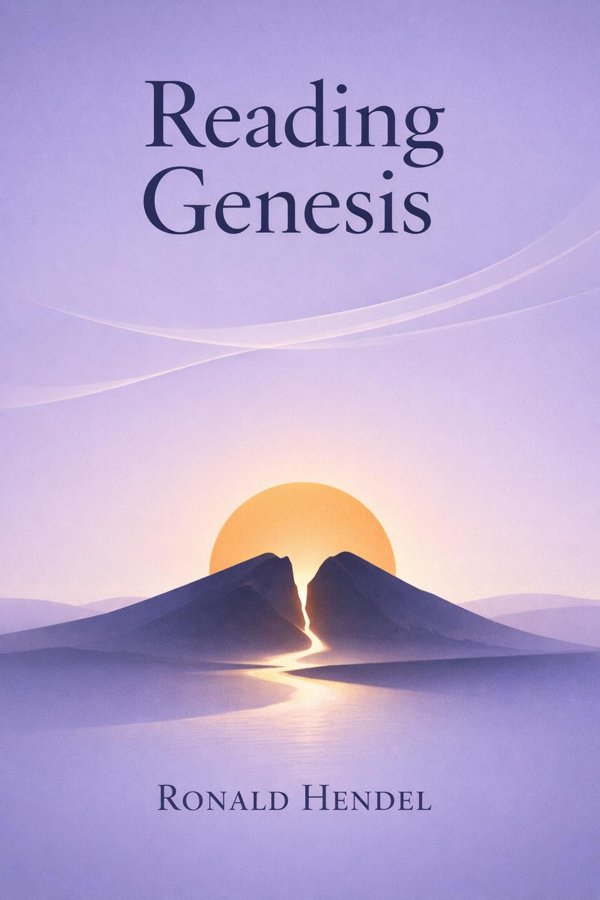
Reading Genesis: Summary & Key Insights
 10 min9 chaptersAudio available
What Is Reading Genesis About?
Reading Genesis by Ronald Hendel is a civilization book spanning 9 pages. Reading Genesis is a scholarly yet accessible exploration of the first book of the Hebrew Bible. Ronald Hendel examines Genesis as both a foundational religious text and a work of ancient literature, analyzing its narratives, themes, and theological implications. The book situates Genesis within its historical and cultural contexts, offering insights into its composition, interpretation, and enduring influence on Western thought.
This FizzRead summary covers all 9 key chapters of Reading Genesis in approximately 10 minutes, distilling the most important ideas, arguments, and takeaways from Ronald Hendel's work. Also available as an audio summary and Key Quotes Podcast.
Reading Genesis
Reading Genesis is a scholarly yet accessible exploration of the first book of the Hebrew Bible. Ronald Hendel examines Genesis as both a foundational religious text and a work of ancient literature, analyzing its narratives, themes, and theological implications. The book situates Genesis within its historical and cultural contexts, offering insights into its composition, interpretation, and enduring influence on Western thought.
Who Should Read Reading Genesis?
This book is perfect for anyone interested in civilization and looking to gain actionable insights in a short read. Whether you're a student, professional, or lifelong learner, the key ideas from Reading Genesis by Ronald Hendel will help you think differently.
- ✓Readers who enjoy civilization and want practical takeaways
- ✓Professionals looking to apply new ideas to their work and life
- ✓Anyone who wants the core insights of Reading Genesis in just 10 minutes
Want the full summary?
Get instant access to this book summary and 100K+ more with Fizz Moment.
Get Free SummaryAvailable on App Store • Free to download
Key Chapters
The first step in truly reading Genesis is to recognize that it is not a single seamless composition, but a woven text. Scholars refer to its sources as the Yahwist (J), the Elohist (E), the Priestly (P), and occasionally other fragmentary voices that contribute to the final form. Each source carries its own theology, style, and historical horizon. The Yahwist speaks in a vivid, earthy voice—God walks in gardens, forms humans from dust, and converses intimately with patriarchs. The Priestly writer, on the other hand, orchestrates creation through cosmic liturgy, crafting a careful seven-day order that reflects divine transcendence and ritual structure.
Understanding Genesis as composite does not diminish its significance; rather, it enriches it. The layering of sources mirrors the theological evolution of Israel—from story to law, from myth to memory. When the final editors brought these diverse traditions together, they were not simply compiling; they were creating a dialogue within the text. Thus, Genesis is not an ancient relic but a living argument about what it means to belong to God and to history.
This complexity asks us to read with sensitivity—to notice repetitions, contradictions, and stylistic shifts not as flaws but as signs of life. The editors who shaped Genesis were theologians in their own right, believing that divine truth could emerge from the interplay of differing human voices. In that sense, the composite nature of Genesis is its first theology: revelation does not silence diversity; it gathers it.
The opening chapters of Genesis—two distinct creation accounts—establish both the stage of the cosmos and the ethical drama of humanity. In Genesis 1, the Priestly creation, God speaks the world into being with measured rhythm and precision. Light separates darkness, waters are restrained, time is sanctified. The refrain, “And God saw that it was good,” resounds like a cosmic harmony. Here, creation is orderly, moral, and purposeful. God’s word is both power and principle.
Then the perspective shifts. Genesis 2 presents a very different world, intimate and tactile. God shapes humanity from clay, breathes into nostrils the breath of life, and plants a garden with trees both delightful and dangerous. In this earlier Yahwist account, God is anthropomorphic, experimental, even vulnerable. The creation of woman, the naming of animals, and the temptation to know—all infuse this story with psychological and moral nuance.
These two accounts are not competing scientific models but overlapping meditations on creation. Each reflects ancient Near Eastern patterns—the cosmic order resembling Babylonian Enuma Elish, the garden motif echoing Mesopotamian myths of sacred kingship—but they subvert those patterns by reimagining divine sovereignty without violence. In Genesis, creation is not born from divine conflict but divine speech and care.
To read these chapters together is to see the fullness of the biblical imagination: grandeur and intimacy, transcendence and nearness. Together, they pose the abiding question: What kind of world do we live in—one of imposed order or relational trust? Genesis answers, subtly, that we live in both.
+ 7 more chapters — available in the FizzRead app
All Chapters in Reading Genesis
About the Author
Ronald Hendel is a professor of Hebrew Bible and Jewish Studies at the University of California, Berkeley. His research focuses on the Hebrew Bible, ancient Near Eastern literature, and the history of biblical interpretation. He is known for his contributions to biblical scholarship and his ability to make complex topics accessible to a broad audience.
Get This Summary in Your Preferred Format
Read or listen to the Reading Genesis summary by Ronald Hendel anytime, anywhere. FizzRead offers multiple formats so you can learn on your terms — all free.
Available formats: App · Audio · PDF · EPUB — All included free with FizzRead
Download Reading Genesis PDF and EPUB Summary
Key Quotes from Reading Genesis
“The first step in truly reading Genesis is to recognize that it is not a single seamless composition, but a woven text.”
“The opening chapters of Genesis—two distinct creation accounts—establish both the stage of the cosmos and the ethical drama of humanity.”
Frequently Asked Questions about Reading Genesis
Reading Genesis by Ronald Hendel is a civilization book that explores key ideas across 9 chapters. Reading Genesis is a scholarly yet accessible exploration of the first book of the Hebrew Bible. Ronald Hendel examines Genesis as both a foundational religious text and a work of ancient literature, analyzing its narratives, themes, and theological implications. The book situates Genesis within its historical and cultural contexts, offering insights into its composition, interpretation, and enduring influence on Western thought.
You Might Also Like
The Structure of Scientific Revolutions
Thomas S. Kuhn
10 min
Genius
Harold Bloom
10 min
A Cultural History of the Medieval Age
Various Editors
10 min
A History of God: The 4,000-Year Quest of Judaism, Christianity and Islam
Karen Armstrong
10 min
A History of the World in 10½ Chapters
Julian Barnes
10 min
A Short History of Progress
Ronald Wright
10 minBrowse by Category
Ready to read Reading Genesis?
Get the full summary and 100K+ more books with Fizz Moment.