
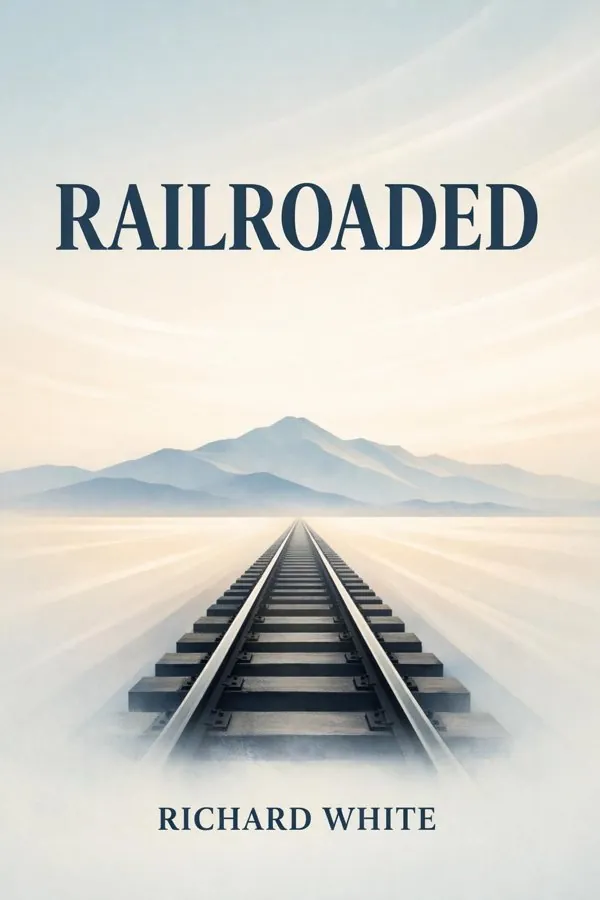
Railroaded: The Transcontinentals and the Making of Modern America: Summary & Key Insights
 10 min11 chaptersAudio available
What Is Railroaded: The Transcontinentals and the Making of Modern America About?
Railroaded: The Transcontinentals and the Making of Modern America by Richard White is a world_history book spanning 11 pages. Railroaded: The Transcontinentals and the Making of Modern America es un estudio histórico que examina cómo la construcción de los ferrocarriles transcontinentales en el siglo XIX transformó la economía, la política y la sociedad de los Estados Unidos. Richard White analiza las prácticas financieras, la corrupción y las consecuencias ambientales y sociales de la expansión ferroviaria, mostrando cómo estos proyectos moldearon el capitalismo moderno estadounidense.
This FizzRead summary covers all 11 key chapters of Railroaded: The Transcontinentals and the Making of Modern America in approximately 10 minutes, distilling the most important ideas, arguments, and takeaways from Richard White's work. Also available as an audio summary and Key Quotes Podcast.
Railroaded: The Transcontinentals and the Making of Modern America
Railroaded: The Transcontinentals and the Making of Modern America es un estudio histórico que examina cómo la construcción de los ferrocarriles transcontinentales en el siglo XIX transformó la economía, la política y la sociedad de los Estados Unidos. Richard White analiza las prácticas financieras, la corrupción y las consecuencias ambientales y sociales de la expansión ferroviaria, mostrando cómo estos proyectos moldearon el capitalismo moderno estadounidense.
Who Should Read Railroaded: The Transcontinentals and the Making of Modern America?
This book is perfect for anyone interested in world_history and looking to gain actionable insights in a short read. Whether you're a student, professional, or lifelong learner, the key ideas from Railroaded: The Transcontinentals and the Making of Modern America by Richard White will help you think differently.
- ✓Readers who enjoy world_history and want practical takeaways
- ✓Professionals looking to apply new ideas to their work and life
- ✓Anyone who wants the core insights of Railroaded: The Transcontinentals and the Making of Modern America in just 10 minutes
Want the full summary?
Get instant access to this book summary and 100K+ more with Fizz Moment.
Get Free SummaryAvailable on App Store • Free to download
Key Chapters
When Congress first authorized the transcontinental railroads, it did so under the guise of national necessity. After the Civil War, the Republic wanted unity, economic growth, and a new sense of purpose. To achieve that, lawmakers promised unprecedented federal support: millions of acres of public land and tens of millions of dollars in government bonds. The expectation was that private enterprise would efficiently complete what the state could not afford to build itself. Yet what emerged was a deeply flawed partnership. The subsidy system rewarded completion, not quality; speculation, not prudence. It produced more paper wealth than real infrastructure.
From my perspective as a historian, the railroads’ subsidies encapsulate a fundamental problem of American capitalism: the confusion between public benefit and private opportunity. Politicians saw the railroads as progress incarnate. Promoters saw them as instruments for transforming federal generosity into private fortune. Their logic was simple: build fast, borrow more, sell stock, and move on before the truth about solvency caught up. Land grants were secured through intricate lobbying networks that blurred the line between economic development and legalized bribery. Vast tracts of land, promised to settlers and Native peoples alike, ended up as speculative chips traded in New York and San Francisco.
The result was a boomtown form of development on a continental scale. The railroads did knit the nation together, but at a staggering social and fiscal cost. Rather than minimizing government involvement, the transcontinentals demonstrated how indispensable the state could be in underwriting private success—and how easily such partnerships produced waste and fraud. This system of subsidies did not merely finance steel rails; it built the template for corporate welfare and bureaucratic complexity that remains with us.
The public remembers names like Leland Stanford, Collis P. Huntington, and Jay Gould as titans of industry, but their genius was not engineering—it was manipulation. They were masters of the emerging art of corporate capitalism in its most speculative form. These men learned to live between two worlds: the political and the financial. To legislators, they were the avatars of progress; to Wall Street, they were magicians of capitalization. They built reputations less from trains that ran on time than from bonds that sold quickly.
Take Huntington, for instance. He haunted Washington’s corridors like a permanent lobbyist in all but title, purchasing influence with the patience of a chess player. His correspondence reveals a tone both pragmatic and cynical: bribes recast as ‘expenses,’ favors as ‘policy.’ Stanford cultivated California’s political machinery to protect the Central Pacific’s interests, merging business and public office with startling comfort. Jay Gould, perhaps the most notorious, turned the stock ticker itself into a weapon, manipulating railway shares with breathtaking audacity. It is difficult to overstate how new all of this was at the time. America was learning—painfully—how to operate a capitalist economy on a national scale.
From their perspective, these men did not see themselves as villains. They believed they were acting within the logic of the game, one written by a nation hungry for expansion yet naïve about the costs of its own ambition. They lived by a speculative ethic: to imagine, to borrow, to build, and—if necessary—to collapse before the bills came due. In that sense, the transcontinental promoters were less outliers than prototypes for a larger system that would define American modernity.
+ 9 more chapters — available in the FizzRead app
All Chapters in Railroaded: The Transcontinentals and the Making of Modern America
About the Author
Richard White es un historiador estadounidense especializado en historia del Oeste americano, historia ambiental y desarrollo del capitalismo en los Estados Unidos. Es profesor emérito en la Universidad de Stanford y miembro de la American Academy of Arts and Sciences.
Get This Summary in Your Preferred Format
Read or listen to the Railroaded: The Transcontinentals and the Making of Modern America summary by Richard White anytime, anywhere. FizzRead offers multiple formats so you can learn on your terms — all free.
Available formats: App · Audio · PDF · EPUB — All included free with FizzRead
Download Railroaded: The Transcontinentals and the Making of Modern America PDF and EPUB Summary
Key Quotes from Railroaded: The Transcontinentals and the Making of Modern America
“When Congress first authorized the transcontinental railroads, it did so under the guise of national necessity.”
“The public remembers names like Leland Stanford, Collis P.”
Frequently Asked Questions about Railroaded: The Transcontinentals and the Making of Modern America
Railroaded: The Transcontinentals and the Making of Modern America by Richard White is a world_history book that explores key ideas across 11 chapters. Railroaded: The Transcontinentals and the Making of Modern America es un estudio histórico que examina cómo la construcción de los ferrocarriles transcontinentales en el siglo XIX transformó la economía, la política y la sociedad de los Estados Unidos. Richard White analiza las prácticas financieras, la corrupción y las consecuencias ambientales y sociales de la expansión ferroviaria, mostrando cómo estos proyectos moldearon el capitalismo moderno estadounidense.
You Might Also Like
The Age of Capital
Eric Hobsbawm
10 min
The Gulag Archipelago
Aleksandr Solzhenitsyn
10 min
Jerusalem: The Biography
Simon Sebag Montefiore
10 min
The Anglo-Saxons
James Campbell
10 min
The Boer War
Thomas Pakenham
10 min
The Industrial Revolutionaries: The Making of the Modern World 1776–1914
Gavin Weightman
10 minBrowse by Category
Ready to read Railroaded: The Transcontinentals and the Making of Modern America?
Get the full summary and 100K+ more books with Fizz Moment.