
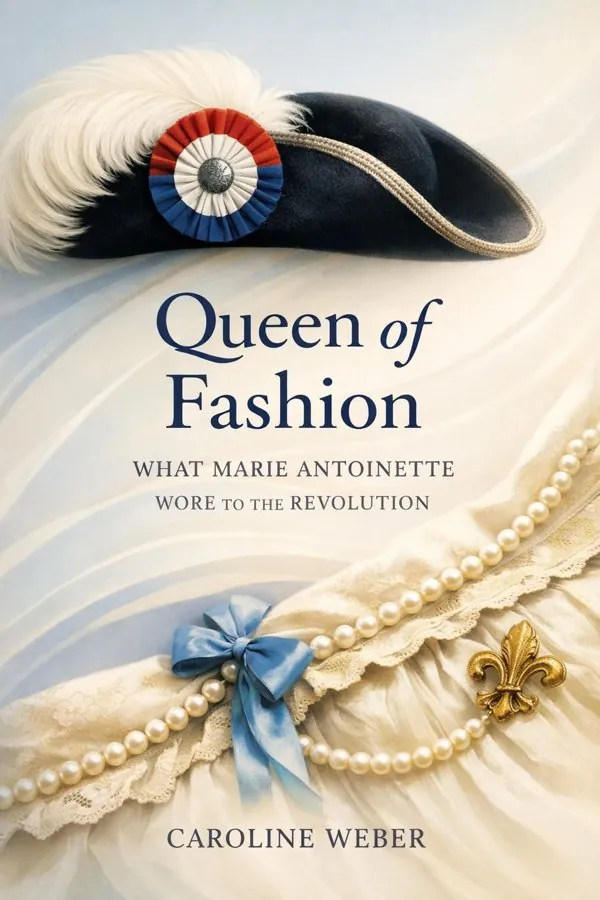
Queen of Fashion: What Marie Antoinette Wore to the Revolution: Summary & Key Insights
 10 min8 chaptersAudio available
What Is Queen of Fashion: What Marie Antoinette Wore to the Revolution About?
Queen of Fashion: What Marie Antoinette Wore to the Revolution by Caroline Weber is a biographies book spanning 8 pages. Este libro examina la vida de Marie Antoinette a través de su vestimenta, mostrando cómo la reina utilizó la moda como una forma de expresión política y personal en medio de la Revolución Francesa. Caroline Weber combina historia cultural y análisis de moda para revelar cómo los atuendos de la reina se convirtieron en símbolos de poder, resistencia y escándalo.
This FizzRead summary covers all 8 key chapters of Queen of Fashion: What Marie Antoinette Wore to the Revolution in approximately 10 minutes, distilling the most important ideas, arguments, and takeaways from Caroline Weber's work. Also available as an audio summary and Key Quotes Podcast.
Queen of Fashion: What Marie Antoinette Wore to the Revolution
Este libro examina la vida de Marie Antoinette a través de su vestimenta, mostrando cómo la reina utilizó la moda como una forma de expresión política y personal en medio de la Revolución Francesa. Caroline Weber combina historia cultural y análisis de moda para revelar cómo los atuendos de la reina se convirtieron en símbolos de poder, resistencia y escándalo.
Who Should Read Queen of Fashion: What Marie Antoinette Wore to the Revolution?
This book is perfect for anyone interested in biographies and looking to gain actionable insights in a short read. Whether you're a student, professional, or lifelong learner, the key ideas from Queen of Fashion: What Marie Antoinette Wore to the Revolution by Caroline Weber will help you think differently.
- ✓Readers who enjoy biographies and want practical takeaways
- ✓Professionals looking to apply new ideas to their work and life
- ✓Anyone who wants the core insights of Queen of Fashion: What Marie Antoinette Wore to the Revolution in just 10 minutes
Want the full summary?
Get instant access to this book summary and 100K+ more with Fizz Moment.
Get Free SummaryAvailable on App Store • Free to download
Key Chapters
Marie Antoinette’s arrival in France was a breathtaking theatrical moment, orchestrated with all the pomp and scrutiny that the Bourbon monarchy could muster. A young girl of fourteen, she crossed into a world built entirely on appearances. Versailles was not merely a palace—it was a stage where every gesture and every garment reflected one’s place in the political order. Upon crossing the border, she was literally stripped of her Austrian clothing and redressed in French attire, symbolically reborn as the Dauphine of France. This first transformation was more than ceremonial—it declared that identity could be refashioned, quite literally, through what one wore.
Yet the discipline of Versailles was relentless. The court’s codes dictated everything from the height of a heel to the angle of a bow. Each morning, the young Dauphine became a spectacle of protocol: dressing in public under the gaze of courtiers who ranked themselves by the order in which they handed her garments. The gown was not personal comfort; it was public armor. Under this pressure, Antoinette learned that fashion was power—but power appropriated and controlled by others. Her appearance was instrumentalized to reinforce the monarchy’s ideals of grace and obedience.
Her initial frustration with these rigid customs marked the beginning of her lifelong tension with the system of appearances. In those early years, the seam between conformity and rebellion began to show. While outwardly she complied, inwardly she sensed the possibility that clothing could also be a form of resistance—a way of redefining her own image within the limited space afforded to her as a royal woman.
As Marie Antoinette matured, she began to experiment, cautiously but decisively, with the strict costume codes that had confined her. Her early years as Dauphine were a period of subtle rebellion, one that unfolded through silk and lace rather than slogans. She surrounded herself with new designers, notably the audacious Rose Bertin, known in Parisian circles as the 'minister of fashion.' Together they began to craft an image that spoke of youth, modernity, and autonomy. In these experiments, Antoinette discovered that fashion could carve out a private sphere even within the public theater of court life.
She replaced the traditional stiff corseted gowns of Versailles with softer lines and lighter textures, borrowing from the simplicity and movement of contemporary styles rather than the cumbersome grandeur of former queens. These changes stirred both admiration and backlash. Older courtiers regarded her innovations as indecent; younger women saw them as liberation. Through the language of fabric and form, she asserted a new femininity—one less about duty, more about personality.
Her choices were not arbitrary aesthetic whims. They reflected a deeper urge to separate herself from the suffocating political symbolism of court attire. The Dauphine’s wardrobe became a reflection of her emotional landscape—a dialogue between self-expression and the constraints of monarchy. Each alteration of silhouette marked a gesture toward independence, each accessory a quiet statement that she was more than the role she had been given.
+ 6 more chapters — available in the FizzRead app
All Chapters in Queen of Fashion: What Marie Antoinette Wore to the Revolution
About the Author
Caroline Weber es profesora de literatura francesa en Barnard College, Columbia University. Es especialista en la cultura y política del siglo XVIII francés y autora de varios estudios sobre la monarquía y la moda en la Francia prerrevolucionaria.
Get This Summary in Your Preferred Format
Read or listen to the Queen of Fashion: What Marie Antoinette Wore to the Revolution summary by Caroline Weber anytime, anywhere. FizzRead offers multiple formats so you can learn on your terms — all free.
Available formats: App · Audio · PDF · EPUB — All included free with FizzRead
Download Queen of Fashion: What Marie Antoinette Wore to the Revolution PDF and EPUB Summary
Key Quotes from Queen of Fashion: What Marie Antoinette Wore to the Revolution
“Marie Antoinette’s arrival in France was a breathtaking theatrical moment, orchestrated with all the pomp and scrutiny that the Bourbon monarchy could muster.”
“As Marie Antoinette matured, she began to experiment, cautiously but decisively, with the strict costume codes that had confined her.”
Frequently Asked Questions about Queen of Fashion: What Marie Antoinette Wore to the Revolution
Queen of Fashion: What Marie Antoinette Wore to the Revolution by Caroline Weber is a biographies book that explores key ideas across 8 chapters. Este libro examina la vida de Marie Antoinette a través de su vestimenta, mostrando cómo la reina utilizó la moda como una forma de expresión política y personal en medio de la Revolución Francesa. Caroline Weber combina historia cultural y análisis de moda para revelar cómo los atuendos de la reina se convirtieron en símbolos de poder, resistencia y escándalo.
You Might Also Like

An American Marriage
Tayari Jones
10 min
Benjamin Franklin: An American Life
Walter Isaacson
10 min
I Know Why The Caged Bird Sings
Maya Angelou
10 min
Long Walk to Freedom
Nelson Mandela
10 min
Persepolis
Marjane Satrapi
10 min
Surely You're Joking, Mr. Feynman!
Richard P. Feynman
10 minBrowse by Category
Ready to read Queen of Fashion: What Marie Antoinette Wore to the Revolution?
Get the full summary and 100K+ more books with Fizz Moment.