
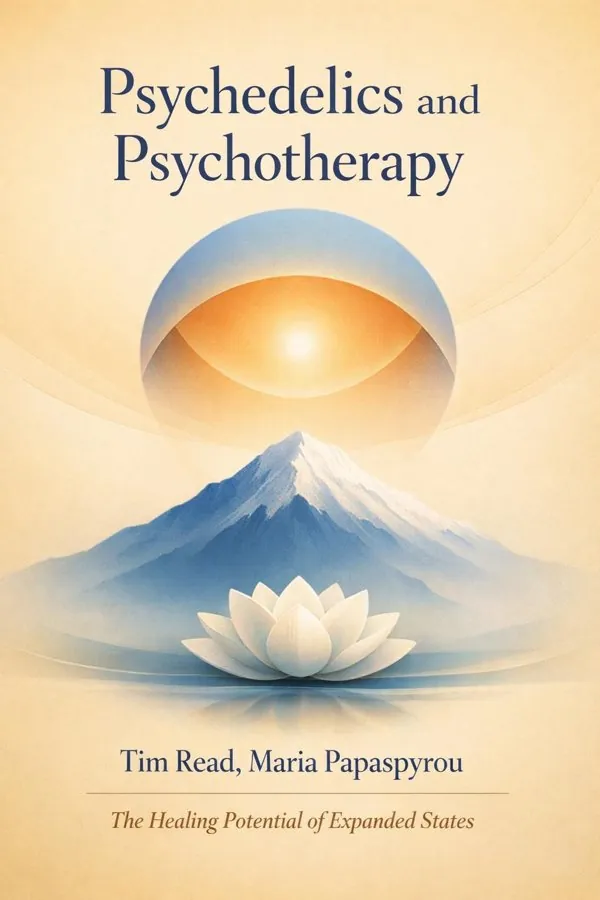
Psychedelics and Psychotherapy: The Healing Potential of Expanded States: Summary & Key Insights
 10 min6 chaptersAudio available
What Is Psychedelics and Psychotherapy: The Healing Potential of Expanded States About?
Psychedelics and Psychotherapy: The Healing Potential of Expanded States by Tim Read, Maria Papaspyrou is a mental_health book spanning 6 pages. This book explores the therapeutic potential of expanded states of consciousness and the role of psychedelic substances in modern psychotherapy. Through contributions from clinical and theoretical experts, it offers a comprehensive view of how psychedelics can facilitate healing, personal transformation, and spiritual growth, integrating scientific, psychological, and spiritual perspectives.
This FizzRead summary covers all 6 key chapters of Psychedelics and Psychotherapy: The Healing Potential of Expanded States in approximately 10 minutes, distilling the most important ideas, arguments, and takeaways from Tim Read, Maria Papaspyrou's work. Also available as an audio summary and Key Quotes Podcast.
Psychedelics and Psychotherapy: The Healing Potential of Expanded States
This book explores the therapeutic potential of expanded states of consciousness and the role of psychedelic substances in modern psychotherapy. Through contributions from clinical and theoretical experts, it offers a comprehensive view of how psychedelics can facilitate healing, personal transformation, and spiritual growth, integrating scientific, psychological, and spiritual perspectives.
Who Should Read Psychedelics and Psychotherapy: The Healing Potential of Expanded States?
This book is perfect for anyone interested in mental_health and looking to gain actionable insights in a short read. Whether you're a student, professional, or lifelong learner, the key ideas from Psychedelics and Psychotherapy: The Healing Potential of Expanded States by Tim Read, Maria Papaspyrou will help you think differently.
- ✓Readers who enjoy mental_health and want practical takeaways
- ✓Professionals looking to apply new ideas to their work and life
- ✓Anyone who wants the core insights of Psychedelics and Psychotherapy: The Healing Potential of Expanded States in just 10 minutes
Want the full summary?
Get instant access to this book summary and 100K+ more with Fizz Moment.
Get Free SummaryAvailable on App Store • Free to download
Key Chapters
From my perspective as both a psychiatrist and psychotherapist, I have learned that healing cannot be confined to the realm of words or behavioral correction alone. Deep suffering—especially trauma, depression, or existential disconnection—often resides beyond what linear consciousness can reach. Psychedelics open doors to what we call expanded states of consciousness, where the mind transcends its habitual boundaries. These states, when guided and supported, allow access to the body’s memory, to archetypal imagery, and to profound emotional truths that lie beneath everyday awareness.
We begin the book by redefining ‘expanded states.’ These are not simply heightened sensory experiences or hallucinations; they are shifts in consciousness where the boundaries of the self soften, allowing the individual to encounter aspects of psyche and reality from a profoundly integrative viewpoint. For the therapeutic process, this means a person can safely re-encounter trauma, reframe their life narrative, and experience what we might call a restoration of presence. In many ways, psychedelics create a temporary window through which the individual glimpses healing possibilities that traditional talk therapy takes years to reach.
This does not mean that psychedelics provide answers by themselves. The psyche’s expansion must be met with containment—a safe, ethically grounded therapeutic relationship that can hold the experience’s intensity. The expanded state is only the beginning; its integration into daily life is what allows real transformation. This is the reason our work insists on psychotherapy as the sacred container within which these experiences become meaningful rather than chaotic. The therapist’s task is not to interpret or control, but to witness, guide, and help the patient anchor insight into embodied living.
When we look back across human history, psychedelic use is anything but novel. Indigenous cultures have long recognized that certain plants—psilocybin mushrooms, ayahuasca, peyote—can catalyze visions that heal. These were not casual encounters; they were ceremonies of initiation, reconciliation, and renewal. By acknowledging this lineage, we honor the ancient roots of what modern psychotherapy is now rediscovering: that mystical experience has therapeutic potential.
In the mid-twentieth century, Western psychiatry began to explore these substances scientifically. Figures like Humphry Osmond, Stanislav Grof, and Albert Hofmann carried the torch for serious research into LSD and psilocybin-assisted therapy. Studies showed remarkable healing effects on alcoholism, depression, and end-of-life anxiety. But then came the cultural backlash, political fear, and prohibition—a widespread retreat into silence. Only now, through rigorous modern studies at institutions like Johns Hopkins and Imperial College, are we witnessing the renaissance of psychedelic-assisted therapy. We treat this revival not as a trend but as a return—a reclaiming of tools that, if used ethically and with humility, can restore dimensions of healing long missing from psychiatry.
In writing about this, Maria and I wanted to ensure readers understand that the modern use of psychedelics for therapy is not about copying ancient rituals or romanticizing them, but about integrating their core wisdom—respect, intention, and community—with contemporary psychotherapeutic models.
+ 4 more chapters — available in the FizzRead app
All Chapters in Psychedelics and Psychotherapy: The Healing Potential of Expanded States
About the Authors
Tim Read is a psychiatrist and psychotherapist with experience in emergency medicine and transpersonal psychiatry. Maria Papaspyrou is an integrative psychotherapist and co-founder of the Institute of Psychedelic Therapy in the United Kingdom. Both are leading figures in the field of psychedelic-assisted psychotherapy.
Get This Summary in Your Preferred Format
Read or listen to the Psychedelics and Psychotherapy: The Healing Potential of Expanded States summary by Tim Read, Maria Papaspyrou anytime, anywhere. FizzRead offers multiple formats so you can learn on your terms — all free.
Available formats: App · Audio · PDF · EPUB — All included free with FizzRead
Download Psychedelics and Psychotherapy: The Healing Potential of Expanded States PDF and EPUB Summary
Key Quotes from Psychedelics and Psychotherapy: The Healing Potential of Expanded States
“From my perspective as both a psychiatrist and psychotherapist, I have learned that healing cannot be confined to the realm of words or behavioral correction alone.”
“When we look back across human history, psychedelic use is anything but novel.”
Frequently Asked Questions about Psychedelics and Psychotherapy: The Healing Potential of Expanded States
Psychedelics and Psychotherapy: The Healing Potential of Expanded States by Tim Read, Maria Papaspyrou is a mental_health book that explores key ideas across 6 chapters. This book explores the therapeutic potential of expanded states of consciousness and the role of psychedelic substances in modern psychotherapy. Through contributions from clinical and theoretical experts, it offers a comprehensive view of how psychedelics can facilitate healing, personal transformation, and spiritual growth, integrating scientific, psychological, and spiritual perspectives.
You Might Also Like

Big Feelings: How to Be Okay When Things Are Not Okay
Liz Fosslien, Mollie West Duffy
10 min
Creative Arts Therapies Handbook: Art, Music and Dance Therapy Practices for Wellbeing
Susan I. Buchalter
10 min
Emotional First Aid: Healing Rejection, Guilt, Failure, and Other Everyday Hurts
Guy Winch
10 min
Lost Connections: Why You're Depressed and How to Find Hope
Johann Hari
10 min
No Time to Panic: How to Stop Worrying and Embrace Life
Matt Gutman
10 min
Overcoming Mobbing: A Recovery Guide for Workplace Aggression and Bullying
Maureen Duffy, Len Sperry
10 minBrowse by Category
Ready to read Psychedelics and Psychotherapy: The Healing Potential of Expanded States?
Get the full summary and 100K+ more books with Fizz Moment.