
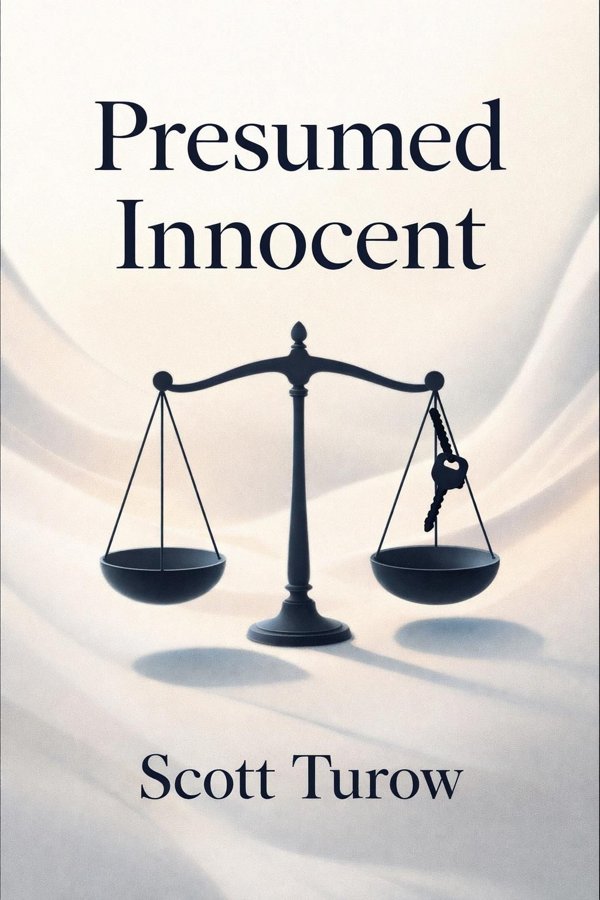
Presumed Innocent: Summary & Key Insights
by Scott Turow
 10 min3 chaptersAudio available
What Is Presumed Innocent About?
Presumed Innocent by Scott Turow is a law_crime book spanning 3 pages. A gripping legal thriller that follows prosecutor Rusty Sabich as he investigates the murder of a colleague, only to find himself accused of the crime. The novel explores themes of justice, guilt, and moral ambiguity within the American legal system.
This FizzRead summary covers all 3 key chapters of Presumed Innocent in approximately 10 minutes, distilling the most important ideas, arguments, and takeaways from Scott Turow's work. Also available as an audio summary and Key Quotes Podcast.
Presumed Innocent
A gripping legal thriller that follows prosecutor Rusty Sabich as he investigates the murder of a colleague, only to find himself accused of the crime. The novel explores themes of justice, guilt, and moral ambiguity within the American legal system.
Who Should Read Presumed Innocent?
This book is perfect for anyone interested in law_crime and looking to gain actionable insights in a short read. Whether you're a student, professional, or lifelong learner, the key ideas from Presumed Innocent by Scott Turow will help you think differently.
- ✓Readers who enjoy law_crime and want practical takeaways
- ✓Professionals looking to apply new ideas to their work and life
- ✓Anyone who wants the core insights of Presumed Innocent in just 10 minutes
Want the full summary?
Get instant access to this book summary and 100K+ more with Fizz Moment.
Get Free SummaryAvailable on App Store • Free to download
Key Chapters
When the courtroom proceedings begin, the perspective narrows to the claustrophobic intensity of trial life. Rusty, once equipped with the poise of a prosecutor, is now stripped bare as a defendant. His attorney, Sandy Stern, becomes a kind of philosopher of the courtroom—a man who understands that trials are not about discovering truth but about managing its representations. Every objection, every procedural challenge, every cross-examination is a struggle over the perception of what might be true.
In constructing Rusty’s defense, Stern’s mastery lies not in disproving every fact but in illuminating the biases and frailties embedded in the prosecution’s case. He portrays investigators as fallible, forensic evidence as tainted by human interpretation, and the entire apparatus of justice as capable of deception. The courtroom scenes vibrate with tension because their power lies not in spectacle but in their realism—the slow choreography of persuasion and doubt.
Meanwhile, Rusty’s personal life mirrors the trial’s emotional stakes. His wife Barbara, deeply wounded by his affair, vacillates between anger and stoic support. Their fractured marriage becomes one of the novel’s emotional anchor points. Turow uses her silence as both a moral echo and a warning: that betrayal, even when buried, continues to dictate the terms of justice in ways unseen. Every exchange between them drips with unspoken guilt. Rusty’s son, Danny, reflects the innocence long lost, a poignant reminder of what stands to be destroyed when the truth is exposed.
As the trial unfolds, the reader watches the delicate dance between revelation and concealment. EVIDENCE, that sacred cornerstone of justice, becomes instead a weapon of perception. Turow demonstrates that the courtroom, for all its rules and rituals, often feels like a stage upon which human emotion performs in elaborate disguise. The moral ambiguity grows thicker, ensnaring not only Rusty but everyone around him. The prosecution’s zeal mirrors the defendant’s desperation. Both sides, in their fervor for victory, risk obscuring the truth altogether.
When the verdict arrives—Rusty is acquitted—it does not bring relief but a hollow silence. The law has spoken, but the question of innocence remains unresolved. Turow insists, through this ambiguity, that justice achieved through procedure may still fall far short of justice in essence.
+ 1 more chapters — available in the FizzRead app
All Chapters in Presumed Innocent
About the Author
Scott Turow is an American author and lawyer known for his legal thrillers. His debut novel, 'Presumed Innocent', became a bestseller and established him as a leading voice in the genre. Turow has also practiced law and written nonfiction about the legal profession.
Get This Summary in Your Preferred Format
Read or listen to the Presumed Innocent summary by Scott Turow anytime, anywhere. FizzRead offers multiple formats so you can learn on your terms — all free.
Available formats: App · Audio · PDF · EPUB — All included free with FizzRead
Download Presumed Innocent PDF and EPUB Summary
Key Quotes from Presumed Innocent
“Rusty Sabich begins his tale as if he were guiding us through familiar territory—a prosecutor handling another homicide, methodical and composed.”
“When the courtroom proceedings begin, the perspective narrows to the claustrophobic intensity of trial life.”
Frequently Asked Questions about Presumed Innocent
Presumed Innocent by Scott Turow is a law_crime book that explores key ideas across 3 chapters. A gripping legal thriller that follows prosecutor Rusty Sabich as he investigates the murder of a colleague, only to find himself accused of the crime. The novel explores themes of justice, guilt, and moral ambiguity within the American legal system.
More by Scott Turow
You Might Also Like
Abortion and the Law in America: Roe v. Wade to the Present
Mary Ziegler
10 min
Black Edge: Inside Information, Dirty Money, and the Quest to Bring Down the Most Wanted Man on Wall Street
Sheelah Kolhatkar
10 min
Blood Feud: The Man Who Blew the Whistle on One of the Deadliest Prescription Drugs Ever
Kathleen Sharp
10 min
Catch and Kill: Lies, Spies, and a Conspiracy to Protect Predators
Ronan Farrow
10 min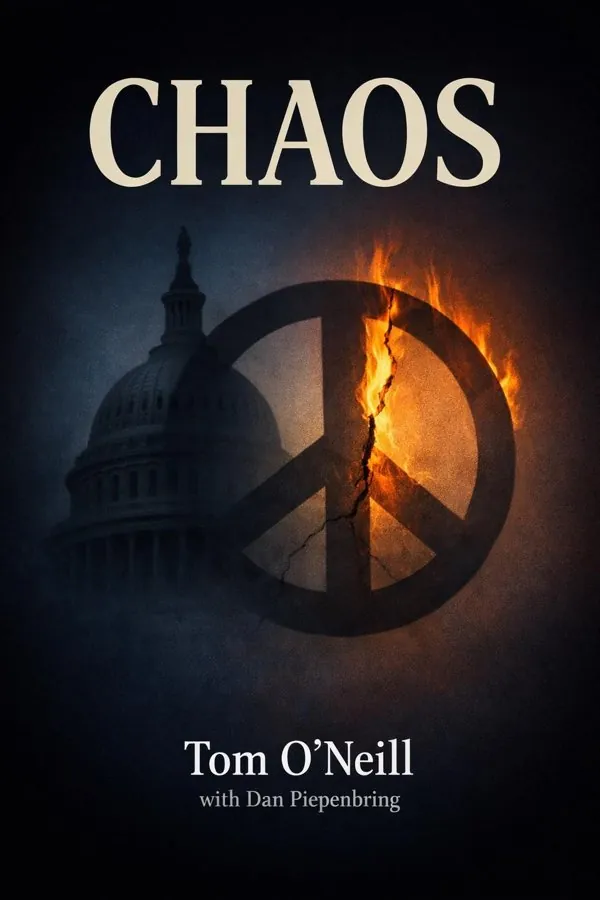
Chaos: Charles Manson, the CIA, and the Secret History of the Sixties
Tom O'Neill with Dan Piepenbring
10 min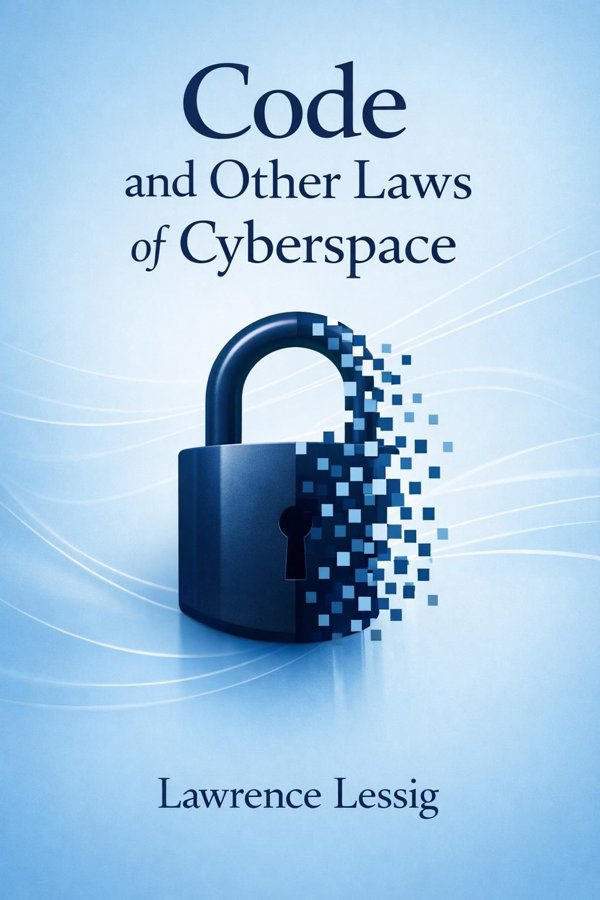
Code and Other Laws of Cyberspace
Lawrence Lessig
10 minBrowse by Category
Ready to read Presumed Innocent?
Get the full summary and 100K+ more books with Fizz Moment.