
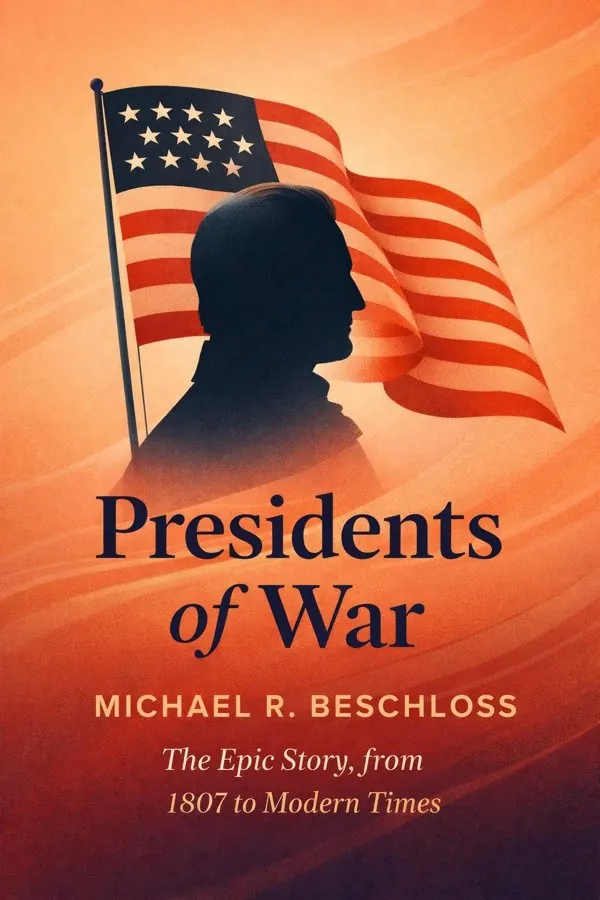
Presidents of War: The Epic Story, from 1807 to Modern Times: Summary & Key Insights
 10 min9 chaptersAudio available
What Is Presidents of War: The Epic Story, from 1807 to Modern Times About?
Presidents of War: The Epic Story, from 1807 to Modern Times by Michael R. Beschloss is a world_history book spanning 9 pages. A sweeping narrative history that explores how American presidents have led the nation into war, from James Madison and the War of 1812 through the conflicts of the 20th century. Beschloss examines the moral, political, and personal challenges faced by each leader, revealing how their decisions shaped both the presidency and the nation.
This FizzRead summary covers all 9 key chapters of Presidents of War: The Epic Story, from 1807 to Modern Times in approximately 10 minutes, distilling the most important ideas, arguments, and takeaways from Michael R. Beschloss's work. Also available as an audio summary and Key Quotes Podcast.
Presidents of War: The Epic Story, from 1807 to Modern Times
A sweeping narrative history that explores how American presidents have led the nation into war, from James Madison and the War of 1812 through the conflicts of the 20th century. Beschloss examines the moral, political, and personal challenges faced by each leader, revealing how their decisions shaped both the presidency and the nation.
Who Should Read Presidents of War: The Epic Story, from 1807 to Modern Times?
This book is perfect for anyone interested in world_history and looking to gain actionable insights in a short read. Whether you're a student, professional, or lifelong learner, the key ideas from Presidents of War: The Epic Story, from 1807 to Modern Times by Michael R. Beschloss will help you think differently.
- ✓Readers who enjoy world_history and want practical takeaways
- ✓Professionals looking to apply new ideas to their work and life
- ✓Anyone who wants the core insights of Presidents of War: The Epic Story, from 1807 to Modern Times in just 10 minutes
Want the full summary?
Get instant access to this book summary and 100K+ more with Fizz Moment.
Get Free SummaryAvailable on App Store • Free to download
Key Chapters
As I delved into James Madison’s presidency, I found a leader torn between philosophy and necessity. The War of 1812 was a conflict he did not seek but eventually could not avoid. Madison inherited a nation still in its infancy, deeply divided between Federalists and Republicans, and uncertain of its place among the powers of Europe. His greatest challenge was deciding whether the young republic could assert itself against British aggression without betraying its principles.
At heart, Madison was a man of words—a constitutional thinker, not a warrior. His temperament was cautious, almost professorial. Yet, the British blockade and the impressment of American sailors forced his hand. As Congress debated and the nation wavered, Madison’s reluctant march to war revealed the paradox of his presidency: the idealist compelled by circumstance to act decisively. The war exposed America’s military weakness and tested Madison’s courage as commander-in-chief. His political enemies mocked him, his own cabinet faltered, and the burning of Washington humiliated the government.
But Madison endured. His war forced the country to reconsider its independence—not just as a legal matter, but as a living identity. In surviving the trial, Madison laid the foundation for a more assertive America. He showed that the president could lead a republic into war even amid internal division, and that principle—when coupled with resolve—could withstand national trauma. His experience marked the beginning of a long pattern in presidential history: reluctant leaders transformed by the necessities of statecraft and conflict.
James K. Polk represented a different kind of wartime president—an expansionist driven by ambition rather than anxiety. Where Madison agonized, Polk calculated. He came to office determined to enlarge America’s borders, believing in Manifest Destiny as both divine mission and national strategy. His Mexican War was not born of immediate threat but of vision—a belief that continental greatness required decisive action.
Polk was meticulous, secretive, and politically disciplined. He used intelligence manipulation and public rhetoric to shape opinion, moving Congress toward war almost before the nation realized what was happening. As I studied this chapter of presidency, I saw how Polk’s success in achieving territorial gains—from Texas to California—came at the moral price of political manipulation. He demonstrated the power of executive persuasion and set a precedent for unilateral presidential war-making.
Behind his triumph, however, lay the seeds of future conflict. The Mexican War deepened divisions between North and South, inflamed debates over slavery, and tested the limits of democratic accountability. Polk’s mastery of political control expanded the power of the presidency but at the cost of transparency. His story reminds us that ambition can be as dangerous as indecision—that when presidents use war to fulfill grand visions, they reshape not only the map but the moral boundaries of leadership.
+ 7 more chapters — available in the FizzRead app
All Chapters in Presidents of War: The Epic Story, from 1807 to Modern Times
About the Author
Michael R. Beschloss is an American historian specializing in the U.S. presidency. He is the author of several acclaimed books on presidential history and a frequent commentator on political affairs. Beschloss is known for his deep research and accessible storytelling style.
Get This Summary in Your Preferred Format
Read or listen to the Presidents of War: The Epic Story, from 1807 to Modern Times summary by Michael R. Beschloss anytime, anywhere. FizzRead offers multiple formats so you can learn on your terms — all free.
Available formats: App · Audio · PDF · EPUB — All included free with FizzRead
Download Presidents of War: The Epic Story, from 1807 to Modern Times PDF and EPUB Summary
Key Quotes from Presidents of War: The Epic Story, from 1807 to Modern Times
“As I delved into James Madison’s presidency, I found a leader torn between philosophy and necessity.”
“Polk represented a different kind of wartime president—an expansionist driven by ambition rather than anxiety.”
Frequently Asked Questions about Presidents of War: The Epic Story, from 1807 to Modern Times
Presidents of War: The Epic Story, from 1807 to Modern Times by Michael R. Beschloss is a world_history book that explores key ideas across 9 chapters. A sweeping narrative history that explores how American presidents have led the nation into war, from James Madison and the War of 1812 through the conflicts of the 20th century. Beschloss examines the moral, political, and personal challenges faced by each leader, revealing how their decisions shaped both the presidency and the nation.
You Might Also Like
The Age of Capital
Eric Hobsbawm
10 min
The Gulag Archipelago
Aleksandr Solzhenitsyn
10 min
Jerusalem: The Biography
Simon Sebag Montefiore
10 min
The Anglo-Saxons
James Campbell
10 min
The Boer War
Thomas Pakenham
10 min
The Industrial Revolutionaries: The Making of the Modern World 1776–1914
Gavin Weightman
10 minBrowse by Category
Ready to read Presidents of War: The Epic Story, from 1807 to Modern Times?
Get the full summary and 100K+ more books with Fizz Moment.