
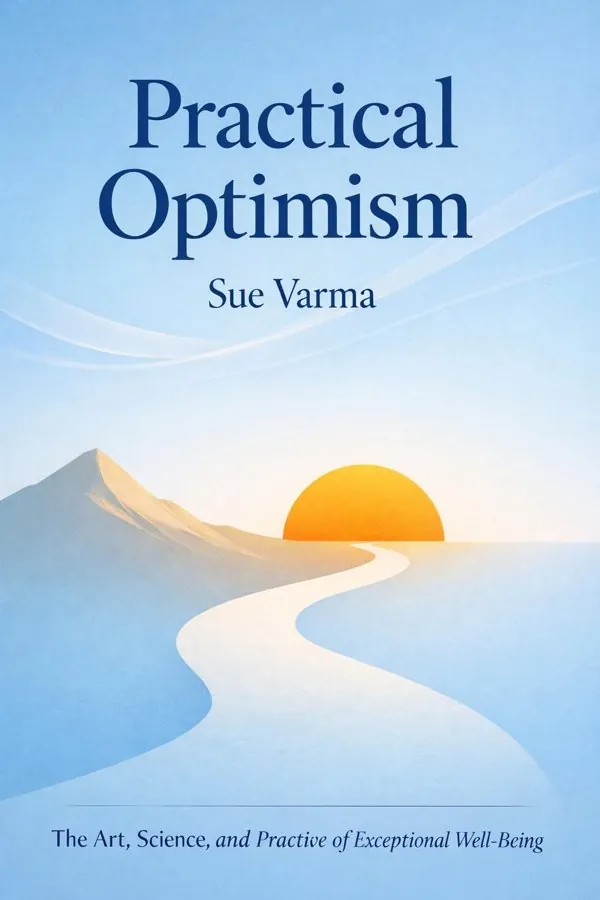
Practical Optimism: The Art, Science, and Practice of Exceptional Well-Being: Summary & Key Insights
by Sue Varma
 10 min4 chaptersAudio available
What Is Practical Optimism: The Art, Science, and Practice of Exceptional Well-Being About?
Practical Optimism: The Art, Science, and Practice of Exceptional Well-Being by Sue Varma is a positive_psych book spanning 4 pages. In 'Practical Optimism', psychiatrist Dr. Sue Varma presents a science-based approach to cultivating resilience and well-being. Drawing on her clinical experience and research in positive psychology, she outlines eight pillars of practical optimism that help individuals manage stress, overcome adversity, and build a more fulfilling life. The book combines actionable strategies with real-life stories to demonstrate how optimism can be learned and sustained even in challenging times.
This FizzRead summary covers all 4 key chapters of Practical Optimism: The Art, Science, and Practice of Exceptional Well-Being in approximately 10 minutes, distilling the most important ideas, arguments, and takeaways from Sue Varma's work. Also available as an audio summary and Key Quotes Podcast.
Practical Optimism: The Art, Science, and Practice of Exceptional Well-Being
In 'Practical Optimism', psychiatrist Dr. Sue Varma presents a science-based approach to cultivating resilience and well-being. Drawing on her clinical experience and research in positive psychology, she outlines eight pillars of practical optimism that help individuals manage stress, overcome adversity, and build a more fulfilling life. The book combines actionable strategies with real-life stories to demonstrate how optimism can be learned and sustained even in challenging times.
Who Should Read Practical Optimism: The Art, Science, and Practice of Exceptional Well-Being?
This book is perfect for anyone interested in positive_psych and looking to gain actionable insights in a short read. Whether you're a student, professional, or lifelong learner, the key ideas from Practical Optimism: The Art, Science, and Practice of Exceptional Well-Being by Sue Varma will help you think differently.
- ✓Readers who enjoy positive_psych and want practical takeaways
- ✓Professionals looking to apply new ideas to their work and life
- ✓Anyone who wants the core insights of Practical Optimism: The Art, Science, and Practice of Exceptional Well-Being in just 10 minutes
Want the full summary?
Get instant access to this book summary and 100K+ more with Fizz Moment.
Get Free SummaryAvailable on App Store • Free to download
Key Chapters
Practical optimism begins with understanding that optimism, contrary to popular belief, isn’t about toxic positivity or blind faith that everything will turn out fine. It’s the balanced belief that, while difficulties are inevitable, we retain agency—mental, emotional, and behavioral—to influence outcomes in a constructive direction. My work as a psychiatrist has shown me that sustained wellbeing doesn’t come from avoiding pain but from relating to it differently.
Neuroscience supports this. Our brains are wired with a negativity bias; we remember pain more vividly than pleasure because this once kept us safe from danger. Practical optimism retrains these biases, encouraging a mindset that notices good experiences with intention and reframes setbacks as opportunities for growth. This approach is both an attitude and a practice—rooted as much in gratitude and curiosity as in action.
When I treated patients who survived the 9/11 attacks, I witnessed resilience emerge from chaos. Those who coped most adaptively didn’t ignore their fears—they faced them while holding onto a sense of purpose, community, and even humor. Their optimism was not the denial of suffering but the courageous belief that healing was possible. From those experiences grew my conviction that optimism, when practiced wisely, is a tool for survival and flourishing alike.
Over the years, I distilled what helps people not only recover but thrive into eight essential pillars: self-awareness, emotional regulation, gratitude, meaning-making, connection, compassion, purpose, and self-care. They are interdependent, reinforcing one another in a cycle of growth.
The first pillar, self-awareness, invites us to observe our thoughts and emotions with honesty rather than judgment. It’s the moment we notice our inner critic or anxiety spiral and pause, asking: what story am I telling myself? With awareness, we gain choice. This leads to emotional regulation—the ability to manage strong feelings rather than be managed by them. Techniques like mindfulness, cognitive reframing, and grounding exercises help recalibrate our nervous system and bring a sense of control back into our internal world.
Gratitude and meaning-making follow as mindset anchors. Gratitude shifts attention from what’s missing to what’s working, nourishing resilience through appreciation. Meaning-making transforms adversity into insight. When life feels senseless, the act of finding ‘why this matters’ can steady us.
Social connection and compassion comprise the next pair of pillars, representing the community dimension of optimism. As humans, we heal in relationship; isolation erodes hope. Practicing empathy—toward others and ourselves—builds a buffer against despair.
The final pillars, purpose and self-care, ground optimism in daily life. Purpose gives direction; it is the long-term horizon toward which we move even when days feel heavy. Self-care provides the fuel—sleep, nutrition, nature, rest, and boundaries—to keep that movement possible. These aren’t luxuries but essentials for sustaining optimism under stress. Together, the eight pillars create a multidimensional framework for wellbeing—one that is realistic about hardship yet oriented toward growth.
+ 2 more chapters — available in the FizzRead app
All Chapters in Practical Optimism: The Art, Science, and Practice of Exceptional Well-Being
About the Author
Dr. Sue Varma is a board-certified psychiatrist, clinical assistant professor at NYU Langone Health, and a nationally recognized expert in mental health and well-being. She has served as the first medical director of the World Trade Center Mental Health Program and is a frequent media contributor on topics of resilience, stress, and emotional health.
Get This Summary in Your Preferred Format
Read or listen to the Practical Optimism: The Art, Science, and Practice of Exceptional Well-Being summary by Sue Varma anytime, anywhere. FizzRead offers multiple formats so you can learn on your terms — all free.
Available formats: App · Audio · PDF · EPUB — All included free with FizzRead
Download Practical Optimism: The Art, Science, and Practice of Exceptional Well-Being PDF and EPUB Summary
Key Quotes from Practical Optimism: The Art, Science, and Practice of Exceptional Well-Being
“Practical optimism begins with understanding that optimism, contrary to popular belief, isn’t about toxic positivity or blind faith that everything will turn out fine.”
“They are interdependent, reinforcing one another in a cycle of growth.”
Frequently Asked Questions about Practical Optimism: The Art, Science, and Practice of Exceptional Well-Being
Practical Optimism: The Art, Science, and Practice of Exceptional Well-Being by Sue Varma is a positive_psych book that explores key ideas across 4 chapters. In 'Practical Optimism', psychiatrist Dr. Sue Varma presents a science-based approach to cultivating resilience and well-being. Drawing on her clinical experience and research in positive psychology, she outlines eight pillars of practical optimism that help individuals manage stress, overcome adversity, and build a more fulfilling life. The book combines actionable strategies with real-life stories to demonstrate how optimism can be learned and sustained even in challenging times.
You Might Also Like
Don't Sweat the Small Stuff... and It's All Small Stuff
Richard Carlson
10 min
Option B
Sheryl Sandberg & Adam Grant
10 min
Hallelujah Anyway: Rediscovering Mercy
Anne Lamott
10 min
I Can Do It: How to Use Affirmations to Change Your Life
Louise Hay
10 min
The Coffee Bean: A Simple Lesson to Create Positive Change
Jon Gordon, Damon West
10 min
The Happiness Hypothesis: Finding Modern Truth in Ancient Wisdom
Jonathan Haidt
10 minBrowse by Category
Ready to read Practical Optimism: The Art, Science, and Practice of Exceptional Well-Being?
Get the full summary and 100K+ more books with Fizz Moment.