
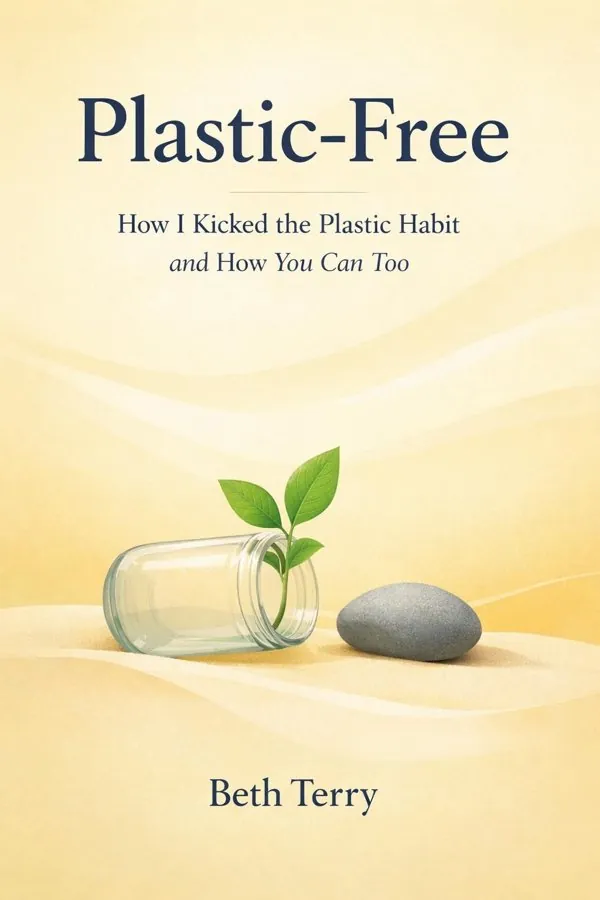
Plastic-Free: How I Kicked the Plastic Habit and How You Can Too: Summary & Key Insights
by Beth Terry
 10 min9 chaptersAudio available
Key Takeaways from Plastic-Free: How I Kicked the Plastic Habit and How You Can Too
Most lasting environmental change starts not with expertise, but with discomfort.
You cannot solve a problem you only understand in slogans.
What feels unavoidable is often just unexamined.
Buying a stainless-steel bottle is easy; redesigning your routines is the real work.
If you want to cut plastic fast, start where you eat.
What Is Plastic-Free: How I Kicked the Plastic Habit and How You Can Too About?
Plastic-Free: How I Kicked the Plastic Habit and How You Can Too by Beth Terry is a environment book spanning 11 pages. Plastic-Free is part memoir, part practical handbook, and part call to action. In this deeply personal and highly usable book, Beth Terry explains how a single disturbing image of plastic pollution pushed her to confront the role disposable plastics played in her own life. Instead of treating the issue as someone else’s responsibility, she began a years-long experiment in reducing her dependence on plastic—and documented what worked, what failed, and what changed her thinking. The result is a book that moves beyond guilt and into strategy. Terry shows readers how plastic enters nearly every corner of modern life, from food packaging and cleaning supplies to cosmetics, travel, and shopping habits. She also explains why reducing plastic matters not only for oceans and wildlife, but for human health, waste systems, and climate concerns. Her authority comes not from abstract theory but from lived practice: she tested alternatives, built new routines, researched materials, and connected personal choices to wider corporate and political systems. For anyone who feels overwhelmed by plastic’s ubiquity, this book offers both clarity and a realistic path forward.
This FizzRead summary covers all 9 key chapters of Plastic-Free: How I Kicked the Plastic Habit and How You Can Too in approximately 10 minutes, distilling the most important ideas, arguments, and takeaways from Beth Terry's work. Also available as an audio summary and Key Quotes Podcast.
Plastic-Free: How I Kicked the Plastic Habit and How You Can Too
Plastic-Free is part memoir, part practical handbook, and part call to action. In this deeply personal and highly usable book, Beth Terry explains how a single disturbing image of plastic pollution pushed her to confront the role disposable plastics played in her own life. Instead of treating the issue as someone else’s responsibility, she began a years-long experiment in reducing her dependence on plastic—and documented what worked, what failed, and what changed her thinking. The result is a book that moves beyond guilt and into strategy. Terry shows readers how plastic enters nearly every corner of modern life, from food packaging and cleaning supplies to cosmetics, travel, and shopping habits. She also explains why reducing plastic matters not only for oceans and wildlife, but for human health, waste systems, and climate concerns. Her authority comes not from abstract theory but from lived practice: she tested alternatives, built new routines, researched materials, and connected personal choices to wider corporate and political systems. For anyone who feels overwhelmed by plastic’s ubiquity, this book offers both clarity and a realistic path forward.
Who Should Read Plastic-Free: How I Kicked the Plastic Habit and How You Can Too?
This book is perfect for anyone interested in environment and looking to gain actionable insights in a short read. Whether you're a student, professional, or lifelong learner, the key ideas from Plastic-Free: How I Kicked the Plastic Habit and How You Can Too by Beth Terry will help you think differently.
- ✓Readers who enjoy environment and want practical takeaways
- ✓Professionals looking to apply new ideas to their work and life
- ✓Anyone who wants the core insights of Plastic-Free: How I Kicked the Plastic Habit and How You Can Too in just 10 minutes
Want the full summary?
Get instant access to this book summary and 100K+ more with Fizz Moment.
Get Free SummaryAvailable on App Store • Free to download
Key Chapters
Most lasting environmental change starts not with expertise, but with discomfort. Beth Terry did not begin her plastic-free journey as a policy expert, chemist, or sustainability professional. She began as an ordinary consumer who suddenly saw plastic not as convenience, but as a long-lived problem hidden inside everyday habits. That shift in perception matters because it reframes waste: the plastic fork used for five minutes may persist for centuries. Once that truth becomes emotionally real, avoidance is much harder.
Terry’s story shows that personal transformation often begins with a moral shock—a photograph, a documentary, a news story, or a realization about one’s own trash. But the book is careful not to romanticize this awakening. Once she decided to reduce plastic, she encountered confusion everywhere. Plastic was woven into groceries, toiletries, online orders, banking, electronics, and social expectations. She didn’t have a perfect plan. She started by paying attention.
That is one of the book’s most powerful lessons: awareness precedes action. Before changing systems, we must first see them. Terry began tracking what she threw away, noticing patterns and asking a simple question repeatedly: Do I really need this plastic, and if so, is there another option? This mindset transformed reduction from a vague ambition into a daily practice.
Readers can apply this by identifying the moment or reason they care, then turning that concern into observation rather than perfectionism. Keep a one-week record of the plastic you use. Notice the categories that repeat. Emotional motivation starts the journey, but attention gives it structure.
Actionable takeaway: Start with one week of honest observation and let your awareness—not guilt—guide your first changes.
You cannot solve a problem you only understand in slogans. One of Terry’s most useful contributions is showing that plastic is not a single uniform material. It is a family of substances with different chemical compositions, uses, recyclability levels, and health implications. The number stamped on the bottom of a container may look reassuring, but it tells a more complicated story than most consumers realize.
Some plastics are more commonly recycled, such as PET and HDPE, while others are rarely processed or may contain additives that raise concern. Terry encourages readers to move beyond the simplistic assumption that recyclable means benign. A plastic item may technically be recyclable yet still end up in landfill, incineration, export streams, or the environment. Even when recycled, many plastics are downcycled into lower-value products rather than endlessly remade into the same item.
Understanding these distinctions changes behavior. Instead of asking only, “Can I recycle this?” Terry asks, “Can I avoid needing it in the first place?” That leads to better decisions: choosing unpackaged produce over bagged salad, storing food in glass jars rather than disposable tubs, and being wary of “green” marketing that uses recyclability to mask overconsumption.
This chapter also has a health dimension. Plastic is often combined with stabilizers, colorants, and softeners, and while the book is practical rather than alarmist, it invites readers to think carefully about food contact, heating plastics, and repeated use of disposable items. Knowledge becomes a filter for better choices.
Actionable takeaway: Learn the most common plastic categories in your home and prioritize reducing the ones you use most often, especially disposable food and beverage packaging.
What feels unavoidable is often just unexamined. Terry emphasizes that before buying alternatives or making dramatic lifestyle changes, it helps to assess your actual plastic footprint. Many people imagine their biggest problem is shopping bags, only to discover that snack wrappers, takeout containers, frozen food packaging, or bathroom products dominate their waste stream. A personal waste audit turns guesswork into useful information.
Terry’s approach is practical: collect or record the plastic you discard over a set period, then sort it by category. Food packaging, beverage containers, cleaning products, personal care items, shipping materials, and miscellaneous household plastics often reveal obvious patterns. The point is not to shame yourself, but to identify your highest-impact opportunities. A household that drinks bottled water daily should start there. A household that buys most food prepackaged may find bulk shopping and meal planning more effective.
This method also prevents burnout. Instead of trying to eliminate every form of plastic at once, Terry shows readers how to focus on the categories where they have the most control. For example, replacing disposable shopping bags may be easy, but replacing weekly takeout habits may require new cooking routines, containers, and social coordination. The audit helps sequence change realistically.
A careful assessment can also uncover hidden plastic dependencies, such as produce stickers, prescription bottles, bread bags, tape, pet food packaging, and synthetic sponges. Once visible, these patterns become opportunities for substitution, reduction, or advocacy. Measurement creates momentum because progress can be seen.
Actionable takeaway: Do a seven-day plastic audit, group your waste into categories, and choose the top two sources as your first reduction targets.
Buying a stainless-steel bottle is easy; redesigning your routines is the real work. Terry makes an important distinction between swapping products and changing habits. Plastic reduction is not just about finding a metal, glass, wood, or cloth version of every disposable item. In many cases, the better solution is to avoid consumption patterns that create waste in the first place.
Still, alternatives do matter. Terry offers numerous examples: cloth shopping bags instead of plastic bags, reusable produce sacks, glass food containers, bar soap instead of bottled body wash, refillable pens, razors with replaceable blades, and durable dishware for meals on the go. These substitutions reduce recurring plastic use and often save money over time. But substitutes only work when they are integrated into real life. A reusable mug left at home does not reduce takeaway cup waste.
That is why Terry stresses systems: keep bags in the car or by the door, carry a kit with utensils and a container, store jars where they are easy to use, and build shopping routines around refill or bulk options. She also encourages flexibility. Sometimes a perfect alternative does not exist, or the sustainable option is too expensive or inaccessible. In those cases, reducing frequency, reusing what you already have, and avoiding unnecessary purchases may be more sensible than buying premium eco-products.
The deeper point is that anti-plastic living is not a shopping identity. It is a practice of intentional consumption. The goal is not to own the “right” reusables, but to create conditions in which waste becomes less automatic.
Actionable takeaway: Pick three reusable items you will actually use every week and design a routine so they are always available when needed.
If you want to cut plastic fast, start where you eat. Terry shows that kitchens generate a disproportionate share of household plastic waste because food systems are saturated with packaging. Grocery bags, produce bags, yogurt tubs, frozen meal trays, bread bags, cling film, beverage bottles, condiment containers, and snack wrappers pile up quickly. The kitchen is therefore both the biggest challenge and the richest opportunity.
Terry advocates a layered strategy. First, buy whole foods and ingredients rather than heavily processed products. A bag of dried beans in minimal packaging often replaces multiple packaged convenience meals. Second, seek out farmers’ markets, CSA programs, bakeries, butchers, and bulk bins where personal containers may be accepted. Third, cook more at home and plan meals in advance so convenience packaging becomes less necessary. Batch cooking, freezing in reusable containers, and carrying your own takeout container can all reduce waste.
She also addresses food storage. Instead of relying on zip bags and plastic wrap, Terry suggests jars, stainless-steel tins, cloth covers, beeswax-style wraps where appropriate, and durable containers that can be reused for years. Even small shifts—bringing your own coffee cup, storing leftovers in glass, buying loose produce—compound significantly.
The chapter is not naïve about barriers. Bulk sections may be inconsistent, local stores may resist outside containers, and some medical, allergy, or budget realities limit choices. Terry’s strength is realism: do what you can, where you can, and keep improving. Plastic reduction in the kitchen works best when linked to cooking skills, planning, and local sourcing.
Actionable takeaway: Identify the five food items you buy most often in plastic packaging and replace just two of them with lower-waste alternatives this month.
Some of the most unnecessary plastics in modern life hide behind the language of hygiene and convenience. Terry draws attention to bathrooms and cleaning cupboards, where plastic bottles, pumps, tubes, wipes, and disposable tools often multiply without much thought. Shampoo, conditioner, lotion, toothpaste, deodorant, detergent, spray cleaners, and scrubbers all tend to arrive in plastic, yet many have viable alternatives.
One of Terry’s recurring themes is simplification. Instead of managing dozens of specialized products, she encourages readers to ask what is truly essential. Bar soap can replace body wash. Shampoo bars or refill options can reduce bottles. Powdered detergents in cardboard, homemade cleaners using basic ingredients, and washable cloths instead of disposable wipes all cut waste while often lowering cost. Safety razors, reusable menstrual products, and refillable cosmetic containers are further examples of durable shifts.
This section also highlights the power of ingredient and packaging awareness. Many personal care products are marketed as self-care necessities, but Terry gently exposes how much of that demand is manufactured by advertising. Reducing plastic here often means reducing product complexity altogether.
That said, she does not prescribe a one-size-fits-all regimen. Skin conditions, accessibility needs, hygiene requirements, and household preferences vary. The point is to evaluate default consumption patterns, not to create purity rules. Try alternatives gradually and keep what truly works.
For many readers, bathroom and cleaning swaps are satisfying because the changes are visible and repeatable. Each bottle not purchased prevents future waste and reinforces a mindset of mindful maintenance rather than disposable convenience.
Actionable takeaway: Replace one bottled bathroom product and one disposable cleaning item with lower-waste versions you can sustain for at least 30 days.
A single household can reduce waste, but a connected community can change norms. Terry argues that personal responsibility matters most when it expands into shared action. After all, many plastic choices are constrained by what stores stock, what restaurants offer, and what municipalities collect. Individual consumers do not operate in isolation; they participate in systems that can be influenced.
The book encourages readers to move from private habit change to public engagement. That may mean talking with local grocers about bulk options, asking cafés to welcome reusable cups, supporting refill businesses, or starting neighborhood conversations about waste reduction. Terry’s own work demonstrates how blogging, sharing resources, and exchanging ideas with others helped transform a solitary experiment into a broader movement.
Community also provides resilience. When one person is trying to avoid plastic, the task can feel eccentric and exhausting. When many people share tips, suppliers, recipes, and encouragement, practical solutions multiply. A friend may know a local dairy that accepts glass bottles. A community group may lobby for a plastic bag ordinance. A school may switch event supplies once enough parents ask.
Importantly, Terry does not let corporations and governments off the hook. She frames consumer action not as a substitute for policy, but as a pressure mechanism. Organized demand can influence manufacturers, retailers, and lawmakers. Waste audits and personal stories become evidence in broader campaigns for extended producer responsibility, better packaging design, and restrictions on unnecessary disposables.
Actionable takeaway: Choose one local institution—a café, grocery store, school, or workplace—and make a specific request that would reduce plastic for more than just you.
Perfectionism is one of the most effective defenses of the status quo. Terry openly acknowledges the limits, contradictions, and frustrations of trying to live with less plastic in a world built around it. Medical products, electronics, safety requirements, transportation systems, and countless supply chains still depend on plastic. Even committed people will make compromises. The point of the book is not to become flawlessly plastic-free, but to reduce harm meaningfully and persistently.
This is a crucial message because environmental efforts often collapse under purity pressure. People either feel they must do everything or decide there is no point doing anything. Terry rejects that trap. She documents mistakes, backsliding, and inconvenient realities, while showing that partial success still matters. Refusing one bottle, one bag, or one package does not solve the crisis—but repeated millions of times, and paired with advocacy, those choices shift demand and consciousness.
The book also reminds readers that sustainability should not become an ego performance. Reusing an old plastic item you already own may be better than buying a trendy “eco” replacement. Budget limits, disability, caregiving burdens, and geography all shape what is possible. Compassion makes long-term change more durable than self-criticism.
In practice, this means celebrating reductions, learning from setbacks, and revising your systems over time. Maybe you cannot eliminate plastic from every category, but you can steadily shrink its role in your life. That approach is psychologically sustainable and politically useful, because it keeps more people engaged.
Actionable takeaway: Set a realistic reduction goal for one category this month, track improvement, and treat imperfections as information rather than failure.
All Chapters in Plastic-Free: How I Kicked the Plastic Habit and How You Can Too
About the Author
Beth Terry is an American environmental activist, writer, and leading voice in the movement to reduce plastic waste. She became widely known after launching her blog, My Plastic-Free Life, where she documented her effort to eliminate disposable plastic from her daily routines. What began as a personal challenge evolved into a broader educational project that inspired readers around the world to rethink convenience, packaging, and consumption. Terry’s work stands out for its combination of honesty, research, and practicality: she shares not only environmental concerns, but also the real-life trial and error involved in changing habits. Through her writing and advocacy, she has helped make plastic reduction feel accessible rather than overwhelming, while also highlighting the need for corporate responsibility and systemic change.
Get This Summary in Your Preferred Format
Read or listen to the Plastic-Free: How I Kicked the Plastic Habit and How You Can Too summary by Beth Terry anytime, anywhere. FizzRead offers multiple formats so you can learn on your terms — all free.
Available formats: App · Audio · PDF · EPUB — All included free with FizzRead
Download Plastic-Free: How I Kicked the Plastic Habit and How You Can Too PDF and EPUB Summary
Key Quotes from Plastic-Free: How I Kicked the Plastic Habit and How You Can Too
“Most lasting environmental change starts not with expertise, but with discomfort.”
“You cannot solve a problem you only understand in slogans.”
“What feels unavoidable is often just unexamined.”
“Buying a stainless-steel bottle is easy; redesigning your routines is the real work.”
“If you want to cut plastic fast, start where you eat.”
Frequently Asked Questions about Plastic-Free: How I Kicked the Plastic Habit and How You Can Too
Plastic-Free: How I Kicked the Plastic Habit and How You Can Too by Beth Terry is a environment book that explores key ideas across 9 chapters. Plastic-Free is part memoir, part practical handbook, and part call to action. In this deeply personal and highly usable book, Beth Terry explains how a single disturbing image of plastic pollution pushed her to confront the role disposable plastics played in her own life. Instead of treating the issue as someone else’s responsibility, she began a years-long experiment in reducing her dependence on plastic—and documented what worked, what failed, and what changed her thinking. The result is a book that moves beyond guilt and into strategy. Terry shows readers how plastic enters nearly every corner of modern life, from food packaging and cleaning supplies to cosmetics, travel, and shopping habits. She also explains why reducing plastic matters not only for oceans and wildlife, but for human health, waste systems, and climate concerns. Her authority comes not from abstract theory but from lived practice: she tested alternatives, built new routines, researched materials, and connected personal choices to wider corporate and political systems. For anyone who feels overwhelmed by plastic’s ubiquity, this book offers both clarity and a realistic path forward.
You Might Also Like

A Life on Our Planet: My Witness Statement and a Vision for the Future
David Attenborough
10 min
A Sky Full Of Birds
Matt Merritt
10 min
Carbon Zero: Imagining Cities That Can Save the Planet
Alex Steffen
10 min
Eaarth: Making a Life on a Tough New Planet
Bill McKibben
10 min
The Social Contract and Environmental Governance
Various Editors
10 min
The Wild Places
Robert Macfarlane
10 minBrowse by Category
Ready to read Plastic-Free: How I Kicked the Plastic Habit and How You Can Too?
Get the full summary and 100K+ more books with Fizz Moment.