
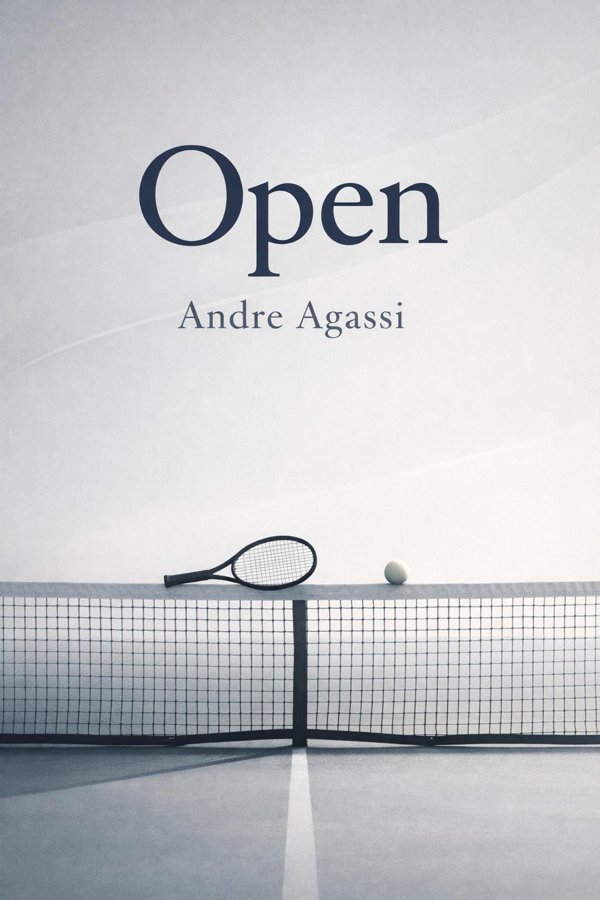
Open: An Autobiography: Summary & Key Insights
by Andre Agassi
 10 min8 chaptersAudio available
Key Takeaways from Open: An Autobiography
A child can inherit ambition long before he develops a voice of his own.
Institutions can polish talent while quietly deepening emotional wounds.
Public image can become a costume so convincing that even the person wearing it starts to disappear.
Victory is often imagined as the cure for suffering, but Agassi’s life shows that winning can be thrilling and strangely insufficient at the same time.
A life built on concealment eventually begins to crack.
What Is Open: An Autobiography About?
Open: An Autobiography by Andre Agassi is a biographies book spanning 7 pages. What makes Open unforgettable is not that it tells the story of a champion, but that it reveals the cost of becoming one. In this strikingly honest autobiography, Andre Agassi looks past the trophies, fame, and public image to show the inner life of a man who achieved greatness while feeling deeply conflicted about the sport that made him famous. From a childhood shaped by a demanding father and endless training to global celebrity, personal collapse, and eventual renewal, Agassi tells a story about pressure, identity, rebellion, and the search for meaning. The book matters because it overturns the usual mythology of sports success. Instead of presenting winning as a simple reward for hard work, Agassi shows how ambition can become a burden, how performance can hide pain, and how self-knowledge often arrives only after failure. His authority is unquestionable: Agassi is one of tennis’s all-time greats, a career Grand Slam winner and Olympic gold medalist. Yet his greatest strength as a writer is not prestige but candor. Open is compelling not just for tennis fans, but for anyone trying to understand how talent, expectation, and personal truth collide.
This FizzRead summary covers all 8 key chapters of Open: An Autobiography in approximately 10 minutes, distilling the most important ideas, arguments, and takeaways from Andre Agassi's work. Also available as an audio summary and Key Quotes Podcast.
Open: An Autobiography
What makes Open unforgettable is not that it tells the story of a champion, but that it reveals the cost of becoming one. In this strikingly honest autobiography, Andre Agassi looks past the trophies, fame, and public image to show the inner life of a man who achieved greatness while feeling deeply conflicted about the sport that made him famous. From a childhood shaped by a demanding father and endless training to global celebrity, personal collapse, and eventual renewal, Agassi tells a story about pressure, identity, rebellion, and the search for meaning.
The book matters because it overturns the usual mythology of sports success. Instead of presenting winning as a simple reward for hard work, Agassi shows how ambition can become a burden, how performance can hide pain, and how self-knowledge often arrives only after failure. His authority is unquestionable: Agassi is one of tennis’s all-time greats, a career Grand Slam winner and Olympic gold medalist. Yet his greatest strength as a writer is not prestige but candor. Open is compelling not just for tennis fans, but for anyone trying to understand how talent, expectation, and personal truth collide.
Who Should Read Open: An Autobiography?
This book is perfect for anyone interested in biographies and looking to gain actionable insights in a short read. Whether you're a student, professional, or lifelong learner, the key ideas from Open: An Autobiography by Andre Agassi will help you think differently.
- ✓Readers who enjoy biographies and want practical takeaways
- ✓Professionals looking to apply new ideas to their work and life
- ✓Anyone who wants the core insights of Open: An Autobiography in just 10 minutes
Want the full summary?
Get instant access to this book summary and 100K+ more with Fizz Moment.
Get Free SummaryAvailable on App Store • Free to download
Key Chapters
A child can inherit ambition long before he develops a voice of his own. Agassi’s story begins with his father, Mike Agassi, whose fierce, almost combustible determination shaped every part of his son’s early life. In Las Vegas, Andre grows up under a regime of constant drills, thousands of balls fired at him by a homemade machine his father calls “the dragon.” Tennis is not introduced as a game to enjoy but as a mission to complete. The message is clear: greatness is expected, and anything less feels like failure.
This early pressure creates both skill and damage. On one hand, repetition builds extraordinary reflexes, discipline, and competitive instincts. On the other, it disconnects Andre from choice. He becomes highly capable without becoming inwardly committed. That tension becomes one of the book’s central truths: excellence achieved without ownership can feel like imprisonment. Agassi learns to perform before he learns to understand himself, and that imbalance follows him for years.
This idea reaches far beyond tennis. Many people are shaped by parental expectations, cultural pressure, or early labels such as “gifted,” “promising,” or “special.” These forces can produce success, but they can also leave a person unsure whether the life they are living is truly theirs. The challenge is not simply to become good at something, but to separate your own desires from the ambitions others placed on you.
Actionable takeaway: Reflect on one major goal in your life and ask, “Did I choose this, or did I absorb it?” The answer can help you reclaim ownership of your path.
Institutions can polish talent while quietly deepening emotional wounds. When Agassi is sent to Nick Bollettieri’s tennis academy in Florida at age thirteen, he enters a world built to mass-produce champions. The academy is intense, competitive, and transactional. Potential is the currency, and childhood has little room to exist. For Andre, the academy brings opportunity, structure, and visibility, but it also amplifies his resentment. He is no longer just training hard; he is living inside a system that rewards winning above all else.
At Bollettieri’s academy, Agassi’s game sharpens quickly. His talent stands out, and the environment teaches him how professional sports operates: performance creates attention, attention creates status, and status can reshape your future. Yet he still feels alienated from the thing he excels at. The academy confirms that he is exceptional, but it does not answer the deeper question of whether he loves the life being built around him. That unresolved conflict becomes increasingly dangerous as success grows.
This chapter highlights a broader truth about elite systems, whether in sports, academics, or business. High-performance environments often develop competence brilliantly while neglecting emotional maturity, autonomy, and inner balance. People can emerge highly trained yet inwardly fractured. Agassi’s experience reminds us that talent development without personal grounding can create success that feels hollow.
In everyday life, this applies to workplaces, schools, and even family cultures. If the system around you values output but ignores well-being, you may advance while becoming less connected to yourself. Achievement and resentment can coexist.
Actionable takeaway: If you are in a high-pressure environment, identify one practice that belongs entirely to you, such as journaling, therapy, honest conversation, or time away from metrics. It helps preserve identity inside demanding systems.
Public image can become a costume so convincing that even the person wearing it starts to disappear. As Agassi rises in professional tennis, he becomes more than an athlete; he becomes a global celebrity. The long hair, bright clothes, rebellious attitude, and commercial appeal make him a star who stands apart from tennis tradition. To the public, he is charismatic, glamorous, and electrifying. But Open reveals how much of that image was performance, defense, and branding rather than self-expression.
Agassi understands that fame rewards simplification. The world prefers a recognizable character over a complicated human being. So he plays the role assigned to him, even as it distances him from his own truth. His image creates opportunity, wealth, and influence, but it also traps him. The more successful the persona becomes, the harder it is to admit how unhappy, confused, or exhausted he feels. One of the book’s sharpest insights is that external admiration does not automatically produce internal coherence.
This tension is widely relatable in the age of social media and personal branding. Many people curate identities at work, online, or in relationships that earn approval but gradually feel false. The danger is not just dishonesty toward others; it is losing direct access to yourself. Agassi’s famous admission about his hairpiece is symbolic: the image was literally manufactured, but the deeper fabrication was emotional.
The practical lesson is not that visibility is bad, but that identity should not depend entirely on perception. A successful persona can be useful, but it should not replace a private, honest self that can survive without applause.
Actionable takeaway: Ask yourself where you are performing rather than living. Choose one relationship or context in which you will speak more plainly and drop one layer of image management.
Victory is often imagined as the cure for suffering, but Agassi’s life shows that winning can be thrilling and strangely insufficient at the same time. Throughout Open, he describes the emotional whiplash of professional tennis: moments of brilliance, crushing losses, intense preparation, and the peculiar emptiness that often follows big wins. He reaches heights most athletes only dream about, yet triumph does not resolve his inner conflict. In some cases, it intensifies it, because success forces him to continue a life he is not sure he wants.
Agassi’s honesty about this is one of the memoir’s greatest strengths. He refuses the cliché that achievement automatically creates peace. Winning matters in practical terms: rankings rise, careers expand, confidence improves, and the world treats you differently. But emotional fulfillment does not always follow. The gap between outer accomplishment and inner satisfaction can become stark when a person has tied identity too tightly to results.
This idea applies to careers, education, entrepreneurship, and personal ambition. People often tell themselves that once they get the promotion, degree, contract, or recognition, they will feel whole. Sometimes they feel proud, but often the deeper issues remain. Success can expose unresolved pain because it removes the excuse that external barriers were the only problem.
Agassi’s journey encourages a more mature understanding of achievement: goals are meaningful, but they cannot carry the full burden of self-worth. Results can enrich life, but they cannot define it completely.
Actionable takeaway: Before pursuing your next major goal, write down what you expect it to change emotionally. Then ask which of those needs must be met through relationships, healing, or self-understanding instead of achievement alone.
A life built on concealment eventually begins to crack. Agassi’s struggles are not limited to tennis; they spill into his relationships, self-esteem, and sense of stability. His marriage to Brooke Shields, his emotional isolation, and his downward spiral reveal how unprocessed pain can undermine even the most glamorous life. One of the memoir’s most startling moments is Agassi’s confession about using crystal meth and then lying about it to avoid suspension. The event is not presented for shock value alone. It shows how far a person can drift when identity, purpose, and emotional truth have eroded.
Collapse in Open is not a single dramatic event but an accumulation of disconnection. Agassi feels trapped by expectations, tired of performance, and increasingly distant from himself. In that state, bad decisions become easier. The memoir does not excuse those choices, but it helps explain them. It shows that public success can conceal private disorder for a long time, until the gap becomes unsustainable.
There is a practical wisdom here for anyone who assumes breakdown happens only to obviously unstable people. Often collapse occurs in high-functioning lives where pain has been postponed, masked, or converted into productivity. Relationships suffer when honesty is absent, and self-destructive habits often begin as attempts to escape internal pressure.
Agassi’s candor invites readers to see confession not as weakness but as a turning point. The moment we name what is broken, we create the possibility of repair. Hidden problems gain power; spoken truths begin to loosen it.
Actionable takeaway: Identify one area of your life where secrecy is increasing stress. Share the truth with a trusted person or professional. Honest disclosure is often the first real move toward recovery.
Real change rarely begins with inspiration alone; it begins when truth meets structure. Agassi’s transformation is not a sudden reinvention but a gradual rebuilding of his life through better habits, stronger relationships, and a more honest understanding of himself. A major part of this renewal comes through coach Brad Gilbert, whose pragmatic approach helps Agassi simplify his game and reconnect to competition in a healthier way. Instead of chasing perfection or spectacle, he learns to value strategy, resilience, and consistency.
This shift is crucial. Earlier in his career, Agassi often fights not just opponents but his own resentment, ego, and emotional chaos. With the right guidance, he starts to see that discipline can serve freedom rather than oppression. The same work ethic that once felt imposed by his father becomes something he can use intentionally. He begins to choose effort instead of merely enduring it.
His later relationship with Steffi Graf also represents a different kind of support: grounded, mature, and built on mutual understanding rather than image. Together, these influences help Agassi become less performative and more integrated. He is still imperfect, but he is no longer drifting without direction.
For readers, this offers a powerful model of growth. Transformation often requires both internal honesty and external scaffolding. We need people who tell the truth, systems that support better habits, and goals rooted in meaning rather than image. Reinvention is not magical. It is procedural.
Actionable takeaway: If you want lasting change, pair one honest self-assessment with one concrete support system, such as a coach, accountability partner, therapist, calendar routine, or training plan. Insight alone is fragile; structure helps it stick.
The body eventually forces every achiever to confront reality. As Agassi ages, injuries and physical decline challenge the identity he built through elite performance. Back pain, recovery struggles, and the wear of professional tennis make it impossible to rely on youthful gifts alone. He can no longer dominate purely through reflexes and raw explosiveness. To continue, he must adapt. This phase of his life reveals a deeper kind of strength: not the glamour of early dominance, but the humility and intelligence required to evolve.
Agassi’s later career demonstrates that resilience is not stubbornly doing things the old way. It is recognizing what has changed and responding creatively. He refines his game, manages his body more carefully, and competes with greater strategic awareness. Physical vulnerability, while painful, makes him more disciplined and more realistic. In a paradox common to many mature performers, limitations become teachers.
This idea matters beyond athletics. Careers change, energy shifts, responsibilities grow, and abilities evolve with age or circumstance. Many people suffer because they cling to an outdated version of themselves. Agassi models a better response: respect the loss, then redesign the approach. Reinvention is not surrender. It is often the only path to longevity.
Practically, this can mean adjusting workload, changing methods, building recovery time, or focusing on strengths that deepen with experience such as judgment, composure, and pattern recognition. Growth in midlife often depends less on intensity and more on adaptation.
Actionable takeaway: Instead of asking, “How do I perform like I used to?” ask, “What version of success fits my current reality?” Then make one strategic adjustment that honors where you are now, not where you were before.
The most meaningful victories are often the ones that outlast applause. One of the most moving arcs in Open is Agassi’s eventual discovery of purpose beyond tennis, especially through his commitment to education and philanthropy. After years of feeling trapped by the sport, he begins to build something that reflects his values rather than just his abilities. His work with the Andre Agassi Foundation for Education and the school he helps create become evidence that a person’s legacy can expand beyond the field that first made them visible.
This matters because the memoir is not simply about surviving fame or escaping pain. It is about converting experience into service. Agassi’s difficult childhood, his complicated relationship with authority, and his hard-earned self-awareness all feed into a new mission: creating opportunities for children who need support, structure, and hope. In that sense, the later chapters of his life suggest redemption not as image repair but as contribution.
Many readers will recognize the longing underneath this transformation. At some point, achievement alone stops being enough. People begin to ask what their work serves, who benefits from their effort, and what they are building beyond personal success. Purpose often emerges when talent is redirected toward impact.
The lesson is not that everyone must start a foundation or public initiative. It is that fulfillment deepens when personal struggle is turned into something useful for others. The pain does not disappear, but it gains context.
Actionable takeaway: Identify one way your skills or experiences could meaningfully help others. Start small: mentor someone, volunteer, teach, donate strategically, or support a cause that reflects your deepest values.
All Chapters in Open: An Autobiography
About the Author
Andre Agassi is a retired American tennis player and one of the most celebrated champions in the history of the sport. During his career, he won eight Grand Slam singles titles, an Olympic gold medal, and completed a career Grand Slam, placing him among a select group of all-time greats. Known for his explosive return game, charisma, and crossover popularity, Agassi helped redefine tennis for a new generation of fans. Beyond the court, he became equally notable for his honesty about the pressures of fame and elite competition, especially through his memoir Open. After retirement, Agassi devoted much of his energy to philanthropy, particularly education reform, through the Andre Agassi Foundation for Education and related initiatives aimed at expanding opportunities for underserved children.
Get This Summary in Your Preferred Format
Read or listen to the Open: An Autobiography summary by Andre Agassi anytime, anywhere. FizzRead offers multiple formats so you can learn on your terms — all free.
Available formats: App · Audio · PDF · EPUB — All included free with FizzRead
Download Open: An Autobiography PDF and EPUB Summary
Key Quotes from Open: An Autobiography
“A child can inherit ambition long before he develops a voice of his own.”
“Institutions can polish talent while quietly deepening emotional wounds.”
“Public image can become a costume so convincing that even the person wearing it starts to disappear.”
“Victory is often imagined as the cure for suffering, but Agassi’s life shows that winning can be thrilling and strangely insufficient at the same time.”
“A life built on concealment eventually begins to crack.”
Frequently Asked Questions about Open: An Autobiography
Open: An Autobiography by Andre Agassi is a biographies book that explores key ideas across 8 chapters. What makes Open unforgettable is not that it tells the story of a champion, but that it reveals the cost of becoming one. In this strikingly honest autobiography, Andre Agassi looks past the trophies, fame, and public image to show the inner life of a man who achieved greatness while feeling deeply conflicted about the sport that made him famous. From a childhood shaped by a demanding father and endless training to global celebrity, personal collapse, and eventual renewal, Agassi tells a story about pressure, identity, rebellion, and the search for meaning. The book matters because it overturns the usual mythology of sports success. Instead of presenting winning as a simple reward for hard work, Agassi shows how ambition can become a burden, how performance can hide pain, and how self-knowledge often arrives only after failure. His authority is unquestionable: Agassi is one of tennis’s all-time greats, a career Grand Slam winner and Olympic gold medalist. Yet his greatest strength as a writer is not prestige but candor. Open is compelling not just for tennis fans, but for anyone trying to understand how talent, expectation, and personal truth collide.
You Might Also Like

An American Marriage
Tayari Jones
10 min
Benjamin Franklin: An American Life
Walter Isaacson
10 min
I Know Why The Caged Bird Sings
Maya Angelou
10 min
Long Walk to Freedom
Nelson Mandela
10 min
Persepolis
Marjane Satrapi
10 min
Surely You're Joking, Mr. Feynman!
Richard P. Feynman
10 minBrowse by Category
Ready to read Open: An Autobiography?
Get the full summary and 100K+ more books with Fizz Moment.