
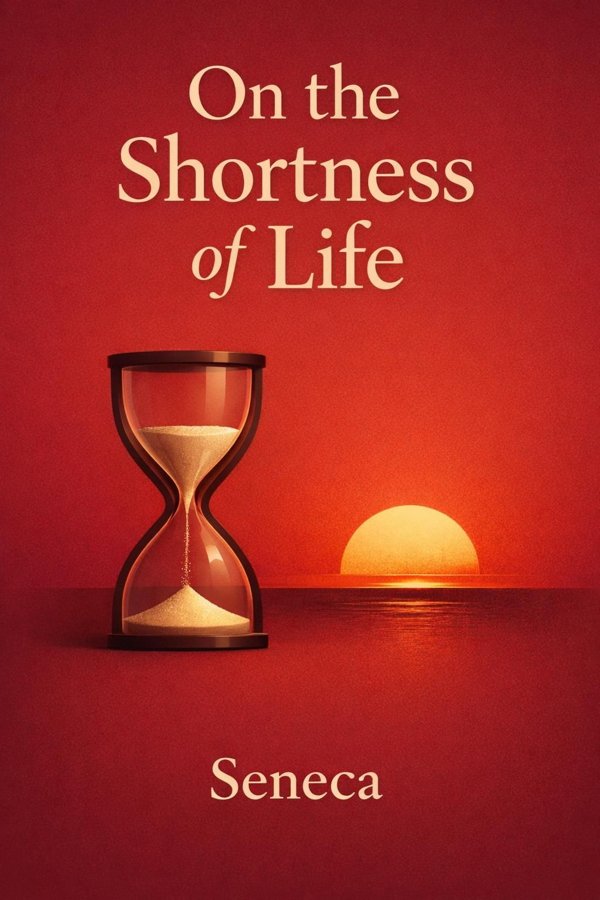
On the Shortness of Life: Summary & Key Insights
by Seneca
 10 min5 chaptersAudio available
What Is On the Shortness of Life About?
On the Shortness of Life by Seneca is a western_phil book spanning 5 pages. In this classic Stoic treatise, Seneca the Younger reflects on the fleeting nature of human life and the ways people squander their time. He argues that life is long enough if used wisely, urging readers to cultivate wisdom, virtue, and awareness of the present moment. The work remains a timeless meditation on how to live meaningfully and purposefully.
This FizzRead summary covers all 5 key chapters of On the Shortness of Life in approximately 10 minutes, distilling the most important ideas, arguments, and takeaways from Seneca's work. Also available as an audio summary and Key Quotes Podcast.
On the Shortness of Life
In this classic Stoic treatise, Seneca the Younger reflects on the fleeting nature of human life and the ways people squander their time. He argues that life is long enough if used wisely, urging readers to cultivate wisdom, virtue, and awareness of the present moment. The work remains a timeless meditation on how to live meaningfully and purposefully.
Who Should Read On the Shortness of Life?
This book is perfect for anyone interested in western_phil and looking to gain actionable insights in a short read. Whether you're a student, professional, or lifelong learner, the key ideas from On the Shortness of Life by Seneca will help you think differently.
- ✓Readers who enjoy western_phil and want practical takeaways
- ✓Professionals looking to apply new ideas to their work and life
- ✓Anyone who wants the core insights of On the Shortness of Life in just 10 minutes
Want the full summary?
Get instant access to this book summary and 100K+ more with Fizz Moment.
Get Free SummaryAvailable on App Store • Free to download
Key Chapters
I begin by addressing Paulinus directly because his life, like yours, is consumed by activity. He manages affairs, oversees responsibilities, and serves others tirelessly. I remind him—and you—that it is not the quantity of years that counts but the quality of their use. There is a universal complaint among men: life is short. Yet I deny it entirely. Life is long enough for those who know how to make use of it. The tragedy is that most people squander their time as though it were infinite, only realizing its scarcity when it slips beyond recovery.
Think of how often time is wasted in vanity, ambition, and desires that neither fulfill nor endure. Youth is spent in negligence, adulthood in stress, and old age in regret. We live as though we expect a second life to correct our mistakes, as though endless tomorrows are guaranteed. The philosopher, however, sees clearly: every moment that passes is gone forever, and yet every moment can be redeemed through wisdom. To study philosophy is to study how to live purposefully, how to be present, and how to become the master of one’s hours rather than their victim.
I do not claim that knowledge lengthens life in the physical sense; rather, it deepens it. A person who lives wisely experiences in one day what the thoughtless never experience in a lifetime—peace, clarity, and fulfillment. When you are ruled by passions or ambitions, you become a servant to external forces; but when you live by reason, time serves you. The present ceases to slip away and becomes a vast, timeless possession. In this way, life reveals its true abundance.
Among all the ways people squander life, none is more deceptive than busyness. You imagine that to be busy is to be productive, that constant movement signifies importance. Yet, busyness is the greatest thief of time. The busy man, I observe, has no leisure to truly think or live; he is consumed by duties that others impose, by ambitions that enslave him, and by desires that increase rather than satisfy. His schedule is full but his soul is empty.
Busyness gives the illusion of progress while hiding the absence of purpose. The anxious pursuit of professional recognition, wealth, or social standing may fill years, but it hollows life. You end up living for others’ expectations, serving their interests instead of your own freedom. The busiest people are often the least self-aware, because they mistake motion for meaning. They can recount what they have done each day, but not why they have lived it.
True leisure is not idleness; it is the domain of the wise. Leisure grants space for contemplation, study, and self-examination. It transforms time from an enemy to an ally. The philosopher, through reflective living, owns his day entirely—he walks through time as one navigating a familiar home. The ignorant, meanwhile, wander through their minutes like guests in a house they never built. There is profound richness in the ability to stand still, to think deeply, to withdraw occasionally from the crowd. Only then does time reveal its full generosity.
+ 3 more chapters — available in the FizzRead app
All Chapters in On the Shortness of Life
About the Author
Lucius Annaeus Seneca (c. 4 BCE–65 CE), known as Seneca the Younger, was a Roman Stoic philosopher, statesman, and playwright. Born in Corduba, Hispania, he became one of the leading intellectual figures of his time and served as an advisor to Emperor Nero. His philosophical writings, including essays and letters, explore ethics, virtue, and the art of living well.
Get This Summary in Your Preferred Format
Read or listen to the On the Shortness of Life summary by Seneca anytime, anywhere. FizzRead offers multiple formats so you can learn on your terms — all free.
Available formats: App · Audio · PDF · EPUB — All included free with FizzRead
Download On the Shortness of Life PDF and EPUB Summary
Key Quotes from On the Shortness of Life
“I begin by addressing Paulinus directly because his life, like yours, is consumed by activity.”
“Among all the ways people squander life, none is more deceptive than busyness.”
Frequently Asked Questions about On the Shortness of Life
On the Shortness of Life by Seneca is a western_phil book that explores key ideas across 5 chapters. In this classic Stoic treatise, Seneca the Younger reflects on the fleeting nature of human life and the ways people squander their time. He argues that life is long enough if used wisely, urging readers to cultivate wisdom, virtue, and awareness of the present moment. The work remains a timeless meditation on how to live meaningfully and purposefully.
More by Seneca
You Might Also Like
A Little History of Philosophy
Nigel Warburton
10 min
Areopagitica
John Milton
10 min
How To Think Like A Philosopher: Essential Principles For Clear Thinking
Peter Cave
10 min
Language, Truth and Logic
A. J. Ayer
10 min
The Age of Reason
Thomas Paine
10 min
The Essays
Michel De Montaigne
10 minBrowse by Category
Ready to read On the Shortness of Life?
Get the full summary and 100K+ more books with Fizz Moment.