
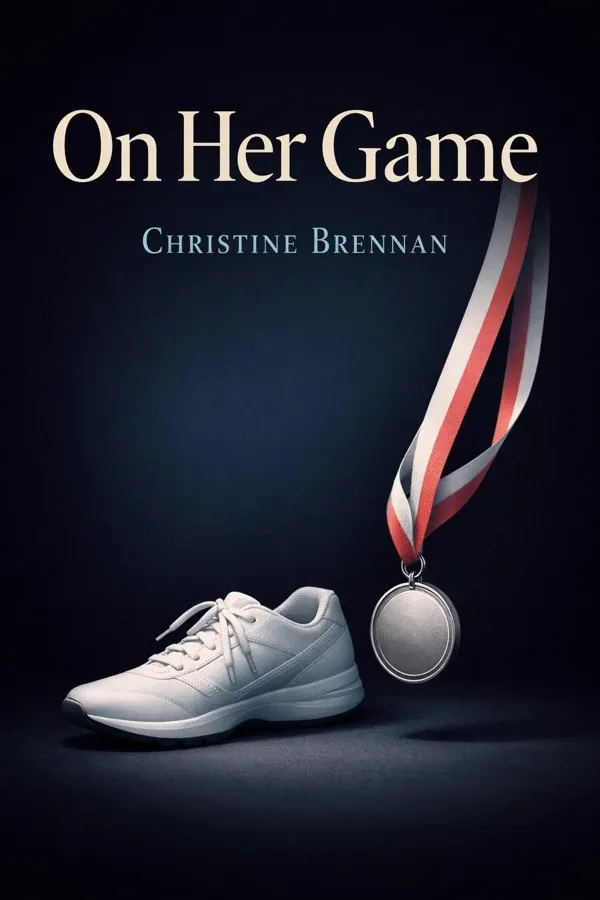
On Her Game: Inside the Lives and Minds of Today's Female Athletes: Summary & Key Insights
 10 min12 chaptersAudio available
What Is On Her Game: Inside the Lives and Minds of Today's Female Athletes About?
On Her Game: Inside the Lives and Minds of Today's Female Athletes by Christine Brennan is a biographies book spanning 12 pages. A collection of profiles and interviews by sports journalist Christine Brennan, exploring the experiences, challenges, and triumphs of prominent female athletes in the late 20th century. The book offers insight into their personal motivations, struggles for equality, and the evolving landscape of women's sports.
This FizzRead summary covers all 12 key chapters of On Her Game: Inside the Lives and Minds of Today's Female Athletes in approximately 10 minutes, distilling the most important ideas, arguments, and takeaways from Christine Brennan's work. Also available as an audio summary and Key Quotes Podcast.
On Her Game: Inside the Lives and Minds of Today's Female Athletes
A collection of profiles and interviews by sports journalist Christine Brennan, exploring the experiences, challenges, and triumphs of prominent female athletes in the late 20th century. The book offers insight into their personal motivations, struggles for equality, and the evolving landscape of women's sports.
Who Should Read On Her Game: Inside the Lives and Minds of Today's Female Athletes?
This book is perfect for anyone interested in biographies and looking to gain actionable insights in a short read. Whether you're a student, professional, or lifelong learner, the key ideas from On Her Game: Inside the Lives and Minds of Today's Female Athletes by Christine Brennan will help you think differently.
- ✓Readers who enjoy biographies and want practical takeaways
- ✓Professionals looking to apply new ideas to their work and life
- ✓Anyone who wants the core insights of On Her Game: Inside the Lives and Minds of Today's Female Athletes in just 10 minutes
Want the full summary?
Get instant access to this book summary and 100K+ more with Fizz Moment.
Get Free SummaryAvailable on App Store • Free to download
Key Chapters
To understand the present strength of female athletes, one must first trace the long and uneven path that led them here. In the early decades of organized sport, women were largely excluded on grounds that seemed moral, medical, or even aesthetic. Society argued that aggression, physical exertion, and risk were masculine traits, incompatible with femininity and motherhood. But throughout the twentieth century, courageous women began to defy those labels – first as amateurs, then as competitors demanding recognition.
The turning point came in 1972 with Title IX, the landmark U.S. legislation that prohibited sex-based discrimination in educational programs receiving federal funds. Its effect on sports was monumental. Suddenly, schools and universities were obliged to provide athletic opportunities to women on par with men. A generation of girls began to lace up their shoes with a new sense of legitimacy. Title IX was not merely a legal victory; it was a psychological and cultural shift.
As I look back from the vantage point of the 1990s, the results are clear but complex. Equal opportunities opened the door, but attitudes were slower to change. Women’s teams often practiced in inferior facilities, received smaller budgets, and were sparsely covered by the media. Yet the seeds of transformation had been planted. By the 1996 Atlanta Olympics, which I covered closely, women comprised a record number of participants. The games symbolized how far we had come – and how much further we still needed to go.
The historical thread matters because it reveals a constant pattern of resistance and reinvention. Every generation of female athletes inherits both the privileges earned by those before and the prejudices left unresolved. They are pioneers by necessity, compelled to compete not only for victory but for validation. When I speak with women in sports today, I recognize in their words echoes of those early struggles – ambition tempered by realism, success shadowed by scrutiny. That continuity is both painful and empowering. It tells us that progress is a marathon, not a sprint, and that every stride counts.
In reporting on elite athletes, my goal was intimacy, not spectacle. I wanted to peel back the public veneer and touch the private reality of competition. Nancy Kerrigan, for instance, was often defined by a single incident – the 1994 attack that turned her name into tabloid shorthand. Yet when I sat with her, what emerged was not scandal but humanity: a woman balancing discipline, fear, and grace under relentless scrutiny. She embodied the paradox that fame brings in women’s sports – visibility that illuminates and consumes in equal measure.
Similarly, gymnast Shannon Miller represented another form of quiet strength. Her rigorous training regimen and near-mechanical consistency masked the mental toll of sustaining excellence in adolescence. Behind every medal is an untold cost: the loneliness of focus, the sacrifice of normal teenage life, and the constant negotiation with self-doubt. Shannon spoke of strategic visualization, of rehearsing routines in her mind until movement became instinct. Listening to her, I realized that success is never an accident but a deliberate construction of willpower.
These portraits extend beyond individual triumphs. They are case studies of what happens when young women chase perfection in a system still learning how to support them. In each conversation, I sensed an undercurrent of self-awareness – an understanding that their visibility carried social meaning. They were not just athletes; they were symbols of possibility. And yet, they resisted being reduced to symbols, insisting that their identities were richer than the spotlight allowed.
Writing these profiles reminded me that to be an elite female athlete is to inhabit contradiction: admired yet scrutinized, empowered yet vulnerable, independent yet constantly compared. Their stories reveal that success, in its deepest sense, has less to do with scores or medals than with self-definition – with claiming ownership of one’s narrative in a world eager to write it for you.
+ 10 more chapters — available in the FizzRead app
All Chapters in On Her Game: Inside the Lives and Minds of Today's Female Athletes
About the Author
Christine Brennan is an American sports journalist, commentator, and author known for her coverage of the Olympic Games and advocacy for women in sports. She has written for USA Today and appeared on major networks such as CNN and ABC News.
Get This Summary in Your Preferred Format
Read or listen to the On Her Game: Inside the Lives and Minds of Today's Female Athletes summary by Christine Brennan anytime, anywhere. FizzRead offers multiple formats so you can learn on your terms — all free.
Available formats: App · Audio · PDF · EPUB — All included free with FizzRead
Download On Her Game: Inside the Lives and Minds of Today's Female Athletes PDF and EPUB Summary
Key Quotes from On Her Game: Inside the Lives and Minds of Today's Female Athletes
“To understand the present strength of female athletes, one must first trace the long and uneven path that led them here.”
“In reporting on elite athletes, my goal was intimacy, not spectacle.”
Frequently Asked Questions about On Her Game: Inside the Lives and Minds of Today's Female Athletes
On Her Game: Inside the Lives and Minds of Today's Female Athletes by Christine Brennan is a biographies book that explores key ideas across 12 chapters. A collection of profiles and interviews by sports journalist Christine Brennan, exploring the experiences, challenges, and triumphs of prominent female athletes in the late 20th century. The book offers insight into their personal motivations, struggles for equality, and the evolving landscape of women's sports.
You Might Also Like

An American Marriage
Tayari Jones
10 min
Benjamin Franklin: An American Life
Walter Isaacson
10 min
I Know Why The Caged Bird Sings
Maya Angelou
10 min
Long Walk to Freedom
Nelson Mandela
10 min
Persepolis
Marjane Satrapi
10 min
Surely You're Joking, Mr. Feynman!
Richard P. Feynman
10 minBrowse by Category
Ready to read On Her Game: Inside the Lives and Minds of Today's Female Athletes?
Get the full summary and 100K+ more books with Fizz Moment.