
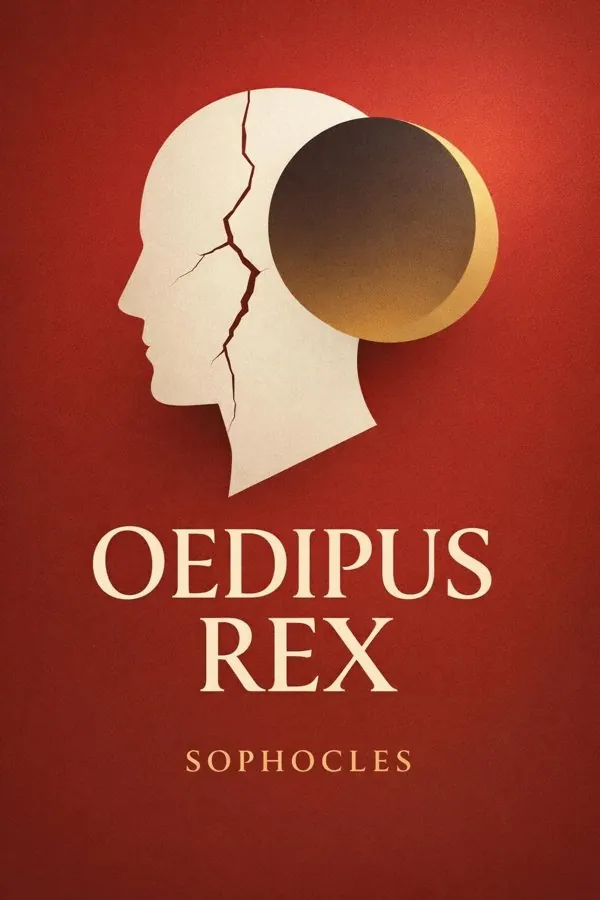
Oedipus Rex: Summary & Key Insights
by Sophocles
 10 min4 chaptersAudio available
What Is Oedipus Rex About?
Oedipus Rex by Sophocles is a classics book spanning 4 pages. Oedipus Rex, also known as Oedipus the King, is one of the greatest works of classical Greek tragedy written by Sophocles. The play tells the story of Oedipus, the King of Thebes, who seeks to rid his city of a devastating plague. In his quest for truth, he discovers that he himself is the source of the city's suffering, having unknowingly killed his father and married his mother. The tragedy explores profound themes of fate, free will, and human responsibility, and remains a cornerstone of Western literature and philosophy.
This FizzRead summary covers all 4 key chapters of Oedipus Rex in approximately 10 minutes, distilling the most important ideas, arguments, and takeaways from Sophocles's work. Also available as an audio summary and Key Quotes Podcast.
Oedipus Rex
Oedipus Rex, also known as Oedipus the King, is one of the greatest works of classical Greek tragedy written by Sophocles. The play tells the story of Oedipus, the King of Thebes, who seeks to rid his city of a devastating plague. In his quest for truth, he discovers that he himself is the source of the city's suffering, having unknowingly killed his father and married his mother. The tragedy explores profound themes of fate, free will, and human responsibility, and remains a cornerstone of Western literature and philosophy.
Who Should Read Oedipus Rex?
This book is perfect for anyone interested in classics and looking to gain actionable insights in a short read. Whether you're a student, professional, or lifelong learner, the key ideas from Oedipus Rex by Sophocles will help you think differently.
- ✓Readers who enjoy classics and want practical takeaways
- ✓Professionals looking to apply new ideas to their work and life
- ✓Anyone who wants the core insights of Oedipus Rex in just 10 minutes
Want the full summary?
Get instant access to this book summary and 100K+ more with Fizz Moment.
Get Free SummaryAvailable on App Store • Free to download
Key Chapters
Thebes lies wounded by pestilence; crops rot, mothers mourn, and death walks freely. Oedipus, the king once exalted for his triumph over the Sphinx, now shoulders the sorrow of his people. His voice trembles not from fear but from compassion and fierce determination. He vows before the citizens and the gods that he will uncover the root of this suffering and purge his city of guilt.
As I conceived this opening, I wanted the audience to sense both the grandeur and the fragility of human leadership. Oedipus’s faith in his ability to find truth through inquiry and logic is admirable but fateful. He is a rational man in a world where divine will remains inscrutable. In calling for Creon to consult the Oracle at Delphi, he sows the first seeds of his undoing—for the gods do not answer in plain speech.
When Creon returns with Apollo’s message—that the plague is divine punishment for the unavenged murder of King Laius—the tragedy stirs from its slumber. Oedipus, seeing himself as champion of justice, declares that he will chase down the murderer and curse him to exile and misery. It is a moment of moral clarity shadowed by irony, for the curse he pronounces will soon consume him. In that proclamation, he is both judge and condemned.
Through Oedipus I sought to depict how human greatness arises from will, knowledge, and conviction—yet how those very virtues, if untempered by humility, can quicken ruin. The audience witnesses not a villain’s downfall, but an innocent mind betrayed by the limits of mortal understanding.
Having sworn before all of Thebes to find Laius’s killer, Oedipus summons Tiresias, the prophet who sees though he is blind. Tiresias hesitates, for truth is a dreadful gift when it foresees disaster. But pressed by the king’s fury, the old seer utters words that wound the air itself: “You are the murderer whom you seek.”
This revelation is the pivot upon which the play turns—from inquiry to confrontation, from reason to revelation. Yet Oedipus cannot believe it. His faith in his own innocence and justice makes him deaf to prophecy. The notion that he, savior of Thebes, could be its poisoner overturns his entire vision of himself. So he turns his suspicion outward, accusing Creon of conspiring to steal his throne.
The quarrel that follows is more than political; it is metaphysical. It shows how pride and fear can veil truth more effectively than darkness. I designed Jocasta’s entrance at this moment not merely to calm her husband but to introduce human tenderness amid divine cruelty. Her skepticism toward prophecy—she recalls an oracle that Laius would die by his son’s hand, a prediction seemingly disproven by Laius’s death at bandits’ hands—encourages Oedipus to stand firm. Yet her tale plants the seed of recognition.
The grandeur of this scene is in its irony. The prophet who cannot see beholds the truth; the king with sight is blind to it. I wanted the spectators to feel pity, not judgment—to understand that Oedipus’s denial is not willful wickedness, but the natural resistance of the human mind to impossible knowledge.
+ 2 more chapters — available in the FizzRead app
All Chapters in Oedipus Rex
About the Author
Sophocles (c. 496–406 BCE) was one of the three great tragedians of ancient Greece, alongside Aeschylus and Euripides. He wrote over 120 plays, of which seven survive in complete form. His innovations in dramatic structure and character development profoundly influenced the evolution of Western drama.
Get This Summary in Your Preferred Format
Read or listen to the Oedipus Rex summary by Sophocles anytime, anywhere. FizzRead offers multiple formats so you can learn on your terms — all free.
Available formats: App · Audio · PDF · EPUB — All included free with FizzRead
Download Oedipus Rex PDF and EPUB Summary
Key Quotes from Oedipus Rex
“Thebes lies wounded by pestilence; crops rot, mothers mourn, and death walks freely.”
“Having sworn before all of Thebes to find Laius’s killer, Oedipus summons Tiresias, the prophet who sees though he is blind.”
Frequently Asked Questions about Oedipus Rex
Oedipus Rex by Sophocles is a classics book that explores key ideas across 4 chapters. Oedipus Rex, also known as Oedipus the King, is one of the greatest works of classical Greek tragedy written by Sophocles. The play tells the story of Oedipus, the King of Thebes, who seeks to rid his city of a devastating plague. In his quest for truth, he discovers that he himself is the source of the city's suffering, having unknowingly killed his father and married his mother. The tragedy explores profound themes of fate, free will, and human responsibility, and remains a cornerstone of Western literature and philosophy.
More by Sophocles
You Might Also Like






Browse by Category
Ready to read Oedipus Rex?
Get the full summary and 100K+ more books with Fizz Moment.