
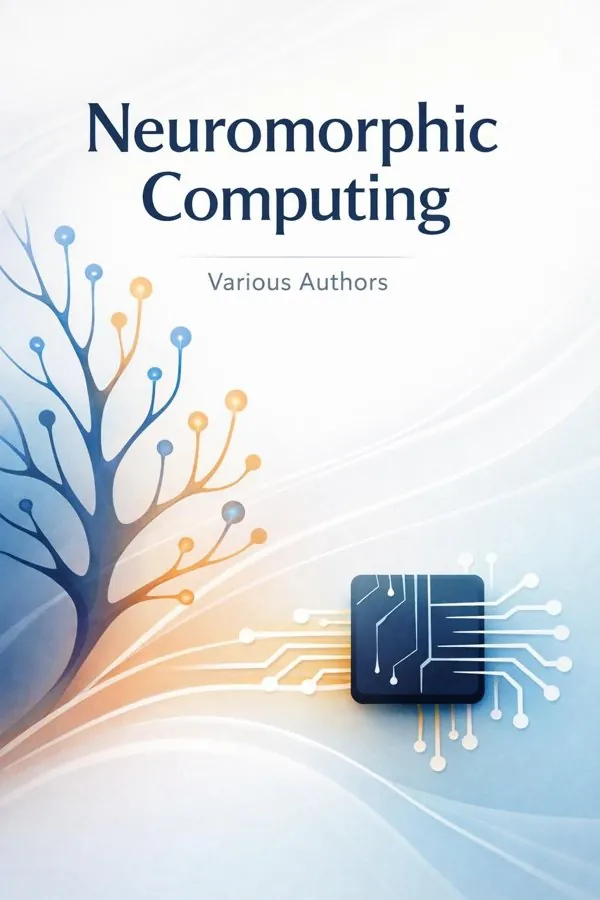
Neuromorphic Computing: Summary & Key Insights
 10 min3 chaptersAudio available
What Is Neuromorphic Computing About?
Neuromorphic Computing by Various Authors is a ai_ml book spanning 3 pages. Neuromorphic computing is an interdisciplinary field that seeks to design computer systems inspired by the structure and function of the human brain. It integrates neuroscience, computer science, and electrical engineering to create hardware and algorithms that mimic neural architectures, enabling energy-efficient and adaptive computation. The book explores the principles, architectures, and applications of neuromorphic systems, including spiking neural networks, memristor-based circuits, and brain-inspired processors.
This FizzRead summary covers all 3 key chapters of Neuromorphic Computing in approximately 10 minutes, distilling the most important ideas, arguments, and takeaways from Various Authors's work. Also available as an audio summary and Key Quotes Podcast.
Neuromorphic Computing
Neuromorphic computing is an interdisciplinary field that seeks to design computer systems inspired by the structure and function of the human brain. It integrates neuroscience, computer science, and electrical engineering to create hardware and algorithms that mimic neural architectures, enabling energy-efficient and adaptive computation. The book explores the principles, architectures, and applications of neuromorphic systems, including spiking neural networks, memristor-based circuits, and brain-inspired processors.
Who Should Read Neuromorphic Computing?
This book is perfect for anyone interested in ai_ml and looking to gain actionable insights in a short read. Whether you're a student, professional, or lifelong learner, the key ideas from Neuromorphic Computing by Various Authors will help you think differently.
- ✓Readers who enjoy ai_ml and want practical takeaways
- ✓Professionals looking to apply new ideas to their work and life
- ✓Anyone who wants the core insights of Neuromorphic Computing in just 10 minutes
Want the full summary?
Get instant access to this book summary and 100K+ more with Fizz Moment.
Get Free SummaryAvailable on App Store • Free to download
Key Chapters
My fascination with the brain has always stemmed from its elegance and efficiency. Every thought, every sensory experience, is the result of coordinated spikes—the brief electrical pulses through millions of neurons. At the heart of neuromorphic computing lies this principle: information exists not in static states but in dynamic patterns, just as the brain encodes meaning in timing.
To design systems that mimic this behavior, engineers start from biological models. The basic unit, the neuron, integrates inputs through dendrites and fires when a certain threshold is reached. Spiking neural networks (SNNs) capture this process mathematically. Each spike is an event—a carrier of information that travels asynchronously. Unlike conventional artificial neural networks that rely on continuous activations and synchronous updates, SNNs operate in event-driven fashion, making them vastly more efficient when implemented in hardware.
Synaptic plasticity, the brain’s method for learning, inspires our computational learning rules. Spike-Timing-Dependent Plasticity (STDP)—where synaptic weights change based on the exact timing of pre- and post-synaptic spikes—has become a cornerstone for neuromorphic learning. This enables a local, autonomous learning process, free from the heavy global optimization characteristic of traditional machine learning. Such systems learn through interaction and experience, echoing how living organisms adapt to their environment.
From there, we translate these ideas into circuits. Memristors—resistive components that retain memory of past electrical activity—serve as physical analogs of synapses. Their ability to change resistance incrementally and remember those changes makes them ideal for implementing adaptive networks in hardware. A network of memristors and spiking neurons forms what we call neuromorphic chips—machines that don’t just compute, but learn and remember at the physical level.
This foundation is not purely theoretical. It shapes real architectures—like IBM’s TrueNorth, which emulates one million neurons and billions of synapses, and Intel’s Loihi, which allows on-chip learning through digitally implemented STDP. These systems show that brain-inspired principles can translate into scalable, silicon-based constructions. Neuromorphic computing thus stands not as a metaphor for neural function but as a rigorous engineering discipline uniting biology and computation.
The architecture of neuromorphic hardware captures the most audacious idea in computer engineering today: to recreate cognition using energy-efficient circuits organized like neural tissue. Machines such as TrueNorth and Loihi exemplify different design philosophies but share core principles. They embed massive parallelism, asynchronous event handling, and local memory to achieve adaptive, low-power computation.
TrueNorth employs digital cores arranged to simulate large-scale neural networks. Each neuron communicates through binary spikes in a globally asynchronous, locally synchronous manner. Loihi advances this by integrating on-chip learning capabilities—its cores support variable synaptic strength adjusted through STDP and other localized learning rules. Loihi effectively learns in real time, adapting to streaming data without retraining—all within power budgets orders of magnitude lower than GPU-based systems.
When applied to sensory processing, these chips shine. Neuromorphic vision sensors, known as Dynamic Vision Sensors (DVS), capture scenes through brightness changes rather than full-frame updates. Each pixel acts like a neuron, firing when local contrast changes occur. The result is real-time vision with microsecond latency and minimal data flow. Similarly, neuromorphic auditory systems use event-based microphones to process sound dynamically, capturing temporal structure in a way unmatched by traditional systems. Such sensory modalities make these processors suitable for autonomous robots and edge devices that require power-efficient, continuous perception.
In robotics, neuromorphic processors translate sensory input directly into motor behavior. They do not rely on centralized computation. Instead, they distribute intelligence throughout the system—sensing, processing, and acting locally. This leads to autonomy that is both faster and more robust. In large-scale deployments such as environmental monitoring or smart infrastructure, neuromorphic nodes act as adaptive agents that self-calibrate and maintain operation even under limited energy supply.
The impact of these architectures extends well beyond engineering. They suggest a new philosophy of computation—one where intelligence is not a global abstraction but an emergent property of local interactions, timing, and adaptation. In other words, neuromorphic computing doesn’t just simulate the brain; it redefines computing itself to be more alive, responsive, and sustainable.
+ 1 more chapters — available in the FizzRead app
All Chapters in Neuromorphic Computing
About the Author
This volume is a collaborative work by multiple researchers and engineers specializing in neuromorphic engineering, artificial intelligence, and computational neuroscience. The contributors come from leading universities and research institutions worldwide.
Get This Summary in Your Preferred Format
Read or listen to the Neuromorphic Computing summary by Various Authors anytime, anywhere. FizzRead offers multiple formats so you can learn on your terms — all free.
Available formats: App · Audio · PDF · EPUB — All included free with FizzRead
Download Neuromorphic Computing PDF and EPUB Summary
Key Quotes from Neuromorphic Computing
“My fascination with the brain has always stemmed from its elegance and efficiency.”
“The architecture of neuromorphic hardware captures the most audacious idea in computer engineering today: to recreate cognition using energy-efficient circuits organized like neural tissue.”
Frequently Asked Questions about Neuromorphic Computing
Neuromorphic Computing by Various Authors is a ai_ml book that explores key ideas across 3 chapters. Neuromorphic computing is an interdisciplinary field that seeks to design computer systems inspired by the structure and function of the human brain. It integrates neuroscience, computer science, and electrical engineering to create hardware and algorithms that mimic neural architectures, enabling energy-efficient and adaptive computation. The book explores the principles, architectures, and applications of neuromorphic systems, including spiking neural networks, memristor-based circuits, and brain-inspired processors.
More by Various Authors




You Might Also Like
Life 3.0
Max Tegmark
10 min
Superintelligence
Nick Bostrom
10 min
TensorFlow in Action
Thushan Ganegedara
10 min
AI Made Simple: A Beginner’s Guide to Generative AI, ChatGPT, and the Future of Work
Rajeev Kapur
10 min
AI Snake Oil
Arvind Narayanan, Sayash Kapoor
10 min
AI Superpowers: China, Silicon Valley, and the New World Order
Kai-Fu Lee
10 minBrowse by Category
Ready to read Neuromorphic Computing?
Get the full summary and 100K+ more books with Fizz Moment.