
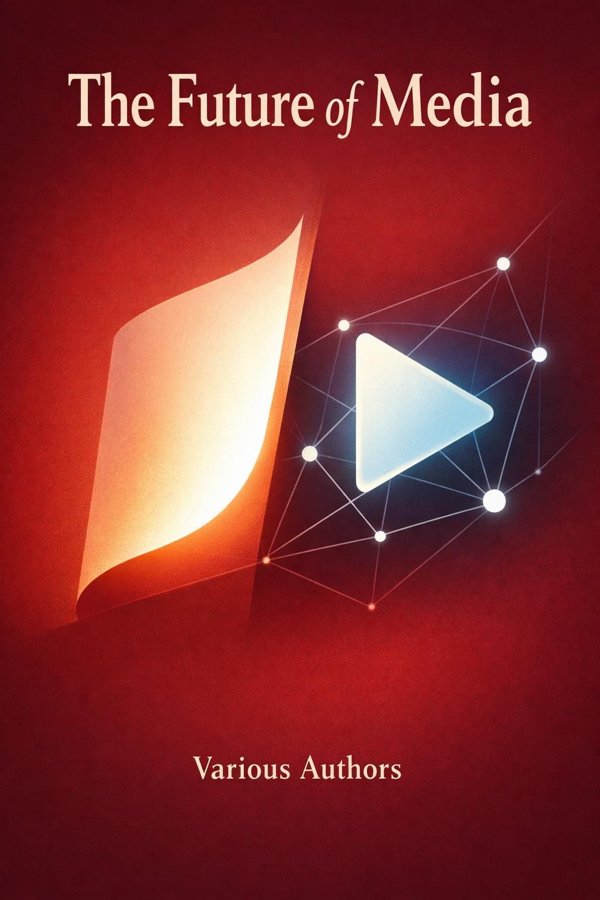
The Future of Media: Summary & Key Insights
 10 min9 chaptersAudio available
Key Takeaways from The Future of Media
The most important change in modern media is not just technological innovation, but the redistribution of power.
One of the book’s central insights is that the audience is no longer a passive endpoint.
Attention used to be programmed by editors and schedulers.
In an environment flooded with content, trust matters more than volume.
Every media form carries an economic logic behind it.
What Is The Future of Media About?
The Future of Media by Various Authors is a digital_culture book. Media no longer simply reports the world; it actively shapes how reality is discovered, discussed, monetized, and remembered. The Future of Media examines this shift through a collection of essays and analyses by multiple contributors who explore how journalism, entertainment, advertising, platforms, and audiences are being transformed by digital technology. Rather than treating media as a single industry, the book presents it as an interconnected ecosystem where creators, distributors, algorithms, brands, and users all influence what rises to attention and what disappears. What makes this collection valuable is its range of perspectives. By bringing together different voices, the book captures the complexity of a media landscape defined by streaming, social platforms, data tracking, mobile consumption, and the collapse of traditional gatekeepers. It asks urgent questions: Who controls visibility? How does trust survive in a fragmented information economy? What happens when audiences become creators and platforms become publishers? For readers trying to understand the future of news, culture, and communication, this book matters because it moves beyond hype. It offers a grounded, multi-angled view of where media is headed and what individuals, businesses, and institutions must do to adapt.
This FizzRead summary covers all 9 key chapters of The Future of Media in approximately 10 minutes, distilling the most important ideas, arguments, and takeaways from Various Authors's work. Also available as an audio summary and Key Quotes Podcast.
The Future of Media
Media no longer simply reports the world; it actively shapes how reality is discovered, discussed, monetized, and remembered. The Future of Media examines this shift through a collection of essays and analyses by multiple contributors who explore how journalism, entertainment, advertising, platforms, and audiences are being transformed by digital technology. Rather than treating media as a single industry, the book presents it as an interconnected ecosystem where creators, distributors, algorithms, brands, and users all influence what rises to attention and what disappears.
What makes this collection valuable is its range of perspectives. By bringing together different voices, the book captures the complexity of a media landscape defined by streaming, social platforms, data tracking, mobile consumption, and the collapse of traditional gatekeepers. It asks urgent questions: Who controls visibility? How does trust survive in a fragmented information economy? What happens when audiences become creators and platforms become publishers?
For readers trying to understand the future of news, culture, and communication, this book matters because it moves beyond hype. It offers a grounded, multi-angled view of where media is headed and what individuals, businesses, and institutions must do to adapt.
Who Should Read The Future of Media?
This book is perfect for anyone interested in digital_culture and looking to gain actionable insights in a short read. Whether you're a student, professional, or lifelong learner, the key ideas from The Future of Media by Various Authors will help you think differently.
- ✓Readers who enjoy digital_culture and want practical takeaways
- ✓Professionals looking to apply new ideas to their work and life
- ✓Anyone who wants the core insights of The Future of Media in just 10 minutes
Want the full summary?
Get instant access to this book summary and 100K+ more with Fizz Moment.
Get Free SummaryAvailable on App Store • Free to download
Key Chapters
The most important change in modern media is not just technological innovation, but the redistribution of power. For most of the twentieth century, media influence flowed through a small number of institutions: newspapers, broadcast networks, film studios, and publishers. They controlled production, distribution, and audience access. The Future of Media argues that digital networks have weakened that model by enabling content to move through decentralized systems where audiences, platforms, and creators now share influence.
This does not mean old media disappeared. Instead, power became more fluid. A major newspaper still matters, but so does a viral post, a niche newsletter, a streaming recommendation, or a creator with a devoted community. Visibility is no longer guaranteed by owning a printing press or a channel; it is earned, optimized, amplified, or suppressed through networks. That shift changes how stories spread, how reputations are built, and how institutions maintain authority.
Consider how breaking news now unfolds. A witness posts a video, social media users circulate it, journalists verify it, platforms algorithmically boost it, and public interpretation forms in real time. In entertainment, a small online fandom can revive a canceled show. In marketing, brand awareness can emerge from creator collaborations rather than expensive mass advertising. Networks have become the new infrastructure of influence.
The practical implication is clear: organizations can no longer think only in terms of broadcasting messages. They must understand circulation, participation, and community dynamics. To remain relevant, build media strategies around relationships and adaptability, not just reach.
One of the book’s central insights is that the audience is no longer a passive endpoint. In digital culture, people do not simply consume media; they remix it, comment on it, reinterpret it, and redistribute it. This shift from audience to participant has transformed the economics and social meaning of media itself.
User-generated content once seemed secondary to professional production. Today it is foundational. Fans create commentary channels, citizens document events before reporters arrive, customers influence brand narratives through reviews and posts, and communities build entire media ecosystems around shared interests. This participatory environment has expanded expression, but it has also complicated questions of quality, ownership, and accountability.
The book highlights that participation is not evenly empowering. Platforms invite contribution, but they also structure what can be seen and monetized. A creator may produce value for a platform without gaining much security or ownership. At the same time, institutions increasingly rely on audience interaction as a source of data, engagement, and free promotion. Participation can be liberating, but it can also be extractive.
A practical example is the rise of short-form video. Viewers are encouraged not only to watch but to stitch, duet, parody, and imitate. This accelerates cultural trends while blurring the line between original work and communal performance. Newsrooms, educators, and businesses now design content with participation in mind because interaction extends visibility.
The actionable takeaway is to stop treating audiences as targets. Whether you are a journalist, marketer, educator, or creator, design for contribution. Ask how people can respond, reshape, and co-create meaning around your content.
Attention used to be programmed by editors and schedulers. Today, much of it is organized by algorithms. The Future of Media shows that recommendation systems have become some of the most powerful unseen editors in contemporary life. They determine what people encounter, what gets buried, and how long content remains visible.
Algorithms are often presented as neutral tools that simply surface relevance. The book pushes back on that idea. These systems are built around goals such as retention, engagement, ad revenue, or conversion. As a result, they privilege certain kinds of content: emotionally charged posts, familiar patterns, highly clickable headlines, or material that encourages repeated interaction. What appears popular may be partly the result of system design rather than organic public interest.
This matters because media exposure shapes beliefs, tastes, and behavior. A person watching videos about health may be guided toward trustworthy information or toward misinformation, depending on what the system learns will keep them engaged. A musician can be discovered globally through a recommendation engine, yet become dependent on opaque platform logic. News organizations optimize headlines and formats to satisfy algorithmic distribution, sometimes at the cost of nuance.
The lesson is not that algorithms are inherently harmful, but that they are editorial systems with commercial and cultural consequences. Readers, creators, and institutions must learn to question how visibility is produced. If a post performs unusually well or disappears unexpectedly, platform incentives may be part of the explanation.
The actionable takeaway: do not confuse algorithmic prominence with importance. Diversify your information sources, and if you publish content, build direct audience channels like newsletters or memberships that reduce dependence on platform recommendation systems.
In an environment flooded with content, trust matters more than volume. The Future of Media emphasizes that the defining challenge of the digital age is not merely information abundance, but credibility under conditions of overload, speed, and manipulation. When anyone can publish instantly, the question shifts from “Can I find information?” to “Which source deserves belief?”
Traditional media once benefited from institutional authority. That authority has weakened due to political polarization, economic pressure, public mistakes, and the democratization of publishing tools. At the same time, misinformation spreads quickly because emotionally resonant content often travels faster than verified reporting. Deepfakes, manipulated clips, and context-free fragments make it harder for audiences to judge what is real.
The book argues that trust cannot be rebuilt through branding alone. It must be earned through transparent practices: showing sources, explaining methods, correcting errors visibly, and distinguishing reporting from opinion. Media organizations that reveal how they know what they know are better positioned to maintain legitimacy. Individual creators face a similar challenge. Audiences increasingly reward consistency, honesty, and expertise rather than polished presentation alone.
Practical examples are everywhere. A newsroom that publishes its verification process can stand out in a rumor-heavy crisis. A podcast host who clearly separates facts from interpretation builds a more durable audience. A brand that communicates openly during controversy is more likely to retain loyalty than one that hides behind vague messaging.
The actionable takeaway is simple but demanding: if you create or share media, make credibility visible. Explain your reasoning, cite your sources, and treat trust as a long-term asset rather than a short-term tactic.
Every media form carries an economic logic behind it. One of the book’s most useful contributions is its reminder that the future of media will not be determined by creativity alone, but by business models. The way content is funded influences what gets produced, who gets served, and which values dominate the system.
Advertising supported the mass media era, but digital distribution fractured that model. Online ads became cheap, targeted, automated, and heavily concentrated on major platforms. As revenue shifted toward technology companies, many publishers struggled to sustain reporting, local coverage, and long-form work. In response, new models emerged: subscriptions, memberships, crowdfunding, branded content, micro-payments, live events, and creator patronage.
Each model creates incentives. Subscription systems often reward depth, loyalty, and niche expertise. Ad-driven environments favor scale, speed, and engagement. Sponsored content can fund quality work, but it also raises questions about independence. Platform monetization tools allow individual creators to earn directly, yet they can change overnight and leave income unstable. The book encourages readers to see media economics not as a back-office issue, but as a shaping force behind editorial choices and cultural output.
For example, a local investigative project might survive through nonprofit funding rather than ads. A specialized newsletter can thrive with a small paying audience because it serves a well-defined need. A video creator may diversify income through merchandise, memberships, and partnerships to avoid relying solely on volatile platform payouts.
The actionable takeaway: whenever you evaluate media, ask who pays for it and what behavior that funding model rewards. Sustainable media strategy starts with aligning revenue incentives to the kind of work you want to protect.
Mass media once gathered broad publics around shared experiences. Digital media has replaced much of that common ground with fragmentation. The Future of Media explains that this fragmentation has two faces: it enables richer diversity and specialized communities, yet it also weakens shared narratives and can intensify ideological isolation.
On the positive side, fragmented media allows underserved voices to be heard. People can now find content tailored to specific cultures, professions, identities, hobbies, or political interests. This has expanded representation and reduced dependence on mainstream approval. Niche podcasts, independent newsletters, and community-driven channels can achieve influence without appealing to everyone.
But fragmentation also changes the public sphere. When people inhabit separate information environments, they may no longer share basic facts, reference points, or priorities. Algorithms can intensify this by feeding users more of what aligns with previous behavior. The result is not just personalization, but the creation of parallel realities where groups encounter different versions of events and different emotional climates.
A practical example can be seen in news consumption. One person may receive updates primarily through mainstream outlets, another through partisan influencers, and another through meme accounts and clips. All are “informed,” yet their understanding of the same issue may differ dramatically. In entertainment, fragmentation means there may never again be many truly universal cultural moments, but there will be countless smaller worlds with intense loyalty.
The actionable takeaway is to treat niche belonging as valuable but incomplete. Build your media diet and your communication strategy to include both specialized depth and cross-community exposure. Diversity of sources is now a civic habit, not just an intellectual preference.
Digital media excels at immediacy, but speed comes with a cognitive cost. The Future of Media repeatedly suggests that the faster media moves, the harder it becomes to preserve context, nuance, and deliberation. Real-time publishing has many advantages, especially during emergencies and live events, yet it can also produce shallow interpretation, outrage cycles, and premature certainty.
Platforms reward responsiveness. Journalists race to publish first. Creators feel pressure to comment instantly on every trend. Brands are expected to react in real time. Audiences learn to expect continuous updates. This creates a culture where reaction becomes a signal of relevance. But rapid response often favors emotion over analysis and visibility over understanding.
The consequences are practical and political. In a developing news story, early claims may be incomplete or wrong, but they can shape public perception long before corrections arrive. In social discourse, people may share clips detached from context because immediacy feels more compelling than accuracy. Organizations often speak too quickly in moments of crisis, only to retract or revise. The book argues that media systems need forms of “slow value” to counterbalance this pressure: deeper reporting, thoughtful editorial judgment, explanatory formats, and institutional patience.
Examples include long-form investigative journalism, expert-led newsletters, documentary podcasts, and publications that invest in analysis rather than constant posting. Even on fast-moving platforms, some creators stand out precisely because they slow things down and explain rather than react.
The actionable takeaway is to resist equating speed with quality. If you create media, build processes for verification and reflection. If you consume it, pause before sharing and ask whether the information has been contextualized, not just quickly delivered.
Amid constant disruption, the book offers a stabilizing insight: technologies change rapidly, but core human needs remain remarkably consistent. People still seek meaning, belonging, entertainment, orientation, identity, and trust. New platforms alter the form of media, yet the underlying motivations for engaging with stories, images, and information remain deeply human.
This perspective helps separate trend from substance. It is easy to become fixated on formats—streaming, podcasts, social video, immersive environments, AI-generated media—but the more strategic question is what enduring need each format serves. Podcasts work not simply because they are digital audio, but because they offer intimacy, companionship, and depth. Social platforms thrive not only because they are technically efficient, but because they satisfy desires for recognition and connection. Streaming succeeds because it matches convenience with personalized entertainment.
Understanding these continuities helps organizations adapt without chasing every novelty. A news outlet that knows its audience values clarity and credibility can deliver that through articles, podcasts, or short video. A teacher who understands that learners want relevance and narrative can redesign educational media across formats. A brand that recognizes people want community can invest in membership experiences rather than only promotional content.
The future of media is therefore not a story of machines replacing people, but of human needs being expressed through evolving interfaces. Technologies win when they fit emotional, social, and practical patterns already present in everyday life.
The actionable takeaway: when evaluating a new media trend, ask which timeless human need it fulfills. Build around that need first, and let format follow function rather than the other way around.
Perhaps the book’s broadest argument is that media literacy is no longer optional. In a world where nearly every institution, relationship, and public debate is mediated through screens and platforms, understanding media has become a basic civic competence. To participate responsibly in society, people must know how content is produced, distributed, framed, and monetized.
Media literacy is more than spotting fake news. It involves recognizing persuasive techniques, understanding platform incentives, identifying bias without assuming all perspectives are equal, and distinguishing evidence from performance. It also includes awareness of how one’s own habits are shaped by convenience, emotion, and repeated exposure. The book suggests that future media users must be interpreters, not just receivers.
This has major implications for education, parenting, leadership, and democracy. Schools can no longer treat media analysis as a side topic. Businesses need employees who can evaluate sources and communicate responsibly online. Citizens need the ability to assess viral claims before joining digital outrage or panic. Even creators benefit from media literacy because it helps them navigate ethical tradeoffs in attention-driven systems.
A practical application might involve teaching students to compare headlines across outlets, examine who benefits from a narrative, or trace how a story changes as it moves across platforms. Organizations can train teams to verify information before acting on it. Individuals can audit their own feeds to see whether they are being informed or merely stimulated.
The actionable takeaway: practice active media literacy daily. Ask who created the message, what incentives shape it, what evidence supports it, and how the format influences your reaction. Better media judgment is now a survival skill.
All Chapters in The Future of Media
About the Author
Various Authors refers to a collaborative collection of contributors rather than one single writer. In a book like The Future of Media, this typically includes scholars, journalists, media analysts, critics, and industry experts whose work focuses on communication, technology, culture, and digital transformation. The strength of such a collection lies in the diversity of expertise: one contributor may specialize in journalism, another in platform economics, another in audience behavior or media theory. Together, these voices create a richer and more multidimensional picture of where media is heading. This multi-author format is especially appropriate for a subject as fast-moving and complex as digital culture, where no single perspective can fully capture the technological, economic, political, and social changes reshaping media today.
Get This Summary in Your Preferred Format
Read or listen to the The Future of Media summary by Various Authors anytime, anywhere. FizzRead offers multiple formats so you can learn on your terms — all free.
Available formats: App · Audio · PDF · EPUB — All included free with FizzRead
Download The Future of Media PDF and EPUB Summary
Key Quotes from The Future of Media
“The most important change in modern media is not just technological innovation, but the redistribution of power.”
“One of the book’s central insights is that the audience is no longer a passive endpoint.”
“Attention used to be programmed by editors and schedulers.”
“In an environment flooded with content, trust matters more than volume.”
“Every media form carries an economic logic behind it.”
Frequently Asked Questions about The Future of Media
The Future of Media by Various Authors is a digital_culture book that explores key ideas across 9 chapters. Media no longer simply reports the world; it actively shapes how reality is discovered, discussed, monetized, and remembered. The Future of Media examines this shift through a collection of essays and analyses by multiple contributors who explore how journalism, entertainment, advertising, platforms, and audiences are being transformed by digital technology. Rather than treating media as a single industry, the book presents it as an interconnected ecosystem where creators, distributors, algorithms, brands, and users all influence what rises to attention and what disappears. What makes this collection valuable is its range of perspectives. By bringing together different voices, the book captures the complexity of a media landscape defined by streaming, social platforms, data tracking, mobile consumption, and the collapse of traditional gatekeepers. It asks urgent questions: Who controls visibility? How does trust survive in a fragmented information economy? What happens when audiences become creators and platforms become publishers? For readers trying to understand the future of news, culture, and communication, this book matters because it moves beyond hype. It offers a grounded, multi-angled view of where media is headed and what individuals, businesses, and institutions must do to adapt.
More by Various Authors

You Might Also Like
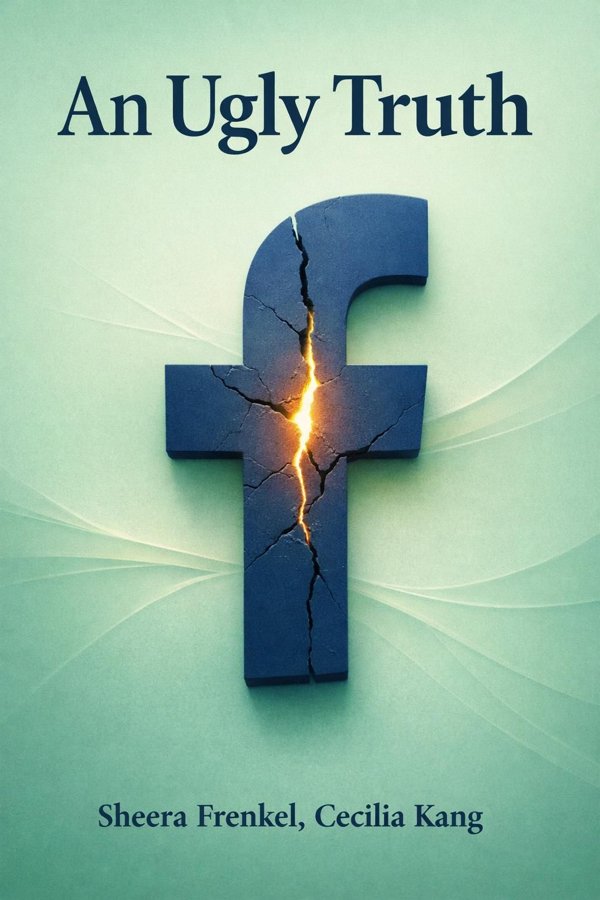
An Ugly Truth: Inside Facebook’s Battle for Domination
Sheera Frenkel, Cecilia Kang
10 min
Cyber Citizens
Ian Goodfellow
10 min
Digital Minimalism: Choosing a Focused Life in a Noisy World
Cal Newport
10 min
E‑Books & Beyond
Various Authors
10 min
This Is Why We Can't Have Nice Things
Whitney Phillips
10 min
A History of Fake Things on the Internet: When Misinformation Became Entertainment
Walter J. Scheirer
10 minBrowse by Category
Ready to read The Future of Media?
Get the full summary and 100K+ more books with Fizz Moment.