
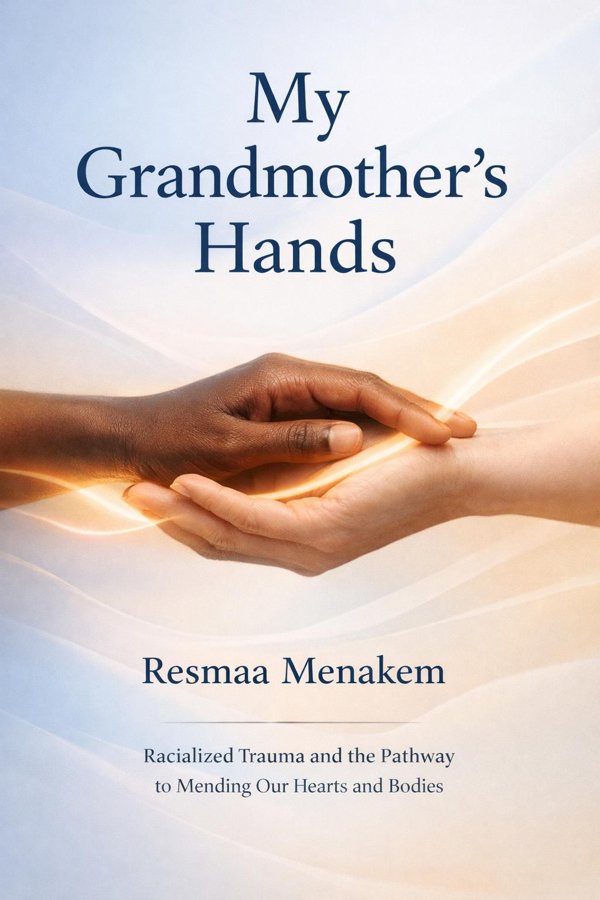
My Grandmother's Hands: Racialized Trauma and the Pathway to Mending Our Hearts and Bodies: Summary & Key Insights
 10 min5 chaptersAudio available
What Is My Grandmother's Hands: Racialized Trauma and the Pathway to Mending Our Hearts and Bodies About?
My Grandmother's Hands: Racialized Trauma and the Pathway to Mending Our Hearts and Bodies by Resmaa Menakem is a mental_health book spanning 5 pages. My Grandmother’s Hands explores how trauma caused by racism is stored in the body and passed down through generations. Drawing from somatic psychology and trauma therapy, Resmaa Menakem offers practical body-centered practices to heal racialized trauma in Black, White, and police bodies, emphasizing that true healing must occur not only in the mind but also in the nervous system.
This FizzRead summary covers all 5 key chapters of My Grandmother's Hands: Racialized Trauma and the Pathway to Mending Our Hearts and Bodies in approximately 10 minutes, distilling the most important ideas, arguments, and takeaways from Resmaa Menakem's work. Also available as an audio summary and Key Quotes Podcast.
My Grandmother's Hands: Racialized Trauma and the Pathway to Mending Our Hearts and Bodies
My Grandmother’s Hands explores how trauma caused by racism is stored in the body and passed down through generations. Drawing from somatic psychology and trauma therapy, Resmaa Menakem offers practical body-centered practices to heal racialized trauma in Black, White, and police bodies, emphasizing that true healing must occur not only in the mind but also in the nervous system.
Who Should Read My Grandmother's Hands: Racialized Trauma and the Pathway to Mending Our Hearts and Bodies?
This book is perfect for anyone interested in mental_health and looking to gain actionable insights in a short read. Whether you're a student, professional, or lifelong learner, the key ideas from My Grandmother's Hands: Racialized Trauma and the Pathway to Mending Our Hearts and Bodies by Resmaa Menakem will help you think differently.
- ✓Readers who enjoy mental_health and want practical takeaways
- ✓Professionals looking to apply new ideas to their work and life
- ✓Anyone who wants the core insights of My Grandmother's Hands: Racialized Trauma and the Pathway to Mending Our Hearts and Bodies in just 10 minutes
Want the full summary?
Get instant access to this book summary and 100K+ more with Fizz Moment.
Get Free SummaryAvailable on App Store • Free to download
Key Chapters
My grandmother’s hands were strong, dark, and worn from years of labor, yet when they held mine, they carried a calm that no history could erase. Those hands symbolize the central metaphor of this work—the transmission of both trauma and tenderness through generations. In my grandmother’s touch, I felt centuries of endurance, the residue of racial violence, and the quiet power of survival that made her body an archive of history and hope. The book’s title honors those hands because they remind us that healing is a physical inheritance, not an abstraction.
Intergenerational trauma does not vanish with time; it embeds itself in the nervous system, showing up as hypervigilance, constricted muscles, or chronic anxiety. The trauma experienced by one generation becomes the baseline regulation or dysregulation of the next. My grandmother lived through segregation and humiliation, and the stress she absorbed shaped her body’s responses. I grew up inheriting those cues of caution and readiness, learning that safety was never guaranteed. When I began studying somatic therapy, I recognized those sensations for what they were—my grandmother’s embodied wisdom about survival.
Through this lens, we can see how family stories become bodily memories. Healing those memories means acknowledging how they live within us. My grandmother’s grace under pressure taught me that resilience begins with staying connected to one’s body, even in danger. She couldn’t articulate the science of trauma, but she knew how to breathe through pain, how to soften when her body begged her to harden. In honoring her, I ask every reader to look within their lineage and notice the hands—the gestures, the touches—that carried both suffering and survival. Every nervous system tells a story. To heal ourselves, we must listen not just to what was said, but to what was felt.
The nervous system is where trauma lives and heals. It governs our reflexes of fight, flight, freeze, and collapse. Under racial stress, these reflexes become patterned responses to threat, even when the threat is historical or symbolic. Every racial encounter can activate bodily memories older than our own lifetimes. Through somatic therapy, I came to understand that racial justice work often fails because it stays in the cognitive realm—debates, ideologies, and moral positions—while the body remains flooded with survival energy that no amount of reasoning can resolve.
I distinguish between two types of pain: clean pain and dirty pain. Clean pain is the discomfort of facing reality and choosing integrity despite fear. It hurts, but it moves toward healing. Dirty pain, in contrast, is the pain of avoidance—of clinging to denial, blame, or aggression instead of working through discomfort. Dirty pain perpetuates trauma because it refuses the body’s need to metabolize stress. A police officer avoiding vulnerability, a White person denying privilege, a Black person numbing their rage—all can fall into dirty pain without realizing that the avoidance keeps the body locked in defensive cycles.
To experience clean pain, one must learn to settle the body enough to stay present while experiencing discomfort. Grounding, breathing, vocalization, and rhythmic movement allow the nervous system to discharge tension safely. These practices create room for empathy, accountability, and real connection. Healing racialized trauma therefore begins not with self-consciousness or moral correctness but with somatic capacity—the ability to feel what’s true and remain steady. Once a body can hold discomfort without collapsing or attacking, transformation becomes possible.
+ 3 more chapters — available in the FizzRead app
All Chapters in My Grandmother's Hands: Racialized Trauma and the Pathway to Mending Our Hearts and Bodies
About the Author
Resmaa Menakem is a therapist, author, and trauma specialist known for his work on racialized trauma and body-centered healing. He has served as a therapist for individuals and organizations and has written extensively on the intersection of race, trauma, and healing.
Get This Summary in Your Preferred Format
Read or listen to the My Grandmother's Hands: Racialized Trauma and the Pathway to Mending Our Hearts and Bodies summary by Resmaa Menakem anytime, anywhere. FizzRead offers multiple formats so you can learn on your terms — all free.
Available formats: App · Audio · PDF · EPUB — All included free with FizzRead
Download My Grandmother's Hands: Racialized Trauma and the Pathway to Mending Our Hearts and Bodies PDF and EPUB Summary
Key Quotes from My Grandmother's Hands: Racialized Trauma and the Pathway to Mending Our Hearts and Bodies
“My grandmother’s hands were strong, dark, and worn from years of labor, yet when they held mine, they carried a calm that no history could erase.”
“The nervous system is where trauma lives and heals.”
Frequently Asked Questions about My Grandmother's Hands: Racialized Trauma and the Pathway to Mending Our Hearts and Bodies
My Grandmother's Hands: Racialized Trauma and the Pathway to Mending Our Hearts and Bodies by Resmaa Menakem is a mental_health book that explores key ideas across 5 chapters. My Grandmother’s Hands explores how trauma caused by racism is stored in the body and passed down through generations. Drawing from somatic psychology and trauma therapy, Resmaa Menakem offers practical body-centered practices to heal racialized trauma in Black, White, and police bodies, emphasizing that true healing must occur not only in the mind but also in the nervous system.
You Might Also Like

Big Feelings: How to Be Okay When Things Are Not Okay
Liz Fosslien, Mollie West Duffy
10 min
Creative Arts Therapies Handbook: Art, Music and Dance Therapy Practices for Wellbeing
Susan I. Buchalter
10 min
Emotional First Aid: Healing Rejection, Guilt, Failure, and Other Everyday Hurts
Guy Winch
10 min
Lost Connections: Why You're Depressed and How to Find Hope
Johann Hari
10 min
No Time to Panic: How to Stop Worrying and Embrace Life
Matt Gutman
10 min
Overcoming Mobbing: A Recovery Guide for Workplace Aggression and Bullying
Maureen Duffy, Len Sperry
10 minBrowse by Category
Ready to read My Grandmother's Hands: Racialized Trauma and the Pathway to Mending Our Hearts and Bodies?
Get the full summary and 100K+ more books with Fizz Moment.