
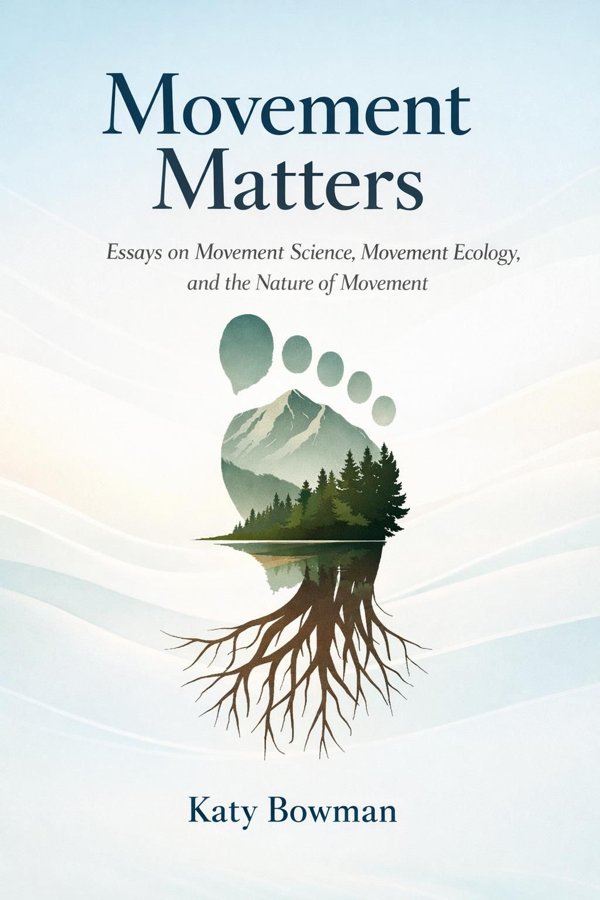
Movement Matters: Essays on Movement Science, Movement Ecology, and the Nature of Movement: Summary & Key Insights
by Katy Bowman
 10 min11 chaptersAudio available
What Is Movement Matters: Essays on Movement Science, Movement Ecology, and the Nature of Movement About?
Movement Matters: Essays on Movement Science, Movement Ecology, and the Nature of Movement by Katy Bowman is a health_med book spanning 11 pages. Movement Matters es una colección de ensayos en los que la biomecánica Katy Bowman explora cómo el movimiento afecta la salud humana, la ecología y la sostenibilidad. A través de una mirada interdisciplinaria, Bowman argumenta que la falta de movimiento en la vida moderna tiene consecuencias tanto personales como ambientales, y propone una visión de la vida más activa y conectada con la naturaleza.
This FizzRead summary covers all 11 key chapters of Movement Matters: Essays on Movement Science, Movement Ecology, and the Nature of Movement in approximately 10 minutes, distilling the most important ideas, arguments, and takeaways from Katy Bowman's work. Also available as an audio summary and Key Quotes Podcast.
Movement Matters: Essays on Movement Science, Movement Ecology, and the Nature of Movement
Movement Matters es una colección de ensayos en los que la biomecánica Katy Bowman explora cómo el movimiento afecta la salud humana, la ecología y la sostenibilidad. A través de una mirada interdisciplinaria, Bowman argumenta que la falta de movimiento en la vida moderna tiene consecuencias tanto personales como ambientales, y propone una visión de la vida más activa y conectada con la naturaleza.
Who Should Read Movement Matters: Essays on Movement Science, Movement Ecology, and the Nature of Movement?
This book is perfect for anyone interested in health_med and looking to gain actionable insights in a short read. Whether you're a student, professional, or lifelong learner, the key ideas from Movement Matters: Essays on Movement Science, Movement Ecology, and the Nature of Movement by Katy Bowman will help you think differently.
- ✓Readers who enjoy health_med and want practical takeaways
- ✓Professionals looking to apply new ideas to their work and life
- ✓Anyone who wants the core insights of Movement Matters: Essays on Movement Science, Movement Ecology, and the Nature of Movement in just 10 minutes
Want the full summary?
Get instant access to this book summary and 100K+ more with Fizz Moment.
Get Free SummaryAvailable on App Store • Free to download
Key Chapters
It’s impossible to talk about human health without confronting sedentarism—the modern epidemic of stillness. Through industrialization, convenience, and design, nearly every need has been engineered to remove the requirement for our bodies to move. We sit while we work, travel, eat, and communicate. What once demanded physical engagement now happens through screens and devices. This isn’t just an issue of posture or calories; it is a systemic shift in how humans inhabit their environments. The result is physiological degradation and ecological detachment.
In this section, I discuss how sedentary lifestyles mirror industrial processes that favor efficiency over engagement. The built environment filters out opportunities for natural movement—smooth surfaces replace uneven terrain; chairs become the default habitat; transport systems turn distances into sedentary transitions. The human body responds to this loss as any ecosystem would: with imbalance and depletion. Our musculoskeletal systems weaken, circulation stagnates, and even cellular functions decline due to lack of mechanical stimulation.
But it’s not merely the body that suffers. Sedentarism changes how we relate to our environment—reducing the need to touch soil, to feel temperature variations, or to navigate natural obstacles. Movement once bridged humans to their surroundings; now, sedentarism constructs walls. Understanding this dynamic is the first step toward reclaiming a life of active participation, where motion once again becomes the interface between self and world.
Every creature on Earth relies on movement to survive, reproduce, and maintain its ecological role. From the tiniest insects to the migration of large mammals, movement patterns define the shape and resilience of ecosystems. Humans are no exception. The way we move—or fail to—affects nutrient cycles, energy flow, and even the distribution of life itself. In *Movement Matters*, I trace how our modern motion patterns have become ecologically disruptive.
Where nomadic or agrarian humans once moved in synchrony with ecosystems, industrial lifestyles have localized movement into artificial spaces—gyms, vehicles, factories—separating our energy expenditure from ecological feedback loops. We consume without contributing to the renewal of natural systems. I use examples such as foraging paths, walking in varied terrain, and manual food gathering to illustrate how human motion once fostered biodiversity. Modern conveniences compress that web. By not moving through landscapes, we fail to disperse seeds, aerate soil, or maintain the small ecological connections that once linked us to place.
In aligning movement with ecology again, I encourage reinhabitation—physically re-engaging with the land through functional, context-aware motion. This alignment asks us to think not only of how movement keeps us fit, but how movement keeps ecosystems alive.
+ 9 more chapters — available in the FizzRead app
All Chapters in Movement Matters: Essays on Movement Science, Movement Ecology, and the Nature of Movement
About the Author
Katy Bowman es una biomecánica, autora y educadora reconocida internacionalmente por su trabajo en el campo del movimiento natural y la mecánica corporal. Es fundadora de Nutritious Movement y autora de varios libros sobre cómo integrar el movimiento en la vida cotidiana.
Get This Summary in Your Preferred Format
Read or listen to the Movement Matters: Essays on Movement Science, Movement Ecology, and the Nature of Movement summary by Katy Bowman anytime, anywhere. FizzRead offers multiple formats so you can learn on your terms — all free.
Available formats: App · Audio · PDF · EPUB — All included free with FizzRead
Download Movement Matters: Essays on Movement Science, Movement Ecology, and the Nature of Movement PDF and EPUB Summary
Key Quotes from Movement Matters: Essays on Movement Science, Movement Ecology, and the Nature of Movement
“It’s impossible to talk about human health without confronting sedentarism—the modern epidemic of stillness.”
“Every creature on Earth relies on movement to survive, reproduce, and maintain its ecological role.”
Frequently Asked Questions about Movement Matters: Essays on Movement Science, Movement Ecology, and the Nature of Movement
Movement Matters: Essays on Movement Science, Movement Ecology, and the Nature of Movement by Katy Bowman is a health_med book that explores key ideas across 11 chapters. Movement Matters es una colección de ensayos en los que la biomecánica Katy Bowman explora cómo el movimiento afecta la salud humana, la ecología y la sostenibilidad. A través de una mirada interdisciplinaria, Bowman argumenta que la falta de movimiento en la vida moderna tiene consecuencias tanto personales como ambientales, y propone una visión de la vida más activa y conectada con la naturaleza.
More by Katy Bowman

You Might Also Like

On Immunity
Eula Biss
10 min
The Three-Body Problem
Liu Cixin
10 min
Community Health Volunteer Toolkit: Training and Practical Activities
World Health Organization
10 min
Healing Back Pain: The Mind-Body Connection
John E. Sarno
10 min
Health Literacy for All: Practical Guides to Communicate Health Information (Compilations)
World Health Organization
10 min
The Complete Guide to Sports Supplements: An Evidence-Based Review
Anita Bean
10 minBrowse by Category
Ready to read Movement Matters: Essays on Movement Science, Movement Ecology, and the Nature of Movement?
Get the full summary and 100K+ more books with Fizz Moment.