
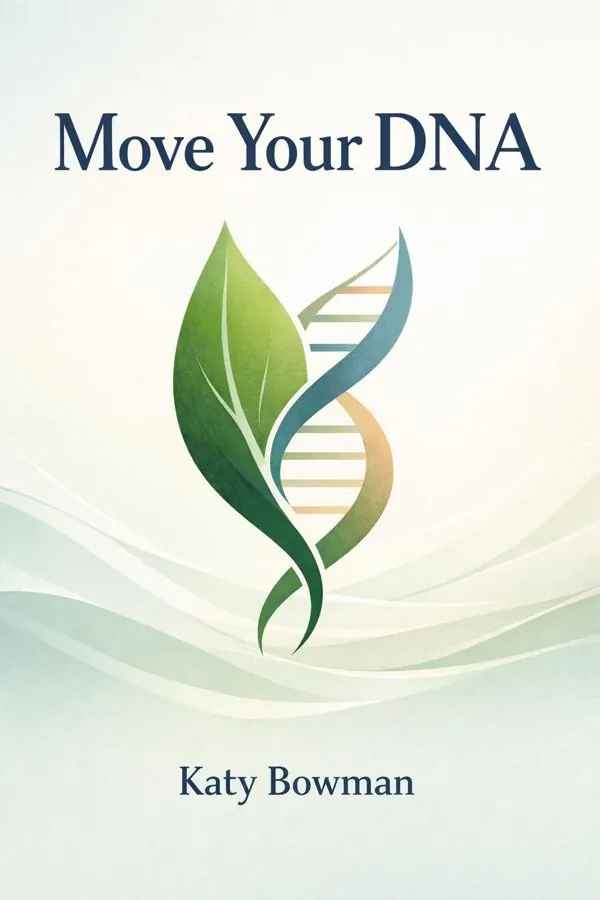
Move Your DNA: Restore Your Health Through Natural Movement: Summary & Key Insights
by Katy Bowman
 10 min5 chaptersAudio available
What Is Move Your DNA: Restore Your Health Through Natural Movement About?
Move Your DNA: Restore Your Health Through Natural Movement by Katy Bowman is a fitness book spanning 5 pages. Move Your DNA explora cómo el movimiento natural afecta la salud humana a nivel celular. Katy Bowman explica la diferencia entre ejercicio y movimiento, mostrando cómo la falta de variedad en los patrones de movimiento modernos contribuye a problemas físicos y metabólicos. El libro ofrece una guía práctica para incorporar movimientos naturales en la vida diaria, mejorando la movilidad, la fuerza y la longevidad.
This FizzRead summary covers all 5 key chapters of Move Your DNA: Restore Your Health Through Natural Movement in approximately 10 minutes, distilling the most important ideas, arguments, and takeaways from Katy Bowman's work. Also available as an audio summary and Key Quotes Podcast.
Move Your DNA: Restore Your Health Through Natural Movement
Move Your DNA explora cómo el movimiento natural afecta la salud humana a nivel celular. Katy Bowman explica la diferencia entre ejercicio y movimiento, mostrando cómo la falta de variedad en los patrones de movimiento modernos contribuye a problemas físicos y metabólicos. El libro ofrece una guía práctica para incorporar movimientos naturales en la vida diaria, mejorando la movilidad, la fuerza y la longevidad.
Who Should Read Move Your DNA: Restore Your Health Through Natural Movement?
This book is perfect for anyone interested in fitness and looking to gain actionable insights in a short read. Whether you're a student, professional, or lifelong learner, the key ideas from Move Your DNA: Restore Your Health Through Natural Movement by Katy Bowman will help you think differently.
- ✓Readers who enjoy fitness and want practical takeaways
- ✓Professionals looking to apply new ideas to their work and life
- ✓Anyone who wants the core insights of Move Your DNA: Restore Your Health Through Natural Movement in just 10 minutes
Want the full summary?
Get instant access to this book summary and 100K+ more with Fizz Moment.
Get Free SummaryAvailable on App Store • Free to download
Key Chapters
When I distinguish 'exercise' from 'movement,' I’m not dismissing workouts but reframing their role. Exercise is a modern concept — a way to compensate artificially for lost movement. Movement, in contrast, is life itself. Historically, our ancestors didn’t perform workouts; they lived in a world that demanded constant, varied motion. Every physical activity — walking, gathering, climbing, carrying children — contributed to their mechanical nourishment.
The modern world has separated movement into isolated events. We sit for ten hours, then run for thirty minutes, thinking we’ve balanced the ledger. But our bodies don’t calculate like that. Cellular processes depend on continuous mechanical input, not sporadic intensity. If you imagine a heart cell or bone cell waiting for mechanical signals, it doesn’t receive them only during a workout — it thrives on the ongoing rhythm of movement throughout the day.
This explains why static postures (like prolonged sitting) and repetitive, high-intensity exercises can both create imbalance. Sedentary hours starve tissues of necessary inputs, and overemphasis on certain motions — running straight lines, cycling seated — overdoses limited movement nutrients. True physical health arises from a spectrum of motions. You can think of yourself as a gardener tending multiple plants; each part of your body requires unique mechanical stimulation to flourish.
A simple walk can be a full-body dialogue if approached mindfully — noticing how muscles align, how feet contact varied surfaces, how the pelvis moves. Exercise transforms into movement when diversity, alignment, and awareness join together. My goal is not to make you guilt-ridden about sitting or to glorify athleticism. It’s to invite you to see that movement is already within reach. Open a window, stretch to reach it, squat to pick up a dropped object, walk barefoot across your yard — each small act restores natural mechanical nutrition.
Understanding this distinction frees you from the constraint of needing a gym or special program. Movement happens in how you live, not simply how you train. Once you shift this mindset, you begin to see opportunities everywhere; life itself becomes your movement studio.
+ 3 more chapters — available in the FizzRead app
All Chapters in Move Your DNA: Restore Your Health Through Natural Movement
About the Author
Katy Bowman es una biomecánica estadounidense, autora y educadora reconocida por su trabajo en movimiento natural y salud del cuerpo. Fundadora de Nutritious Movement, Bowman promueve la idea de que el movimiento variado es esencial para la función óptima del cuerpo humano.
Get This Summary in Your Preferred Format
Read or listen to the Move Your DNA: Restore Your Health Through Natural Movement summary by Katy Bowman anytime, anywhere. FizzRead offers multiple formats so you can learn on your terms — all free.
Available formats: App · Audio · PDF · EPUB — All included free with FizzRead
Download Move Your DNA: Restore Your Health Through Natural Movement PDF and EPUB Summary
Key Quotes from Move Your DNA: Restore Your Health Through Natural Movement
“Movement nutrition is the foundation of this entire philosophy.”
“When I distinguish 'exercise' from 'movement,' I’m not dismissing workouts but reframing their role.”
Frequently Asked Questions about Move Your DNA: Restore Your Health Through Natural Movement
Move Your DNA: Restore Your Health Through Natural Movement by Katy Bowman is a fitness book that explores key ideas across 5 chapters. Move Your DNA explora cómo el movimiento natural afecta la salud humana a nivel celular. Katy Bowman explica la diferencia entre ejercicio y movimiento, mostrando cómo la falta de variedad en los patrones de movimiento modernos contribuye a problemas físicos y metabólicos. El libro ofrece una guía práctica para incorporar movimientos naturales en la vida diaria, mejorando la movilidad, la fuerza y la longevidad.
More by Katy Bowman
You Might Also Like
The Men's Health Handbook: Practical Fitness, Nutrition, and Wellbeing for Men
Men's Health Editors
10 min
30 Ways to Reboot Your Body: A Complete User Manual for Getting the Most Out of the Human Body
Ben Greenfield
10 min
Active Aging: Exercise Plans for Older Adults: Safe Training for Seniors and Aging Populations
Patricia A. Brill
10 min
Becoming a Supple Leopard: The Ultimate Guide to Resolving Pain, Preventing Injury, and Optimizing Athletic Performance
Kelly Starrett
10 min
Bigger Leaner Stronger: The Simple Science of Building the Ultimate Male Body
Michael Matthews
10 min
Body by Science: A Research-Based Program for Strength Training, Bodybuilding, and Complete Fitness in 12 Minutes a Week
Doug McGuff, John Little
10 minBrowse by Category
Ready to read Move Your DNA: Restore Your Health Through Natural Movement?
Get the full summary and 100K+ more books with Fizz Moment.