
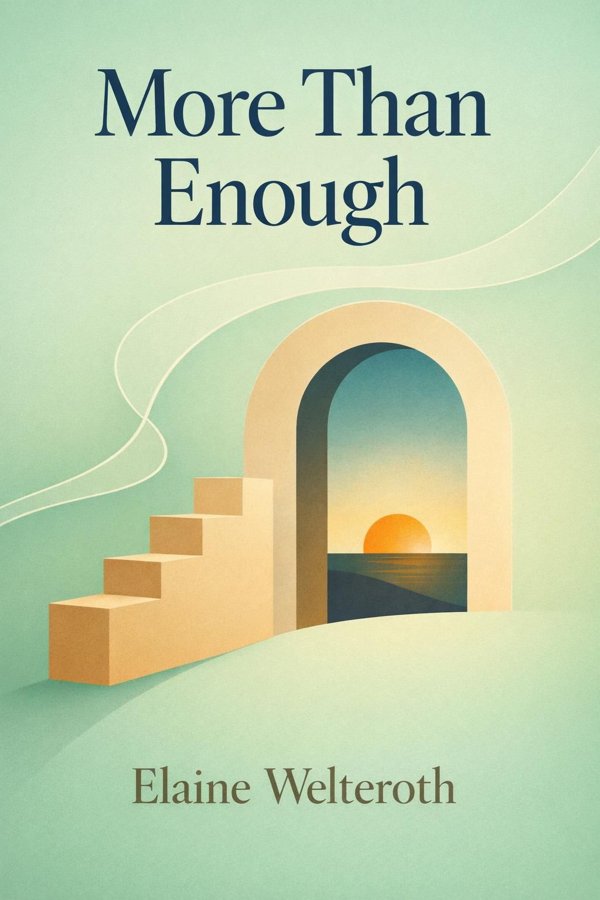
More Than Enough: Claiming Space for Who You Are (No Matter What They Say): Summary & Key Insights
 10 min9 chaptersAudio available
Key Takeaways from More Than Enough: Claiming Space for Who You Are (No Matter What They Say)
Before people step into the world, the world has already stepped into them.
Ambition is often misunderstood as hunger for status, but Welteroth presents it as something deeper: a way of becoming more fully yourself.
Talent matters, but access often decides who gets seen.
The same room can reward one person for confidence and punish another for it.
No one rises alone, but support only matters if you are willing to grow into it.
What Is More Than Enough: Claiming Space for Who You Are (No Matter What They Say) About?
More Than Enough: Claiming Space for Who You Are (No Matter What They Say) by Elaine Welteroth is a biographies book spanning 11 pages. More Than Enough is a memoir about identity, ambition, race, beauty, and the courage to define success for yourself in rooms that were not designed with you in mind. In this deeply personal account, Elaine Welteroth traces her journey from a young girl shaped by a loving but complex multiracial family to a trailblazing editor who rose to become editor-in-chief of Teen Vogue. Along the way, she reveals the emotional cost of being “the only one” in elite spaces, the pressure to perform perfection, and the slow, difficult work of learning that belonging does not have to be earned through self-erasure. What makes this book powerful is that it is not only a career story. It is a story about becoming whole. Welteroth examines the intersections of race, gender, class, and image with honesty and vulnerability, showing how public success can exist alongside private uncertainty. Her authority comes from lived experience: she broke barriers in fashion and media while using her platform to expand representation and push culture forward. The result is an inspiring, candid memoir that speaks to anyone who has ever felt underestimated, unseen, or asked to shrink themselves to fit someone else’s idea of enough.
This FizzRead summary covers all 9 key chapters of More Than Enough: Claiming Space for Who You Are (No Matter What They Say) in approximately 10 minutes, distilling the most important ideas, arguments, and takeaways from Elaine Welteroth's work. Also available as an audio summary and Key Quotes Podcast.
More Than Enough: Claiming Space for Who You Are (No Matter What They Say)
More Than Enough is a memoir about identity, ambition, race, beauty, and the courage to define success for yourself in rooms that were not designed with you in mind. In this deeply personal account, Elaine Welteroth traces her journey from a young girl shaped by a loving but complex multiracial family to a trailblazing editor who rose to become editor-in-chief of Teen Vogue. Along the way, she reveals the emotional cost of being “the only one” in elite spaces, the pressure to perform perfection, and the slow, difficult work of learning that belonging does not have to be earned through self-erasure.
What makes this book powerful is that it is not only a career story. It is a story about becoming whole. Welteroth examines the intersections of race, gender, class, and image with honesty and vulnerability, showing how public success can exist alongside private uncertainty. Her authority comes from lived experience: she broke barriers in fashion and media while using her platform to expand representation and push culture forward. The result is an inspiring, candid memoir that speaks to anyone who has ever felt underestimated, unseen, or asked to shrink themselves to fit someone else’s idea of enough.
Who Should Read More Than Enough: Claiming Space for Who You Are (No Matter What They Say)?
This book is perfect for anyone interested in biographies and looking to gain actionable insights in a short read. Whether you're a student, professional, or lifelong learner, the key ideas from More Than Enough: Claiming Space for Who You Are (No Matter What They Say) by Elaine Welteroth will help you think differently.
- ✓Readers who enjoy biographies and want practical takeaways
- ✓Professionals looking to apply new ideas to their work and life
- ✓Anyone who wants the core insights of More Than Enough: Claiming Space for Who You Are (No Matter What They Say) in just 10 minutes
Want the full summary?
Get instant access to this book summary and 100K+ more with Fizz Moment.
Get Free SummaryAvailable on App Store • Free to download
Key Chapters
Before people step into the world, the world has already stepped into them. One of the most important ideas in More Than Enough is that identity does not begin in the workplace or in adulthood; it begins at home, in family, in neighborhood, and in the stories we absorb about who we are allowed to become. Elaine Welteroth reflects on being raised by a Black mother and a white father, and how that background gave her both pride and tension. She was taught confidence, faith, discipline, and the importance of education, but she also learned early that race shaped how others saw her.
These early influences mattered because they formed her internal compass. Her mother especially modeled strength and self-belief, showing that dignity is something you practice before the world validates it. At the same time, Welteroth had to make sense of existing between categories in a culture that often demands easy labels. That experience sharpened her awareness of difference and prepared her to notice who gets centered, who gets excluded, and who is told to be grateful just to be in the room.
This idea applies far beyond memoir. Anyone trying to build confidence can benefit from tracing the messages they inherited growing up. What did your family teach you about success, beauty, safety, money, race, or ambition? Which beliefs strengthened you, and which ones made you smaller? Understanding your roots helps you separate your true voice from fear-based conditioning.
Actionable takeaway: Write down three messages from your upbringing that still shape your decisions today, then decide which ones you want to keep and which ones you need to outgrow.
Ambition is often misunderstood as hunger for status, but Welteroth presents it as something deeper: a way of becoming more fully yourself. As she moved through school and into college, she began to understand that wanting more was not selfish or shallow. Ambition gave her a language for possibility. Storytelling, writing, and media became more than career interests; they became tools for connecting worlds and making meaning from her experience.
A key insight here is that ambition looks different when you come from groups that have historically been underrepresented. For some people, striving is encouraged from the start. For others, it can feel risky. Success may invite scrutiny, accusations of being too much, or pressure to stay in roles that make others comfortable. Welteroth shows that ambition is not just about climbing. It is about resisting the limits other people place on your imagination.
Her story also highlights the importance of experimentation. She did not arrive with a flawless master plan. She pursued internships, followed interests, learned by doing, and stayed open to the unexpected. That is a practical lesson for readers who feel paralyzed by the pressure to know their entire future. Ambition is often less about certainty than about willingness: willingness to try, to learn, and to keep moving before you feel fully ready.
In everyday life, this might mean applying for a stretch role, launching a creative project, or asking yourself what you would pursue if you stopped treating your dreams as unrealistic. Ambition becomes sustainable when it is anchored to purpose rather than comparison.
Actionable takeaway: Define one goal that reflects who you are becoming, not just what looks impressive to others, and take one concrete step toward it this week.
Talent matters, but access often decides who gets seen. Welteroth’s early career in journalism and magazine publishing reveals how difficult it can be to break into prestigious industries that rely on gatekeeping, image, and insider networks. Entering media was not simply a matter of being good at writing. It required persistence, strategic self-presentation, and the ability to navigate systems where opportunity was not equally distributed.
One of the memoir’s strengths is that it demystifies glamorous careers. Behind the recognizable brands and polished offices were long hours, uncertainty, and constant proof that she belonged. Welteroth had to learn the unwritten rules of elite spaces while also dealing with the burden of visibility. As a young Black woman in fashion and publishing, she was often one of very few people who looked like her. That changed the stakes of every impression. Mistakes could feel magnified. Success could feel conditional.
Yet the lesson is not simply that systems are unfair. It is that preparation and resilience can coexist with critique. Welteroth did the work, built relationships, refined her craft, and stayed alert to openings. She understood that excellence alone does not eliminate bias, but it can create leverage. She also recognized that getting through the door is only the beginning; what matters next is how you use your position.
For readers, this idea is useful in any competitive field. Breaking in may require both skill and strategy: learning industry norms, finding allies, building a portfolio, and refusing to interpret rejection as final truth. Closed doors are often structural, not personal.
Actionable takeaway: Identify one barrier in your field that feels personal, then reframe it as a system problem and make a plan with two strategic responses instead of one emotional reaction.
The same room can reward one person for confidence and punish another for it. In More Than Enough, Welteroth vividly shows how race and gender shape professional life, especially in industries obsessed with image and influence. She did not move through media as a neutral individual. She moved through it as a Black woman whose appearance, tone, ambition, and leadership were constantly interpreted through cultural bias.
This idea matters because inequality in the workplace is often disguised as personal preference or company culture. A hairstyle becomes “too political.” A direct communication style becomes “difficult.” A push for inclusion becomes “off-brand.” Welteroth’s experiences reveal how often marginalized people are asked to translate themselves into forms others find acceptable. The pressure is not only to perform well, but to do so without making anyone uncomfortable about their own assumptions.
Her story also demonstrates the emotional labor involved in navigating these dynamics. It takes energy to decide when to speak, when to educate, when to let something go, and when silence would cost too much. That labor is rarely acknowledged, yet it shapes careers and well-being. Welteroth does not romanticize this struggle. Instead, she names it, which is itself a form of power.
In practical terms, this chapter of her journey encourages readers to recognize bias without internalizing it. For leaders, it is a reminder that diversity without belonging is cosmetic. Representation matters, but inclusive culture matters more. For individuals, it underscores the value of boundaries, documentation, support networks, and language for naming what is happening.
Actionable takeaway: The next time you feel diminished in a professional setting, describe the experience in specific terms rather than vague self-doubt; clarity is the first step toward protecting your space.
No one rises alone, but support only matters if you are willing to grow into it. Welteroth’s memoir highlights the crucial role of mentorship in shaping her career, confidence, and sense of possibility. Along the way, she encountered people who recognized her talent, gave her guidance, and helped her see a bigger future than the one she might have imagined on her own. In industries where access is uneven, mentorship can be transformative because it offers both practical advice and a lived example of what is possible.
But the book makes another important point: mentors are not saviors. They can open doors, share wisdom, and advocate for you, yet they cannot substitute for your own preparation and courage. Welteroth had to deliver, adapt, and keep learning. She also had to be coachable without becoming dependent on external approval. That balance is essential. Good mentorship strengthens your voice; it does not replace it.
This idea is useful for readers at any career stage. A mentor might be a boss, a professor, a peer, or even someone you learn from through books and interviews. What matters is finding people whose values align with your growth, not just your advancement. It also means understanding that mentorship can be reciprocal. As you gain experience, part of your responsibility is to become the kind of guide you once needed.
In practical application, mentorship works best when approached intentionally. Instead of asking vaguely for help, ask for insight on a specific challenge, a skill gap, or a decision. Come prepared. Follow up. Apply what you learn. Relationships deepen when guidance is honored through action.
Actionable takeaway: Reach out to one person whose career or character you respect, ask one thoughtful, specific question, and then implement at least one piece of their advice.
Real leadership is not just about reaching the top; it is about changing what the top looks like. One of the defining sections of More Than Enough is Welteroth’s tenure at Teen Vogue, where she helped transform the publication from a celebrity-and-style brand into a sharper, more politically engaged, culturally relevant platform. Her work demonstrated that media aimed at young audiences did not have to be shallow to be successful. It could speak honestly about power, identity, activism, and the world readers were inheriting.
This shift mattered because editorial decisions shape public imagination. When a magazine widens its lens, it tells readers that their full lives matter—not only how they dress, but what they think, fear, challenge, and hope for. Welteroth used her leadership role to center voices and topics that had often been sidelined. In doing so, she challenged the assumption that mainstream platforms must cater to the narrowest version of acceptability.
Her example offers a broader lesson on institutional change. If you gain influence inside a system, you face a choice: preserve what benefits you, or use your position to make the system more honest and inclusive. That often involves risk. Innovation can attract criticism from those invested in the old model. But Welteroth shows that leadership requires vision strong enough to withstand discomfort.
For readers in any field, this idea translates into asking better questions: Who is missing from the conversation? What stories are we telling repeatedly? What assumptions are baked into our standards? Whether you manage a team, design a classroom, run a business, or shape content, you can widen the frame.
Actionable takeaway: Review one sphere of influence in your life and identify one concrete change that would make it more inclusive, representative, or truthful.
Being seen is not the same as being understood. As Welteroth’s public profile grew, she had to navigate the complicated territory between personal identity and public role. Success brought admiration and influence, but it also came with projection. People saw the title, the fashion, the visibility, and often assumed certainty. What they did not always see was the ongoing internal work of figuring out who she was beyond performance, expectation, and applause.
This is one of the memoir’s most relatable insights. Many people, even outside public life, know the gap between how they appear and how they actually feel. You can be high-achieving and still insecure. You can be praised and still lonely. You can represent something meaningful to others while privately wrestling with doubt. Welteroth refuses the false narrative that external success resolves internal complexity.
Her story encourages readers to think carefully about image. Branding can be useful, but it becomes dangerous when it hardens into a mask. If your public self is always polished, agreeable, or inspirational, you may lose contact with the parts of you that are still questioning, grieving, or evolving. The challenge is to remain authentic without oversharing, grounded without disappearing into other people’s expectations.
This idea can be applied by setting clearer boundaries around what parts of your life are public, how you define yourself apart from your résumé, and what practices keep you connected to your actual values. Journaling, therapy, spiritual reflection, and honest friendships all help preserve the self beneath the role.
Actionable takeaway: Make a list of the labels others place on you, then write a private definition of yourself that includes qualities no title or social image can fully capture.
One of the memoir’s central truths is that many people spend years waiting to be chosen, approved, or welcomed before they allow themselves to take up space. Welteroth’s journey challenges that reflex. Claiming space is not arrogance. It is the decision to stop shrinking in order to make others comfortable. It means trusting that your voice, body, perspective, and presence do not need to be justified by perfection.
For women, especially women of color, this message carries special force. Society often sends contradictory instructions: be exceptional, but not intimidating; be visible, but not loud; be authentic, but only in ways that are palatable. Welteroth exposes how exhausting those double binds can be. Her answer is not to deny vulnerability, but to refuse self-erasure. Confidence, in her telling, is not the absence of fear. It is acting with integrity despite fear.
This idea has everyday relevance. Claiming space can look dramatic, such as speaking up in a boardroom or rejecting a limiting career path. But it can also be intimate: wearing your hair the way you want, setting a boundary in a relationship, naming your worth in a negotiation, or refusing to apologize for your ambition. The point is not domination. The point is congruence—living in a way that no longer asks your identity to live in hiding.
Welteroth also suggests that claiming space is contagious. When one person stands fully in themselves, others gain permission to do the same. Personal liberation creates cultural ripple effects.
Actionable takeaway: Choose one place in your life where you have been minimizing yourself, and replace one shrinking habit this week with one visible act of self-respect.
Success is not a final destination; it is a stage that can become a trap if you confuse achievement with identity. In the later movement of More Than Enough, Welteroth reflects on transitions, new beginnings, and the challenge of leaving roles that once defined her. This is a crucial idea because many ambitious people know how to strive, but fewer know how to evolve. Once you become known for something, changing direction can feel like betrayal—of others’ expectations and even of your former self.
Welteroth treats transition as a sign of growth rather than instability. She shows that there are seasons when the role that once stretched you begins to contain you. At that point, courage means listening for what is next, even without guarantees. Reinvention does not erase what came before; it integrates it. Every chapter of her career and personal life contributes to a broader sense of purpose rooted in impact, creativity, and authenticity.
This lesson is valuable for anyone at a crossroads. You may have built a life that looks successful on paper yet no longer feels aligned. The fear of disappointing people, losing status, or starting over can keep you stuck. Welteroth’s story suggests that transitions become more manageable when you stop seeing them as evidence of failure and start seeing them as evidence that you are still becoming.
Practically, reinvention often begins quietly: a new interest you can no longer ignore, a value conflict you can no longer rationalize, or a fatigue that achievement cannot solve. Paying attention to these signals helps you move before burnout makes the decision for you.
Actionable takeaway: Ask yourself what part of your current life feels complete, and what new direction keeps returning to your mind; then take one low-risk step to explore that next chapter.
All Chapters in More Than Enough: Claiming Space for Who You Are (No Matter What They Say)
About the Author
Elaine Welteroth is an American journalist, editor, producer, and television host whose work focuses on culture, identity, beauty, and representation. She rose to prominence in magazine publishing and made history as the youngest editor-in-chief in Teen Vogue’s history, as well as the second Black woman to hold that position. During her tenure, the magazine expanded beyond fashion and celebrity coverage to include politics, social justice, and youth activism. Welteroth has since built a multi-platform career in media, bringing thoughtful commentary to television and public discourse. Known for combining style with substance, she has become a leading voice on ambition, authenticity, and inclusive leadership. More Than Enough reflects both her personal journey and her broader mission to help people claim space as their full selves.
Get This Summary in Your Preferred Format
Read or listen to the More Than Enough: Claiming Space for Who You Are (No Matter What They Say) summary by Elaine Welteroth anytime, anywhere. FizzRead offers multiple formats so you can learn on your terms — all free.
Available formats: App · Audio · PDF · EPUB — All included free with FizzRead
Download More Than Enough: Claiming Space for Who You Are (No Matter What They Say) PDF and EPUB Summary
Key Quotes from More Than Enough: Claiming Space for Who You Are (No Matter What They Say)
“Before people step into the world, the world has already stepped into them.”
“Ambition is often misunderstood as hunger for status, but Welteroth presents it as something deeper: a way of becoming more fully yourself.”
“Talent matters, but access often decides who gets seen.”
“The same room can reward one person for confidence and punish another for it.”
“No one rises alone, but support only matters if you are willing to grow into it.”
Frequently Asked Questions about More Than Enough: Claiming Space for Who You Are (No Matter What They Say)
More Than Enough: Claiming Space for Who You Are (No Matter What They Say) by Elaine Welteroth is a biographies book that explores key ideas across 9 chapters. More Than Enough is a memoir about identity, ambition, race, beauty, and the courage to define success for yourself in rooms that were not designed with you in mind. In this deeply personal account, Elaine Welteroth traces her journey from a young girl shaped by a loving but complex multiracial family to a trailblazing editor who rose to become editor-in-chief of Teen Vogue. Along the way, she reveals the emotional cost of being “the only one” in elite spaces, the pressure to perform perfection, and the slow, difficult work of learning that belonging does not have to be earned through self-erasure. What makes this book powerful is that it is not only a career story. It is a story about becoming whole. Welteroth examines the intersections of race, gender, class, and image with honesty and vulnerability, showing how public success can exist alongside private uncertainty. Her authority comes from lived experience: she broke barriers in fashion and media while using her platform to expand representation and push culture forward. The result is an inspiring, candid memoir that speaks to anyone who has ever felt underestimated, unseen, or asked to shrink themselves to fit someone else’s idea of enough.
You Might Also Like

An American Marriage
Tayari Jones
10 min
Benjamin Franklin: An American Life
Walter Isaacson
10 min
I Know Why The Caged Bird Sings
Maya Angelou
10 min
Long Walk to Freedom
Nelson Mandela
10 min
Persepolis
Marjane Satrapi
10 min
Surely You're Joking, Mr. Feynman!
Richard P. Feynman
10 minBrowse by Category
Ready to read More Than Enough: Claiming Space for Who You Are (No Matter What They Say)?
Get the full summary and 100K+ more books with Fizz Moment.