
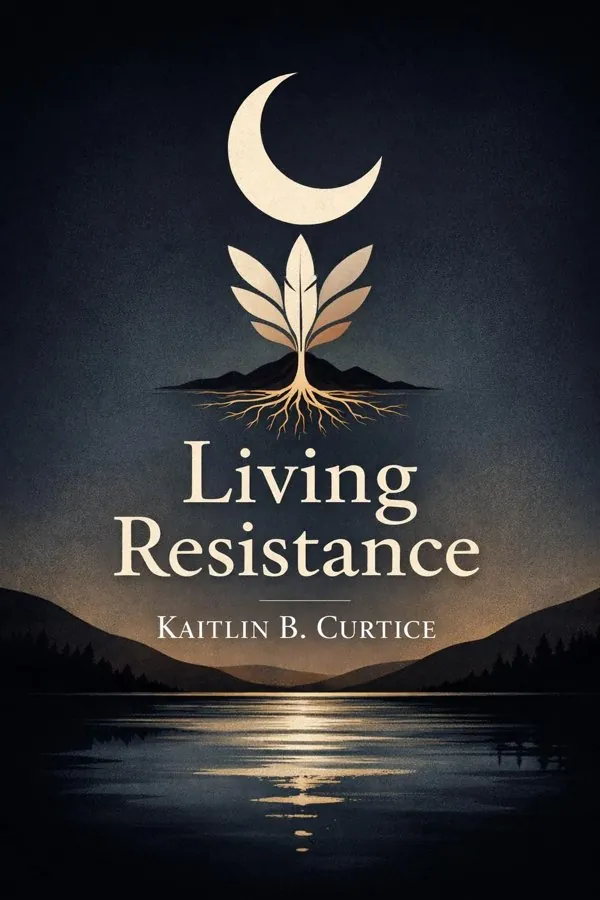
Living Resistance: An Indigenous Vision for Seeking Wholeness Every Day: Summary & Key Insights
 10 min9 chaptersAudio available
Key Takeaways from Living Resistance: An Indigenous Vision for Seeking Wholeness Every Day
One of the quietest forms of resistance is refusing to live as a stranger to yourself.
Many people spend their lives trying to deserve a place they already possess.
Resistance that ignores the inner life can become reactive, performative, or destructive.
Without spiritual grounding, resistance can burn hot and collapse quickly.
A disconnected relationship with the earth often mirrors a disconnected relationship with ourselves and each other.
What Is Living Resistance: An Indigenous Vision for Seeking Wholeness Every Day About?
Living Resistance: An Indigenous Vision for Seeking Wholeness Every Day by Kaitlin B. Curtice is a eastern_wisdom book spanning 9 pages. Living Resistance is a deeply reflective and practical book about how to resist the forces that fragment us without losing our humanity in the process. Kaitlin B. Curtice argues that resistance is not only public activism or political opposition; it is also a daily spiritual practice rooted in identity, memory, community, rest, and relationship with the earth. Drawing from Indigenous wisdom, personal storytelling, and contemplative insight, she shows that wholeness is not something we achieve through perfection, but something we remember and nurture through intentional living. What makes this book especially meaningful is its insistence that healing and justice belong together. Curtice invites readers to confront systems of oppression while also tending to the inner life, honoring grief, and cultivating belonging. Her vision of resistance is gentle but not passive, spiritual but not detached, and personal without ignoring structural harm. As an enrolled citizen of the Potawatomi Nation, an author, poet, and speaker on spirituality and decolonization, Curtice writes with moral clarity and lived authority. Living Resistance matters because it offers a humane path toward integrity in a world shaped by disconnection, burnout, and injustice.
This FizzRead summary covers all 9 key chapters of Living Resistance: An Indigenous Vision for Seeking Wholeness Every Day in approximately 10 minutes, distilling the most important ideas, arguments, and takeaways from Kaitlin B. Curtice's work. Also available as an audio summary and Key Quotes Podcast.
Living Resistance: An Indigenous Vision for Seeking Wholeness Every Day
Living Resistance is a deeply reflective and practical book about how to resist the forces that fragment us without losing our humanity in the process. Kaitlin B. Curtice argues that resistance is not only public activism or political opposition; it is also a daily spiritual practice rooted in identity, memory, community, rest, and relationship with the earth. Drawing from Indigenous wisdom, personal storytelling, and contemplative insight, she shows that wholeness is not something we achieve through perfection, but something we remember and nurture through intentional living.
What makes this book especially meaningful is its insistence that healing and justice belong together. Curtice invites readers to confront systems of oppression while also tending to the inner life, honoring grief, and cultivating belonging. Her vision of resistance is gentle but not passive, spiritual but not detached, and personal without ignoring structural harm.
As an enrolled citizen of the Potawatomi Nation, an author, poet, and speaker on spirituality and decolonization, Curtice writes with moral clarity and lived authority. Living Resistance matters because it offers a humane path toward integrity in a world shaped by disconnection, burnout, and injustice.
Who Should Read Living Resistance: An Indigenous Vision for Seeking Wholeness Every Day?
This book is perfect for anyone interested in eastern_wisdom and looking to gain actionable insights in a short read. Whether you're a student, professional, or lifelong learner, the key ideas from Living Resistance: An Indigenous Vision for Seeking Wholeness Every Day by Kaitlin B. Curtice will help you think differently.
- ✓Readers who enjoy eastern_wisdom and want practical takeaways
- ✓Professionals looking to apply new ideas to their work and life
- ✓Anyone who wants the core insights of Living Resistance: An Indigenous Vision for Seeking Wholeness Every Day in just 10 minutes
Want the full summary?
Get instant access to this book summary and 100K+ more with Fizz Moment.
Get Free SummaryAvailable on App Store • Free to download
Key Chapters
One of the quietest forms of resistance is refusing to live as a stranger to yourself. Curtice begins with identity because colonizing systems often work by severing people from memory, ancestry, land, language, and story. When that severing happens, people can become easier to control, easier to shame, and easier to assimilate into ways of living that deny their full humanity. In this context, returning to who you are is not nostalgia. It is recovery.
Curtice reflects on reclaiming her Potawatomi identity and the deeper sense of self that comes from remembering where she comes from. She shows that identity is not merely a label or demographic category. It is a living relationship with ancestors, inherited wisdom, embodied history, and spiritual grounding. To know yourself in this way is to resist the pressures of a culture that rewards fragmentation and performance. It means you stop asking, "Who do I need to be to belong here?" and start asking, "What truths about me have always been present, even when ignored?"
This idea applies far beyond Indigenous experience. Anyone shaped by displacement, family silence, religious harm, racism, or social pressure may need to return to forgotten parts of themselves. That return can look like learning family history, reconnecting with cultural practices, journaling about formative experiences, naming wounds honestly, or choosing communities where your full self is welcome.
Curtice’s point is not that identity is simple. It is layered, evolving, and sometimes painful. But resisting erasure begins with honoring what is real. Actionable takeaway: spend time identifying one part of your story you have minimized or hidden, and begin a practice of honoring it through reflection, conversation, or ritual.
Many people spend their lives trying to deserve a place they already possess. Curtice challenges the modern, colonized idea that belonging is conditional, scarce, and granted only to those who perform correctly. In competitive, hierarchical cultures, belonging is often treated like a reward for productivity, conformity, respectability, or usefulness. But Indigenous wisdom offers a different vision: belonging is rooted in relationship. It is not something we achieve; it is something we remember.
This distinction matters because when belonging becomes something to win, people live in fear. They shape-shift to fit expectations, silence inconvenient truths, and compare themselves endlessly with others. The result is loneliness masked as success. Curtice argues that true belonging begins when we stop organizing our worth around external approval and start recognizing our inherent place within the web of life.
Belonging also has communal dimensions. It is not merely self-acceptance in private. It involves being accountable to others, honoring mutual care, and creating spaces where people are not required to erase themselves in order to be included. In practice, this means building families, friendships, workplaces, and faith communities that make room for complexity, grief, difference, and interdependence.
A practical example might be noticing where you perform for acceptance: at work, online, in family roles, or in spiritual spaces. Do you hide parts of yourself to stay safe? Do your communities ask for your authenticity or your compliance? Curtice invites readers to seek spaces of real kinship rather than conditional inclusion.
The deeper lesson is that belonging is ecological and spiritual. We belong to one another, to place, and to the sacred. Actionable takeaway: identify one environment where you feel you must earn your right to exist, and begin setting boundaries or seeking relationships that affirm your inherent worth instead.
Resistance that ignores the inner life can become reactive, performative, or destructive. Curtice emphasizes self-awareness as a necessary foundation for meaningful change. If we do not understand our fears, habits, wounds, and assumptions, then even our attempts to pursue justice can replicate harm. Inner work is not separate from outer transformation; it is part of it.
Self-awareness begins with attention. It means noticing what happens within us when we feel threatened, ashamed, defensive, disconnected, or overwhelmed. It also means becoming aware of the stories we have inherited from family, religion, nation, and dominant culture. Which stories taught us who matters? Which taught us to distrust our bodies, dismiss our grief, or prioritize image over truth? Curtice invites readers to examine these narratives so they do not unconsciously govern their lives.
This process is especially important in a world that encourages speed and distraction. People can stay so busy reacting to news, obligations, and social pressures that they never pause long enough to understand what is shaping them. But resistance requires discernment. For example, a person committed to justice may need to ask: am I speaking from conviction or from the need to be seen as good? Am I helping others, or avoiding my own pain through constant activism?
Practical practices include journaling, therapy, spiritual direction, contemplative prayer, body-based awareness, and honest conversations with trusted people. Even brief pauses during the day can help: What am I feeling? What am I avoiding? What story is driving this reaction?
Curtice does not frame self-awareness as self-absorption. The goal is not endless introspection. It is clarity that makes compassion and accountability possible. Actionable takeaway: establish a daily five-minute check-in to name one emotion, one trigger, and one truth, so your actions emerge from awareness rather than automatic reaction.
Without spiritual grounding, resistance can burn hot and collapse quickly. Curtice presents spirituality not as escape from the world, but as the source of strength needed to stay present within it. In her vision, spiritual practice helps people resist despair, reconnect with meaning, and act from rootedness rather than panic. It creates interior space where truth can be heard and where exhaustion does not become the only voice.
Curtice draws on an Indigenous understanding of spirituality as embodied, relational, and woven into everyday life. The sacred is not confined to institutions or formal rituals. It can be encountered through silence, breath, storytelling, prayer, ceremony, meals, and attention to the living world. This broader vision is especially healing for people whose experience of religion has been marked by exclusion or control. It reminds readers that spirituality can be a place of restoration instead of fear.
Grounding practices matter because systems of domination thrive on disconnection. When people are cut off from their inner life and from the sacred, they become easier to manipulate through urgency, shame, and spectacle. Spiritual disciplines interrupt that pattern. A person who begins the day with silence, gratitude, or a walk in nature may be better able to respond thoughtfully instead of being consumed by chaos.
Examples of grounding practices include morning reflection, breath prayers, lighting a candle to mark intention, keeping a gratitude list, reading poetry, sitting outdoors, or honoring seasonal rhythms. The practice itself matters less than the posture it forms: receptivity, humility, and remembrance.
Curtice’s insight is that resistance must be nourished if it is to remain humane. We need practices that return us to ourselves and to the sacred center from which wise action flows. Actionable takeaway: choose one simple spiritual practice you can repeat daily for a week, and use it as an anchor before engaging work, news, or conflict.
A disconnected relationship with the earth often mirrors a disconnected relationship with ourselves and each other. Curtice insists that resistance must include renewed intimacy with the natural world because colonial and consumer cultures train people to treat land as property, resource, or backdrop rather than relative. Indigenous wisdom offers another way: the earth is alive with meaning, and human beings are participants in a larger web of reciprocal relationship.
This shift is more than environmental sentiment. It reshapes ethics. If the earth is not an object but a living community to which we belong, then care for land becomes inseparable from care for people. Environmental destruction, extractive economics, and displacement are not isolated issues; they are symptoms of a worldview built on domination. To reconnect with the earth is therefore to unlearn entitlement and relearn humility.
Curtice encourages readers to practice attention. Notice local seasons. Learn the names of plants, birds, and waterways where you live. Spend time outdoors without demanding productivity from the experience. Such practices restore a sense of scale and reciprocity. They also challenge the restless mindset that sees value only in what can be bought, optimized, or consumed.
Practical application can be small but significant: gardening, reducing waste, supporting Indigenous land stewardship, walking without headphones, participating in local ecological efforts, or pausing to give thanks before meals. Parents can involve children by teaching them to observe weather patterns or care for a patch of soil. Communities can hold gatherings outdoors to foster a more grounded sense of belonging.
Curtice reminds readers that healing is not purely internal. The body needs place, rhythm, and relationship with the living world. Actionable takeaway: begin a weekly practice of intentional time outside, using it to observe, listen, and ask what reciprocity with your local environment might require.
What remains unnamed often continues unchallenged. Curtice argues that wholeness cannot be pursued honestly without confronting the systems that deform individual and collective life. Racism, colonialism, white supremacy, patriarchy, capitalism, and other forms of domination are not abstract theories in this book. They are forces that shape bodies, communities, imaginations, and possibilities. Resistance requires more than personal wellness; it requires the courage to see the structures beneath the surface.
Curtice’s approach is important because she refuses the false choice between spirituality and social analysis. Too often, people are invited to heal inwardly while leaving harmful systems intact. But a spirituality that ignores injustice becomes another tool of denial. Likewise, critique without tenderness can become dehumanizing. Curtice seeks a way of truth-telling that is both clear-eyed and life-giving.
To confront oppression, readers must examine how systems operate externally and internally. Externally, this may involve learning history, listening to marginalized voices, studying policies, and noticing who benefits from the status quo. Internally, it means paying attention to biases, fears, and habits of complicity. A person might oppose injustice in principle while still participating in exclusion at work, in church, or in everyday relationships.
Practical actions include reading beyond familiar perspectives, supporting Indigenous and marginalized communities materially, advocating for institutional change, and asking difficult questions in spaces that prefer comfort over truth. Even small acts matter when they interrupt silence.
Curtice reminds readers that naming harm is not negativity; it is an act of liberation. We cannot heal what we refuse to see. Actionable takeaway: choose one system of injustice you benefit from or are affected by, learn more about its history and current impact, and take one concrete step toward accountability or change.
No one becomes whole in isolation. Curtice emphasizes that while personal reflection matters, resistance is fundamentally communal. The modern world often celebrates self-sufficiency, but this ideal can leave people spiritually malnourished and politically powerless. Indigenous wisdom instead highlights kinship, mutual responsibility, and collective care. We need one another not only for survival, but for truth, healing, and transformation.
Community matters because many wounds are relational. Shame, exclusion, domination, and erasure happen between people and within institutions. As a result, healing often requires trustworthy relationships where we can be seen fully, held accountable gently, and supported consistently. A community rooted in living resistance is not perfect or conflict-free. It is willing to practice repair, make room for grief, and honor interdependence.
Curtice also shows that collective action becomes more sustainable when it grows from real relationship. People are more likely to persist in justice work when they are nourished by shared purpose, ritual, meals, stories, and mutual aid. Activism detached from community can become exhausting or self-referential. But when resistance is communal, it becomes a culture rather than a performance.
In practical terms, this could mean joining a local group committed to justice, forming a circle for shared reflection, organizing neighborhood care, supporting community-led initiatives, or creating traditions that remind people they are not alone. It may also mean evaluating whether your current communities deepen your humanity or drain it.
Curtice’s vision of community is not sentimental. It requires boundaries, honesty, and commitment. But it offers an alternative to loneliness and burnout. Wholeness grows when people practice being human together. Actionable takeaway: strengthen one relationship or community practice this week that moves you from individual striving toward shared care and mutual accountability.
In a culture that equates worth with output, rest becomes a radical act. Curtice frames rest not as laziness or indulgence, but as resistance to systems that demand constant performance. Many people have internalized the belief that they must keep producing, proving, and pleasing in order to matter. This logic depletes the body, narrows the spirit, and leaves little room for joy, grief, or contemplation. Rest interrupts that cycle.
Curtice’s understanding of rest is broad. It includes sleep, stillness, pleasure, play, Sabbath, boundaries, creativity, and time that is not governed by utility. Rest allows the nervous system to recover, but it also challenges a worldview built on extraction. When people rest, they reject the lie that they exist only to be consumed by labor or obligation.
This idea is especially important for those engaged in caregiving, justice work, or emotionally demanding roles. Such people may imagine that rest must be earned after everything is done. But everything is never done. If rest always comes last, it often never arrives. Curtice encourages readers to see renewal as part of the work of resistance, not a reward for surviving it.
Practical applications might include setting technology limits, protecting a weekly period of unstructured time, saying no to nonessential commitments, creating bedtime rituals, spending time in beauty, or engaging in restorative practices like stretching, music, or quiet walks. Rest can also be communal when families and groups normalize slowness and shared care.
Curtice reminds us that a rested person may be more compassionate, creative, and clear. Exhaustion is not a badge of moral seriousness. Actionable takeaway: schedule one nonnegotiable period of rest this week and protect it as an act of dignity, not as something you must first deserve.
Many people treat wholeness like a final destination, something that will arrive once they are healed enough, successful enough, or spiritually advanced enough. Curtice offers a gentler and more truthful picture. Wholeness is not perfection. It is the ongoing practice of living in alignment with truth, relationship, and presence, even while life remains unfinished. In this sense, wholeness is not achieved once and for all; it is inhabited day by day.
This perspective is liberating because it frees readers from the exhausting need to become flawless before they can participate in meaningful life. People can be healing and still wounded, courageous and still afraid, grounded and still learning. Living resistance means refusing fragmentation where possible and returning, again and again, to what nourishes integrity.
Curtice ties wholeness to everyday choices. How do we speak to ourselves? How do we move through conflict? How do we honor our bodies, our communities, and the earth? These ordinary acts reveal whether we are living from disconnection or from a deeper center. Wholeness is therefore practical. It shows up in how we set boundaries, tell the truth, make time for beauty, practice accountability, and care for others without abandoning ourselves.
Examples include beginning the day with intention, noticing when you are split between your values and your habits, making amends when you cause harm, choosing media consumption more carefully, or building routines that support emotional and spiritual steadiness. Small, repeated acts of alignment matter.
Curtice’s final invitation is hopeful. Even in a broken world, a more integrated life is possible. Not complete control, but faithful presence. Not purity, but coherence. Actionable takeaway: choose one daily habit that helps you live more consistently with your deepest values, and practice it as a small act of wholeness.
All Chapters in Living Resistance: An Indigenous Vision for Seeking Wholeness Every Day
About the Author
Kaitlin B. Curtice is an award-winning author, poet, and public speaker whose work explores spirituality, decolonization, belonging, and intersectional identity. She is an enrolled citizen of the Potawatomi Nation, and her writing is shaped by Indigenous wisdom, personal narrative, and a commitment to justice rooted in healing rather than performance. Curtice is known for bringing together contemplative insight and cultural critique in a voice that is both accessible and deeply reflective. Across her books, essays, and talks, she invites readers to reconsider what it means to live truthfully in relationship with self, community, the earth, and the sacred. Her work has made her a respected voice for readers seeking a more grounded, compassionate, and expansive vision of spiritual life.
Get This Summary in Your Preferred Format
Read or listen to the Living Resistance: An Indigenous Vision for Seeking Wholeness Every Day summary by Kaitlin B. Curtice anytime, anywhere. FizzRead offers multiple formats so you can learn on your terms — all free.
Available formats: App · Audio · PDF · EPUB — All included free with FizzRead
Download Living Resistance: An Indigenous Vision for Seeking Wholeness Every Day PDF and EPUB Summary
Key Quotes from Living Resistance: An Indigenous Vision for Seeking Wholeness Every Day
“One of the quietest forms of resistance is refusing to live as a stranger to yourself.”
“Many people spend their lives trying to deserve a place they already possess.”
“Resistance that ignores the inner life can become reactive, performative, or destructive.”
“Without spiritual grounding, resistance can burn hot and collapse quickly.”
“A disconnected relationship with the earth often mirrors a disconnected relationship with ourselves and each other.”
Frequently Asked Questions about Living Resistance: An Indigenous Vision for Seeking Wholeness Every Day
Living Resistance: An Indigenous Vision for Seeking Wholeness Every Day by Kaitlin B. Curtice is a eastern_wisdom book that explores key ideas across 9 chapters. Living Resistance is a deeply reflective and practical book about how to resist the forces that fragment us without losing our humanity in the process. Kaitlin B. Curtice argues that resistance is not only public activism or political opposition; it is also a daily spiritual practice rooted in identity, memory, community, rest, and relationship with the earth. Drawing from Indigenous wisdom, personal storytelling, and contemplative insight, she shows that wholeness is not something we achieve through perfection, but something we remember and nurture through intentional living. What makes this book especially meaningful is its insistence that healing and justice belong together. Curtice invites readers to confront systems of oppression while also tending to the inner life, honoring grief, and cultivating belonging. Her vision of resistance is gentle but not passive, spiritual but not detached, and personal without ignoring structural harm. As an enrolled citizen of the Potawatomi Nation, an author, poet, and speaker on spirituality and decolonization, Curtice writes with moral clarity and lived authority. Living Resistance matters because it offers a humane path toward integrity in a world shaped by disconnection, burnout, and injustice.
You Might Also Like
A New Earth
Eckhart Tolle
10 min
The Daily Stoic
Ryan Holiday, Stephen Hanselman
10 min
Buddhism: Plain and Simple
Steve Hagen
10 min
Enchiridion
Epictetus
10 min
The Book of Tea
Kakuzō Okakura
10 min
The Light We Give: How Sikh Wisdom Can Transform Your Life
Simran Jeet Singh
10 minBrowse by Category
Ready to read Living Resistance: An Indigenous Vision for Seeking Wholeness Every Day?
Get the full summary and 100K+ more books with Fizz Moment.