
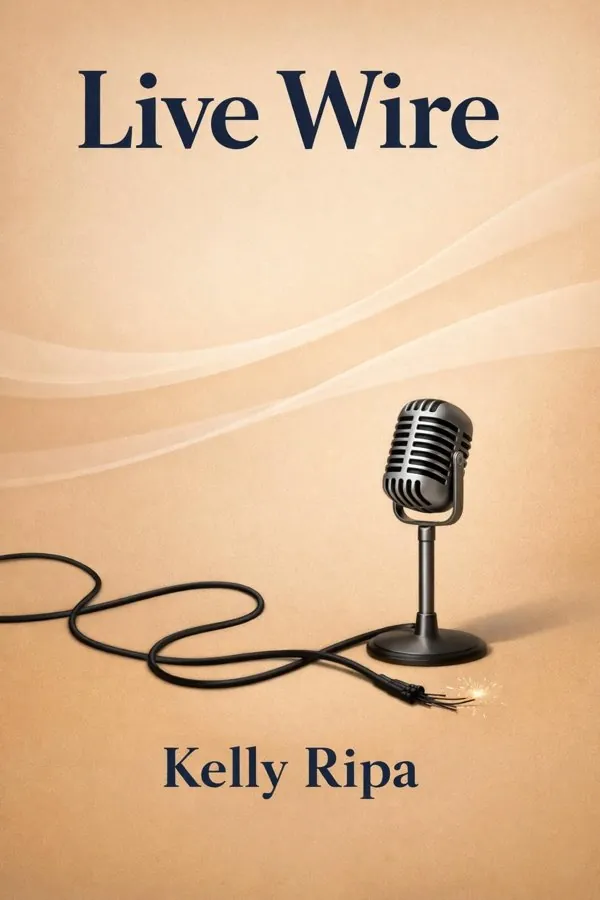
Live Wire: Long-Winded Short Stories: Summary & Key Insights
by Kelly Ripa
 10 min10 chaptersAudio available
Key Takeaways from Live Wire: Long-Winded Short Stories
Before people learn how to perform for the world, they learn who they are at home.
Careers usually look intentional in retrospect, but they rarely feel that way when they begin.
A long career depends less on staying the same than on knowing when to evolve.
Long relationships are not sustained by romance alone.
Parenting is often discussed in polished clichés, but Ripa’s stories remind readers that family life is messy, funny, exhausting, and deeply meaningful all at once.
What Is Live Wire: Long-Winded Short Stories About?
Live Wire: Long-Winded Short Stories by Kelly Ripa is a biographies book spanning 11 pages. What makes a celebrity memoir memorable is rarely the fame itself. It is the ability to turn highly visible moments into deeply human stories. In Live Wire: Long-Winded Short Stories, Kelly Ripa does exactly that. Through a lively collection of personal essays, she reflects on her childhood in New Jersey, her early years as a struggling actress, her breakout role on All My Children, her long television career, and the unpredictable realities of marriage, motherhood, aging, and public life. The result is not a polished image-management exercise, but a funny, revealing, and often surprisingly vulnerable portrait of a woman navigating ambition, family, and fame all at once. The book matters because Ripa writes with the sharp timing of a host, the emotional memory of an actress, and the candor of someone willing to laugh at herself. She does not present life as orderly or glamorous. Instead, she shows how resilience is built through awkward moments, missteps, hard work, and strong relationships. As one of daytime television’s most recognizable personalities, Ripa brings authority not just from celebrity, but from decades of working in a demanding, public-facing industry while sustaining a long marriage and raising a family in the spotlight.
This FizzRead summary covers all 10 key chapters of Live Wire: Long-Winded Short Stories in approximately 10 minutes, distilling the most important ideas, arguments, and takeaways from Kelly Ripa's work. Also available as an audio summary and Key Quotes Podcast.
Live Wire: Long-Winded Short Stories
What makes a celebrity memoir memorable is rarely the fame itself. It is the ability to turn highly visible moments into deeply human stories. In Live Wire: Long-Winded Short Stories, Kelly Ripa does exactly that. Through a lively collection of personal essays, she reflects on her childhood in New Jersey, her early years as a struggling actress, her breakout role on All My Children, her long television career, and the unpredictable realities of marriage, motherhood, aging, and public life. The result is not a polished image-management exercise, but a funny, revealing, and often surprisingly vulnerable portrait of a woman navigating ambition, family, and fame all at once.
The book matters because Ripa writes with the sharp timing of a host, the emotional memory of an actress, and the candor of someone willing to laugh at herself. She does not present life as orderly or glamorous. Instead, she shows how resilience is built through awkward moments, missteps, hard work, and strong relationships. As one of daytime television’s most recognizable personalities, Ripa brings authority not just from celebrity, but from decades of working in a demanding, public-facing industry while sustaining a long marriage and raising a family in the spotlight.
Who Should Read Live Wire: Long-Winded Short Stories?
This book is perfect for anyone interested in biographies and looking to gain actionable insights in a short read. Whether you're a student, professional, or lifelong learner, the key ideas from Live Wire: Long-Winded Short Stories by Kelly Ripa will help you think differently.
- ✓Readers who enjoy biographies and want practical takeaways
- ✓Professionals looking to apply new ideas to their work and life
- ✓Anyone who wants the core insights of Live Wire: Long-Winded Short Stories in just 10 minutes
Want the full summary?
Get instant access to this book summary and 100K+ more with Fizz Moment.
Get Free SummaryAvailable on App Store • Free to download
Key Chapters
Before people learn how to perform for the world, they learn who they are at home. One of the strongest threads in Live Wire is Kelly Ripa’s belief that her working-class upbringing in Stratford, New Jersey, gave her both her humor and her resilience. In a town where everyone knew each other and appearances were hard to maintain, authenticity was less a lifestyle choice than a survival skill. Her parents, Joe and Esther, helped form a household grounded in discipline, directness, and practicality, and those values stayed with her long after television fame arrived.
Ripa’s stories from childhood do more than provide comic background. They explain why she often approaches life with a mix of grit and self-awareness. She did not grow up surrounded by celebrity culture or entitlement. She grew up understanding routines, responsibilities, and the social dynamics of ordinary life. That foundation later gave her the ability to navigate highly unusual circumstances without entirely losing her sense of proportion.
For readers, this idea is useful because it reframes background not as limitation but as preparation. The traits formed in ordinary environments, such as humor, toughness, patience, and honesty, often matter more than glamorous advantages. Ripa’s memories suggest that the habits and values people absorb early can become a stabilizing force when life becomes more public or more chaotic.
A practical way to apply this lesson is to identify three values your upbringing gave you, even if your childhood was imperfect. Perhaps it taught you persistence, adaptability, or emotional intelligence. Instead of dismissing your background as unremarkable, treat it as a source of usable strength. Actionable takeaway: write down the early-life traits that still serve you and begin using them consciously in your current challenges.
Careers usually look intentional in retrospect, but they rarely feel that way when they begin. Ripa’s entrance into acting, especially through her role as Hayley Vaughan on All My Children, captures how opportunity often arrives wrapped in confusion, risk, and improvisation. She did not step into the entertainment industry with complete mastery or certainty. Instead, she entered a fast-moving professional world where expectations were high, emotions were big, and learning had to happen in real time.
Her account of the soap opera years shows how early career experiences can be both chaotic and formative. Daytime television demanded speed, endurance, memorization, emotional range, and adaptability. It was not just an acting job; it was a training ground. In that environment, Ripa learned how to perform under pressure, collaborate with demanding teams, and build confidence before she fully felt ready. The glamour that outsiders often associate with television mattered far less than the daily grind of showing up prepared.
This idea matters because many readers wait for confidence before pursuing serious opportunities. Ripa’s story suggests the opposite: confidence is often the result of surviving the first overwhelming chance. Beginners do not need total readiness; they need enough courage to enter the room and enough discipline to keep learning.
A practical application is to rethink intimidating opportunities as apprenticeships rather than final exams. A new role, creative project, or career pivot may feel uncomfortable precisely because it is stretching your abilities. Instead of asking, “Am I already good enough?” ask, “What will this teach me if I commit to it?” Actionable takeaway: choose one opportunity you have been postponing out of self-doubt and take the next concrete step toward it this week.
A long career depends less on staying the same than on knowing when to evolve. Ripa’s transition from actress to television host reveals how reinvention happens when preparation meets instinct. Moving into daytime hosting was not a simple promotion from one form of entertainment to another. It required a different kind of presence: less scripted, more immediate, and far more dependent on personality. As a host, she could no longer disappear into a character. She had to be visibly herself, every day, in conversation with co-hosts, guests, and millions of viewers.
That shift carries a larger lesson about professional identity. Many people become known for one skill set and then fear moving beyond it. Ripa’s evolution shows that growth often means accepting exposure. Hosting demanded wit, spontaneity, emotional intelligence, and the ability to recover quickly from awkwardness or mistakes. It also meant trusting that her own voice, not just her acting ability, could carry an audience.
Her experience speaks to anyone who has ever wondered whether it is too late or too risky to change lanes. Reinvention is not a denial of past success. It is often the next logical expression of it. The discipline she built as an actress became the structure that supported her as a host.
In practical terms, career transitions are easier when people identify which underlying strengths transfer across roles. Communication, timing, work ethic, and relationship-building matter in many fields. Actionable takeaway: if you are considering a career shift, list the skills from your current role that remain valuable in the next one, and use that list to build confidence instead of focusing only on what is unfamiliar.
Long relationships are not sustained by romance alone. In Live Wire, Ripa’s reflections on her marriage to Mark Consuelos suggest that lasting partnership depends on humor, mutual respect, and the ability to weather life’s absurdity together. Their relationship, which began on All My Children, has endured the pressures of demanding careers, public attention, parenting, and time itself. Rather than portraying marriage as flawless, Ripa presents it as dynamic, funny, and occasionally exasperating, which makes her account far more convincing.
One of the book’s strengths is the way it normalizes the ordinary mechanics of commitment. Shared history matters, but so do daily acts of patience, flexibility, and perspective. Ripa uses humor not to minimize conflict, but to keep conflict from becoming the whole story. This is a subtle but important distinction. Couples who can laugh together often create emotional breathing room, making it easier to handle stress without turning every disagreement into a crisis.
Her stories also suggest that admiration is crucial. A successful partnership is not a merger of identical personalities. It is a collaboration between two distinct people who continue choosing each other while changing over time. Readers do not need celebrity lives to understand this. The challenge of balancing independence and closeness exists in every relationship.
A practical application is to pay attention to how a relationship handles pressure, not just affection. Do you and your partner communicate clearly? Do you recover after tension? Do you still make room for playfulness? Actionable takeaway: create one small ritual this week, such as a daily walk, check-in, or shared joke, that strengthens connection outside moments of stress.
Parenting is often discussed in polished clichés, but Ripa’s stories remind readers that family life is messy, funny, exhausting, and deeply meaningful all at once. Her reflections on motherhood resist idealization. She writes about raising children while managing a demanding public career, navigating the emotional swings of family life, and confronting the reality that love does not eliminate disorder. If anything, the more people care, the more opportunities there are for noise, conflict, worry, and comic disaster.
What makes this perspective valuable is its honesty. Ripa does not suggest that balance is something one achieves once and then keeps forever. Instead, balance appears as a continuous act of adjustment. Some days the work side demands more. Some days family does. Some seasons feel smoother than others. The emotional labor lies in remaining present without expecting perfection.
Her stories also point to an important truth about identity. Parenthood expands a person’s sense of self, but it can also complicate it. Many readers, especially working parents, will recognize the pressure to be fully available at home while also remaining committed and effective professionally. Ripa’s voice offers reassurance that competence in one area does not require superhuman control in all others.
The practical lesson is to replace perfectionist standards with values-based priorities. Ask what your family actually needs most from you: attention, consistency, humor, boundaries, or patience. Often it is not flawless execution but emotional steadiness. Actionable takeaway: choose one area of family life where you can lower unnecessary pressure and replace it with a more realistic, more loving expectation.
Fame creates visibility, but not necessarily understanding. One of the recurring insights in Live Wire is that public perception often flattens real people into neat, marketable identities. Ripa is widely recognized as energetic, polished, funny, and approachable, yet her essays reveal the gap between that image and the more complex, vulnerable person behind it. She writes about being observed, interpreted, and sometimes judged through incomplete narratives, a dynamic familiar not only to celebrities but to anyone who has ever felt misunderstood.
This theme matters because modern life encourages performance at every level. Social media, professional branding, and public-facing work all push people toward simplified versions of themselves. Ripa’s stories show the cost of that simplification. The audience may see a cheerful television host, but not the stress, fatigue, insecurity, or private negotiations that make that persona possible. Her honesty challenges the assumption that visibility equals transparency.
For readers, the broader application is powerful. Most people are managing a version of this tension: the self presented at work, online, or in family roles versus the fuller self that includes doubt and contradiction. Ripa does not solve that tension completely, but she demonstrates that humor and candor can soften it. Owning one’s imperfections is often more liberating than constantly defending a polished image.
A practical response is to examine where you may be overinvesting in how you appear rather than how you actually feel or function. Authenticity does not mean disclosing everything. It means reducing the gap between reality and presentation. Actionable takeaway: identify one context where you can show up more honestly, with less unnecessary performance and more grounded self-respect.
Professional success is often described in terms of talent, but talent alone rarely sustains a long career. Ripa’s workplace stories, especially from television, show that chemistry, trust, timing, and interpersonal awareness matter just as much. Whether acting in an ensemble or co-hosting a live show, she operated in environments where the quality of relationships directly shaped the quality of the work. Entertainment may look effortless to viewers, but behind the scenes it depends on preparation, communication, and the ability to collaborate under pressure.
Her experiences reveal that work is never only about tasks. It is also about atmosphere. A strong team can elevate performance, absorb stress, and make challenges more manageable. A weak or mistrustful environment can magnify every small problem. This is especially true in live television, where there is little room to hide discomfort or disconnection. The audience can feel when a working relationship is genuine and when it is strained.
The lesson extends far beyond media. In any field, people perform better when they feel respected, seen, and able to rely on one another. Technical skill opens doors, but relational skill often determines longevity. Ripa’s career illustrates how professionalism includes not just showing up prepared, but also contributing to an environment where others can do their best work.
A useful application is to treat workplace relationships as part of the job rather than as optional extras. This means listening carefully, communicating clearly, and addressing tension before it hardens into resentment. Actionable takeaway: strengthen one important professional relationship this week by expressing appreciation, clarifying expectations, or initiating an honest, constructive conversation.
Personal development rarely arrives as a grand revelation. More often, it emerges through embarrassment, reflection, and the slow recognition of one’s own patterns. Throughout Live Wire, Ripa returns to stories that are funny on the surface but revealing underneath. She uses mishaps, anxieties, family moments, and professional experiences to examine how she has changed over time. This self-awareness gives the book depth. It is not simply a sequence of amusing anecdotes; it is a record of someone learning how to understand herself more clearly.
A key insight here is that maturity does not mean becoming less flawed. It means becoming less defensive about one’s flaws. Ripa’s self-deprecating humor works because it is grounded in observation rather than self-erasure. She can laugh at herself without denying her competence. That balance is important. Many people swing between harsh self-criticism and rigid self-protection. Self-awareness offers a middle path: honest recognition without unnecessary shame.
Readers can apply this lesson by paying attention to repeated emotional reactions. What situations make you overreact, shut down, or seek control? What stories do you tell yourself when you feel insecure? Growth begins when these patterns are named. Reflection becomes more useful when it is specific and compassionate rather than vague or punishing.
Ripa’s essays suggest that a well-lived life includes the ability to revisit old moments with more perspective. Even discomfort can become material for insight. Actionable takeaway: think of one recent overreaction or awkward experience and ask what it reveals about your deeper needs, fears, or habits, then use that answer as a prompt for meaningful change.
No one builds a life alone, even when the spotlight makes success look individual. In Ripa’s stories, friendships and mentorships play a quietly essential role. They provide emotional grounding, perspective, encouragement, and often comic relief. In industries driven by competition and image, trusted relationships become even more valuable because they offer something fame cannot: honesty. The people who know you outside the performance are often the ones who help you stay sane inside it.
This idea matters because modern achievement culture tends to celebrate independence while underestimating support systems. Ripa’s life and career suggest that resilience is relational. Friends help interpret difficult moments. Mentors model how to navigate pressure. Colleagues who become confidants can make challenging environments more humane. These relationships do not eliminate stress, but they make stress more bearable by reminding people who they are beyond the latest crisis.
The lesson applies broadly. Whether in work, parenting, creative pursuits, or personal transition, people need a small circle that combines affection with truth. Not every friend is a mentor, and not every mentor becomes a close friend, but both roles matter. One offers companionship; the other offers guidance. Together, they strengthen judgment and endurance.
A practical application is to review the relationships in your life by function as well as feeling. Who energizes you? Who tells you the truth? Who has experience you can learn from? Who needs your support in return? Actionable takeaway: reach out to one mentor, friend, or trusted colleague this week, not just socially but intentionally, to strengthen a relationship that helps you grow.
All Chapters in Live Wire: Long-Winded Short Stories
About the Author
Kelly Ripa is an American actress, television host, and producer whose career spans soap operas, daytime talk shows, and entertainment production. Born in Stratford, New Jersey, she first rose to fame playing Hayley Vaughan on All My Children, a role that introduced her to millions of viewers and to her future husband, actor Mark Consuelos. She later became a major figure in daytime television through her work on Live, where her wit, spontaneity, and relatability made her one of the medium’s most recognizable personalities. Over the years, Ripa has built a reputation for balancing humor with candor, both on screen and in public life. Live Wire: Long-Winded Short Stories is her debut book, offering readers a personal and comedic look at the experiences that shaped her life and career.
Get This Summary in Your Preferred Format
Read or listen to the Live Wire: Long-Winded Short Stories summary by Kelly Ripa anytime, anywhere. FizzRead offers multiple formats so you can learn on your terms — all free.
Available formats: App · Audio · PDF · EPUB — All included free with FizzRead
Download Live Wire: Long-Winded Short Stories PDF and EPUB Summary
Key Quotes from Live Wire: Long-Winded Short Stories
“Before people learn how to perform for the world, they learn who they are at home.”
“Careers usually look intentional in retrospect, but they rarely feel that way when they begin.”
“A long career depends less on staying the same than on knowing when to evolve.”
“Long relationships are not sustained by romance alone.”
“Parenting is often discussed in polished clichés, but Ripa’s stories remind readers that family life is messy, funny, exhausting, and deeply meaningful all at once.”
Frequently Asked Questions about Live Wire: Long-Winded Short Stories
Live Wire: Long-Winded Short Stories by Kelly Ripa is a biographies book that explores key ideas across 10 chapters. What makes a celebrity memoir memorable is rarely the fame itself. It is the ability to turn highly visible moments into deeply human stories. In Live Wire: Long-Winded Short Stories, Kelly Ripa does exactly that. Through a lively collection of personal essays, she reflects on her childhood in New Jersey, her early years as a struggling actress, her breakout role on All My Children, her long television career, and the unpredictable realities of marriage, motherhood, aging, and public life. The result is not a polished image-management exercise, but a funny, revealing, and often surprisingly vulnerable portrait of a woman navigating ambition, family, and fame all at once. The book matters because Ripa writes with the sharp timing of a host, the emotional memory of an actress, and the candor of someone willing to laugh at herself. She does not present life as orderly or glamorous. Instead, she shows how resilience is built through awkward moments, missteps, hard work, and strong relationships. As one of daytime television’s most recognizable personalities, Ripa brings authority not just from celebrity, but from decades of working in a demanding, public-facing industry while sustaining a long marriage and raising a family in the spotlight.
You Might Also Like

An American Marriage
Tayari Jones
10 min
Benjamin Franklin: An American Life
Walter Isaacson
10 min
I Know Why The Caged Bird Sings
Maya Angelou
10 min
Long Walk to Freedom
Nelson Mandela
10 min
Persepolis
Marjane Satrapi
10 min
Surely You're Joking, Mr. Feynman!
Richard P. Feynman
10 minBrowse by Category
Ready to read Live Wire: Long-Winded Short Stories?
Get the full summary and 100K+ more books with Fizz Moment.