
Warren Buffett's Must-Reads for Building Wealth
The Oracle of Omaha reads 500 pages a day and credits books for his investing success. Warren Buffett's reading list is a masterclass in finance, decision-making, and long-term thinking — essential for anyone serious about building wealth.
 10 min read
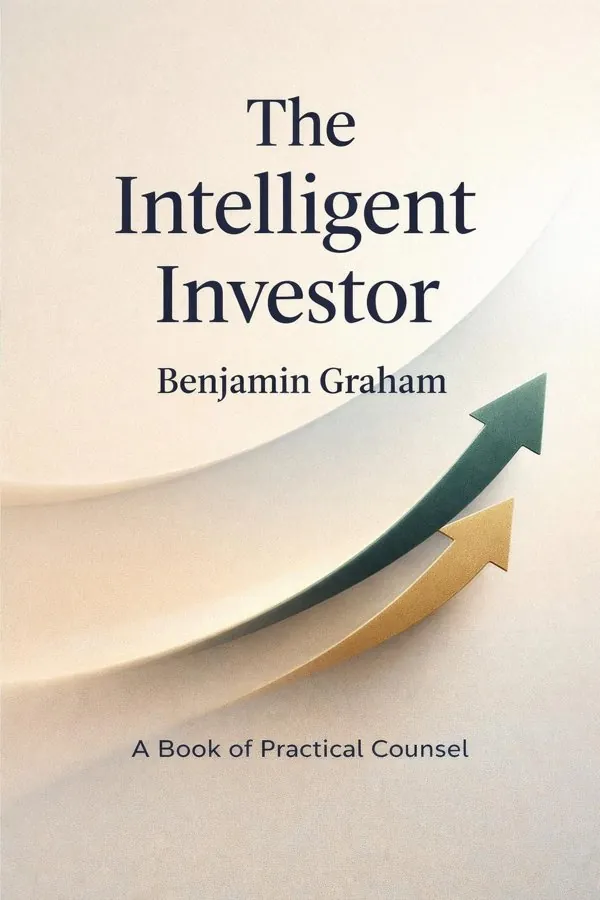
The Intelligent Investor
by Benjamin Graham
Why does one investor build durable wealth over decades while another repeatedly chases hot tips, panics in downturns, and ends up disappointed? Benjamin Graham’s The Intelligent Investor answers that question with unusual clarity. First published in 1949, this classic remains one of the most respected books on value investing because it focuses less on prediction and more on judgment, discipline, and protection against avoidable mistakes. Graham, widely regarded as the father of modern security analysis, wrote for ordinary investors who wanted a rational framework in a market often driven by noise, excitement, and fear. His advice is timeless precisely because human behavior in markets rarely changes. Instead of promising quick riches, he teaches readers how to think about risk, intrinsic value, portfolio construction, and emotional control. Concepts such as the margin of safety, the distinction between investment and speculation, and the famous allegory of Mr. Market have shaped generations of investors, including many professionals. If you want a practical philosophy for making smarter financial decisions and avoiding costly psychological traps, this book still matters enormously.
Key Takeaways
- 1The Difference Between Investment and Speculation — Graham begins with a deceptively simple but essential definition: an investment operation is one that, after thorough an…
- 2Defining the Intelligent Investor: Emotional Discipline — For Graham, intelligence in investing has little to do with IQ, advanced math, or market predictions. The intelligent in…
- 3Understanding Market Fluctuations: The Allegory of Mr. Market — One of Graham’s most memorable teaching tools is Mr. Market, an imaginary business partner who shows up every day offeri…
 10 min read
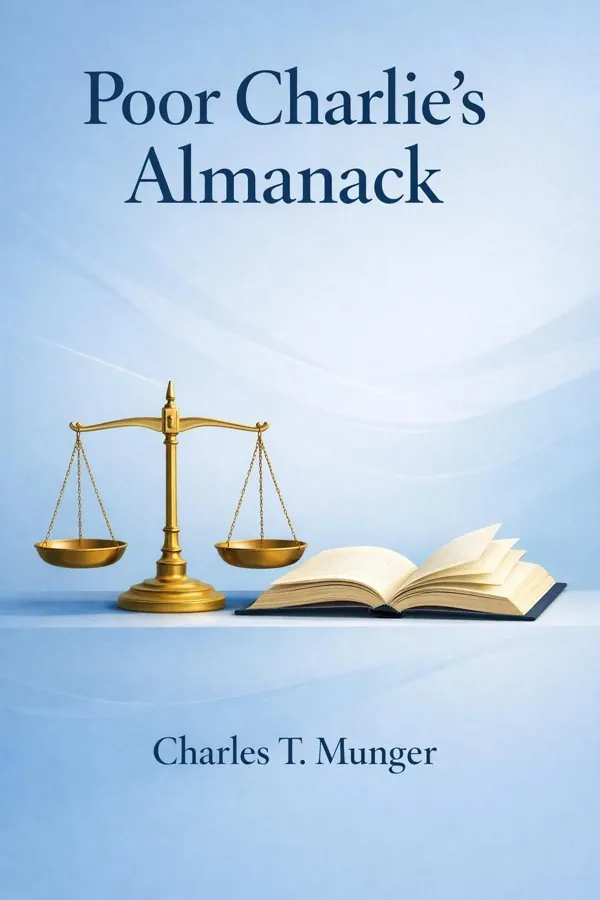
Poor Charlie"s Almanack
by Charles T. Munger
Poor Charlie’s Almanack is far more than a book about investing. It is a practical guide to thinking clearly, judging wisely, and living rationally in a world full of noise, ego, incentives, and error. Compiled by Peter D. Kaufman from Charles T. Munger’s speeches, essays, and public remarks, the book captures the intellectual operating system behind one of the most respected minds in business. Munger, best known as Warren Buffett’s longtime partner at Berkshire Hathaway, argues that success does not come from flashy predictions or complicated formulas. It comes from disciplined reasoning, moral clarity, patience, and a broad understanding of how the world actually works. What makes this book matter is its reach. Munger draws lessons not only from finance, but also from psychology, biology, history, economics, engineering, law, and human behavior. His famous idea of using a “latticework of mental models” offers readers a way to make better decisions in investing, business, and everyday life. Sharp, witty, and often brutally honest, Poor Charlie’s Almanack remains essential reading for anyone who wants to avoid foolish mistakes and build sound judgment over a lifetime.
Key Takeaways
- 1The Psychology of Human Misjudgment — The most dangerous enemy in decision-making is often not the market, the competition, or bad luck, but the mind itself. …
- 2The Importance of Mental Models — A single big idea is rarely enough to understand a complex world. Munger’s concept of mental models is his answer to sha…
- 3Worldly Wisdom Through Broad Learning — Real wisdom does not come from knowing more facts than everyone else; it comes from understanding the enduring patterns …
 10 min read
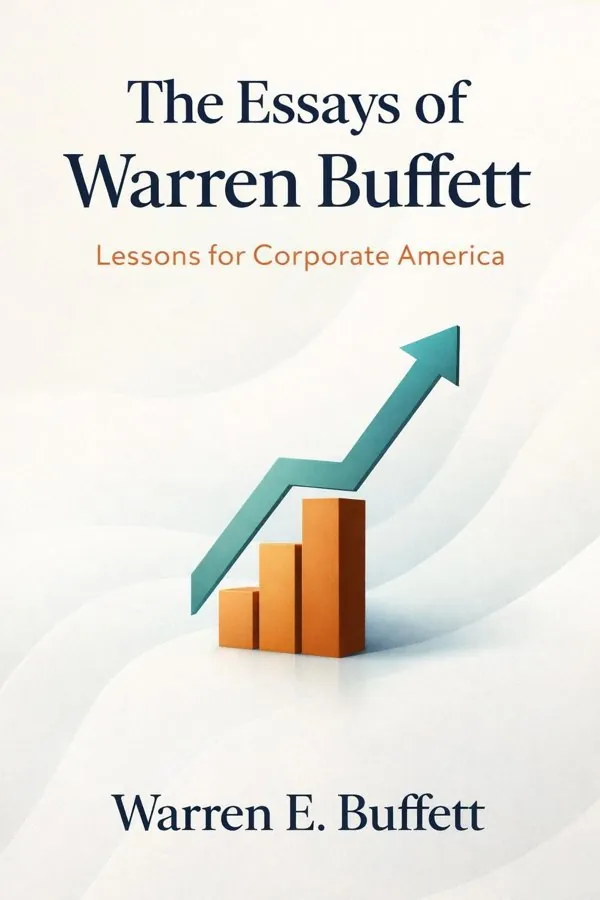
The Essays of Warren Buffett
by Warren Buffett
The Essays of Warren Buffett is more than a finance book. It is a masterclass in rational thinking, capital allocation, corporate stewardship, and long-term investing, drawn from Buffett’s famous shareholder letters to Berkshire Hathaway owners and organized by legal scholar Lawrence A. Cunningham. Rather than presenting theory in the abstract, the book shows how one of history’s greatest investors actually thinks about businesses, managers, markets, accounting, acquisitions, and ethics. That is what makes it so enduring: every idea comes from real decisions, real money, and real consequences. What sets this collection apart is Buffett’s rare ability to explain complex financial concepts in plain language without losing depth. He writes as an owner, not a speculator, and he treats shareholders as partners, not customers to be impressed. The result is a book that teaches not just how to invest, but how to judge character, avoid foolishness, read financial statements intelligently, and make decisions with discipline. For investors, executives, entrepreneurs, and anyone interested in how durable wealth is built, The Essays of Warren Buffett remains one of the clearest and most practical guides ever written.
Key Takeaways
- 1Corporate Governance Means True Owner Alignment — Great governance begins with a simple but demanding idea: managers should behave as if the business belongs to them and …
- 2Capital Allocation Is The CEO’s Core Job — A business can produce cash, but turning that cash into long-term value is a separate skill altogether. Buffett argues t…
- 3Treat Stocks As Pieces Of Businesses — The market invites people to think in tickers, charts, and price moves. Buffett asks readers to think in farms, shops, b…
 10 min read
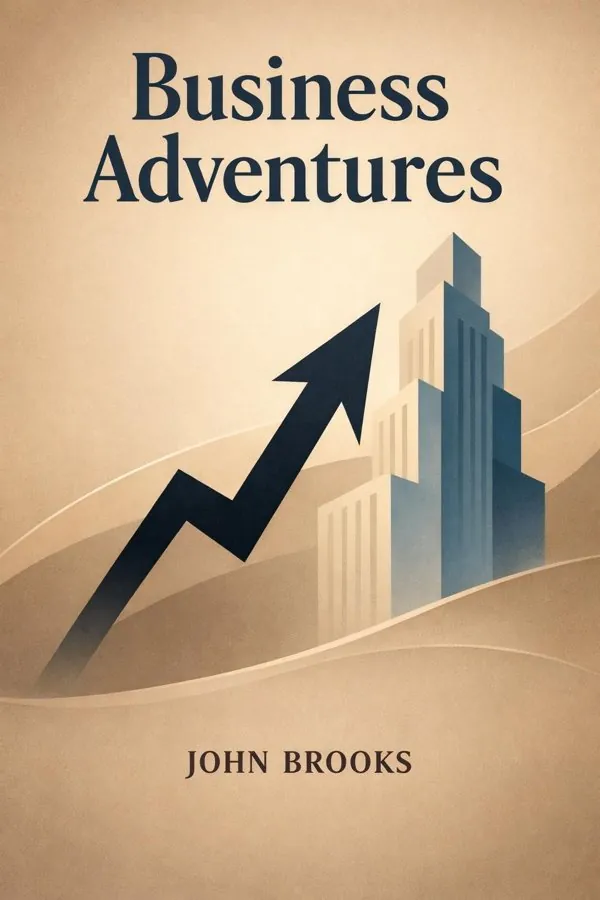
Business Adventures
by John Brooks
Business Adventures by John Brooks is a masterful collection of twelve narrative essays about some of the most revealing episodes in twentieth-century American business. First published in The New Yorker and later collected in book form, these stories move from market panics and product failures to currency crises, shareholder battles, and the hidden systems that keep modern capitalism running. Although the events took place decades ago, the book remains strikingly current because Brooks was never really writing only about stocks, cars, taxes, or corporate meetings. He was writing about people under pressure: executives defending bad decisions, investors chasing confidence, bureaucracies wrestling with complexity, and institutions trying to preserve credibility when events turn against them. That is why the book still resonates with leaders, founders, investors, and curious readers today. Brooks had a rare gift: he combined the reporting discipline of a financial journalist with the narrative grace of a novelist. The result is a business book that does not lecture in abstractions, but reveals enduring truths through vivid stories. Business Adventures matters because it shows that markets change, technologies evolve, but human nature in business barely does.
Key Takeaways
- 1Markets Run on Emotion as Much — A stock market decline is never only about numbers; it is also about the speed with which confidence can evaporate. In “…
- 2Great Products Can Still Fail Spectacularly — The Edsel is remembered as a punchline, but Brooks treats it as something more useful: a case study in how large organiz…
- 3Complex Systems Hide Everyday Fragility — One of Brooks’s most surprising achievements is making administrative machinery feel dramatic. In “The Federal Income Ta…
 10 min read
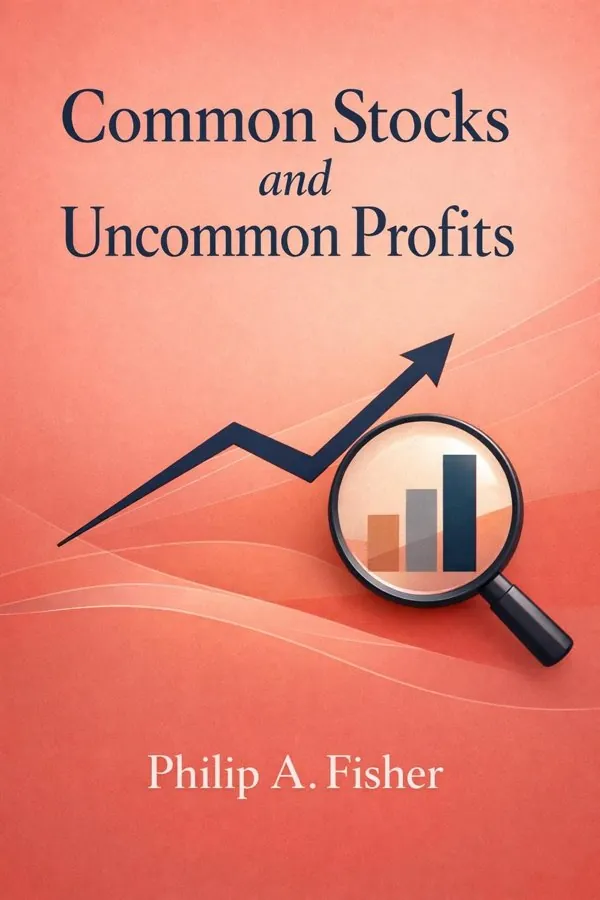
Common Stocks and Uncommon Profits
by Philip Fisher
Most investors spend too much time studying stock prices and too little time studying the businesses behind them. In Common Stocks and Uncommon Profits, Philip Fisher argues that truly exceptional investment results come not from chasing bargains or predicting short-term market swings, but from identifying rare companies with the capacity to grow for many years. First published in 1958, the book became one of the foundational texts of growth investing and remains highly relevant in today’s markets. Fisher’s central insight is simple but powerful: outstanding stocks are usually backed by outstanding management, strong products, a culture of innovation, and large opportunities for future expansion. To uncover these qualities, he recommends deep qualitative research, including his famous “scuttlebutt” method of gathering information from customers, suppliers, competitors, employees, and industry experts. This approach goes far beyond reading financial statements. Fisher wrote from authority. He was one of the earliest professional investors to focus on long-term business quality instead of short-term price action, and his ideas later influenced major investors such as Warren Buffett. This book matters because it teaches readers how to think like an owner, not a trader.
Key Takeaways
- 1Investment Is Not Mere Speculation — The stock market punishes confusion, and one of the costliest confusions is mistaking speculation for investment. Fisher…
- 2Use Scuttlebutt to See Reality — A company’s annual report tells a story, but the world around the company tells the truth. Fisher’s famous “scuttlebutt”…
- 3The Fifteen Points Define Excellence — Great investments are rarely accidents. Fisher’s famous fifteen-point checklist provides a framework for identifying the…
 10 min read
The Most Important Thing
by Howard Marks
What separates exceptional investors from the crowd is rarely access to better information alone. More often, it is the ability to interpret that information with greater depth, discipline, and emotional balance. In The Most Important Thing, legendary investor Howard Marks distills decades of experience into a practical philosophy of intelligent investing. Rather than offering a formula for quick profits, Marks explains how thoughtful investors can improve their odds by understanding risk, market cycles, value, psychology, and the importance of judgment. At the center of the book is his famous idea of “second-level thinking,” the ability to look beyond obvious conclusions and ask what others may be missing. This book matters because it challenges many of the simplistic assumptions that dominate financial conversations. Marks argues that success does not come from certainty or prediction, but from careful reasoning, humility, and consistent decision-making under uncertainty. As co-founder of Oaktree Capital Management and one of the most respected voices in investing, Marks writes with unusual authority. His insights are valuable not only for professional investors, but for anyone who wants to make better decisions in environments shaped by risk, emotion, and imperfect information.
Key Takeaways
- 1Second-Level Thinking Beats the Obvious — Most people stop thinking at the first reasonable answer, but extraordinary results usually come from going one level de…
- 2Risk Matters More Than Return Chasing — The most dangerous investment mistake is not earning too little; it is taking risks you do not fully understand. Marks r…
- 3Value and Price Are Never the Same — An excellent asset can still be a poor investment if you pay too much for it. This distinction between value and price i…
 10 min read
Shoe Dog
by Phil Knight
Shoe Dog es una memoria escrita por Phil Knight, fundador de Nike, que narra la historia de cómo transformó un pequeño préstamo de $50 en una de las marcas más reconocidas del mundo. El libro describe los desafíos, fracasos y triunfos que enfrentó mientras construía la empresa desde sus humildes comienzos como Blue Ribbon Sports hasta convertirse en un gigante global. Con humor, humanidad y franqueza, Knight ofrece una mirada íntima al espíritu emprendedor y la perseverancia detrás del éxito de Nike.
Key Takeaways
- 1The Crazy Idea: From Post-College Doubt to Bold Vision — After finishing my MBA at Stanford, I found myself drifting, restless. The world seemed vast and full of possibilities, …
- 2Building Blue Ribbon Sports: Hustle, Partnership, and Persistence — When I returned to Oregon, my grand dream shrunk to the size of a car trunk. I began selling Onitsuka Tiger shoes at tra…
- 3Breaking Away: Conflict with Onitsuka and the Birth of Nike
 10 min read
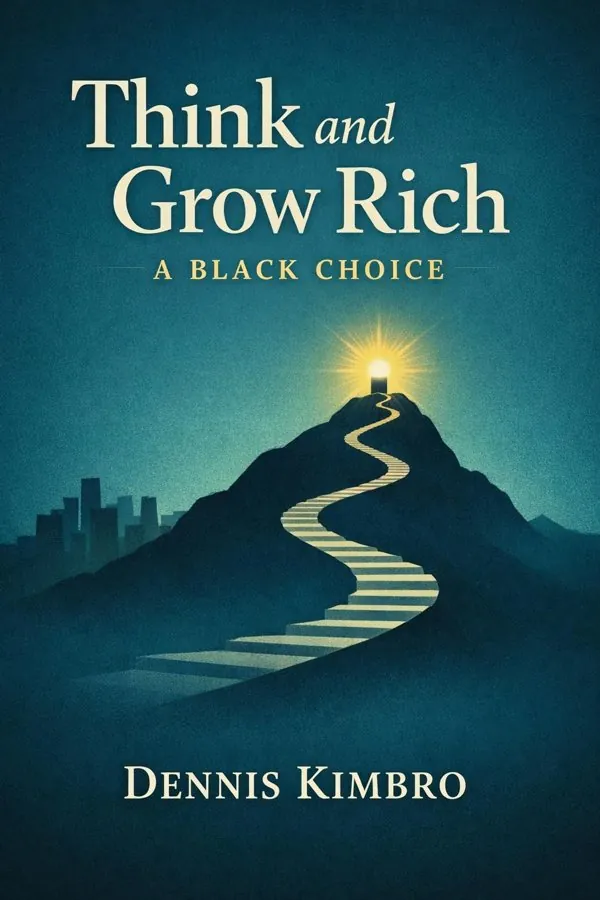
Think and Grow Rich
by Napoleon Hill
What does it really take to build wealth, confidence, and lasting success when the odds have not always been in your favor? That is the central question behind this powerful adaptation of Think and Grow Rich. In this version, the familiar success principles popularized by Napoleon Hill are explored through the lived experiences, struggles, and achievements of African Americans who turned vision into accomplishment. The result is more than a motivational book. It is a practical guide to self-mastery, disciplined thinking, and purposeful action. What makes this book matter is its insistence that success is not reserved for the privileged or the fortunate. It begins in the mind, is strengthened by faith, and is made real through persistence, learning, and community. By grounding timeless success ideas in Black history and achievement, the book gives readers examples that feel concrete, relevant, and deeply inspiring. Dennis Kimbro, an American author, educator, and motivational speaker known for his work on leadership and achievement in the African American community, brings credibility and clarity to these ideas. His message is simple but transformative: greatness is not an exception in Black life. It is a legacy to be claimed and extended.
Key Takeaways
- 1Historical Context — Before ambition can feel believable, it has to be placed inside a truthful story. This chapter shows that for African Am…
- 2The Power of Thought — One of the book’s core beliefs is that success begins in the mind. Thoughts shape identity, expectations, and behavior l…
- 3Defining Desire and Purpose — Desire is more than wishing for a better life. In this book, it is presented as a focused, emotionally charged commitmen…
Want the full summary?
Get instant access to this book summary and 100K+ more with Fizz Moment.
Get Free SummaryAvailable on App Store • Free to download
About This List
The Oracle of Omaha reads 500 pages a day and credits books for his investing success. Warren Buffett's reading list is a masterclass in finance, decision-making, and long-term thinking — essential for anyone serious about building wealth.
This list features 8 carefully selected books. With FizzRead, you can read AI-powered summaries of each book in just 15 minutes. Get the key takeaways and start applying the insights immediately.
Ready to start reading?
Get instant access to all 8 book summaries and 100K+ more with FizzRead.