
Stephen King's Must-Read Books
Books recommended by the master of horror himself. Stephen King's essential reading for writers and readers alike.
 10 min read
The Road
by Cormac McCarthy
What remains of humanity when nearly everything that made civilization possible has been burned away? In The Road, Cormac McCarthy offers a stark, unforgettable answer through the journey of a father and son moving through a ruined landscape after an unnamed apocalypse. Their world is cold, ash-covered, lawless, and stripped of comforts, yet the novel is far more than a survival story. It is a psychological study of fear, grief, attachment, moral endurance, and the fragile persistence of hope. McCarthy examines what happens to the mind when the future collapses, and what keeps people going when meaning seems almost impossible to sustain. At the heart of the book is the bond between parent and child: protective, tender, exhausting, and morally demanding. McCarthy, one of America’s most acclaimed novelists, is known for his spare style, philosophical depth, and unsentimental treatment of violence and human nature. In The Road, he combines literary intensity with emotional clarity, creating a novel that asks one of the most urgent questions in psychology and ethics alike: how do we stay human when the world no longer supports humanity?
Key Takeaways
- 1Love as a Last Moral Shelter — When the world loses its structure, love becomes more than an emotion; it becomes a discipline of protection, meaning, a…
- 2Discipline Keeps Despair From Taking Over — In extreme conditions, survival depends less on inspiration than on routine. One of the most psychologically realistic f…
- 3Fear Distorts and Protects the Mind — Fear is not merely an emotion in The Road; it is an atmosphere. The father lives in a state of hypervigilance, constantl…
 10 min read
1984
by George Orwell
George Orwell’s 1984 is one of the defining novels of the modern age: a bleak, brilliant portrait of a society in which power seeks not only to control people’s actions, but to colonize their minds. Set in Oceania, a totalitarian superstate ruled by the ever-watchful figure of Big Brother, the story follows Winston Smith, a minor Party employee whose job is to falsify history so the regime always appears infallible. As Winston begins to doubt the Party’s version of reality, he embarks on a dangerous search for truth, memory, love, and freedom. What makes 1984 endure is not only its gripping story, but its deep insight into propaganda, surveillance, censorship, political language, and the fragility of objective truth. Orwell wrote with unusual authority, having witnessed imperialism, ideological extremism, war, and the manipulation of public opinion firsthand. The result is not merely a dystopian novel, but a lasting warning: when language is twisted, history rewritten, and fear normalized, human dignity itself is at risk.
Key Takeaways
- 1Oceania and Permanent War — A society is easiest to control when fear feels normal. Orwell opens 1984 by placing readers in a world divided into thr…
- 2Winston’s Job: Rewriting Reality — Who controls the past gains enormous power over the present. Winston Smith works at the Ministry of Truth, where his tas…
- 3Surveillance, Language, and Thought Control — The most effective prison is the one people carry inside themselves. In Oceania, control operates through more than poli…
 10 min read
Brave New World
by Aldous Huxley
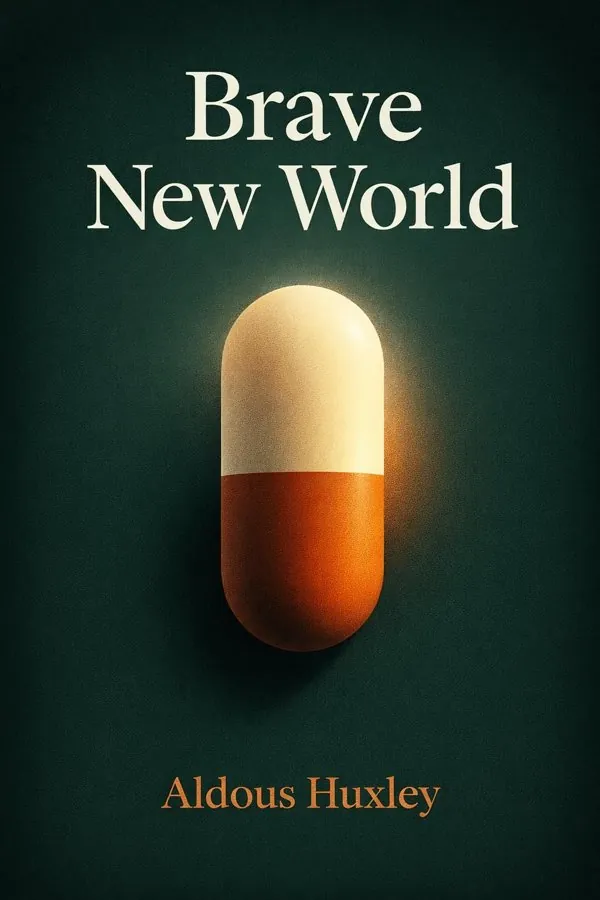
What if the greatest threat to freedom were not violence or tyranny, but comfort? In Brave New World, Aldous Huxley imagines a future society that has solved many of humanity’s oldest problems: war is minimized, suffering is medicated, desire is managed, and social conflict is engineered away before it begins. Yet beneath this polished surface lies a terrifying question: what remains of a human being when individuality, family, love, grief, ambition, and spiritual longing have all been sacrificed for stability? Set in the technologically advanced World State, the novel follows characters who begin to sense the emptiness hidden inside a perfectly organized civilization. Through genetic design, psychological conditioning, casual pleasure, and relentless consumption, Huxley presents a world in which people are kept happy precisely by being kept shallow. The book is both a gripping dystopian story and a profound philosophical warning. First published in 1932, Brave New World remains startlingly relevant in an age shaped by entertainment, pharmaceuticals, social engineering, and algorithmic influence. Huxley, one of the twentieth century’s sharpest literary and social critics, wrote a novel that still challenges readers to ask whether a painless life is worth the loss of freedom, depth, and truth.
Key Takeaways
- 1The Hatchery and Conditioning Center — A society reveals its deepest values by the way it creates and trains its children. In Brave New World, the Hatchery and…
- 2Social Hierarchies and Engineered Happiness — Inequality becomes hardest to challenge when people are trained to love the place assigned to them. The World State is b…
- 3Soma and the Sedation of Pain — A society does not need to silence dissent by force if it can teach people to medicate every uncomfortable feeling away.…
 10 min read
The Great Gatsby
by F. Scott Fitzgerald
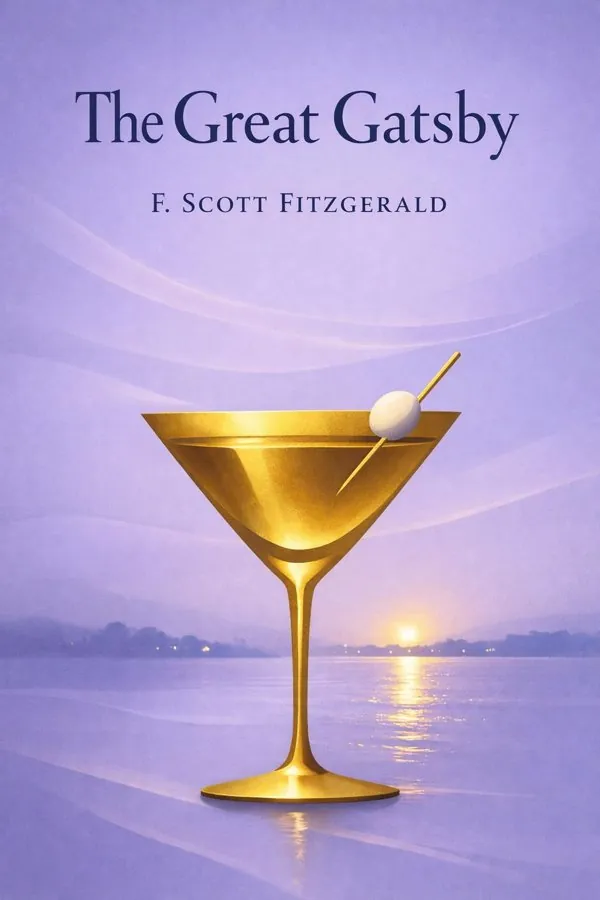
The Great Gatsby is a short novel with an unusually long shadow. Set in the glittering world of Long Island and New York during the Roaring Twenties, it follows Nick Carraway as he becomes entangled with his wealthy, enigmatic neighbor Jay Gatsby—a man who has built a dazzling life around a single impossible desire: to win back Daisy Buchanan, the woman he loved before the war. What begins as a story of romance and ambition gradually reveals itself as something darker: a study of class, self-invention, moral emptiness, and the fragile promises of the American Dream. Fitzgerald’s genius lies in how he turns parties, mansions, and social rituals into symbols of a culture intoxicated by money yet hollow at its core. More than a portrait of an era, the novel remains enduring because it asks timeless questions: Can we remake ourselves? Can love survive illusion? And what happens when our dreams are built on denial? Fitzgerald, one of the defining voices of the Jazz Age, gives these questions unforgettable emotional force.
Key Takeaways
- 1Nick’s Arrival in a Divided World — A new place often reveals more about a society than those born into it ever notice. Fitzgerald begins with Nick Carraway…
- 2Gatsby’s Entrance and a Secret Love — Some people do not simply enter a story; they arrive as if they have already become a legend. Gatsby’s introduction is c…
- 3Wealth, Class, and Invisible Barriers — Money can buy access, but it cannot always buy acceptance. One of the novel’s sharpest insights is that wealth is not a …
 10 min read
Heart of Darkness
by Joseph Conrad
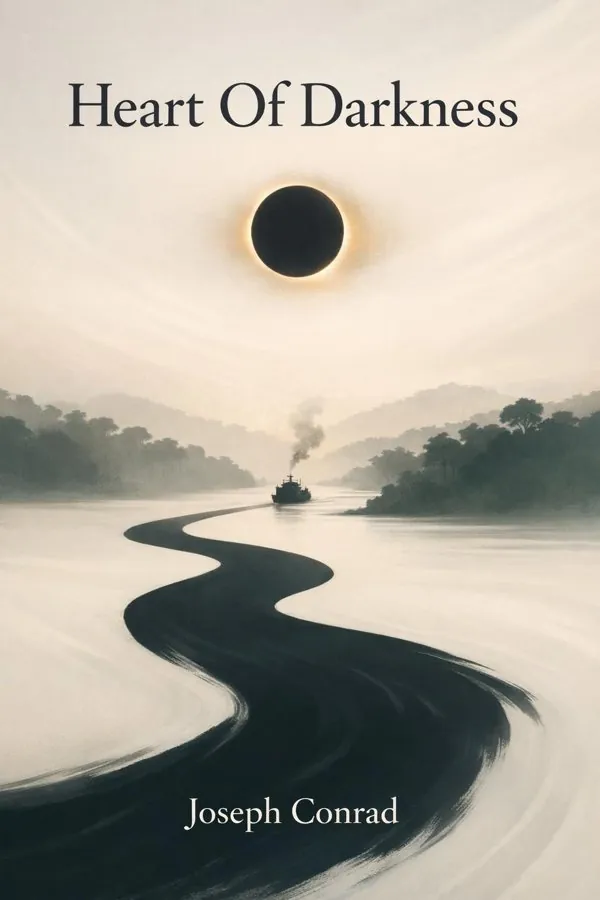
Joseph Conrad’s Heart of Darkness is a short novel with enormous reach. On the surface, it tells a gripping story: sailor Charles Marlow accepts a job with a Belgian trading company and travels into the Congo to retrieve Kurtz, a brilliant and celebrated ivory agent who has become dangerously ill and strangely powerful. But Conrad turns that journey into something larger and more unsettling. As Marlow moves deeper into colonial Africa, the book exposes the violence, greed, and hypocrisy hidden beneath Europe’s language of civilization and progress. It also asks a harder question: what happens to human beings when familiar rules fall away and power goes unchecked? The novella matters because it is both an adventure narrative and a moral investigation. It remains central to conversations about imperialism, racism, corruption, and the fragility of identity. Conrad wrote from unusual authority. A Polish-born seaman who later became a British novelist, he had firsthand experience in the Congo, and that experience shaped the novel’s haunting realism. Heart of Darkness endures not because it gives comforting answers, but because it forces readers to confront how easily darkness can hide inside institutions, ideals, and the self.
Key Takeaways
- 1The Thames and Civilization’s Shadow — A civilization often reveals itself most clearly not in its monuments, but in the stories it tells about its own innocen…
- 2Maps, Desire, and the Lure of Blankness — What draws people toward the unknown is not always courage; often, it is imagination mixed with ambition. Marlow recalls…
- 3Brussels and the Machinery of Empire — Corruption rarely announces itself as corruption; it often appears as administration, routine, and good manners. Marlow’…
 10 min read
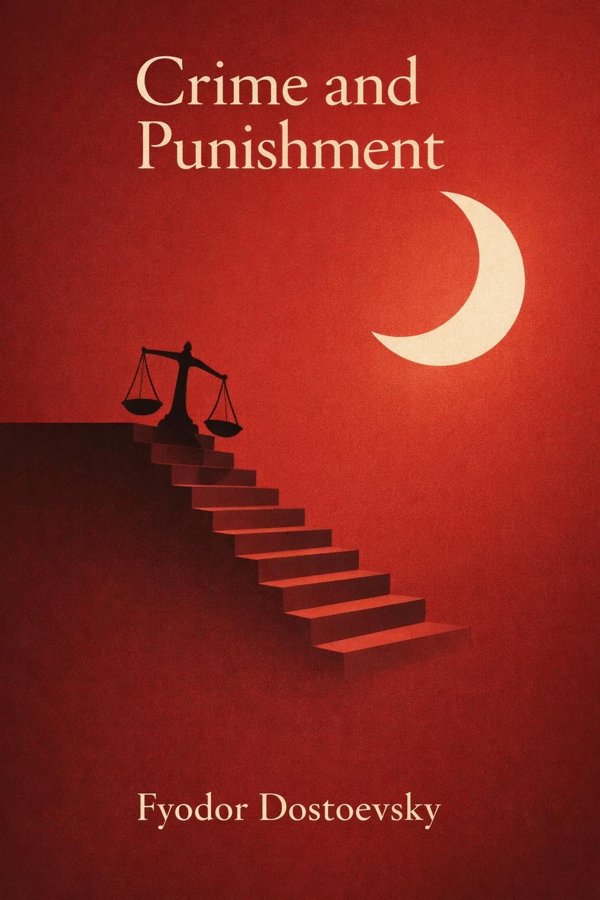
Crime and Punishment
by Fyodor Dostoevsky
Crime and Punishment is one of the most penetrating novels ever written about guilt, morality, and the hidden motives that drive human behavior. Set in the oppressive heat and poverty of St. Petersburg, the story follows Rodion Raskolnikov, a former student who convinces himself that extraordinary people may step beyond ordinary moral laws. Acting on this idea, he commits a brutal crime and then discovers that intellectual justification offers no protection against conscience, fear, and spiritual collapse. What begins as a murder story becomes a profound psychological investigation into suffering, pride, alienation, and the possibility of redemption. Fyodor Dostoevsky matters because few writers have understood the contradictions of the human soul so deeply. Drawing on his own experiences with poverty, imprisonment, political persecution, and religious struggle, he created a novel that still feels startlingly modern. Crime and Punishment remains essential not only as a literary classic, but as a timeless study of how people rationalize wrongdoing, how guilt reshapes identity, and how truth can become the first step toward renewal.
Key Takeaways
- 1Ideas Can Become Dangerous Actions — A destructive act often begins long before the act itself, in the quiet acceptance of a dangerous idea. In Crime and Pun…
- 2Guilt Punishes Before Any Court — The most relentless punishment is often internal rather than legal. After the murder, Raskolnikov does not become triump…
- 3Pride Is a Form of Isolation — Pride does not always look like confidence; sometimes it looks like withdrawal, contempt, and a refusal to need anyone. …
 10 min read
The Bell Jar
by Sylvia Plath
Sylvia Plath’s The Bell Jar is one of the most haunting and enduring novels of the twentieth century because it captures a crisis that feels both deeply personal and painfully universal: what happens when a gifted young woman can no longer live inside the roles the world has prepared for her. First published in 1963 under the pseudonym Victoria Lucas and later recognized as a semi-autobiographical work, the novel follows Esther Greenwood, a brilliant college student whose prestigious summer internship in New York should mark the beginning of a dazzling future. Instead, it exposes the emptiness beneath glamour, success, and social approval. As Esther returns home and spirals into depression, the novel becomes an intimate portrait of mental illness, alienation, and the struggle to claim an authentic self in a culture obsessed with female conformity. The Bell Jar matters not only as a literary classic, but as an unusually honest exploration of psychological suffering long before public conversations about mental health became common. Plath’s authority comes from the precision of her language, the sharpness of her social observation, and her unmatched ability to transform inner turmoil into unforgettable art.
Key Takeaways
- 1Glamour Can Deepen Alienation — Success does not always feel like arrival; sometimes it feels like exile in elegant clothing. At the start of The Bell J…
- 2Expectation Can Fracture Identity — A person can begin to disappear when every path forward feels chosen by someone else. After New York, Esther returns hom…
- 3Love Exposes the Gender Trap — Romance becomes dangerous when it is built on unequal freedom. In The Bell Jar, Esther’s relationships with men do not o…
 10 min read
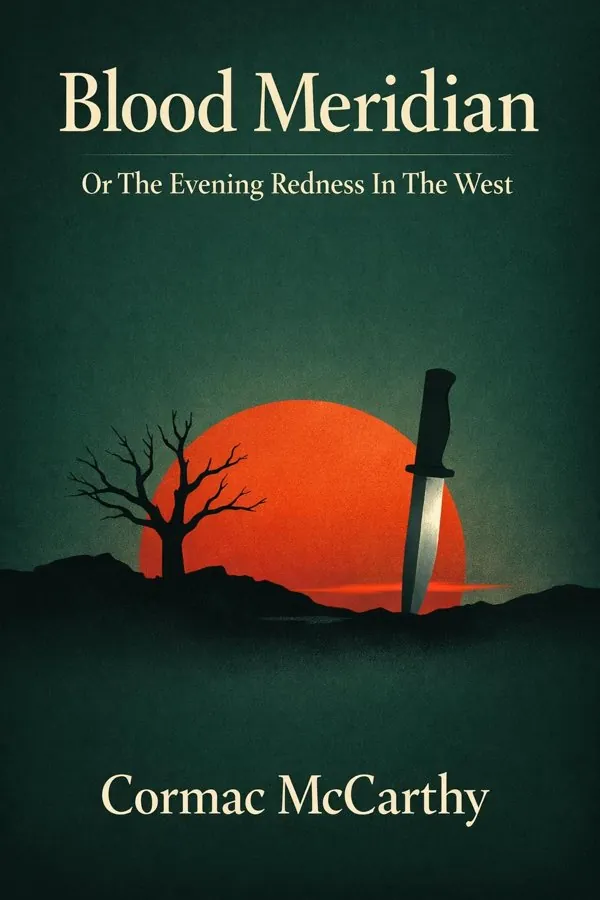
Blood Meridian
by Cormac McCarthy
Blood Meridian is Cormac McCarthy’s ferocious, hallucinatory vision of the American frontier, set along the U.S.-Mexico border in the mid-nineteenth century. At its center is the Kid, a teenage runaway who drifts into a world where war, scalp hunting, and random slaughter are not exceptions but the daily logic of survival and profit. He falls in with John Joel Glanton’s gang, a historical band of mercenaries, and comes under the terrifying influence of Judge Holden, one of the most unforgettable figures in modern fiction. More than a western, the novel is a philosophical reckoning with violence: where it comes from, how societies excuse it, and whether any trace of mercy can survive inside it. McCarthy, widely regarded as one of America’s greatest novelists, brings extraordinary authority to this material through biblical cadence, historical detail, and an unblinking moral imagination. Blood Meridian matters because it strips away the frontier myth of noble conquest and reveals a harsher truth: civilization is often built not despite bloodshed, but through it.
Key Takeaways
- 1The Kid and Violence’s Early Seed — Some people enter violence by choice; in Blood Meridian, the more disturbing idea is that violence may be waiting for th…
- 2The Frontier as Moral Collapse — The frontier in Blood Meridian is not a place of freedom but a proving ground where moral language loses its force. McCa…
- 3The Glanton Gang and Organized Slaughter — Violence becomes most terrifying when it is given a paycheck, a banner, and a justification. The Kid eventually joins Gl…
 10 min read
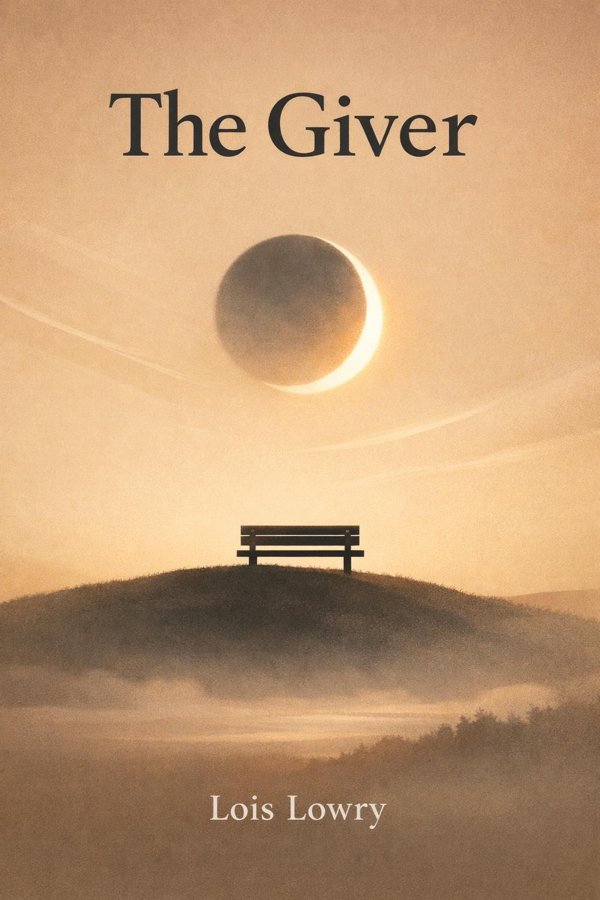
The Giver
by Lois Lowry
What if a society could remove pain, conflict, hunger, and fear—yet only by erasing choice, love, and the full depth of human life? In The Giver, Lois Lowry imagines exactly that paradox through the story of Jonas, a boy growing up in a tightly controlled community built on “Sameness.” At first, his world appears peaceful, efficient, and fair. But when Jonas is selected to become the community’s new Receiver of Memory, he begins to inherit the buried experiences of humanity: pleasure and suffering, beauty and grief, love and loss. Those memories awaken him to everything his society has sacrificed in the name of stability. Published in 1993, The Giver remains one of the most influential dystopian novels for young readers because it asks timeless moral questions in deceptively simple prose. Lowry, a two-time Newbery Medal winner, writes with remarkable clarity and emotional precision, making complex ideas about conformity, freedom, and moral responsibility accessible without ever simplifying them. The result is a novel that feels both intimate and philosophical: a story about one boy’s awakening, and a warning about what happens when comfort becomes more important than truth.
Key Takeaways
- 1The Seduction of Sameness — A world without visible suffering can be dangerously persuasive. One of the most powerful features of The Giver is that …
- 2Jonas’s Selection Changes Everything — The moment Jonas is chosen as Receiver of Memory, his life stops belonging entirely to the community and begins turning …
- 3Memory Gives Life Its Depth — A painless life may sound appealing until we realize that pain and joy are often woven together. As the Giver transmits …
Want the full summary?
Get instant access to this book summary and 100K+ more with Fizz Moment.
Get Free SummaryAvailable on App Store • Free to download
About This List
Books recommended by the master of horror himself. Stephen King's essential reading for writers and readers alike.
This list features 9 carefully selected books. With FizzRead, you can read AI-powered summaries of each book in just 15 minutes. Get the key takeaways and start applying the insights immediately.
Ready to start reading?
Get instant access to all 9 book summaries and 100K+ more with FizzRead.