
Ryan Holiday's Stoic Reading List: Ancient Wisdom for Modern Life
Ryan Holiday is the modern ambassador of Stoicism. His reading recommendations draw from ancient philosophy, military strategy, and timeless wisdom — books that teach resilience, discipline, and clear thinking.

 10 min read
Meditations
by Marcus Aurelius
What does it mean to stay calm, just, and fully human in a world full of pressure, conflict, ego, and loss? That is the enduring question at the heart of Meditations, the private journal of Roman emperor Marcus Aurelius. Written in Greek and never intended for publication, these reflections are not polished philosophy lectures. They are personal reminders from one of the most powerful men in the world trying to govern not only an empire, but also his own mind. That tension is exactly why this book still matters. Meditations remains one of the clearest guides to Stoic philosophy because it speaks directly to everyday struggles: dealing with difficult people, accepting change, resisting vanity, and acting with integrity when no one is watching. Marcus Aurelius is remembered as both a Roman emperor and a Stoic philosopher, a rare figure often described as a philosopher-king. His reflections on virtue, discipline, mortality, and inner peace have influenced readers for centuries. If you want practical wisdom rather than abstract theory, Meditations offers a deeply human blueprint for living with clarity, resilience, and moral purpose.
Key Takeaways
- 1Book I: Lessons from Those Who Shaped Me — The opening book of Meditations is an extraordinary act of gratitude. Instead of launching into abstract arguments, Marc…
- 2Book II: Accepting Fate and Living Rationally — Book II opens with one of the most quoted passages in Stoic philosophy: a morning reminder that we will meet interfering…
- 3Book III: Integrity Beyond Fame — In Book III, Marcus Aurelius turns his attention to time, mortality, and the danger of living for approval. He reminds h…
 10 min read
Man's Search for Meaning
by Viktor Frankl
What keeps a person going when everything familiar has been taken away—comfort, identity, loved ones, freedom, and even the expectation of tomorrow? That is the unbearable and essential question at the heart of *Man's Search for Meaning*. Viktor E. Frankl’s landmark book is far more than a Holocaust memoir. It is a profound study of human endurance, an examination of suffering, and a practical philosophy for anyone trying to live with purpose in hard times. Drawing on his experiences in Nazi concentration camps, Frankl explores how people respond when life is reduced to its barest terms and why some still manage to preserve dignity, hope, and inner freedom. What makes this book endure is that Frankl does not offer empty inspiration. He writes as an Austrian neurologist, psychiatrist, and Holocaust survivor who later developed logotherapy, a school of psychotherapy centered on meaning as the primary human motivation. His insight is simple but life-changing: even when we cannot change our circumstances, we can still choose our response. That idea has made this book one of the most influential works in psychology and self-help, especially for readers facing grief, burnout, uncertainty, or the quiet fear that life has lost direction.
Key Takeaways
- 1The Shock of Arrival and the Dehumanization of Camp Life — When Frankl first arrived at Auschwitz, the destruction of the self began immediately. The process was systematic: priso…
- 2Emotional Detachment and the Apathy that Defines Survival — After the first shock came a second psychological stage: apathy. Frankl shows that this numbness was not indifference in…
- 3Moral Choice and Inner Freedom in the Midst of Suffering — One of the book’s most powerful claims is that even under extreme oppression, a human being retains a final freedom: the…
 10 min read
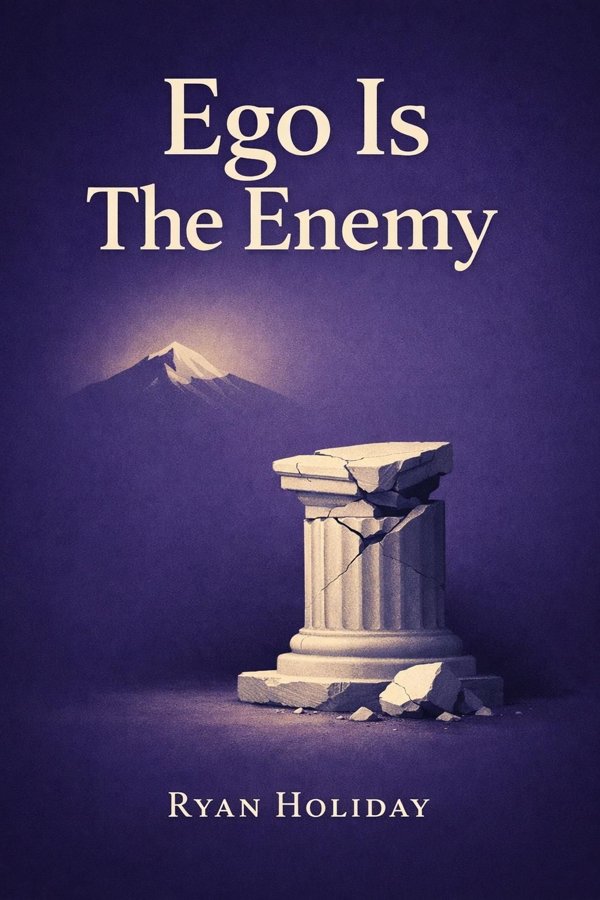
Ego Is The Enemy
by Ryan Holiday
Ego Is The Enemy by Ryan Holiday is a sharp, practical exploration of one of the most destructive forces in human life: the inflated sense of self that clouds judgment, fuels insecurity, and sabotages growth. Rather than treating ego as simple arrogance, Holiday shows how it can appear in many forms—self-importance, obsession with recognition, defensiveness, envy, and the need to always be right. Drawing from Stoic philosophy, military history, sports, politics, and business, he argues that ego can derail us at every stage of life: when we are striving, when we are succeeding, and when we are failing. What makes this book especially powerful is its realism. Holiday does not promise instant confidence or easy success. Instead, he offers a disciplined framework for staying grounded, focused, and effective. He writes with authority shaped by years of studying Stoicism, human behavior, and high-performance cultures, as well as his own experience in media and strategy. For anyone pursuing ambition without self-destruction, Ego Is The Enemy is a compelling reminder that the greatest obstacle is often not outside us, but within us.
Key Takeaways
- 1Aspiration Requires Purpose, Not Self-Importance — At the beginning of any meaningful journey, the greatest danger is not failure but fantasy. When people first become amb…
- 2Talk Less, Build More — There is a strange pleasure in talking about what we plan to do. It makes us feel committed, intelligent, and capable. B…
- 3Always Be a Student — One of ego’s most dangerous tricks is convincing us that talent is enough. The moment we believe we have outgrown learni…
 10 min read
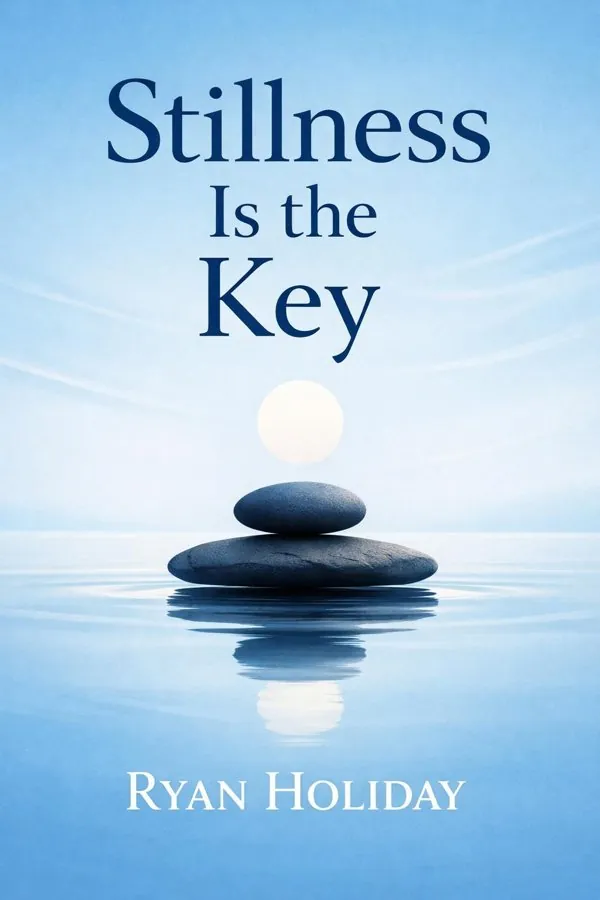
Stillness Is the Key
by Ryan Holiday
In Stillness Is the Key, Ryan Holiday argues that one of the greatest competitive advantages in modern life is not speed, aggression, or constant activity, but the ability to remain calm, clear, and grounded. In a culture addicted to noise, urgency, and distraction, Holiday makes the case that stillness is not passivity. It is an active inner discipline that allows people to think better, act wiser, and live more fully. Drawing from Stoicism, Buddhism, Christian spirituality, and the lives of leaders, artists, athletes, and statesmen, he shows that lasting excellence depends on mastering the mind, settling the spirit, and caring for the body. The book matters because it addresses a problem nearly everyone feels: mental overload, emotional reactivity, and physical exhaustion. Holiday writes not as a detached academic but as a skilled interpreter of ancient wisdom for modern life. Known for bringing Stoic philosophy into contemporary conversations about work, ambition, and character, he offers a practical guide for finding peace and power in the middle of chaos.
Key Takeaways
- 1The Mind Must Be Trained for Clarity — A noisy mind can ruin even the most talented life. Holiday begins with a simple but unsettling truth: most people do not…
- 2Stillness Begins by Slowing Inner Chatter — The most exhausting conversations in life are often the ones happening inside our own heads. Holiday emphasizes that sti…
- 3The Spirit Needs Faith and Humility — Much of human agitation comes from trying to control what was never ours to control. In the book’s second major movement…
 10 min read
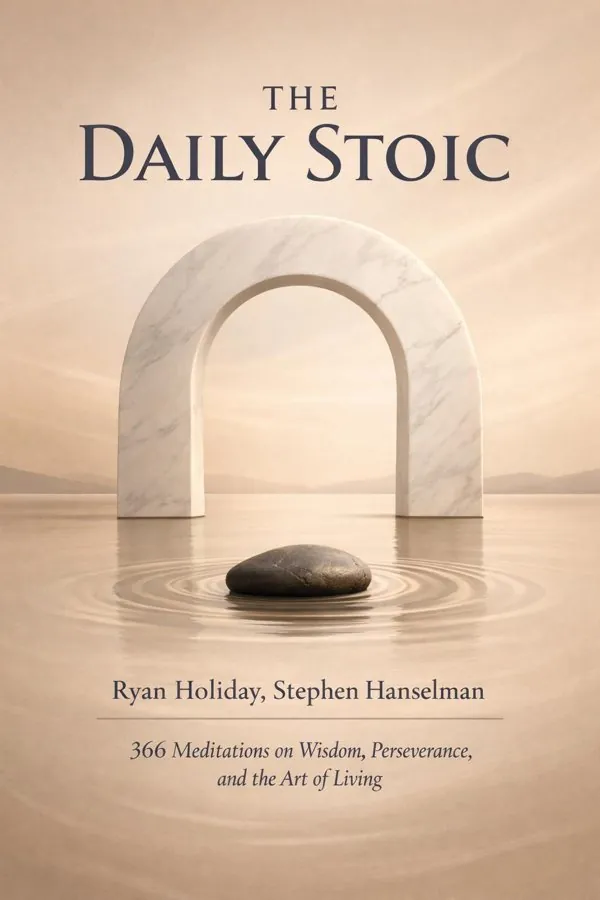
The Daily Stoic
by Ryan Holiday, Stephen Hanselman
The Daily Stoic is a practical guide to living with greater clarity, steadiness, and self-command. Structured as 366 short meditations—one for each day of the year—it draws on the timeless wisdom of Marcus Aurelius, Seneca, and Epictetus, then translates their ideas into language that speaks to modern work, relationships, ambition, anxiety, and adversity. Rather than presenting Stoicism as a dry historical philosophy, Ryan Holiday and Stephen Hanselman show it as a daily discipline: a way to train your mind, direct your actions, and meet life’s uncertainties without being ruled by them. What makes the book matter is its usefulness. These reflections are not designed to impress you intellectually; they are meant to change how you respond when plans fail, tempers rise, egos flare, or fears take over. Holiday, known for bringing Stoic philosophy into contemporary culture, and Hanselman, a seasoned translator and interpreter of classical thought, make ancient insights feel immediate and actionable. The result is a book that can be read a page at a time yet shape an entire outlook—a manual for becoming calmer, wiser, and more resilient in everyday life.
Key Takeaways
- 1Perception Shapes More Than Reality Does — The first battle in life is rarely with events themselves; it is with the story you tell yourself about them. This is th…
- 2Right Action Is the Core of Character — Clear thinking matters, but Stoicism is not just a philosophy of inner calm; it is a philosophy of ethical action. The D…
- 3Will Turns Hardship Into Inner Strength — No philosophy is serious if it only works when life is pleasant. The Daily Stoic’s third major theme, the discipline of …
 10 min read
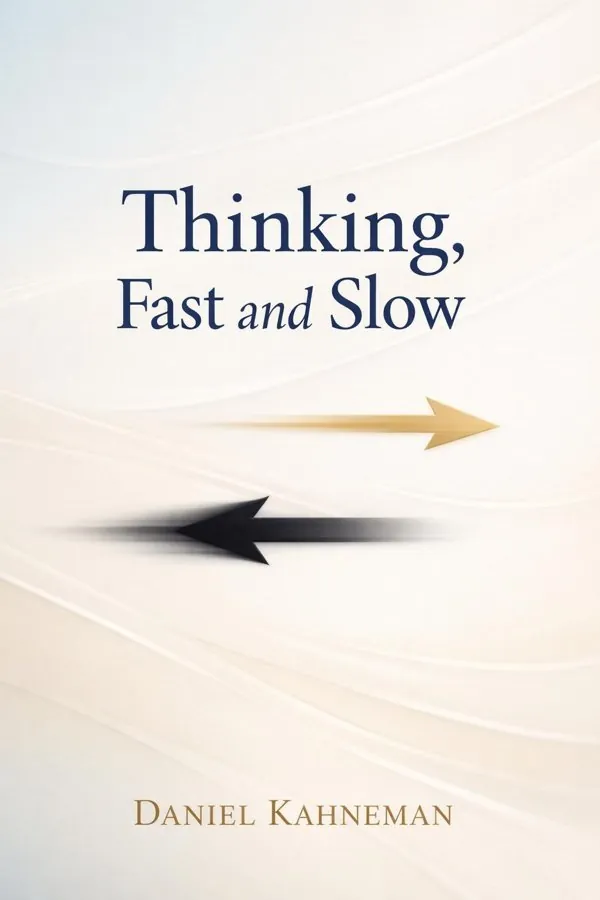
Thinking Fast and Slow
by Daniel Kahneman
Thinking Fast and Slow is one of the most influential books ever written about how the human mind works. In it, Daniel Kahneman distills decades of groundbreaking research in psychology and behavioral economics into a practical framework for understanding why people make smart decisions in some situations and surprisingly poor ones in others. His central insight is that our thinking is shaped by two systems: one that is fast, intuitive, and automatic, and another that is slow, effortful, and analytical. Most of the time, these systems cooperate efficiently. But just as often, the quick judgments of the mind lead us into predictable errors. What makes this book so powerful is that it changes how you see everyday life. From investing and hiring to relationships, planning, medicine, and public policy, Kahneman shows how biases quietly shape choices we assume are rational. He writes with the authority of a Nobel Prize-winning researcher whose work, much of it developed with Amos Tversky, transformed our understanding of judgment under uncertainty. This is not only a book about mistakes; it is a guide to better thinking, wiser decisions, and greater humility about the limits of human reason.
Key Takeaways
- 1The Two Systems That Shape Thought — Most of what you think feels deliberate, but much of it happens automatically. Kahneman’s most famous contribution is th…
- 2Heuristics Make Judgment Efficient and Flawed — The mind is built to simplify, not to calculate perfectly. To navigate uncertainty, we rely on heuristics, mental shortc…
- 3Confidence Often Exceeds What We Know — We are far better at creating explanations than at recognizing our ignorance. Kahneman shows that overconfidence is one …
 10 min read
Siddhartha
by Hermann Hesse
Siddhartha is Hermann Hesse’s luminous 1922 novel about a young man’s search for enlightenment in ancient India, during the era of the Buddha. What begins as the story of a gifted Brahmin’s son quickly becomes a universal exploration of dissatisfaction, desire, suffering, love, loss, and inner awakening. Siddhartha is not content to inherit wisdom secondhand. He wants truth that is lived, not merely taught, and that longing drives him through extreme asceticism, sensual pleasure, wealth, despair, and finally a quiet, profound reconciliation with life itself. The novel matters because it speaks to a question that remains urgent today: how do we find meaning in a world full of advice, ideologies, and distractions? Hesse’s answer is subtle and enduring. Real understanding cannot be borrowed from doctrines alone; it must be discovered through experience, reflection, and attention. Drawing on Indian spiritual traditions while writing for a modern Western audience, Hesse created a work that bridges cultures without losing psychological depth. A Nobel Prize-winning author celebrated for his insight into self-realization, Hesse makes Siddhartha both a spiritual parable and a deeply human coming-of-age story.
Key Takeaways
- 1The Dissatisfied Brahmin — A privileged life can still feel empty when the soul remains unanswered. At the beginning of Siddhartha, we meet a brill…
- 2Learning Through Self-Denial’s Limits — Escaping the world is not the same as understanding it. After leaving home, Siddhartha joins the Samanas, wandering asce…
- 3The Buddha Cannot Be Imitated — Even perfect teaching cannot spare us from having to live our own path. One of the most memorable moments in Siddhartha …
Want the full summary?
Get instant access to this book summary and 100K+ more with Fizz Moment.
Get Free SummaryAvailable on App Store • Free to download
About This List
Ryan Holiday is the modern ambassador of Stoicism. His reading recommendations draw from ancient philosophy, military strategy, and timeless wisdom — books that teach resilience, discipline, and clear thinking.
This list features 7 carefully selected books. With FizzRead, you can read AI-powered summaries of each book in just 15 minutes. Get the key takeaways and start applying the insights immediately.
Ready to start reading?
Get instant access to all 7 book summaries and 100K+ more with FizzRead.