
Mark Zuckerberg's Year of Books: His Top Picks
In 2015, Mark Zuckerberg challenged himself to read a new book every two weeks, sharing his picks with millions of followers. His selections span history, innovation, and human behavior — the ideas behind Facebook's evolution.
 10 min read
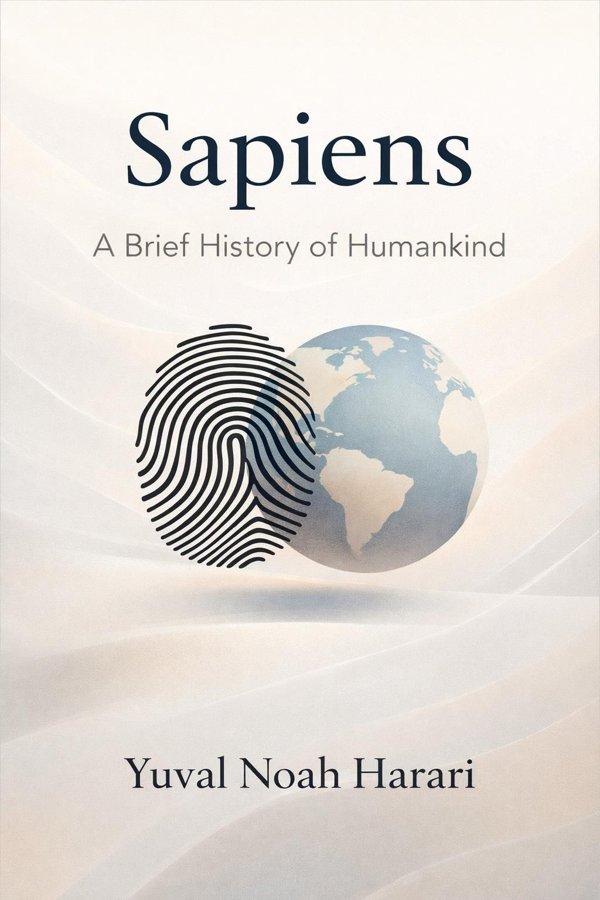
Sapiens
by Yuval Noah Harari
Sapiens: A Brief History of Humankind is an ambitious, big-picture history of our species, tracing how Homo sapiens rose from an unremarkable African ape to the dominant force on Earth. Yuval Noah Harari combines history, biology, anthropology, economics, and philosophy to explain the turning points that transformed human life: the Cognitive Revolution, the Agricultural Revolution, and the Scientific Revolution. Rather than offering a narrow chronological account, he asks a deeper question: what made humans uniquely capable of building empires, religions, markets, and nations? Harari’s answer is both provocative and memorable: our greatest power lies in our ability to create and believe shared stories. These collective fictions—such as money, laws, gods, and states—allow strangers to cooperate on a massive scale. The book matters because it challenges comforting assumptions about progress, happiness, and civilization. It invites readers to see modern society not as inevitable, but as the result of historical choices, accidents, and myths. As a historian and public intellectual, Harari brings scholarly range and narrative clarity to one of the most compelling questions in human history: how did we become who we are?
Key Takeaways
- 1The Cognitive Revolution and Shared Imagination — Human dominance did not begin with stronger bodies, sharper teeth, or faster legs; it began with a new kind of mind. Aro…
- 2The Agricultural Revolution: Progress or Trap? — What if one of history’s greatest achievements was also one of its greatest mistakes? Harari provocatively argues that t…
- 3Myths Make Large Societies Possible — Civilization runs not only on roads, crops, and armies, but on ideas that exist because people collectively agree they d…
 10 min read
Creativity, Inc.
by Ed Catmull
Creativity, Inc. is a leadership book about what it really takes to build an organization where original ideas can survive, improve, and eventually become great work. Written by Ed Catmull, co-founder of Pixar and former president of both Pixar Animation Studios and Walt Disney Animation Studios, the book combines memoir, management philosophy, and hard-earned lessons from one of the most consistently innovative companies in the world. Rather than presenting creativity as a mysterious gift possessed by a few talented people, Catmull argues that creativity depends on the environment leaders create: the quality of communication, the willingness to confront problems early, and the ability to learn from failure without becoming paralyzed by it. Through stories about Pixar’s formation, the making of Toy Story, internal conflicts, production setbacks, and Disney’s revitalization, Catmull shows how fragile creative excellence is—and how easily success can breed complacency. This book matters because it replaces vague advice about innovation with practical principles for managing talented people, protecting candor, and building systems that support risk-taking. For leaders, founders, and creative professionals, it is both inspiring and deeply useful.
Key Takeaways
- 1Early Influences Shaped a Lifelong Vision — Big creative achievements often begin as improbable obsessions. For Ed Catmull, the dream was not simply to work in film…
- 2Pixar Began as an Unlikely Collaboration — Great organizations are rarely born from a perfect plan. Pixar emerged through a messy chain of events involving researc…
- 3Toy Story Proved Process Beats Talent Alone — A brilliant idea is only the beginning; what matters is whether a team can improve weak early versions into something ex…
 10 min read
On Immunity
by Eula Biss
On Immunity is not a conventional book about vaccines. Instead, Eula Biss uses vaccination as a lens to explore fear, motherhood, public health, social trust, and the uneasy boundary between the individual body and the collective world. Writing after the birth of her son, Biss begins with a familiar modern anxiety: how do we protect those we love in a world full of invisible risks? From there, she traces the history of inoculation, the language of immunity, the mythology of contamination, and the politics of responsibility. Her method is distinctive. She brings together science, literary criticism, philosophy, personal narrative, and cultural history, showing that debates about vaccines are never only about medical facts. They are also about power, purity, freedom, privilege, and what we owe one another. That is what makes this book so enduringly relevant. In an age shaped by misinformation, mistrust, and recurring public health crises, Biss offers a thoughtful, humane, and intellectually rigorous meditation on why immunity is both biological protection and a social relationship. The result is a book that deepens how we think about health, citizenship, and care.
Key Takeaways
- 1Vaccination Emerged From Risk And Hope — Medical progress often begins in uncertainty, and vaccination is no exception. Biss reminds readers that early inoculati…
- 2Immunity Is Also A Social Metaphor — Words shape how we think, and Biss shows that the word immunity carries political and moral meanings long before it reac…
- 3The Body Is Never Entirely Individual — One of Biss’s most powerful claims is that the human body cannot be understood as a sealed, independent unit. We absorb …
 10 min read
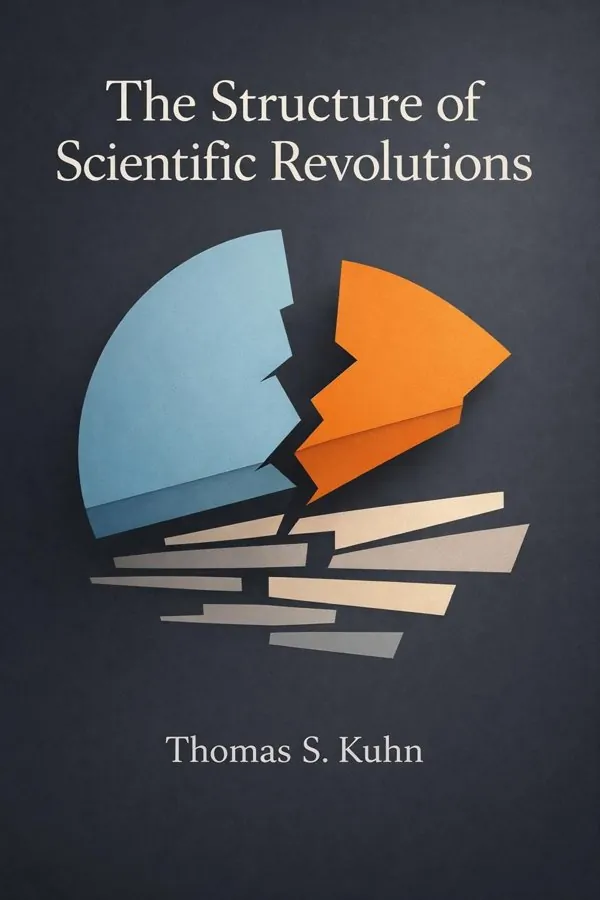
The Structure of Scientific Revolutions
by Thomas S. Kuhn
What if science does not advance mainly by steadily piling up facts, but by periodically overturning its own deepest assumptions? In The Structure of Scientific Revolutions, Thomas S. Kuhn challenged the traditional picture of science as a linear march toward truth and replaced it with a far more dynamic account. He argues that scientific fields are organized around paradigms: shared frameworks that shape what researchers study, how they interpret evidence, and what counts as a legitimate solution. Most of the time, scientists work within these frameworks in periods of “normal science.” But when persistent anomalies accumulate, confidence weakens, crises emerge, and eventually a scientific revolution may install a new paradigm. First published in 1962, Kuhn’s book transformed the philosophy and history of science. Its language, especially the phrase “paradigm shift,” entered culture far beyond academia because it captures a universal pattern of change in ideas, institutions, and worldviews. Kuhn wrote with rare authority, drawing on both scientific training and historical scholarship. The result is a landmark work that helps readers understand not only how science changes, but how human communities decide what counts as reality, reason, and progress.
Key Takeaways
- 1Normal Science Solves Approved Puzzles — Scientific work is often less about wild originality than disciplined problem-solving inside an accepted framework. Kuhn…
- 2Paradigms Shape What Scientists Can See — We do not simply observe the world; we observe it through concepts we have learned. Kuhn’s idea of a paradigm is therefo…
- 3Anomalies Begin Where Confidence Weakens — Breakthroughs often begin as irritations. During normal science, not every mismatch between theory and reality causes al…
 10 min read
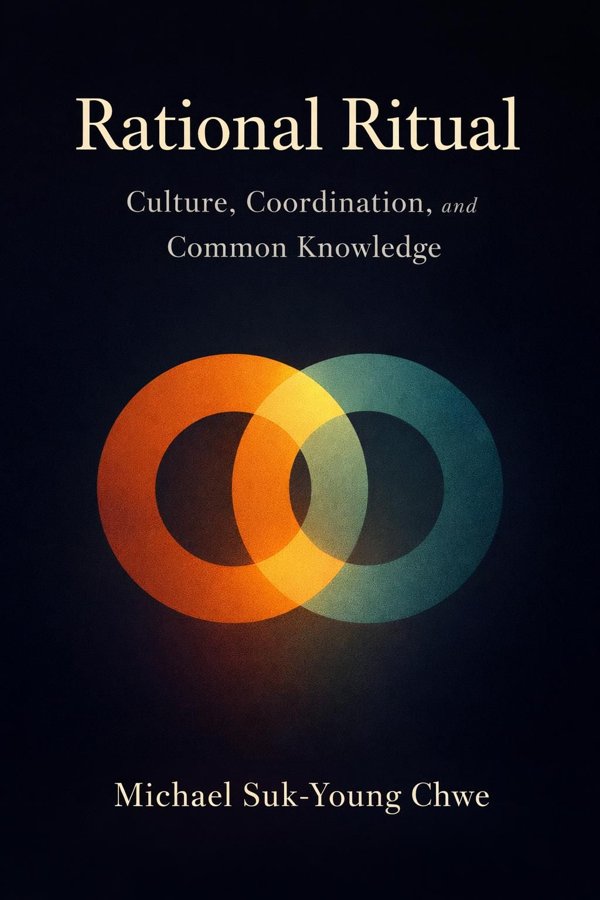
Rational Ritual
by Michael Suk-Young Chwe
Rational Ritual: Culture, Coordination, and Common Knowledge is a strikingly original book that explains why public ceremonies, media events, and shared cultural practices matter so much in social life. Michael Suk-Young Chwe argues that rituals are not merely symbolic leftovers from tradition or irrational displays of emotion. They are highly effective tools for creating common knowledge: not just information that many people possess, but information that everyone knows others possess as well. That difference, Chwe shows, is what makes coordinated action possible. Drawing on game theory, economics, sociology, anthropology, and political theory, Chwe offers a framework for understanding how people align behavior without direct negotiation. From festivals and political rallies to advertising and mass entertainment, public events help individuals become mutually aware of what others are seeing, thinking, and expecting. This insight helps explain everything from market behavior to protest movements and social norms. The book matters because it gives culture a rational structure without reducing it to cold calculation. Chwe, a leading political scientist and theorist of coordination, shows that ritual and reason are not opposites. In many cases, ritual is precisely what makes rational coordination possible.
Key Takeaways
- 1Common Knowledge Changes Everything — Most social problems are not caused by ignorance alone, but by uncertainty about what other people know. That is the pow…
- 2Coordination Matters More Than Competition — We often imagine social life as a contest of individual interests, yet many of our most important choices depend on alig…
- 3Rituals Create Mutual Awareness — A ritual may look ornamental from the outside, but its social function can be intensely practical. Chwe argues that ritu…
 10 min read
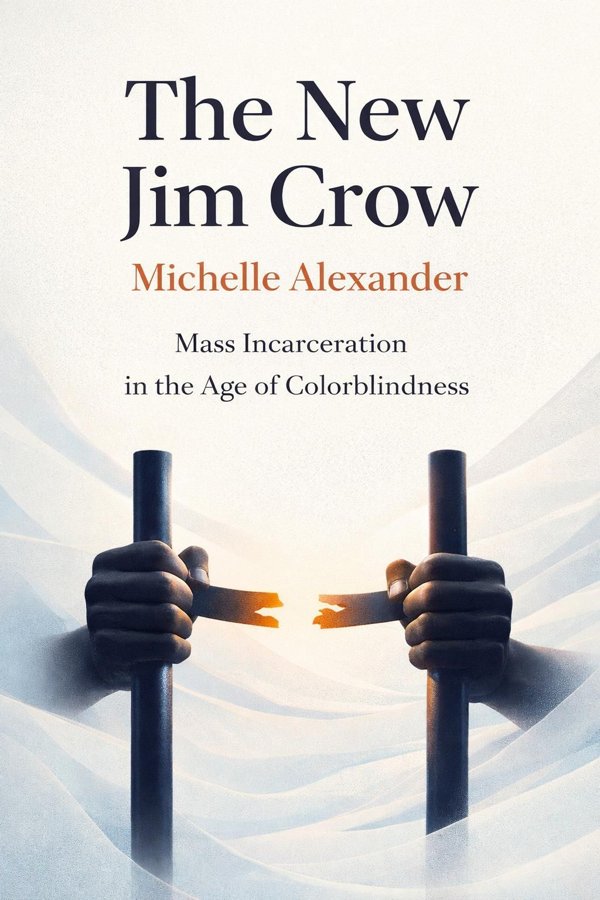
The New Jim Crow
by Michelle Alexander
What if the end of explicit segregation did not end racial caste in America, but simply redesigned it? In The New Jim Crow, Michelle Alexander argues that mass incarceration has become the latest system for managing and marginalizing Black Americans after slavery and Jim Crow. Her central claim is unsettling: the U.S. criminal justice system, often presented as neutral and colorblind, has operated in practice as a powerful mechanism of racial control. Through laws, policing strategies, prosecutorial discretion, sentencing rules, and the stigma attached to a criminal record, millions of people are pushed into a permanent second-class status. This book matters because it shifts the conversation from individual prejudice to institutional design. Alexander shows how policies such as the War on Drugs, stop-and-frisk, plea bargaining, and felony disenfranchisement combine to produce consequences that extend far beyond prison walls. The result is a caste-like system affecting employment, housing, education, voting, and family stability. Alexander writes with the authority of a civil rights lawyer and legal scholar who has worked closely on racial justice issues. Her book remains one of the most influential critiques of the American justice system, challenging readers to question comforting myths about fairness, crime, and equality.
Key Takeaways
- 1The Rebirth of a Racial Caste — A society does not need to use openly racist language to maintain racial hierarchy; it only needs institutions that repr…
- 2Policing as Occupation in Poor Neighborhoods — The front door to mass incarceration is not the courtroom or prison gate; it is the street corner. Alexander emphasizes …
- 3The Law Rewards Unequal Justice — Justice is often imagined as blind, but Alexander shows how legal discretion can produce predictable inequality. The cri…
 10 min read
Lean In
by Sheryl Sandberg
Lean In is Sheryl Sandberg’s influential call for women to pursue leadership with greater confidence, ambition, and self-belief while also challenging the systems that hold them back. Part memoir, part workplace analysis, and part practical guide, the book explores why women remain underrepresented at the top of organizations despite decades of progress. Sandberg argues that external barriers such as bias, unequal expectations at home, and rigid workplace structures matter deeply—but so do the internal habits that cause many women to underestimate their abilities, hold back from opportunities, or leave before they need to. What makes the book enduring is its mix of research, personal stories, and actionable advice on negotiation, mentorship, career choices, and partnership at home. Sandberg writes from unusual authority: she served as Chief Operating Officer of Meta (formerly Facebook), previously worked at Google, and held roles at the U.S. Treasury. Her experience at the highest levels of business gives her perspective, but the book’s real power lies in how it invites readers to examine everyday decisions. Lean In matters because it reframes leadership not as a personality trait, but as a practice of showing up fully.
Key Takeaways
- 1Ambition Often Shrinks Before Opportunity — One of the book’s most striking insights is that many talented women do not wait to be pushed back by the workplace—they…
- 2The Leadership Gap Starts With Belief — A difficult truth runs through Lean In: the gap between women and men in leadership is not explained by ability alone, b…
- 3Sit at the Table, Not the Edges — A powerful metaphor in Lean In is Sandberg’s advice for women to literally and figuratively sit at the table. Her observ…
Want the full summary?
Get instant access to this book summary and 100K+ more with Fizz Moment.
Get Free SummaryAvailable on App Store • Free to download
About This List
In 2015, Mark Zuckerberg challenged himself to read a new book every two weeks, sharing his picks with millions of followers. His selections span history, innovation, and human behavior — the ideas behind Facebook's evolution.
This list features 7 carefully selected books. With FizzRead, you can read AI-powered summaries of each book in just 15 minutes. Get the key takeaways and start applying the insights immediately.
Ready to start reading?
Get instant access to all 7 book summaries and 100K+ more with FizzRead.