
Jordan Peterson's Essential Reading for Finding Meaning
Clinical psychologist and bestselling author Jordan Peterson's reading list draws from mythology, philosophy, psychology, and history. These books explore meaning, responsibility, and the foundations of Western thought.
 10 min read
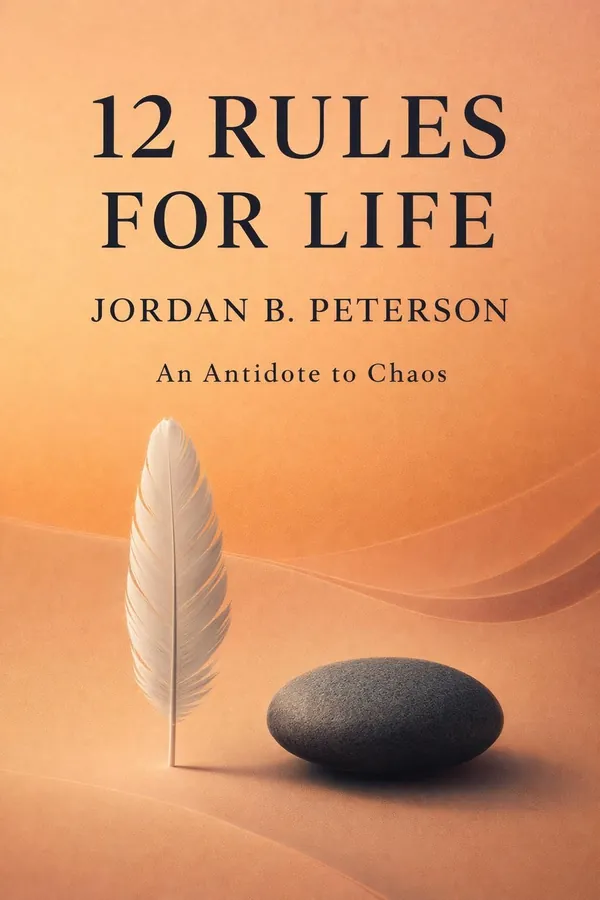
12 Rules for Life
by Jordan Peterson
Why did 12 Rules for Life become such a widely discussed self-help book? Because it speaks to a problem many people feel but struggle to name: modern life often feels unstable, fragmented, and full of noise. In response, Jordan B. Peterson offers a framework built around responsibility, honesty, discipline, and meaning. Rather than promising easy happiness or quick fixes, the book argues that a good life is created by how we meet suffering, uncertainty, and everyday choices. Peterson, a Canadian clinical psychologist, draws from psychology, mythology, religion, and personal observation to present twelve rules that are both practical and philosophical. Some sound simple on the surface—stand up straight, tell the truth, be precise in your speech—but each points to a deeper principle about character and how order is built in the middle of chaos. That blend of everyday advice and big-picture thinking is what gives the book its lasting appeal. For readers looking for a summary of 12 Rules for Life, the central message is clear: meaning grows when you take yourself seriously, act responsibly, and choose what is right over what is merely convenient.
Key Takeaways
- 1Rule 1 – Stand up straight with your shoulders back — This rule is about far more than posture. Peterson uses the image of lobsters and dominance hierarchies to argue that co…
- 2Rule 2 – Treat yourself like someone you are responsible for helping — Many people are kinder, more organized, and more reliable when caring for others than when caring for themselves. They r…
- 3Rule 3 – Make friends with people who want the best for you — The people around you shape your standards, moods, habits, and sense of possibility. Peterson’s warning here is simple: …
 10 min read
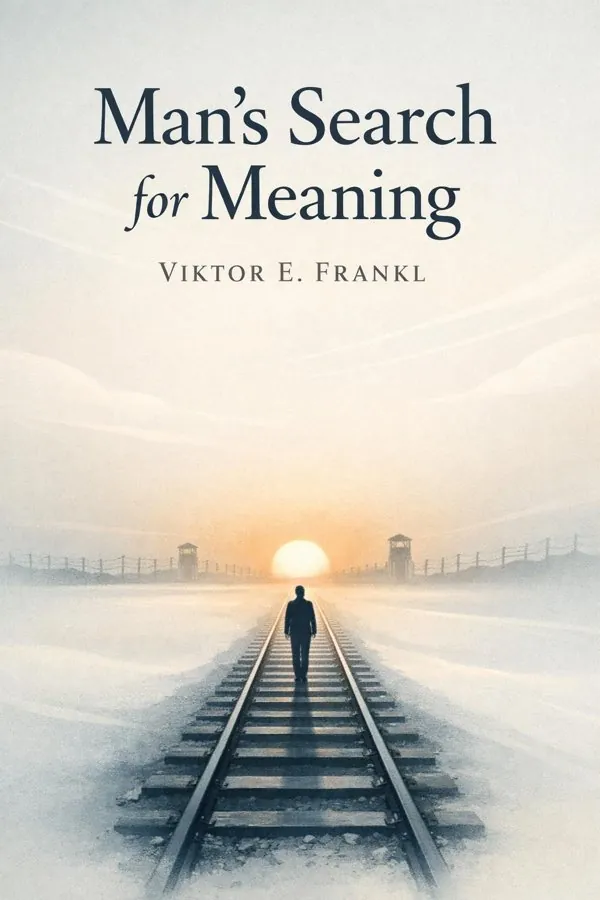
Man's Search for Meaning
by Viktor Frankl
What keeps a person going when everything familiar has been taken away—comfort, identity, loved ones, freedom, and even the expectation of tomorrow? That is the unbearable and essential question at the heart of *Man's Search for Meaning*. Viktor E. Frankl’s landmark book is far more than a Holocaust memoir. It is a profound study of human endurance, an examination of suffering, and a practical philosophy for anyone trying to live with purpose in hard times. Drawing on his experiences in Nazi concentration camps, Frankl explores how people respond when life is reduced to its barest terms and why some still manage to preserve dignity, hope, and inner freedom. What makes this book endure is that Frankl does not offer empty inspiration. He writes as an Austrian neurologist, psychiatrist, and Holocaust survivor who later developed logotherapy, a school of psychotherapy centered on meaning as the primary human motivation. His insight is simple but life-changing: even when we cannot change our circumstances, we can still choose our response. That idea has made this book one of the most influential works in psychology and self-help, especially for readers facing grief, burnout, uncertainty, or the quiet fear that life has lost direction.
Key Takeaways
- 1The Shock of Arrival and the Dehumanization of Camp Life — When Frankl first arrived at Auschwitz, the destruction of the self began immediately. The process was systematic: priso…
- 2Emotional Detachment and the Apathy that Defines Survival — After the first shock came a second psychological stage: apathy. Frankl shows that this numbness was not indifference in…
- 3Moral Choice and Inner Freedom in the Midst of Suffering — One of the book’s most powerful claims is that even under extreme oppression, a human being retains a final freedom: the…
 10 min read
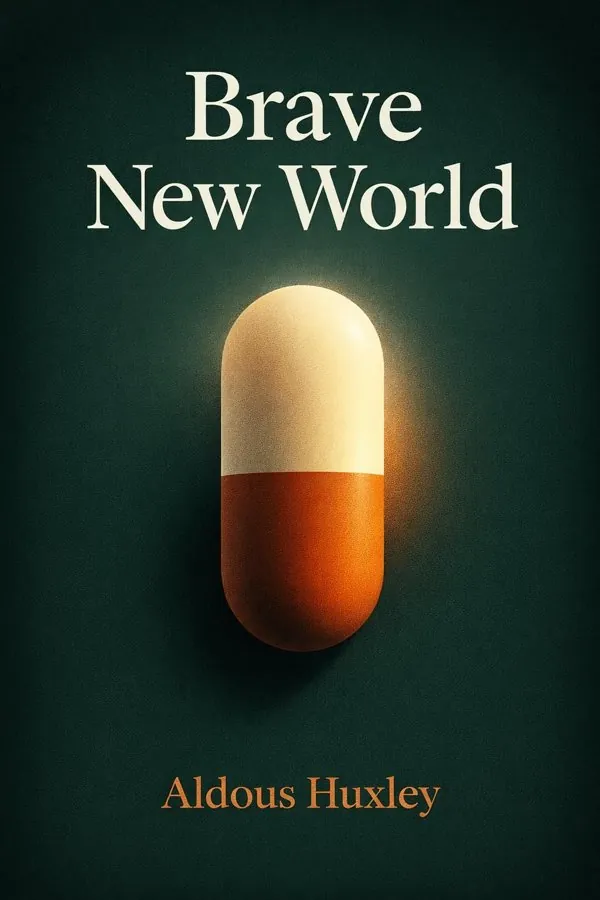
Brave New World
by Aldous Huxley
What if the greatest threat to freedom were not violence or tyranny, but comfort? In Brave New World, Aldous Huxley imagines a future society that has solved many of humanity’s oldest problems: war is minimized, suffering is medicated, desire is managed, and social conflict is engineered away before it begins. Yet beneath this polished surface lies a terrifying question: what remains of a human being when individuality, family, love, grief, ambition, and spiritual longing have all been sacrificed for stability? Set in the technologically advanced World State, the novel follows characters who begin to sense the emptiness hidden inside a perfectly organized civilization. Through genetic design, psychological conditioning, casual pleasure, and relentless consumption, Huxley presents a world in which people are kept happy precisely by being kept shallow. The book is both a gripping dystopian story and a profound philosophical warning. First published in 1932, Brave New World remains startlingly relevant in an age shaped by entertainment, pharmaceuticals, social engineering, and algorithmic influence. Huxley, one of the twentieth century’s sharpest literary and social critics, wrote a novel that still challenges readers to ask whether a painless life is worth the loss of freedom, depth, and truth.
Key Takeaways
- 1The Hatchery and Conditioning Center — A society reveals its deepest values by the way it creates and trains its children. In Brave New World, the Hatchery and…
- 2Social Hierarchies and Engineered Happiness — Inequality becomes hardest to challenge when people are trained to love the place assigned to them. The World State is b…
- 3Soma and the Sedation of Pain — A society does not need to silence dissent by force if it can teach people to medicate every uncomfortable feeling away.…
 10 min read
1984
by George Orwell
George Orwell’s 1984 is one of the defining novels of the modern age: a bleak, brilliant portrait of a society in which power seeks not only to control people’s actions, but to colonize their minds. Set in Oceania, a totalitarian superstate ruled by the ever-watchful figure of Big Brother, the story follows Winston Smith, a minor Party employee whose job is to falsify history so the regime always appears infallible. As Winston begins to doubt the Party’s version of reality, he embarks on a dangerous search for truth, memory, love, and freedom. What makes 1984 endure is not only its gripping story, but its deep insight into propaganda, surveillance, censorship, political language, and the fragility of objective truth. Orwell wrote with unusual authority, having witnessed imperialism, ideological extremism, war, and the manipulation of public opinion firsthand. The result is not merely a dystopian novel, but a lasting warning: when language is twisted, history rewritten, and fear normalized, human dignity itself is at risk.
Key Takeaways
- 1Oceania and Permanent War — A society is easiest to control when fear feels normal. Orwell opens 1984 by placing readers in a world divided into thr…
- 2Winston’s Job: Rewriting Reality — Who controls the past gains enormous power over the present. Winston Smith works at the Ministry of Truth, where his tas…
- 3Surveillance, Language, and Thought Control — The most effective prison is the one people carry inside themselves. In Oceania, control operates through more than poli…
 10 min read
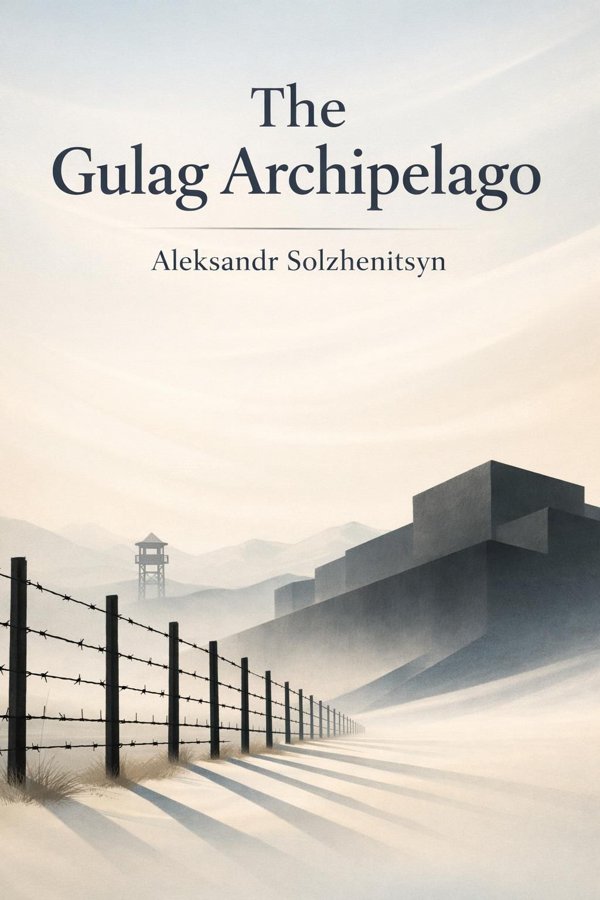
The Gulag Archipelago
by Aleksandr Solzhenitsyn
The Gulag Archipelago is one of the most powerful works ever written about state violence, ideological fanaticism, and the destruction of human dignity. In this vast literary investigation, Aleksandr Solzhenitsyn maps the hidden world of the Soviet prison and labor camp system: the arrests in the middle of the night, the fabricated charges, the interrogations, the transport convoys, the slave labor, and the moral corrosion that spread far beyond the camps themselves. The “archipelago” of the title refers to a chain of prisons, transit points, and camps scattered across the Soviet Union, linked not by geography but by terror. What makes the book extraordinary is the authority behind it. Solzhenitsyn writes not as an outside commentator, but as a former prisoner who endured the system himself and gathered testimony from hundreds of other survivors. He combines memoir, history, moral reflection, and documentary evidence to show how an entire political order normalized lies and cruelty. First published in the West in 1973, The Gulag Archipelago changed how the world understood the Soviet regime. It remains essential not only as a record of suffering, but as a warning about what happens when power escapes moral limits.
Key Takeaways
- 1Arrest Begins the Descent — A totalitarian system often reveals itself in a single knock at the door. Solzhenitsyn begins with arrest because this i…
- 2Interrogation Turns Truth Into Theater — When a regime no longer seeks truth, confession becomes a political performance. Solzhenitsyn describes interrogation as…
- 3The Journey Dehumanizes Before Arrival — Long before prisoners reached the camps, the system had already begun reducing them to cargo. Solzhenitsyn’s description…
 10 min read
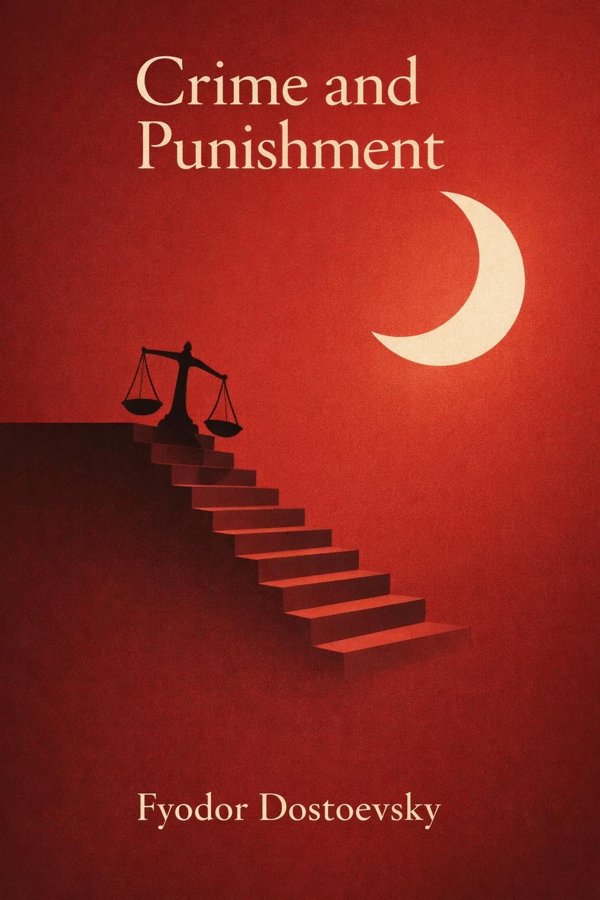
Crime and Punishment
by Fyodor Dostoevsky
Crime and Punishment is one of the most penetrating novels ever written about guilt, morality, and the hidden motives that drive human behavior. Set in the oppressive heat and poverty of St. Petersburg, the story follows Rodion Raskolnikov, a former student who convinces himself that extraordinary people may step beyond ordinary moral laws. Acting on this idea, he commits a brutal crime and then discovers that intellectual justification offers no protection against conscience, fear, and spiritual collapse. What begins as a murder story becomes a profound psychological investigation into suffering, pride, alienation, and the possibility of redemption. Fyodor Dostoevsky matters because few writers have understood the contradictions of the human soul so deeply. Drawing on his own experiences with poverty, imprisonment, political persecution, and religious struggle, he created a novel that still feels startlingly modern. Crime and Punishment remains essential not only as a literary classic, but as a timeless study of how people rationalize wrongdoing, how guilt reshapes identity, and how truth can become the first step toward renewal.
Key Takeaways
- 1Ideas Can Become Dangerous Actions — A destructive act often begins long before the act itself, in the quiet acceptance of a dangerous idea. In Crime and Pun…
- 2Guilt Punishes Before Any Court — The most relentless punishment is often internal rather than legal. After the murder, Raskolnikov does not become triump…
- 3Pride Is a Form of Isolation — Pride does not always look like confidence; sometimes it looks like withdrawal, contempt, and a refusal to need anyone. …
 10 min read
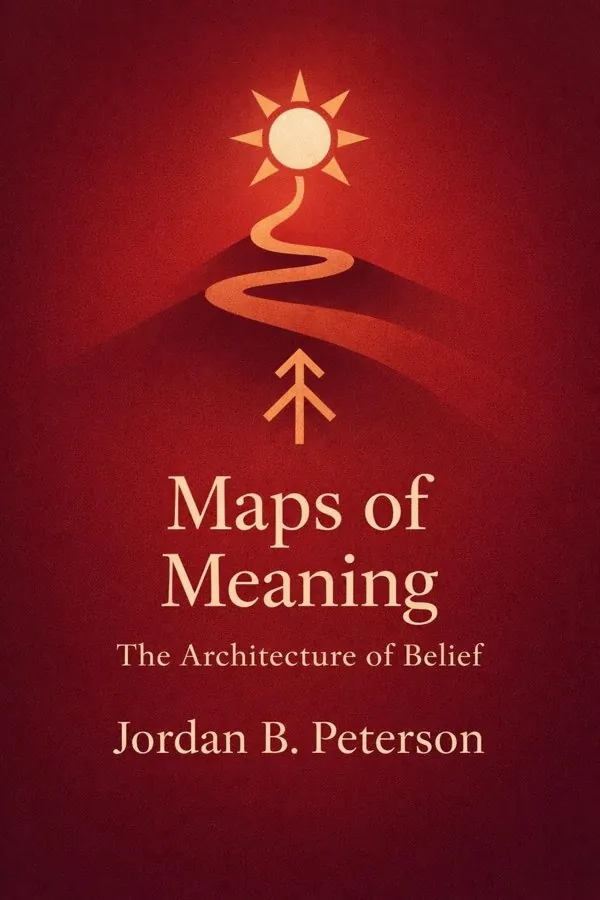
Maps of Meaning
by Jordan Peterson
Maps of Meaning: The Architecture of Belief is Jordan B. Peterson’s ambitious attempt to answer one of the oldest human questions: how do people create meaning strong enough to guide action, endure suffering, and prevent collapse into chaos? First published in 1999, the book brings together clinical psychology, evolutionary theory, neuroscience, mythology, religion, literature, and philosophy to argue that human beings do not merely live in an objective world of facts. We live in a world interpreted through values, stories, symbols, and goals. Peterson examines recurring mythic patterns across cultures and shows how they help individuals orient themselves between order and chaos, certainty and transformation. The book matters because it treats meaning not as a vague spiritual preference but as a psychological necessity. Drawing on his experience as a clinical psychologist and professor, Peterson argues that belief systems are living structures that organize perception, emotion, and morality. Whether or not one agrees with all of his conclusions, Maps of Meaning is a challenging and influential work for anyone trying to understand belief, identity, and the stories that shape human life.
Key Takeaways
- 1The World as a Forum for Action — A human being does not first encounter the world as a neutral collection of objects. We experience it as a field of sign…
- 2Order and Chaos Structure Experience — Meaning often emerges at the boundary between what you understand and what you do not. Peterson argues that across myths…
- 3The Great Father and Great Mother — Human beings often personify the structure of reality before they can explain it abstractly. Peterson argues that recurr…
 10 min read
The Road to Wigan Pier
by George Orwell
What does poverty feel like when you stop treating it as a statistic and begin seeing it as a lived reality? In The Road to Wigan Pier, George Orwell answers that question with unusual honesty, combining first-hand reporting, social criticism, and political reflection into one of the most influential books about class in modern Britain. Originally published in 1937, the book begins as an investigation into working-class life in the industrial North of England, where Orwell documents overcrowded housing, unemployment, dangerous mine labor, and the daily humiliations of poverty. It then turns into a sharper, more controversial argument about socialism, class prejudice, and why many middle-class intellectuals fail to connect with the people they claim to defend. What makes the book endure is Orwell’s rare authority: he does not write from comfortable distance, but from direct observation and moral seriousness. He notices the texture of ordinary life—the smells, rooms, wages, routines, fears—and links them to larger political structures. The result is both a social document and a challenge: if injustice is visible, what excuses remain for ignoring it?
Key Takeaways
- 1Poverty Is Physical, Not Abstract — A society begins to reveal itself when you ask not what it claims to value, but how its poorest people actually live. On…
- 2The Mine Sustains Invisible Civilization — Modern comfort often rests on labor we rarely see. Orwell’s descent into the coal mines is one of the most memorable sec…
- 3Housing Shapes Dignity and Possibility — Few things expose inequality more quickly than a front door. Orwell understood that housing is not merely shelter; it is…
 10 min read
Ordinary Men
by Christopher Browning
Ordinary Men by historian Christopher R. Browning is one of the most unsettling and important works ever written about the Holocaust. First published in 1992 and based largely on postwar testimonies and archival records, the book examines Reserve Police Battalion 101, a unit of middle-aged, working- and lower-middle-class German men who were not elite Nazi fanatics, yet became participants in mass shootings, deportations, and genocide in Nazi-occupied Poland. Browning’s central question is profoundly disturbing: how did seemingly ordinary people become killers? Rather than offering easy moral distance, he reconstructs the social pressures, career incentives, ideological conditioning, fear, conformity, and gradual moral erosion that made atrocity possible. The book matters because it shifts the focus from monstrous exceptions to human vulnerability under systems of power. Browning writes with scholarly restraint, moral seriousness, and deep archival rigor, making his argument both credible and devastating. Ordinary Men is not simply a history of one battalion; it is a warning about obedience, group loyalty, bureaucratic violence, and the terrifying capacity for evil embedded in everyday human behavior.
Key Takeaways
- 1Ordinary People Can Become Perpetrators — One of the most frightening truths in history is that mass murder is often carried out not by obvious monsters, but by p…
- 2The First Kill Is the Hardest — Atrocity often begins not with enthusiasm, but with a threshold crossing. Browning pays close attention to the battalion…
- 3Peer Pressure Can Overpower Conscience — People like to believe they would stand alone against wrongdoing, but Browning shows how rare and difficult that can be.…
 10 min read
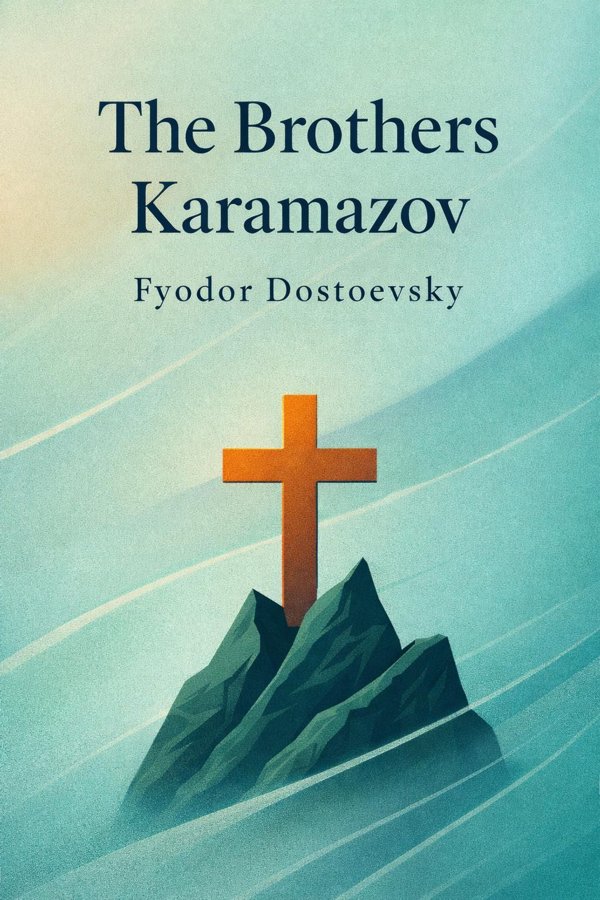
The Brothers Karamazov
by Fyodor Dostoevsky
Few novels ask larger questions than The Brothers Karamazov. On its surface, Fyodor Dostoevsky’s final masterpiece is a family drama: a violent, greedy father is hated by his sons, rivalries intensify, and a murder shatters what little order remains. But beneath that gripping plot lies one of literature’s deepest explorations of faith, doubt, justice, guilt, freedom, morality, and the possibility of redemption. Through the contrasting personalities of Dmitri, Ivan, and Alyosha Karamazov, Dostoevsky turns one broken family into a portrait of the human soul itself. First published in 1880, the novel remains astonishingly modern because it confronts questions that still unsettle us: If God is absent, what guides our choices? Can reason alone sustain morality? Why do innocent people suffer? Are we responsible only for our own actions, or also for the pain we ignore in others? Dostoevsky writes with unusual authority because his own life was marked by political persecution, exile, poverty, illness, and profound spiritual struggle. The result is not merely a great Russian novel, but a timeless investigation into what it means to be human when love, desire, intellect, and conscience pull in different directions.
Key Takeaways
- 1A Family as a Moral Battlefield — Sometimes a family reveals more about human nature than any philosophy textbook. In The Brothers Karamazov, Dostoevsky b…
- 2Freedom Without Morality Becomes Chaos — Human beings often demand freedom, but Dostoevsky asks a harder question: freedom for what? One of the central tensions …
- 3Suffering Challenges Faith and Reason — It is easy to discuss morality in the abstract; it is much harder to defend meaning in the face of innocent suffering. O…
Want the full summary?
Get instant access to this book summary and 100K+ more with Fizz Moment.
Get Free SummaryAvailable on App Store • Free to download
About This List
Clinical psychologist and bestselling author Jordan Peterson's reading list draws from mythology, philosophy, psychology, and history. These books explore meaning, responsibility, and the foundations of Western thought.
This list features 10 carefully selected books. With FizzRead, you can read AI-powered summaries of each book in just 15 minutes. Get the key takeaways and start applying the insights immediately.
Ready to start reading?
Get instant access to all 10 book summaries and 100K+ more with FizzRead.