
Jay Shetty's Mindful Reading List
Books that inspire Jay Shetty's teachings on purpose, mindfulness, and living with intention.
 10 min read
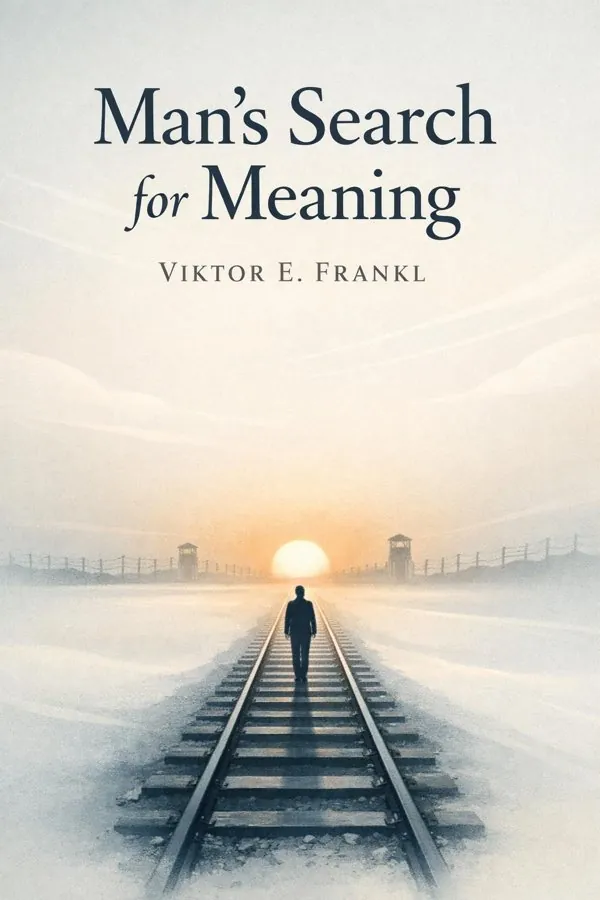
Man's Search for Meaning
by Viktor Frankl
What keeps a person going when everything familiar has been taken away—comfort, identity, loved ones, freedom, and even the expectation of tomorrow? That is the unbearable and essential question at the heart of *Man's Search for Meaning*. Viktor E. Frankl’s landmark book is far more than a Holocaust memoir. It is a profound study of human endurance, an examination of suffering, and a practical philosophy for anyone trying to live with purpose in hard times. Drawing on his experiences in Nazi concentration camps, Frankl explores how people respond when life is reduced to its barest terms and why some still manage to preserve dignity, hope, and inner freedom. What makes this book endure is that Frankl does not offer empty inspiration. He writes as an Austrian neurologist, psychiatrist, and Holocaust survivor who later developed logotherapy, a school of psychotherapy centered on meaning as the primary human motivation. His insight is simple but life-changing: even when we cannot change our circumstances, we can still choose our response. That idea has made this book one of the most influential works in psychology and self-help, especially for readers facing grief, burnout, uncertainty, or the quiet fear that life has lost direction.
Key Takeaways
- 1The Shock of Arrival and the Dehumanization of Camp Life — When Frankl first arrived at Auschwitz, the destruction of the self began immediately. The process was systematic: priso…
- 2Emotional Detachment and the Apathy that Defines Survival — After the first shock came a second psychological stage: apathy. Frankl shows that this numbness was not indifference in…
- 3Moral Choice and Inner Freedom in the Midst of Suffering — One of the book’s most powerful claims is that even under extreme oppression, a human being retains a final freedom: the…
 10 min read
The Four Agreements
by Don Miguel Ruiz
What if much of your stress, shame, conflict, and self-doubt came not from reality itself, but from invisible rules you learned long ago and never questioned? That is the life-changing premise at the heart of *The Four Agreements*. In this modern self-help classic, Don Miguel Ruiz draws on Toltec wisdom to show how people become trapped by limiting beliefs, harsh self-judgment, and fear-based habits—and how they can break free through four simple but demanding practices. The power of the book lies in its clarity: Ruiz does not offer a complicated philosophy or a rigid system, but a practical code for speaking, relating, thinking, and acting with greater awareness. His four agreements—be impeccable with your word, don’t take anything personally, don’t make assumptions, and always do your best—sound simple on the surface, yet they challenge the patterns that drive everyday suffering. Ruiz is best known as a Mexican author and spiritual teacher whose work centers on personal transformation through Toltec-inspired insight. For readers seeking emotional freedom, healthier relationships, and a calmer inner life, *The Four Agreements* remains one of the most accessible and transformative books in the personal growth space.
Key Takeaways
- 1The Domestication of Humans and the Book of Law Within — Ruiz begins by explaining that human beings are “domesticated” in much the same way animals are trained: through reward,…
- 2The First Agreement: Be Impeccable with Your Word — Ruiz describes the word as a creative force. Language shapes identity, influences relationships, and directs attention. …
- 3The Second Agreement: Don’t Take Anything Personally — This agreement is Ruiz’s antidote to one of the most common sources of emotional pain: the belief that other people’s wo…
 10 min read
Meditations
by Marcus Aurelius
What does it mean to stay calm, just, and fully human in a world full of pressure, conflict, ego, and loss? That is the enduring question at the heart of Meditations, the private journal of Roman emperor Marcus Aurelius. Written in Greek and never intended for publication, these reflections are not polished philosophy lectures. They are personal reminders from one of the most powerful men in the world trying to govern not only an empire, but also his own mind. That tension is exactly why this book still matters. Meditations remains one of the clearest guides to Stoic philosophy because it speaks directly to everyday struggles: dealing with difficult people, accepting change, resisting vanity, and acting with integrity when no one is watching. Marcus Aurelius is remembered as both a Roman emperor and a Stoic philosopher, a rare figure often described as a philosopher-king. His reflections on virtue, discipline, mortality, and inner peace have influenced readers for centuries. If you want practical wisdom rather than abstract theory, Meditations offers a deeply human blueprint for living with clarity, resilience, and moral purpose.
Key Takeaways
- 1Book I: Lessons from Those Who Shaped Me — The opening book of Meditations is an extraordinary act of gratitude. Instead of launching into abstract arguments, Marc…
- 2Book II: Accepting Fate and Living Rationally — Book II opens with one of the most quoted passages in Stoic philosophy: a morning reminder that we will meet interfering…
- 3Book III: Integrity Beyond Fame — In Book III, Marcus Aurelius turns his attention to time, mortality, and the danger of living for approval. He reminds h…
 10 min read
Siddhartha
by Hermann Hesse
Siddhartha is Hermann Hesse’s luminous 1922 novel about a young man’s search for enlightenment in ancient India, during the era of the Buddha. What begins as the story of a gifted Brahmin’s son quickly becomes a universal exploration of dissatisfaction, desire, suffering, love, loss, and inner awakening. Siddhartha is not content to inherit wisdom secondhand. He wants truth that is lived, not merely taught, and that longing drives him through extreme asceticism, sensual pleasure, wealth, despair, and finally a quiet, profound reconciliation with life itself. The novel matters because it speaks to a question that remains urgent today: how do we find meaning in a world full of advice, ideologies, and distractions? Hesse’s answer is subtle and enduring. Real understanding cannot be borrowed from doctrines alone; it must be discovered through experience, reflection, and attention. Drawing on Indian spiritual traditions while writing for a modern Western audience, Hesse created a work that bridges cultures without losing psychological depth. A Nobel Prize-winning author celebrated for his insight into self-realization, Hesse makes Siddhartha both a spiritual parable and a deeply human coming-of-age story.
Key Takeaways
- 1The Dissatisfied Brahmin — A privileged life can still feel empty when the soul remains unanswered. At the beginning of Siddhartha, we meet a brill…
- 2Learning Through Self-Denial’s Limits — Escaping the world is not the same as understanding it. After leaving home, Siddhartha joins the Samanas, wandering asce…
- 3The Buddha Cannot Be Imitated — Even perfect teaching cannot spare us from having to live our own path. One of the most memorable moments in Siddhartha …
 10 min read
A New Earth
by Eckhart Tolle
A New Earth is Eckhart Tolle’s bold and accessible exploration of what keeps human beings trapped in conflict, anxiety, and dissatisfaction—and what it would take to move beyond those patterns. At the center of the book is a simple but far-reaching claim: much of human suffering is created by the ego, the false sense of self built from thought, status, memory, and identification with form. Tolle argues that real transformation does not begin with changing the outer world alone, but with awakening to a deeper consciousness beneath compulsive thinking. What makes this book matter is its scope. It is both an intensely personal guide to inner peace and a sweeping diagnosis of humanity’s collective crises, from destructive relationships to social conflict and environmental imbalance. Tolle connects everyday emotional habits with the larger destiny of the planet, suggesting that inner awakening is not a luxury but an evolutionary necessity. Tolle writes with the authority of a teacher whose work has helped millions rethink their relationship to thought, presence, and identity. Following the impact of The Power of Now, A New Earth expands his message into a practical vision for personal and collective awakening.
Key Takeaways
- 1The Flowering of Human Consciousness — Human beings may be more technologically advanced than ever, yet inwardly many still live in confusion, fear, and confli…
- 2Ego: The False Self We Defend — Much of what people call “me” is actually a story they are constantly trying to maintain. Tolle’s central insight is tha…
- 3The Pain-Body Feeds on Unconscious Emotion — Some emotional reactions feel larger than the immediate moment because they are. Tolle introduces the “pain-body” as an …
 10 min read
The Mastery of Love
by Don Miguel Ruiz
Why do so many people long for love yet repeatedly create pain in their closest relationships? In The Mastery of Love, Don Miguel Ruiz argues that the answer is not a lack of love, but a mind shaped by fear, emotional wounds, and false beliefs. Drawing on Toltec wisdom, Ruiz reframes love as a natural state that already exists within us. What blocks it are the stories we carry about rejection, control, worthiness, jealousy, and need. Rather than offering dating advice or communication tricks, Ruiz goes deeper. He explores how childhood conditioning creates what he calls the wounded mind, how fear becomes the hidden force behind conflict, and why many relationships are built on dependency instead of genuine affection. From there, he shows how self-love, awareness, forgiveness, and emotional responsibility can transform the way we relate to others. The book matters because it treats love not as luck, chemistry, or sacrifice, but as a practice of inner freedom. Ruiz, best known for The Four Agreements, brings spiritual clarity and practical insight to one of life’s most universal struggles: learning how to love without fear.
Key Takeaways
- 1The Wounded Mind Creates Fear — Most relationship pain begins long before the relationship itself. Ruiz suggests that from childhood, we inherit emotion…
- 2The Parasite Feeds on Suffering — Fear becomes powerful when it starts to feel like your own voice. Ruiz uses the metaphor of the parasite to describe the…
- 3Stop Seeking Love Outside Yourself — One of the great illusions in relationships is the belief that another person can give you the love you do not give your…
 10 min read
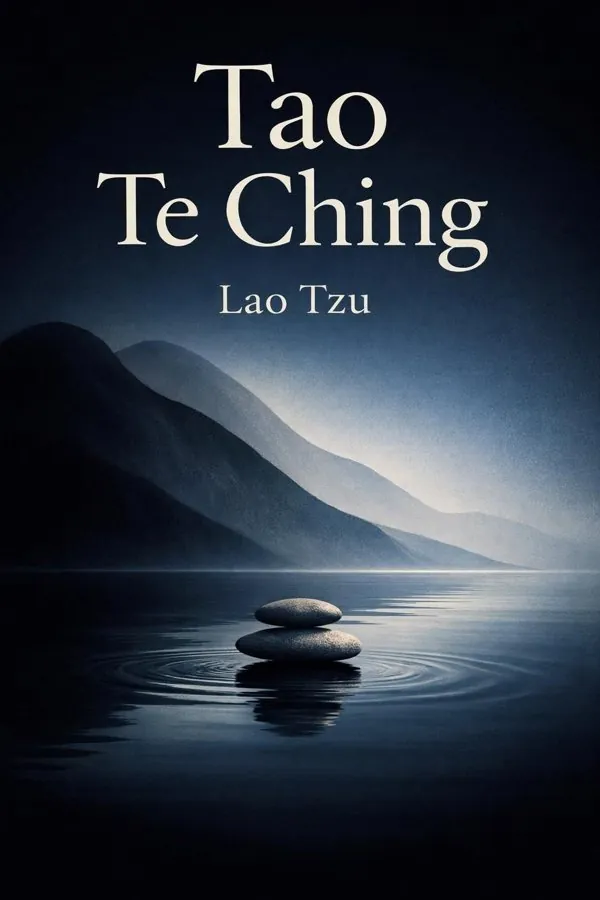
Tao Te Ching
by Lao Tzu
Few books have shaped spiritual thought, leadership, and personal reflection as deeply as the Tao Te Ching. Though brief in length, this ancient classic opens a surprisingly vast way of seeing life: one that values stillness over strain, humility over ego, and alignment over force. At a time when modern life often rewards speed, control, and constant self-assertion, the Tao Te Ching offers a radically different path. It suggests that the most effective way to live is not by pushing harder, but by moving in harmony with the deeper patterns of existence. Attributed to Lao Tzu, the revered sage traditionally associated with the founding of Daoism, this text has endured for more than two millennia because it speaks to timeless human struggles: how to lead without dominating, act without exhausting yourself, and find peace in a world of change. Divided into reflections on the Tao, or the Way, and Te, often translated as virtue or inner power, the book blends poetic paradox with practical wisdom. Its teachings on non-action, simplicity, and natural balance continue to influence philosophy, politics, spirituality, and self-development around the world.
Key Takeaways
- 1Introduction to the Tao — The Tao is the starting point of the entire book, yet Lao Tzu immediately tells us it cannot be fully captured in langua…
- 2The Nature of the Tao — Lao Tzu describes the Tao through paradox because ordinary logic cannot contain it. It is empty, yet never used up. It i…
- 3Wu Wei (Non-Action) — Wu wei is one of the most misunderstood ideas in the Tao Te Ching. It does not mean laziness, passivity, or refusing to …
Want the full summary?
Get instant access to this book summary and 100K+ more with Fizz Moment.
Get Free SummaryAvailable on App Store • Free to download
About This List
Books that inspire Jay Shetty's teachings on purpose, mindfulness, and living with intention.
This list features 7 carefully selected books. With FizzRead, you can read AI-powered summaries of each book in just 15 minutes. Get the key takeaways and start applying the insights immediately.
Ready to start reading?
Get instant access to all 7 book summaries and 100K+ more with FizzRead.