
Emma Watson's Our Shared Shelf: Reads That Empower
Emma Watson's Our Shared Shelf book club championed feminist literature, social justice, and stories of resilience. Her selections challenge perspectives and inspire action.
 10 min read
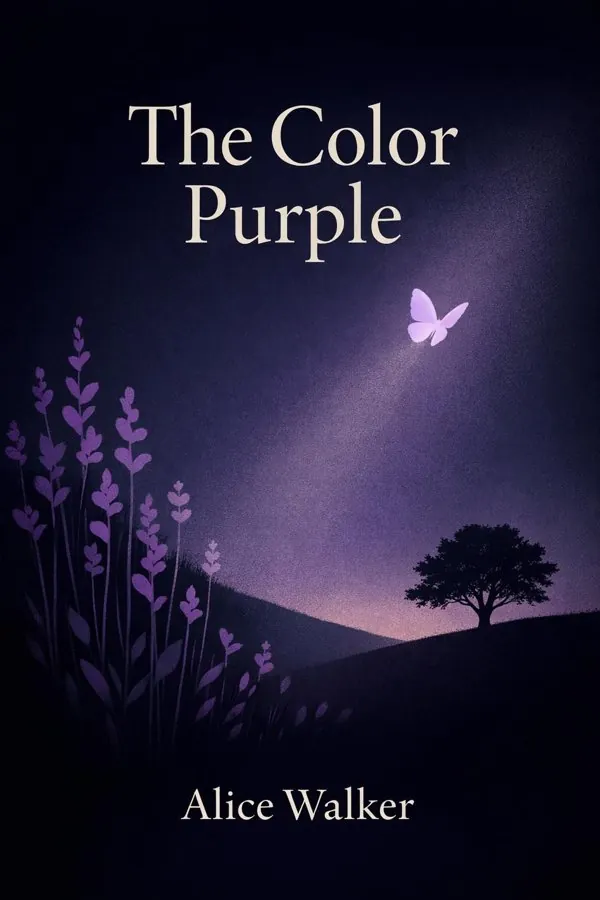
The Color Purple
by Alice Walker
Some novels tell a story; The Color Purple changes the way you hear a human voice. Alice Walker’s landmark 1982 novel is an epistolary work set in the early 20th-century American South, where letters become the fragile yet powerful thread holding together a life marked by violence, separation, racism, and silence. At its center is Celie, a Black woman whose early years are shaped by abuse and forced submission, but whose spirit slowly transforms through love, friendship, work, and self-discovery. As the novel unfolds, Walker reveals not only Celie’s suffering, but also her astonishing capacity to grow into freedom. The book matters because it does more than portray oppression; it insists on the possibility of healing without denying the depth of the wounds. Through Celie, Nettie, Shug Avery, Sofia, and others, Walker explores gender, power, race, sexuality, faith, and the meaning of dignity. Walker’s authority comes not only from her literary brilliance, which earned her the Pulitzer Prize and National Book Award, but from her lifelong commitment to telling the truth about Black women’s lives with tenderness, courage, and moral clarity.
Key Takeaways
- 1Celie’s Early Letters: Silence and Survival — Sometimes the first act of freedom is simply finding a place to speak, even if no one answers. At the beginning of The C…
- 2Life with Mr.___: The Cage of Servitude — Oppression often becomes most dangerous when it is mistaken for ordinary life. When Celie is forced into marriage with M…
- 3Shug Avery and the Awakening — Transformation often begins when someone sees in us what we have never been allowed to see in ourselves. Shug Avery ente…
 10 min read
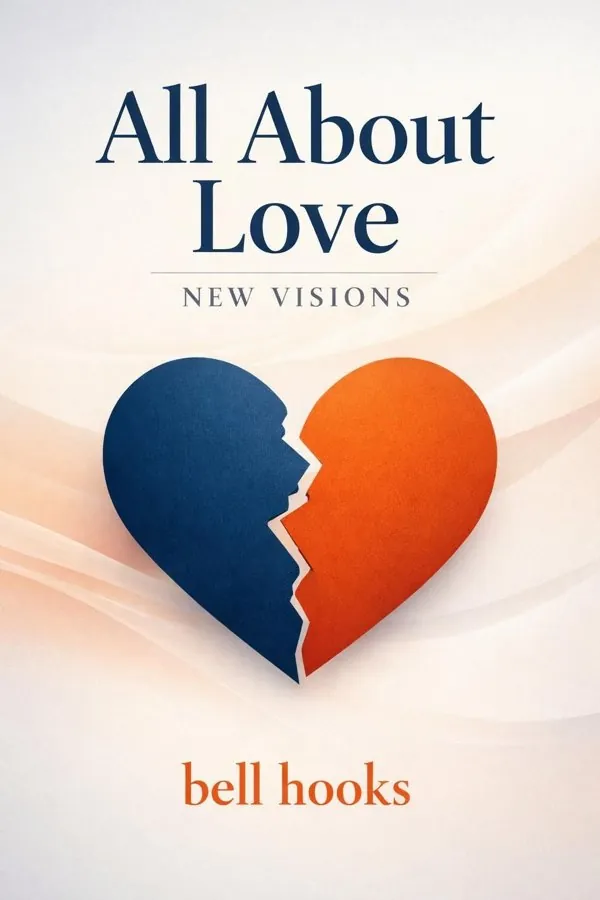
All About Love
by bell hooks
In All About Love, bell hooks takes a word that is used constantly and asks a disarming question: what do we actually mean by it? Her answer is both philosophical and practical. Love, she argues, is not a feeling we fall into, a reward we passively receive, or a private romance detached from the world. It is an ethical practice built from care, commitment, trust, responsibility, respect, and honest knowledge. From that starting point, hooks examines why so many people hunger for love yet struggle to give or receive it well. What makes this book so powerful is the way hooks connects personal pain to social structures. She shows how patriarchy, childhood emotional neglect, consumer culture, and fear of vulnerability distort our understanding of love. Drawing on memoir, social criticism, feminist thought, and spiritual reflection, she offers a language for healing relationships without ignoring power or injustice. hooks writes with unusual authority because she combines intellectual rigor with emotional clarity, making this book both a critique of modern culture and a guide to living differently. All About Love remains essential for anyone seeking healthier relationships, stronger communities, and a more humane vision of freedom.
Key Takeaways
- 1Childhood Teaches Our First Love Lessons — Most adults do not enter relationships as blank slates; they carry a childhood education in love that often goes unquest…
- 2Love Requires Honesty and Clear Communication — A relationship can survive disappointment more easily than deception, because love cannot grow where truth is consistent…
- 3Self-Acceptance Makes Love More Possible — Many people seek love as if another person can supply the worth they do not feel inside, but hooks argues that this ofte…
 10 min read
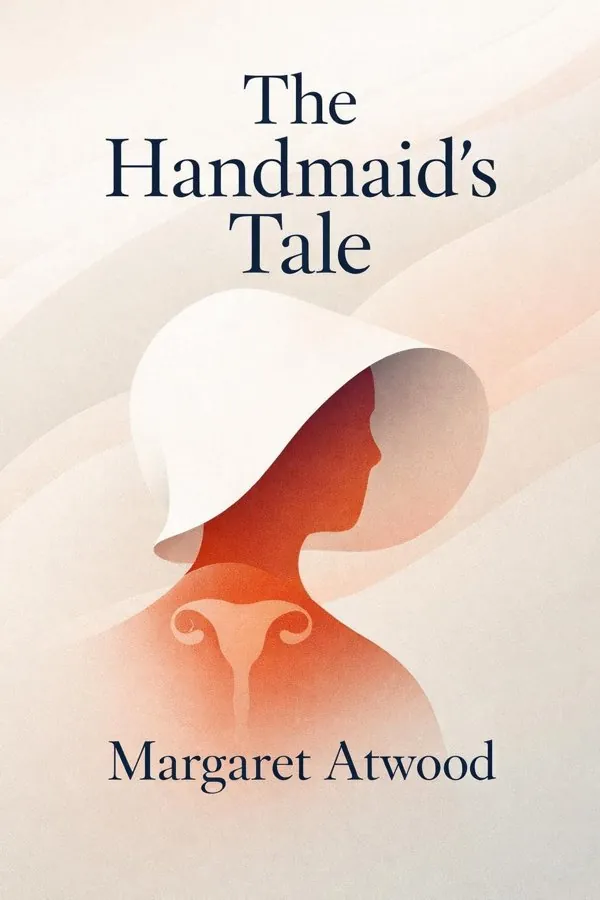
The Handmaid's Tale
by Margaret Atwood
Some novels feel invented; The Handmaid’s Tale feels alarmingly assembled from pieces of real history. Margaret Atwood’s 1985 classic imagines the Republic of Gilead, a theocratic regime built on fear, fertility crisis, and the systematic reduction of women into social functions. At the center is Offred, a Handmaid assigned to bear children for powerful men and their wives, while struggling to preserve memory, identity, and the possibility of freedom. What makes the novel so enduring is not only its dystopian setting, but its psychological precision: Atwood shows how tyranny enters everyday life through language, ritual, clothing, law, and the slow normalization of cruelty. The book matters because it turns abstract debates about power, gender, religion, and politics into lived experience. It asks how rights disappear, how people adapt to oppression, and what forms of resistance remain when open rebellion seems impossible. Atwood brings unusual authority to these questions through her sharp historical awareness, literary craft, and refusal to invent atrocities that human societies have not already practiced somewhere. The result is a haunting, intelligent, and urgently relevant novel.
Key Takeaways
- 1The Birth of Gilead in Chains — Tyranny rarely arrives announcing itself as tyranny; it arrives as a solution. In The Handmaid’s Tale, the Republic of G…
- 2Offred and the Machinery of Control — Oppression becomes most powerful when it feels routine. Offred’s daily life as a Handmaid is governed by scripted ritual…
- 3Desire, Disobedience, and Fragile Freedom — One of the novel’s deepest truths is that resistance often begins not with ideology but with longing. Offred’s acts of d…
 10 min read
Yes, And
by Kelly Leonard and Tom Yorton
What if the skill that makes great improvisers funny onstage could also make leaders wiser, teams more creative, and organizations more resilient? In Yes, And, Kelly Leonard and Tom Yorton argue that the core principle of improvisational theater—accepting what is offered and building on it—has profound relevance far beyond comedy. Drawing on decades of experience at The Second City, the legendary Chicago institution that launched generations of performers and trained countless organizations, the authors show how trust, listening, adaptability, and shared creation can become practical leadership tools. This is not a book about becoming a comedian. It is a book about learning to respond constructively in uncertain situations, support others’ ideas without losing judgment, and turn collaboration into a disciplined practice rather than a corporate slogan. Leonard and Yorton write with unusual authority: one shaped by years inside a world-famous improv theater, the other by experience translating those principles into business settings. The result is a leadership book that feels fresh, human, and immediately usable—especially for anyone trying to lead in a world where scripts rarely survive first contact with reality.
Key Takeaways
- 1The Second City and Collective Creativity — Innovation rarely begins with a lone genius; more often, it emerges from a group willing to make something together befo…
- 2Yes, And Begins With Deep Listening — Most people think improvisation is about being quick. In reality, it is about paying attention. The phrase “Yes, And” on…
- 3Trust Makes Spontaneity Possible — People do their most original thinking when they feel safe enough to risk being imperfect. Improvisation depends on this…
 10 min read
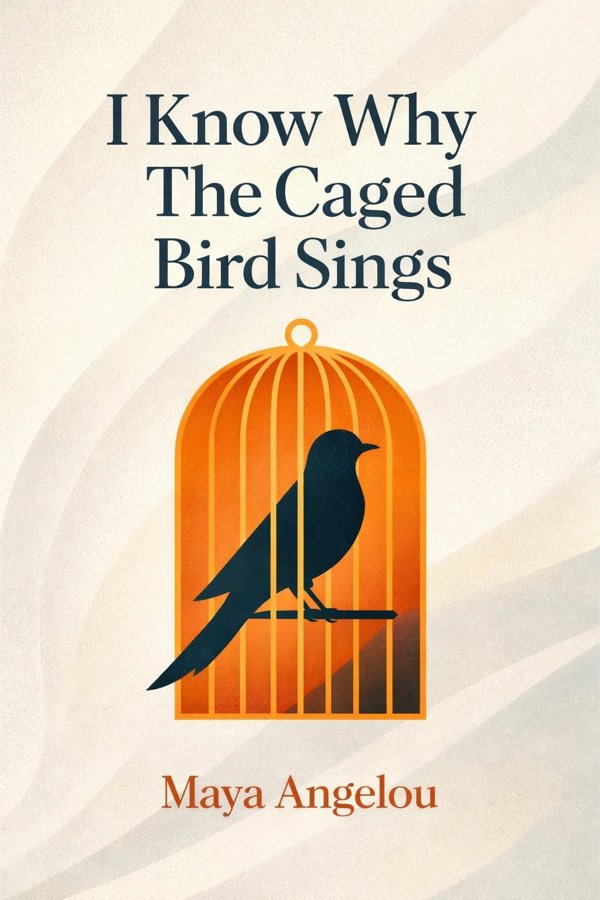
I Know Why The Caged Bird Sings
by Maya Angelou
I Know Why The Caged Bird Sings is Maya Angelou’s groundbreaking first autobiography, originally published in 1969. It traces her early years from a bewildered childhood in the segregated South to the beginnings of adult independence, revealing how racism, sexual violence, shame, and displacement shape a young Black girl’s sense of self. Yet this is not only a story of suffering. It is also a story of language, courage, community, and the slow recovery of a voice once driven into silence. What makes the book so enduring is the way Angelou transforms personal memory into universal insight. She writes with poetic precision about family, class, religion, education, and the emotional costs of living in a society built on humiliation and exclusion. Her experiences in Stamps, St. Louis, and California illuminate larger truths about America while remaining deeply intimate. Angelou’s authority comes not just from having lived these events, but from her remarkable ability to interpret them with honesty and artistry. The result is a modern classic: a memoir that speaks powerfully about resilience, dignity, and the lifelong work of becoming fully oneself.
Key Takeaways
- 1Life in Stamps: Dignity Under Segregation — Oppression often works best when it makes injustice feel ordinary. In the small town of Stamps, Arkansas, Maya and her b…
- 2Family Separation and the Search for Belonging — Children do not experience abandonment as an abstract fact; they experience it as a question about their own worth. Maya…
- 3Violation and Silence: The Shattering of Innocence — Trauma does not only wound the body; it can break the relationship between a person and language. In St. Louis, Maya is …
 10 min read
The Bell Jar
by Sylvia Plath
Sylvia Plath’s The Bell Jar is one of the most haunting and enduring novels of the twentieth century because it captures a crisis that feels both deeply personal and painfully universal: what happens when a gifted young woman can no longer live inside the roles the world has prepared for her. First published in 1963 under the pseudonym Victoria Lucas and later recognized as a semi-autobiographical work, the novel follows Esther Greenwood, a brilliant college student whose prestigious summer internship in New York should mark the beginning of a dazzling future. Instead, it exposes the emptiness beneath glamour, success, and social approval. As Esther returns home and spirals into depression, the novel becomes an intimate portrait of mental illness, alienation, and the struggle to claim an authentic self in a culture obsessed with female conformity. The Bell Jar matters not only as a literary classic, but as an unusually honest exploration of psychological suffering long before public conversations about mental health became common. Plath’s authority comes from the precision of her language, the sharpness of her social observation, and her unmatched ability to transform inner turmoil into unforgettable art.
Key Takeaways
- 1Glamour Can Deepen Alienation — Success does not always feel like arrival; sometimes it feels like exile in elegant clothing. At the start of The Bell J…
- 2Expectation Can Fracture Identity — A person can begin to disappear when every path forward feels chosen by someone else. After New York, Esther returns hom…
- 3Love Exposes the Gender Trap — Romance becomes dangerous when it is built on unequal freedom. In The Bell Jar, Esther’s relationships with men do not o…
 10 min read
Persepolis
by Marjane Satrapi
Persepolis is Marjane Satrapi’s unforgettable graphic memoir about growing up in Iran during one of the most turbulent political transformations of the twentieth century. Told through the eyes of a sharp, rebellious, deeply observant child, the book traces the fall of the Shah, the rise of the Islamic Republic, and the devastating Iran-Iraq War. But Satrapi does far more than recount historical events. She shows how revolution enters kitchens, classrooms, friendships, clothing, and family life, changing not just governments but the texture of ordinary existence. Her stark black-and-white drawings give the story unusual clarity: they strip away distraction and make fear, humor, grief, and defiance feel immediate. What makes Persepolis so powerful is its balance of intimacy and scope. Satrapi is both witness and participant, offering the authority of lived experience while also reflecting on identity, ideology, exile, and freedom. The result is a memoir that challenges stereotypes about Iran and about women in Muslim societies, while speaking to universal questions about belonging, courage, and the cost of political upheaval.
Key Takeaways
- 1Revolution Through a Child’s Eyes — Political upheaval becomes most revealing when seen by someone too young to fully explain it but old enough to feel its …
- 2Faith, Veils, and State Control — The moment clothing becomes compulsory, identity becomes political. One of Persepolis’s clearest insights is that author…
- 3Family Memory Resists Official Narratives — Authoritarian regimes depend on controlling the story of the past, which is why family memory becomes a quiet form of re…
 10 min read
Men Explain Things To Me
by Rebecca Solnit
Men Explain Things to Me is Rebecca Solnit’s sharp, elegant, and deeply influential essay collection about gendered power, silencing, and the everyday habits that sustain inequality. Published in 2014, the book begins with a now-famous anecdote: a man condescendingly explaining a book to Solnit without realizing she is its author. That scene gave cultural language to a familiar experience later widely known as “mansplaining,” but Solnit’s book goes far beyond one irritating social habit. Across seven essays, she connects conversational condescension to broader systems of authority, violence, erasure, and control that shape women’s lives. Her argument is that dismissing women’s knowledge is not trivial; it is part of a continuum that can range from social exclusion to physical danger. Solnit writes with unusual authority because she combines personal experience, historical insight, political analysis, and literary intelligence. She is not merely naming a problem but tracing its roots and consequences. The result is a concise yet powerful feminist work that helps readers see how voice, credibility, and power are distributed—and why reclaiming them matters for everyone.
Key Takeaways
- 1When certainty silences lived experience — Sometimes the most revealing displays of power happen in ordinary conversation. In the title essay, Solnit recounts the …
- 2Dismissal and violence share a continuum — What seems minor in speech can become devastating in life. In “The Longest War,” Solnit argues that the casual dismissal…
- 3Ideas collide when identities are denied — Public debate often pretends to be neutral when it is anything but. In “Worlds Collide,” Solnit explores what happens wh…
 10 min read
Half the Sky
by Nicholas D. Kristof, Sheryl WuDunn
Half the Sky is a powerful work of investigative journalism and moral argument that exposes one of the most pervasive injustices in the world: the systematic oppression of women and girls. In this landmark book, Nicholas D. Kristof and Sheryl WuDunn travel across Asia, Africa, and the developing world to document stories of sex trafficking, forced prostitution, maternal death, gender-based violence, and educational exclusion. Yet the book is not simply a catalog of suffering. Its deeper purpose is to show that when women gain access to education, healthcare, legal rights, and economic opportunity, entire families and communities rise with them. The result is both heartbreaking and deeply hopeful. What makes Half the Sky especially compelling is the authority of its authors. Kristof and WuDunn are Pulitzer Prize-winning journalists with decades of experience reporting on global inequality, conflict, and human rights. They combine data, policy insight, and unforgettable personal narratives to argue that gender equality is not a side issue in development, but one of the central moral and economic challenges of our time. The book matters because it turns distant statistics into human stories and then asks readers a difficult question: now that you know, what will you do?
Key Takeaways
- 1The Girl Effect Changes Everything — One of the most transformative ideas in global development is surprisingly simple: when you invest in girls, you change …
- 2Sex Trafficking Hides in Plain Sight — One of the most disturbing truths in Half the Sky is that slavery did not disappear; it changed form and became easier f…
- 3Maternal Mortality Is a Moral Emergency — Few injustices are as revealing as the deaths of women in pregnancy and childbirth from preventable causes. Half the Sky…
Want the full summary?
Get instant access to this book summary and 100K+ more with Fizz Moment.
Get Free SummaryAvailable on App Store • Free to download
About This List
Emma Watson's Our Shared Shelf book club championed feminist literature, social justice, and stories of resilience. Her selections challenge perspectives and inspire action.
This list features 9 carefully selected books. With FizzRead, you can read AI-powered summaries of each book in just 15 minutes. Get the key takeaways and start applying the insights immediately.
Ready to start reading?
Get instant access to all 9 book summaries and 100K+ more with FizzRead.