
Cal Newport's Deep Work Reading List
Books that shaped Cal Newport's philosophy on deep work, digital minimalism, and focused success.
 10 min read
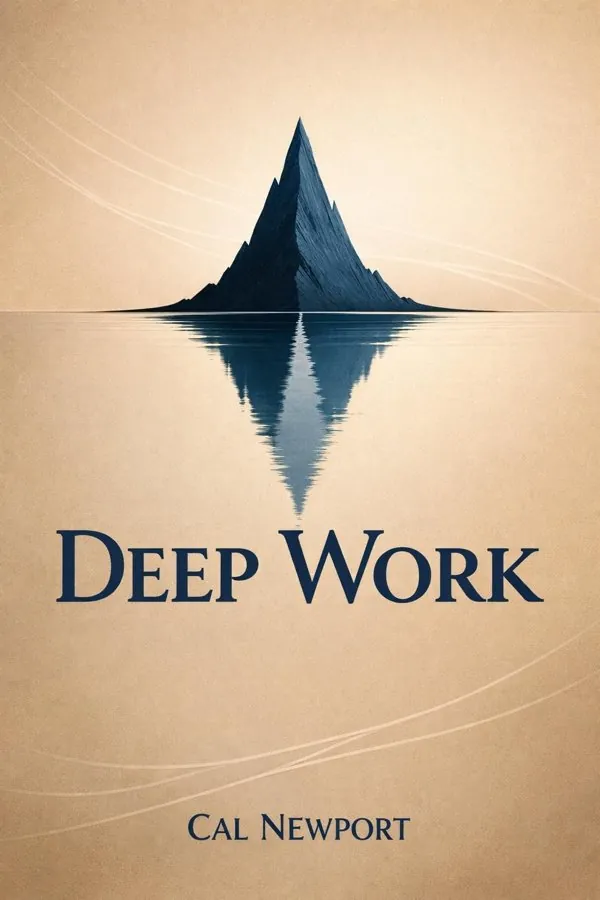
Deep Work
by Cal Newport
In a world ruled by notifications, open-plan offices, endless email threads, and the pressure to always appear available, the ability to focus has become both rare and incredibly valuable. Deep Work by Cal Newport argues that the people who thrive in today’s economy are not necessarily the busiest or the most connected, but the ones who can concentrate intensely on meaningful tasks without distraction. This book is about cultivating that increasingly uncommon skill and using it to produce better results in less time. Newport makes the case that deep, undistracted concentration is a superpower for the knowledge age. He contrasts it with “shallow work,” the reactive, fragmented activity that fills many calendars but creates little lasting value. Drawing from neuroscience, business, academic research, and real-world examples, he shows why focus matters, why it is so hard to maintain, and how anyone can train it. Cal Newport is particularly credible on this subject because he has built a career as a computer science professor, writer, and researcher while famously avoiding much of the digital noise that consumes modern workers. Deep Work is not just a theory of productivity. It is a practical philosophy for doing your best thinking in a distracted age.
Key Takeaways
- 1Focus Is the New Competitive Advantage — The modern economy rewards people who can learn hard things quickly and produce at an elite level, yet both abilities de…
- 2Shallow Work Feels Productive but Isn’t — One of the most dangerous illusions in modern work is that being active is the same as being effective. Newport warns th…
- 3Attention Must Be Trained Like a Muscle — Deep focus is not something you either naturally have or permanently lack. Newport argues that concentration is trainabl…
 10 min read
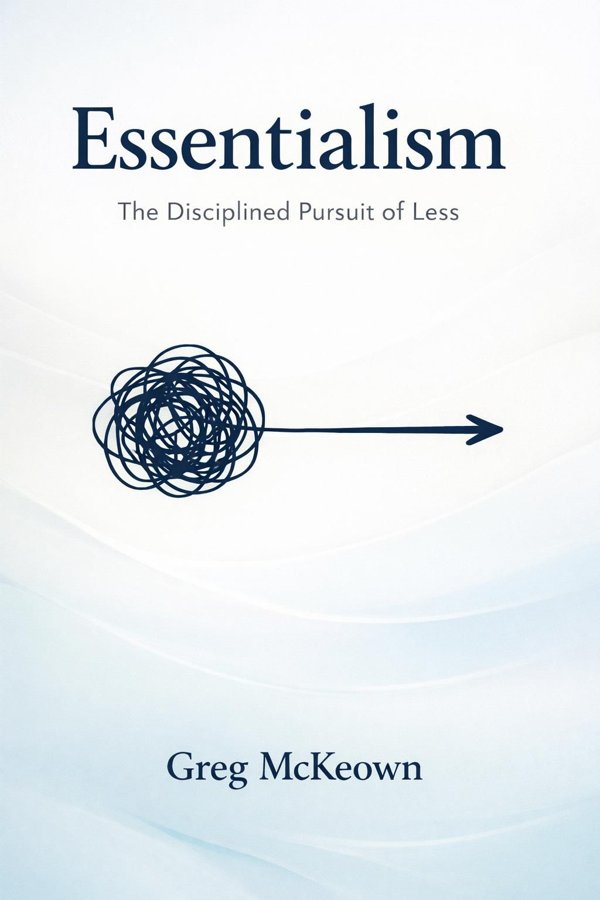
Essentialism
by Greg McKeown
Essentialism by Greg McKeown is a practical philosophy for anyone who feels trapped by constant demands, endless notifications, and the pressure to do everything at once. At its core, the book argues that success does not come from cramming more into our days; it comes from identifying the few things that matter most and giving them our fullest attention. McKeown calls this disciplined pursuit of less but better “Essentialism.” Rather than offering vague inspiration, he provides a clear framework for deciding what is truly important, eliminating what is not, and creating systems that make focused living possible. The book matters because modern life rewards responsiveness, busyness, and visible activity, even when those habits drain our energy and dilute our best work. McKeown, a leadership consultant and researcher who has advised major organizations and studied strategy and decision-making, writes with both credibility and clarity. Essentialism is especially valuable for professionals, leaders, creatives, and anyone who wants to stop living by default and start living by design.
Key Takeaways
- 1Choice Is Your Hidden Power — One of the most dangerous beliefs in modern life is the idea that we have no choice. We tell ourselves we have to attend…
- 2Discern the Vital Few Ruthlessly — If you try to make everything important, nothing truly is. A central principle of Essentialism is that only a few things…
- 3Trade-Offs Are the Price of Focus — Many people exhaust themselves trying to avoid trade-offs. They want career advancement without sacrifice, deep work wit…
 10 min read
Make Time
by Jake Knapp
Modern life is designed to fragment attention. Email, meetings, social feeds, breaking news, and endless to-do lists keep us reactive, busy, and exhausted—yet strangely unsure whether we spent the day on what truly matters. In Make Time, Jake Knapp and John Zeratsky offer a practical alternative: instead of trying to do everything faster, choose what matters most today and deliberately create space for it. The book is not about becoming a productivity machine. It is about reclaiming your time, energy, and focus from systems that profit from distraction. Built around dozens of small, flexible tactics rather than one rigid method, Make Time helps readers design days with more intention. The authors draw on their experience at Google, YouTube, and Google Ventures, where they observed how technology shapes behavior and how even highly successful people can lose control of their attention. Their approach combines behavioral psychology, workplace insight, and real-world experimentation. The result is an accessible, highly usable guide for anyone who feels busy but unfulfilled and wants a more meaningful, sustainable way to work and live.
Key Takeaways
- 1Choose a Daily Highlight — Most people let their day get defined by urgency instead of importance. That is the central problem Make Time asks you t…
- 2Focus Requires Designed Attention — Attention does not remain intact by accident; it must be protected by design. One of Make Time’s most useful insights is…
- 3Defaults Quietly Control Your Day — A surprising amount of life runs on default settings. You check email when you wake up because that is what you always d…
 10 min read
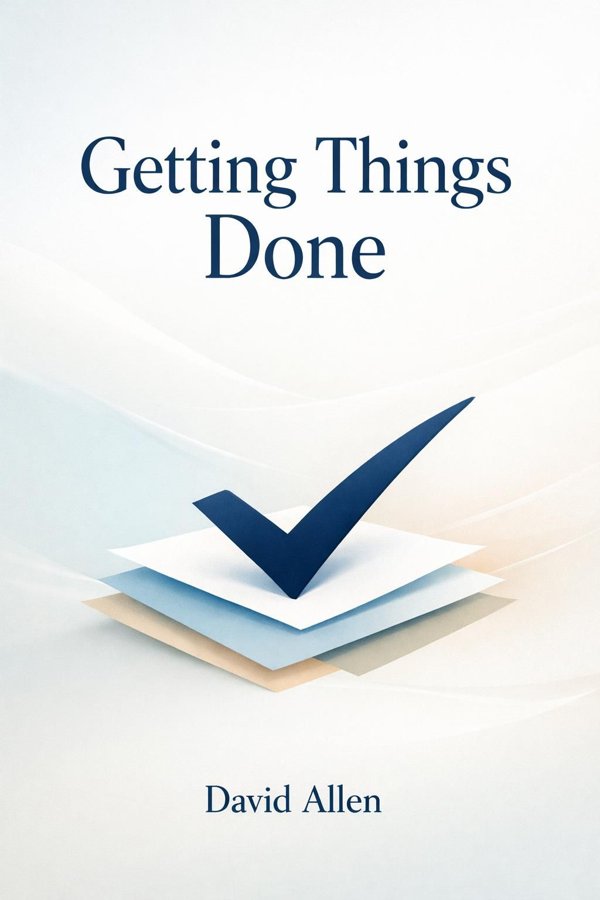
Getting Things Done
by David Allen
What if productivity had less to do with working harder and more to do with thinking more clearly? That’s the promise at the heart of Getting Things Done, David Allen’s landmark guide to managing the endless stream of tasks, ideas, obligations, and interruptions that define modern life. Rather than offering motivational slogans or a stricter to-do list, Allen presents a practical system for getting everything out of your head and into a trusted process. The result is not just higher output, but lower stress, better focus, and a greater sense of control. This book matters because most people don’t struggle from laziness—they struggle from overload. Emails pile up, projects multiply, and even small commitments create mental drag when they remain undefined. Allen’s GTD method solves that problem by teaching readers how to capture, clarify, organize, reflect, and engage with their work in a way that restores mental space. As an American productivity consultant, author, and founder of the David Allen Company, Allen has spent decades helping individuals and organizations build better workflow habits. Getting Things Done became a global productivity classic because it addresses a timeless challenge: how to stay clear, calm, and effective in a world that never stops demanding your attention.
Key Takeaways
- 1The Mind Like Water Principle — The phrase “mind like water” captures the ultimate goal of the GTD method: responding to life appropriately, not reactiv…
- 2The Five Stages of Workflow — At the center of Getting Things Done is a workflow model built on five stages: capture, clarify, organize, reflect, and …
- 3Capturing Everything That Has Your Attention — Capture is the foundation of GTD because you cannot organize what you have not first collected. Allen argues that every …
 10 min read
The 4-Hour Workweek
by Tim Ferriss
What if the real goal of work were not to fill your calendar, but to fund your freedom? In The 4-Hour Workweek, Tim Ferriss challenges one of modern life’s most persistent assumptions: that success must come from long hours, delayed gratification, and a steady climb toward retirement. Instead, he argues for “lifestyle design,” a way of structuring income, time, and mobility so you can enjoy life now rather than someday. The book blends productivity strategy, entrepreneurship advice, negotiation tactics, and unconventional career thinking into a blueprint for escaping the 9-to-5 treadmill. Ferriss explores how to eliminate low-value tasks, automate income through lean businesses, outsource routine work, and create the freedom to travel or pursue meaningful projects. Whether or not readers literally work four hours a week, the book matters because it reframes the purpose of work itself. Ferriss writes with the authority of someone who tested these ideas in his own business, transforming burnout into a highly mobile, efficient lifestyle. The result is a provocative guide for anyone who wants more results, more control, and far more life outside work.
Key Takeaways
- 1Redefine Success Through Lifestyle Design — Most people never question the script they have inherited: work hard for decades, save aggressively, retire late, and on…
- 2Fear-Setting Beats Goal-Setting — People are often less trapped by reality than by vague anxiety. Ferriss introduces one of the book’s most memorable tool…
- 3Eliminate Before You Try to Optimize — Being busy is often a form of avoidance disguised as virtue. Ferriss argues that most productivity advice starts too lat…
 10 min read
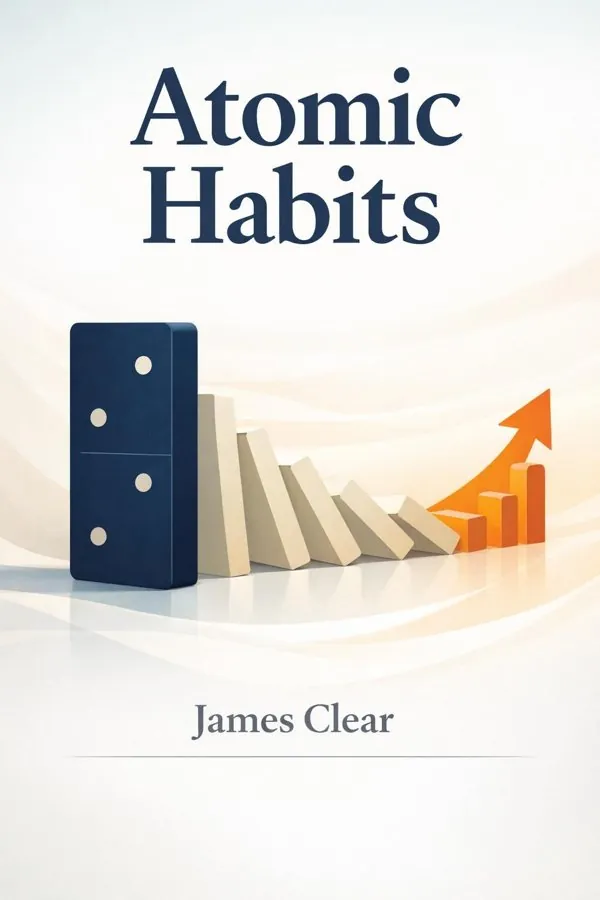
Atomic Habits
by James Clear
What if the quality of your life depends less on dramatic breakthroughs and more on the tiny actions you repeat every day? In Atomic Habits, James Clear argues that lasting transformation does not come from radical reinvention, but from small, consistent improvements that compound over time. The book explains how habits shape identity, influence performance, and quietly determine whether we move toward the future we want or drift away from it. Rather than relying on motivation alone, Clear shows how to design systems that make good behaviors easier and bad behaviors harder. The book matters because most people fail to change not because they lack ambition, but because they use strategies that fight human nature. Clear combines insights from psychology, neuroscience, behavioral economics, and real-world examples from sports, business, and personal development to create a practical framework anyone can apply. As a writer and speaker known for his work on habit formation and continuous improvement, he has helped millions of readers rethink productivity and self-discipline. Atomic Habits stands out because it turns behavior change into something concrete, manageable, and deeply empowering.
Key Takeaways
- 1Tiny changes create remarkable results — We tend to overestimate the importance of one big moment and underestimate the power of small daily improvements. One wo…
- 2Focus on systems, not goals — Goals set direction, but systems determine progress. That distinction changes everything. Most people think achievement …
- 3Identity drives lasting behavior change — The most durable habits are not built by forcing yourself to act differently for a few days. They are built by becoming …
 10 min read
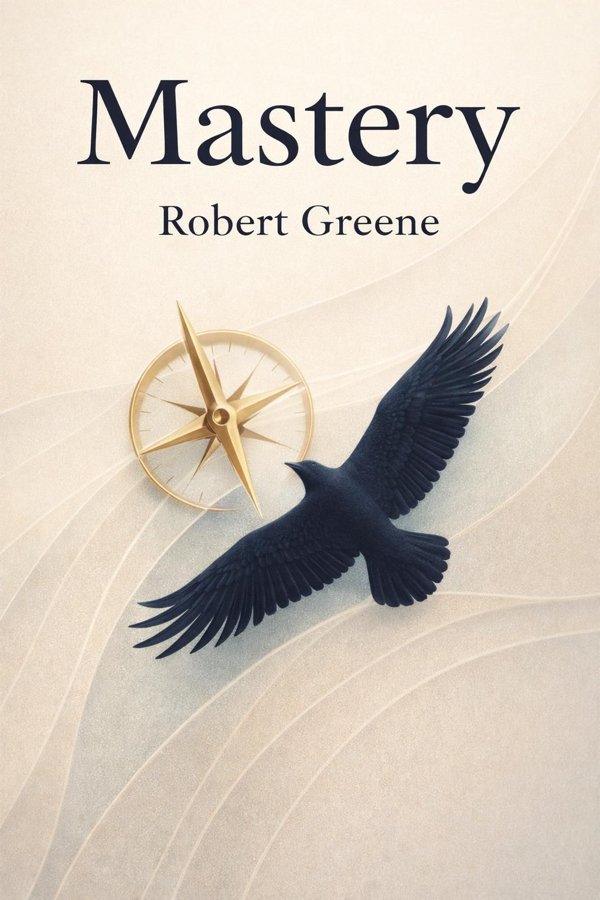
Mastery
by Robert Greene
In Mastery, Robert Greene argues that extraordinary achievement is not the result of luck, genius, or rare talent alone, but of a repeatable process available to far more people than we imagine. Drawing on the lives of masters such as Leonardo da Vinci, Charles Darwin, Benjamin Franklin, and contemporary innovators, Greene shows how deep skill develops through apprenticeship, rigorous observation, creative experimentation, and years of disciplined practice. The book is both a study of excellence and a strategic guide for anyone who wants to do meaningful work at a very high level. What makes Mastery especially compelling is Greene’s ability to combine history, psychology, and practical strategy. He does not romanticize success. Instead, he reveals the hidden labor behind mastery: the awkward beginnings, the long period of learning, the emotional setbacks, and the gradual transformation from student to creator. This matters because many people abandon their ambitions too early, mistaking difficulty for incapacity. Greene’s central insight is that mastery is a developmental path, not an inborn gift. For readers seeking long-term growth, creative independence, and professional excellence, Mastery offers a powerful roadmap.
Key Takeaways
- 1Discover Your Life’s Task — The deepest form of motivation does not come from external rewards; it comes from the feeling that you are doing the wor…
- 2Submit to the Apprenticeship Phase — In a culture obsessed with speed, the apprenticeship feels inconvenient, but Greene treats it as the irreplaceable found…
- 3Absorb the Master’s Power — Before you can become original, you usually need proximity to excellence. Greene highlights the importance of mentors, m…
Want the full summary?
Get instant access to this book summary and 100K+ more with Fizz Moment.
Get Free SummaryAvailable on App Store • Free to download
About This List
Books that shaped Cal Newport's philosophy on deep work, digital minimalism, and focused success.
This list features 7 carefully selected books. With FizzRead, you can read AI-powered summaries of each book in just 15 minutes. Get the key takeaways and start applying the insights immediately.
Ready to start reading?
Get instant access to all 7 book summaries and 100K+ more with FizzRead.