
Best Creativity Books — Unleash Your Creative Potential
Creativity is not a gift reserved for artists — it is a skill anyone can develop. These books show you how to think differently and make original work.
 10 min read
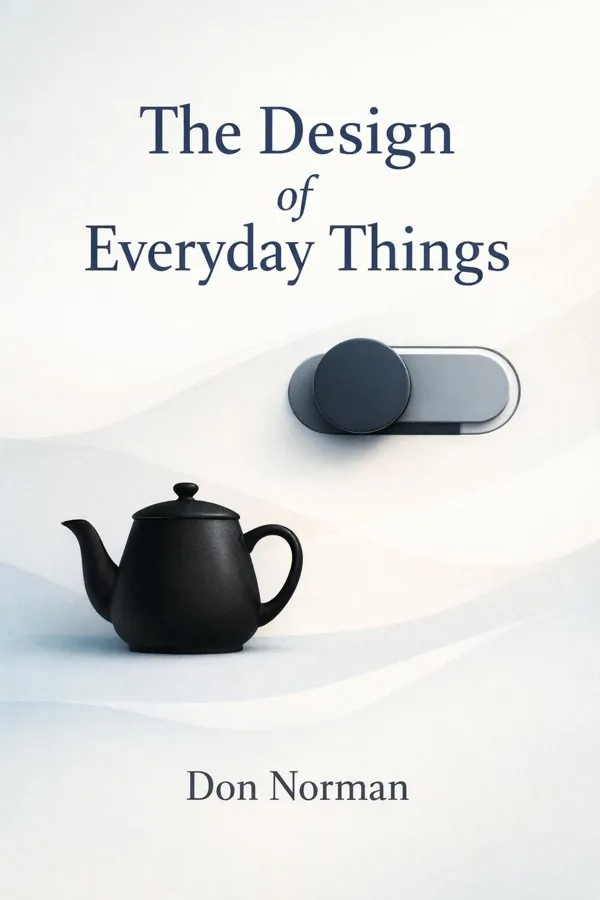
The Design of Everyday Things
by Don Norman
Originally published in 1988 as The Psychology of Everyday Things, Don Norman’s classic argues something both simple and radical: when people struggle with products, the problem is usually not the people, but the design. From confusing doors and stove controls to complicated software and digital systems, Norman shows how everyday objects often fail because they ignore the way human beings actually think, perceive, and act. Rather than treating usability as a cosmetic afterthought, he makes it the central test of good design. What makes this book so enduring is its blend of cognitive science and practical observation. Norman explains ideas like affordances, feedback, mapping, constraints, mental models, and error prevention in clear, memorable terms, then applies them to the objects surrounding us every day. The result is a framework for making products more intuitive, safer, and more satisfying to use. Norman writes with unusual authority. A cognitive scientist, usability engineer, professor, and former Apple executive, he helped shape the modern field of human-centered design. This book remains essential not only for designers, engineers, and product teams, but for anyone who has ever pushed a door the wrong way and wondered why the door made them feel foolish.
Key Takeaways
- 1The Psychology of Everyday Actions — Every awkward interaction with a product reveals a hidden truth: people do not use objects by carefully reasoning throug…
- 2The System Image Shapes Understanding — People never interact with a product’s internal mechanism; they interact with what the product communicates about itself…
- 3Bridging Execution and Evaluation Gulfs — The hardest products are not always the most complex; they are the ones that leave users stranded between intention and …
 10 min read
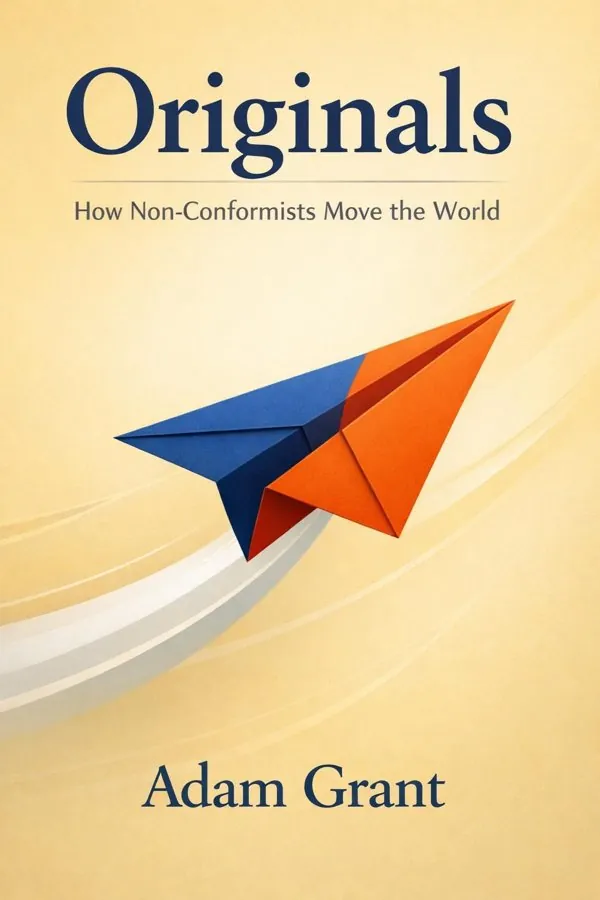
Originals
by Adam Grant
What makes someone challenge the default, question accepted wisdom, and push a new idea into the world when everyone else seems content to follow the script? In Originals, organizational psychologist Adam Grant explores exactly that question. Rather than treating creativity as a mysterious gift reserved for a few rare geniuses, Grant shows that originality is a set of behaviors, decisions, and habits that ordinary people can develop. The book examines how original thinkers spot opportunities for change, manage fear and risk, persuade skeptical audiences, and build cultures that welcome fresh thinking instead of punishing it. What makes the book especially valuable is its evidence-based approach. Grant draws on research in psychology, sociology, business, and history, while also using memorable stories from entrepreneurs, activists, executives, and artists. He argues that originality is not about reckless boldness or constant rebellion. It is about improving the status quo in intelligent, strategic ways. As one of the most influential organizational psychologists of his generation, Adam Grant brings both academic rigor and practical insight to the topic. Originals matters because in a world shaped by conformity, progress depends on people willing to think differently and act on it.
Key Takeaways
- 1Originality Begins With Questioning Defaults — Most people accept the world as it is; original thinkers ask why it has to stay that way. That simple difference is at t…
- 2Creative People Generate Many Bad Ideas — The people with the best ideas are rarely the ones with only a few ideas; they are usually the ones with the most ideas …
- 3Risk Is Often Smaller Than It Looks — Originals are not fearless gamblers; they are often skilled risk managers. One of the most surprising arguments in the b…
 10 min read
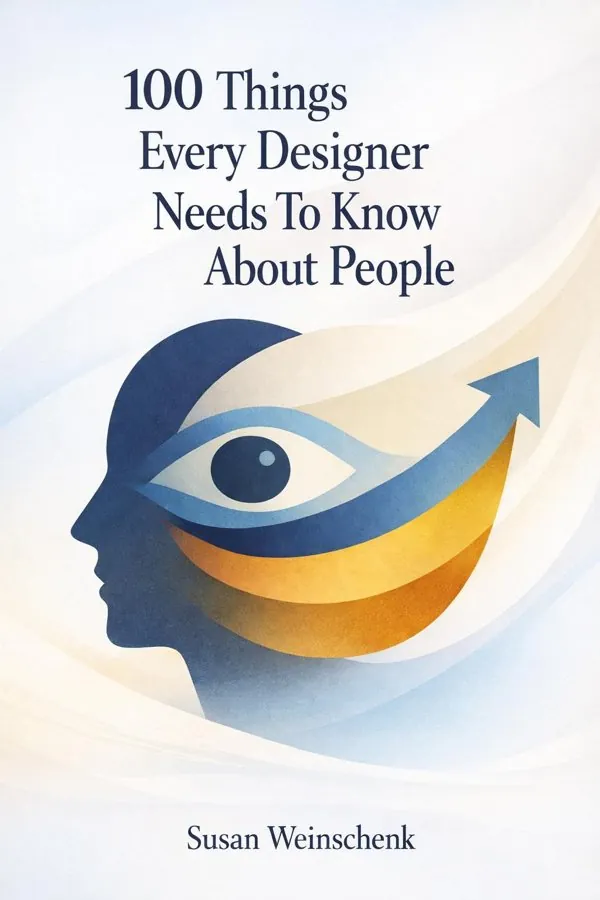
100 Things Every Designer Needs To Know About People
by Susan Weinschenk
This book bridges psychology and design, explaining how people see, read, remember, and make decisions. Drawing on cognitive, perceptual, and social psychology, Dr. Susan Weinschenk provides practical insights and examples to help designers create more intuitive and effective products, websites, and applications that align with human behavior.
Key Takeaways
- 1Vision and Perception — Every design begins with what people see, but seeing isn’t a passive process—it’s interpretation. Our eyes send informat…
- 2Reading and Comprehension — Designers often assume users will read everything carefully. Psychology says otherwise. People rarely read; they scan. E…
- 3Memory and Learning
 10 min read
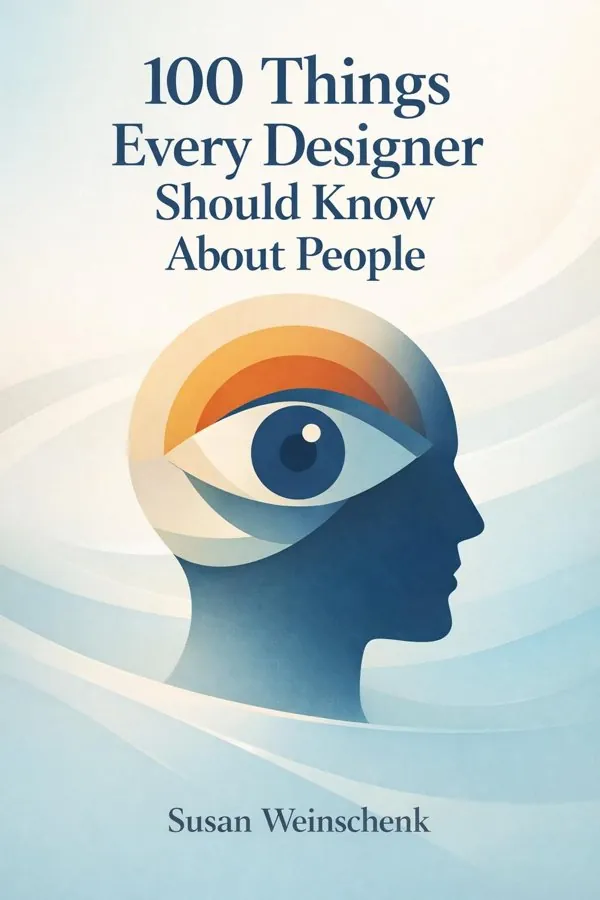
100 Things Every Designer Should Know About People
by Susan Weinschenk
Design works best when it starts with human nature rather than aesthetics alone. In 100 Things Every Designer Should Know About People, Susan Weinschenk translates findings from psychology, neuroscience, and behavioral research into practical guidance for anyone creating websites, apps, products, interfaces, or messages. The book shows that people do not perceive, read, remember, choose, or act in purely rational ways. Instead, they rely on shortcuts, habits, emotions, social cues, and limited attention. Designers who understand these patterns can create experiences that feel intuitive, persuasive, and easier to use. What makes this book especially valuable is its directness. Weinschenk does not bury the reader in academic theory. She extracts the most useful principles and explains what they mean in real design situations: where to place information, how much text people will tolerate, why feedback matters, and what motivates action. Her authority comes from decades of work as a behavioral psychologist and UX expert helping organizations design around how people actually behave. The result is a highly practical handbook for designers, product teams, marketers, and anyone who wants to make human-centered decisions grounded in evidence rather than guesswork.
Key Takeaways
- 1People See Patterns, Not Raw Reality — The first mistake many designers make is assuming users see what the designer sees. They do not. Human vision is selecti…
- 2People Scan Before They Read — Most people do not read interfaces and web pages word by word. They scan for relevance. Before committing attention, the…
- 3Memory Is Limited and Unreliable — Design often fails when it asks people to remember too much. Working memory is narrow, fragile, and easily overloaded. P…
 10 min read
101 Things I Learned in Architecture School
by Matthew Frederick
This book presents 101 concise lessons that cover fundamental principles of design, drawing, and the creative process in architecture. Each lesson is illustrated and written to demystify architectural education, offering practical insights from basic line drawing to complex color theory and spatial composition. It serves as a primer for students and professionals seeking clarity and confidence in architectural thinking and practice.
Key Takeaways
- 1Lessons 1–10: Fundamentals of Architectural Thinking — Architecture starts with perception. The first lessons center on learning to see—not just to look. Observation is the ar…
- 2Lessons 11–20: Drawing and Representation — Architecture communicates through drawings. We don’t merely illustrate buildings; we think through lines. In these lesso…
- 3Lessons 21–30: Composition and Visual Organization
 10 min read
A Designer's Art
by Paul Rand
A Designer's Art is Paul Rand’s elegant and enduring statement on what graphic design is, what it should do, and why it matters far beyond decoration. First published in 1985, the book brings together Rand’s reflections on visual communication, corporate identity, typography, packaging, advertising, symbols, and the relationship between intuition and discipline. Rather than offering a step-by-step manual, Rand presents a philosophy of design grounded in clarity, wit, simplicity, and cultural intelligence. He shows that good design is not cosmetic polish added at the end of a project; it is a way of solving problems and giving form to ideas. The book still matters because many of today’s design challenges remain the same: how to communicate clearly, build trust, create memorable identities, and balance creativity with practical constraints. Rand writes with the authority of one of the most influential graphic designers of the twentieth century, the creator of iconic corporate marks for IBM, ABC, UPS, and Westinghouse. His work shaped modern visual identity, and this book reveals the principles behind that achievement.
Key Takeaways
- 1Design Must Unite Beauty and Use — A design that merely looks attractive but fails to communicate is not successful design. One of Paul Rand’s central conv…
- 2Simplicity Requires Intelligence, Not Reduction — What looks simple is often the result of deep thought. Rand treats simplicity not as minimal styling or fashionable rest…
- 3A Logo Is Meaning Made Visible — A strong logo does not explain everything, but it gives an organization a memorable face. Rand treats trademarks and sym…
 10 min read
A More Beautiful Question: The Power of Inquiry to Spark Breakthrough Ideas
by Warren Berger
In this influential work, journalist and innovation expert Warren Berger explores how asking the right questions can lead to breakthrough ideas in business, education, and everyday life. The book argues that inquiry—deep, imaginative, and 'beautiful' questioning—drives creativity and problem-solving, helping individuals and organizations unlock new possibilities.
Key Takeaways
- 1The Power of Inquiry — Our world has been shaped by questions far more than by answers. Progress in science, art, and business often begins whe…
- 2Why We Stop Questioning — As young children, we bombard the world with questions—Why is the sky blue? Where does the sun go at night?—but by the t…
- 3The Innovator’s Mindset
 10 min read
A Pattern Language: Towns, Buildings, Construction
by Christopher Alexander, Sara Ishikawa, Murray Silverstein
A Pattern Language presents a comprehensive system of design principles for creating human-centered environments. It introduces 253 interconnected 'patterns' that describe solutions to recurring problems in architecture, urban design, and community planning. Each pattern addresses a specific design issue—from the layout of cities to the details of individual rooms—emphasizing harmony, functionality, and the organic relationship between people and their surroundings.
Key Takeaways
- 1The Nature of Patterns — When I use the word "pattern," I refer to a relationship—a core configuration that recurs whenever people face a certain…
- 2Structure of the Language — The 253 patterns in *A Pattern Language* form a hierarchical structure, much like a living tree. At the top level are pa…
- 3Patterns for Regions and Towns
 10 min read
A Whole New Mind: Why Right-Brainers Will Rule the Future
by Daniel H. Pink
A Whole New Mind explores the shift from the Information Age to the Conceptual Age, arguing that the future belongs to those who can combine analytical thinking with creativity and empathy. Daniel H. Pink identifies six essential aptitudes—design, story, symphony, empathy, play, and meaning—that will define success in the modern world. Through engaging examples and research, he shows how right-brain qualities are becoming increasingly valuable in business, education, and everyday life.
Key Takeaways
- 1The Two Hemispheres — Our planetary brain—the one shared across humanity—is composed of two hemispheres, each specializing in different modes …
- 2Abundance, Asia, and Automation — Three powerful forces are reshaping every industry and profession: abundance, Asia, and automation. Abundance refers to…
- 3The Rise of the Conceptual Age
 10 min read
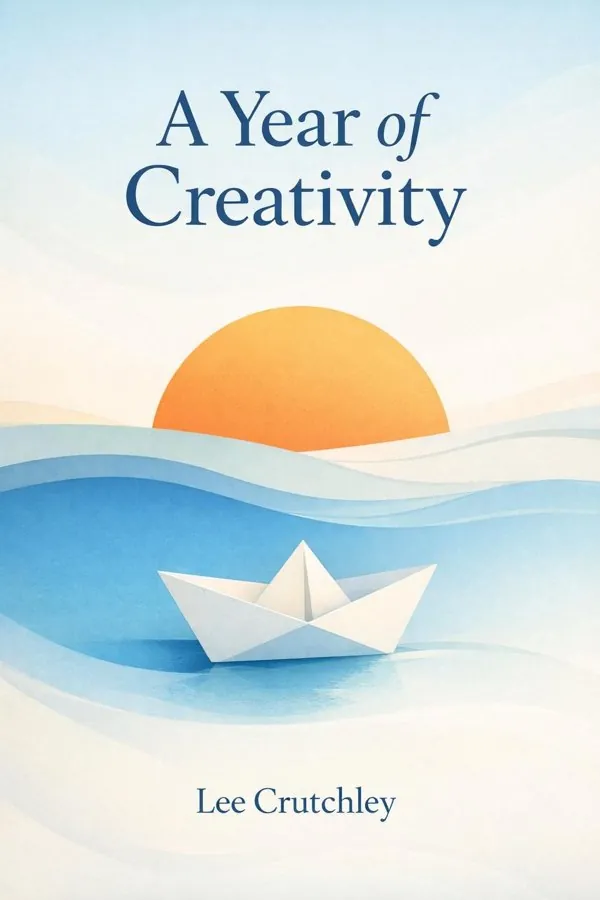
A Year of Creativity
by Lee Crutchley
A Year of Creativity is a guided journal designed to help readers explore their imagination and develop creative habits throughout the year. Each page offers prompts, exercises, and reflections that encourage artistic expression, mindfulness, and self-discovery.
Key Takeaways
- 1Building Sustainable Habits Through Small Actions — Creativity thrives not in bursts of brilliance but in the rhythm of small, consistent acts. One of the core truths I sha…
- 2Setting Creative Intentions and Space for Imagination — There’s an unspoken truth about creativity: it needs space—not only physical space but mental space. Before diving into …
- 3Exploring Vulnerability, Imperfection, and Growth Through Creative Work
 10 min read
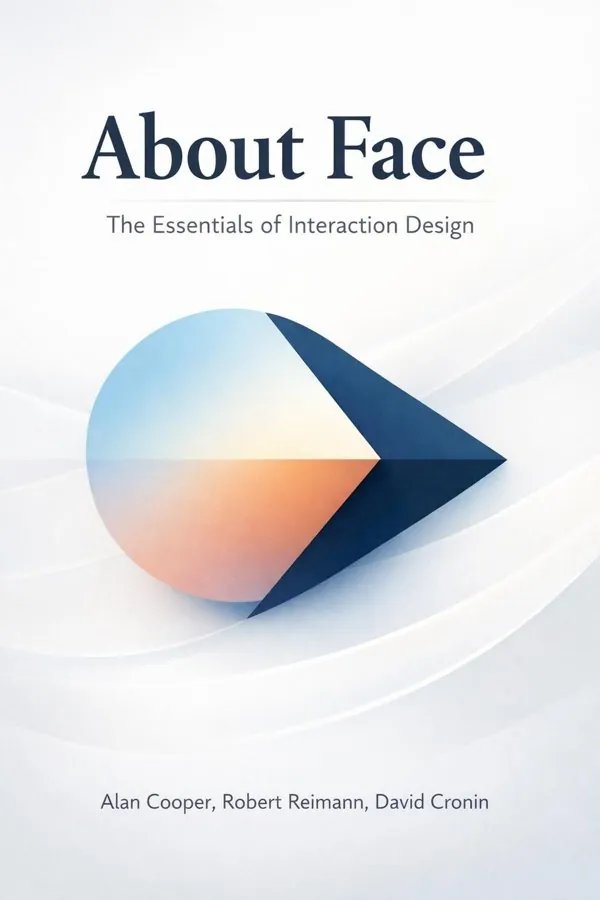
About Face: The Essentials of Interaction Design
by Alan Cooper, Robert Reimann, David Cronin
About Face: The Essentials of Interaction Design is one of the foundational books in modern UX and product design. It argues that great digital products are not defined by how many features they contain, but by how well they support what people are actually trying to accomplish. Alan Cooper, Robert Reimann, and David Cronin present interaction design as a discipline focused on behavior: how software responds, guides, informs, and helps users reach their goals with clarity and confidence. The book covers the full design process, from user research and persona creation to scenarios, interface structure, behavior design, feedback, and evaluation. What makes it especially valuable is that it does not stop at theory. It offers a practical framework for turning messy user needs and business constraints into products that feel coherent, humane, and usable. Alan Cooper is widely regarded as a pioneer in software design, and together with Reimann and Cronin, he helped shape many of the methods now standard in UX practice. For designers, product managers, founders, and developers, this book remains a deeply relevant guide to building technology around people rather than forcing people to adapt to technology.
Key Takeaways
- 1Goal-Directed Design Builds Better Products — Most digital products fail not because they lack power, but because they confuse power with value. About Face begins wit…
- 2Research Reveals the User Behind Assumptions — Design often goes wrong the moment teams assume they already know the user. The authors argue that without research, des…
- 3Scenarios Turn Insight Into Interaction — Knowing who your users are is not enough; you must understand how their goals unfold over time. This is where scenarios …
 10 min read
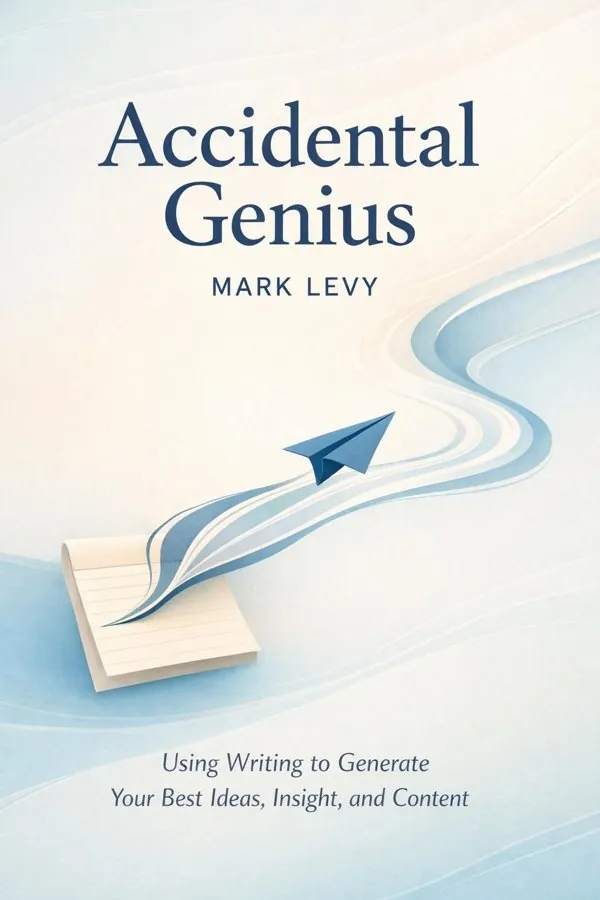
Accidental Genius: Using Writing to Generate Your Best Ideas, Insight, and Content
by Mark Levy
Accidental Genius es un libro que enseña cómo usar la escritura libre como una herramienta para descubrir ideas originales, resolver problemas y generar contenido creativo. Mark Levy explica técnicas prácticas para liberar el pensamiento y superar bloqueos mentales, ayudando a profesionales, escritores y emprendedores a desarrollar su potencial creativo mediante la escritura espontánea.
Key Takeaways
- 1Freewriting as a Gateway to Creativity — At its core, freewriting is simple: You write fast, continuously, without regard for correctness or structure. But that …
- 2The Psychology of Spontaneous Writing — Freewriting works because it plays with the brain’s natural tendencies. When we stop censoring ourselves, we engage the …
- 3Setting Up Effective Freewriting Sessions
 10 min read
Alien Thinking: The Unconventional Path to Breakthrough Ideas
by Cyril Bouquet, Jean-Louis Barsoux, Michael Wade
Alien Thinking propone un enfoque innovador para generar ideas disruptivas y resolver problemas complejos. Los autores, profesores de IMD Business School, presentan un modelo basado en cinco dimensiones —Atención, Lejanía, Imaginación, Experimentación y Navegación— que ayudan a los individuos y organizaciones a pensar de manera diferente y fomentar la creatividad en entornos de cambio constante.
Key Takeaways
- 1Defining Alien Thinking — The concept of 'Alien Thinking' stems from one simple but powerful metaphor: when you look at the world as an alien woul…
- 2Attention — Attention is not mere observation; it is disciplined curiosity. In our fast-paced environment, people are quick to jump …
- 3Levitation
 10 min read
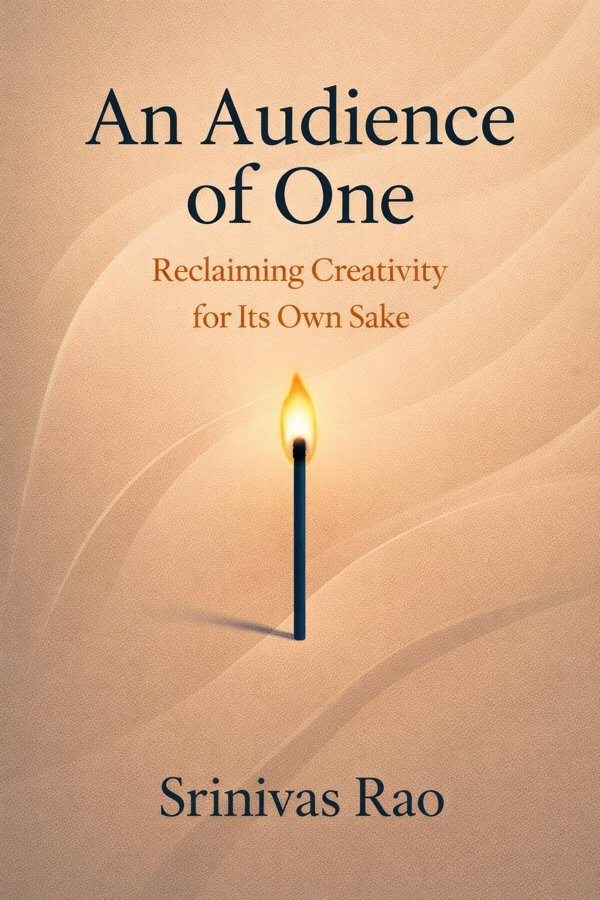
An Audience of One: Reclaiming Creativity for Its Own Sake
by Srinivas Rao
In An Audience of One, Srinivas Rao makes a timely and deeply human argument: creativity loses its vitality when it becomes a performance for strangers. In an age shaped by algorithms, personal branding, and constant comparison, many people no longer create because they are curious, moved, or alive to possibility. They create to be seen. Rao challenges that habit at its root. He invites readers to shift from public approval to private honesty, from chasing attention to cultivating meaningful expression. The book explores why external validation so easily hijacks creative work, how fear and distraction erode originality, and what it takes to build a practice grounded in intrinsic motivation. Drawing on psychology, artistic insight, and years of conversation through his work as host of The Unmistakable Creative, Rao writes with both practical clarity and philosophical depth. This matters because the health of our creative lives affects more than art alone; it shapes how we think, solve problems, and experience identity. For anyone who feels creatively blocked, performative, or burned out, this book offers a compelling path back to authentic creation.
Key Takeaways
- 1The Trap of External Validation — One of the most dangerous things that can happen to a creator is to confuse attention with meaning. Rao argues that mode…
- 2Rediscovering the Joy of Creation — Creativity begins to recover the moment it stops trying to impress. Rao invites readers to remember a more natural relat…
- 3Attention Is the Fuel of Creativity — What we call a creative block is often an attention problem in disguise. Rao emphasizes that creativity requires more th…
 10 min read
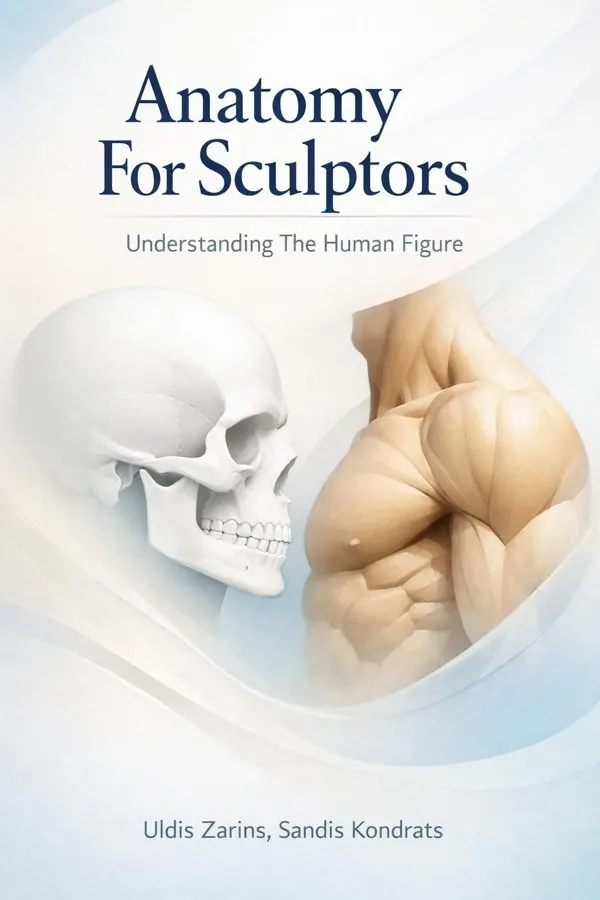
Anatomy For Sculptors: Understanding The Human Figure
by Uldis Zarins, Sandis Kondrats
Great figure art does not begin with surface detail. It begins with structure. Anatomy For Sculptors: Understanding The Human Figure is a practical, visually driven guide that teaches artists how the human body is built, how it moves, and how its internal architecture creates believable form on the outside. Rather than presenting anatomy as a dense medical subject, Uldis Zarins and Sandis Kondrats translate bones, muscles, proportions, and landmarks into clear visual principles that sculptors, illustrators, painters, character designers, and 3D artists can use immediately. What makes this book matter is its focus on artistic application. It shows not only what the body contains, but why those structures change silhouette, affect balance, and determine gesture. Readers learn to see the body as a system of masses, rhythms, pivots, and tensions instead of a confusing collection of parts. Zarins brings the perspective of a sculptor and anatomy teacher, while Kondrats contributes strong visual design and 3D educational clarity. Together, they offer a rare resource: an anatomy book made specifically for artists who want to create figures that feel solid, dynamic, and alive.
Key Takeaways
- 1The Skeleton Creates Every Visible Form — What looks soft and expressive on the surface is governed by something rigid underneath. One of the book’s most importan…
- 2The Head Is Built, Not Guessed — Expression begins in structure long before it appears in features. The book’s treatment of the skull and face shows that…
- 3Torso Masses Control Motion and Balance — The body’s most expressive movements often come from the largest masses, not the smallest details. In Anatomy For Sculpt…
Want the full summary?
Get instant access to this book summary and 100K+ more with Fizz Moment.
Get Free SummaryAvailable on App Store • Free to download
About This List
Creativity is not a gift reserved for artists — it is a skill anyone can develop. These books show you how to think differently and make original work.
This list features 15 carefully selected books. With FizzRead, you can read AI-powered summaries of each book in just 15 minutes. Get the key takeaways and start applying the insights immediately.
Ready to start reading?
Get instant access to all 15 book summaries and 100K+ more with FizzRead.