
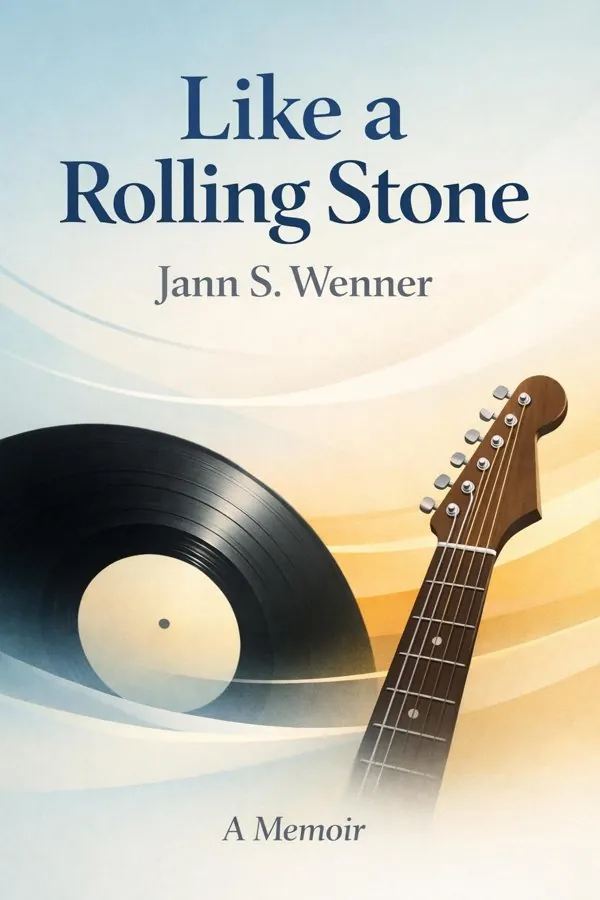
Like a Rolling Stone: A Memoir: Summary & Key Insights
 10 min6 chaptersAudio available
What Is Like a Rolling Stone: A Memoir About?
Like a Rolling Stone: A Memoir by Jann S. Wenner is a biographies book spanning 6 pages. In this candid memoir, Jann S. Wenner, the co-founder and longtime editor of Rolling Stone magazine, recounts his life and career shaping American music journalism. He reflects on his relationships with iconic artists such as John Lennon, Mick Jagger, and Bob Dylan, and chronicles the evolution of Rolling Stone from a countercultural publication to a major cultural institution. The book offers an insider’s view of the rock era, the politics of the 1960s and 1970s, and the changing landscape of media and celebrity.
This FizzRead summary covers all 6 key chapters of Like a Rolling Stone: A Memoir in approximately 10 minutes, distilling the most important ideas, arguments, and takeaways from Jann S. Wenner's work. Also available as an audio summary and Key Quotes Podcast.
Like a Rolling Stone: A Memoir
In this candid memoir, Jann S. Wenner, the co-founder and longtime editor of Rolling Stone magazine, recounts his life and career shaping American music journalism. He reflects on his relationships with iconic artists such as John Lennon, Mick Jagger, and Bob Dylan, and chronicles the evolution of Rolling Stone from a countercultural publication to a major cultural institution. The book offers an insider’s view of the rock era, the politics of the 1960s and 1970s, and the changing landscape of media and celebrity.
Who Should Read Like a Rolling Stone: A Memoir?
This book is perfect for anyone interested in biographies and looking to gain actionable insights in a short read. Whether you're a student, professional, or lifelong learner, the key ideas from Like a Rolling Stone: A Memoir by Jann S. Wenner will help you think differently.
- ✓Readers who enjoy biographies and want practical takeaways
- ✓Professionals looking to apply new ideas to their work and life
- ✓Anyone who wants the core insights of Like a Rolling Stone: A Memoir in just 10 minutes
Want the full summary?
Get instant access to this book summary and 100K+ more with Fizz Moment.
Get Free SummaryAvailable on App Store • Free to download
Key Chapters
I grew up in a postwar America that was proud, prosperous, and deeply conformist. My family life was steady on the surface, but I was restless, always chasing a bigger world than the one laid out before me. Music became my compass — not just the notes, but the ideas. By the time I reached Berkeley, the campus was alive with protest, poetry, and rock ’n’ roll, and I knew the future was being written right there on the streets. Those years gave me two essential gifts: the conviction that culture mattered, and the realization that someone needed to chronicle that revolution as it happened.
It wasn’t clear yet what form that would take. I flirted with traditional journalism, but the mainstream press couldn’t capture what we were living through. The language of the sixties was messy, emotional, alive — and I wanted to create a magazine that mirrored that energy. That impulse would soon become *Rolling Stone*. The seed of the idea came from my admiration for magazines like *Ramparts* and the *Berkeley Barb*, but I wanted something cleaner, with both the fervor of the underground press and the editorial rigor of serious reporting. More than anything, I wanted to give rock music the same critical attention and respect once reserved for literature and film. That sense of possibility propelled me into taking the first leap.
In the fall of 1967, in a San Francisco warehouse buzzing with the spirit of Haight-Ashbury, *Rolling Stone* was born. The first issue came together with borrowed money, borrowed space, and a borrowed dream. The name came from Muddy Waters, and its heart came from a generation that believed the world could be remade through song. We weren’t just building a magazine; we were building a platform that spoke to youth culture with honesty and depth. The early days were chaotic — printing deadlines missed, advertisers scarce — but what kept us alive was the enthusiasm of a small band of writers who believed that the story of rock ’n’ roll was the story of America itself.
We worked out of the haze of the counterculture but refused to be its mouthpiece. The goal was to chronicle it truthfully — the brilliance and the excess alike. *Rolling Stone* quickly became known for exposing the underside of the dream, for combining long-form profiles and investigative reporting with the pulse of the latest tour or record. Our readers didn’t just want gossip or glamour; they wanted insight. And somehow, we gave it to them — an alchemy of youthful daring and editorial precision that made the magazine a cultural touchstone.
+ 4 more chapters — available in the FizzRead app
All Chapters in Like a Rolling Stone: A Memoir
About the Author
Jann S. Wenner is an American magazine magnate best known as the co-founder and publisher of Rolling Stone. Born in 1946, he played a central role in defining rock journalism and popular culture in the late 20th century. Wenner also co-founded Outside magazine and has been inducted into the Rock and Roll Hall of Fame for his contributions to music journalism.
Get This Summary in Your Preferred Format
Read or listen to the Like a Rolling Stone: A Memoir summary by Jann S. Wenner anytime, anywhere. FizzRead offers multiple formats so you can learn on your terms — all free.
Available formats: App · Audio · PDF · EPUB — All included free with FizzRead
Download Like a Rolling Stone: A Memoir PDF and EPUB Summary
Key Quotes from Like a Rolling Stone: A Memoir
“I grew up in a postwar America that was proud, prosperous, and deeply conformist.”
“In the fall of 1967, in a San Francisco warehouse buzzing with the spirit of Haight-Ashbury, *Rolling Stone* was born.”
Frequently Asked Questions about Like a Rolling Stone: A Memoir
Like a Rolling Stone: A Memoir by Jann S. Wenner is a biographies book that explores key ideas across 6 chapters. In this candid memoir, Jann S. Wenner, the co-founder and longtime editor of Rolling Stone magazine, recounts his life and career shaping American music journalism. He reflects on his relationships with iconic artists such as John Lennon, Mick Jagger, and Bob Dylan, and chronicles the evolution of Rolling Stone from a countercultural publication to a major cultural institution. The book offers an insider’s view of the rock era, the politics of the 1960s and 1970s, and the changing landscape of media and celebrity.
You Might Also Like

An American Marriage
Tayari Jones
10 min
Benjamin Franklin: An American Life
Walter Isaacson
10 min
I Know Why The Caged Bird Sings
Maya Angelou
10 min
Long Walk to Freedom
Nelson Mandela
10 min
Persepolis
Marjane Satrapi
10 min
Surely You're Joking, Mr. Feynman!
Richard P. Feynman
10 minBrowse by Category
Ready to read Like a Rolling Stone: A Memoir?
Get the full summary and 100K+ more books with Fizz Moment.