
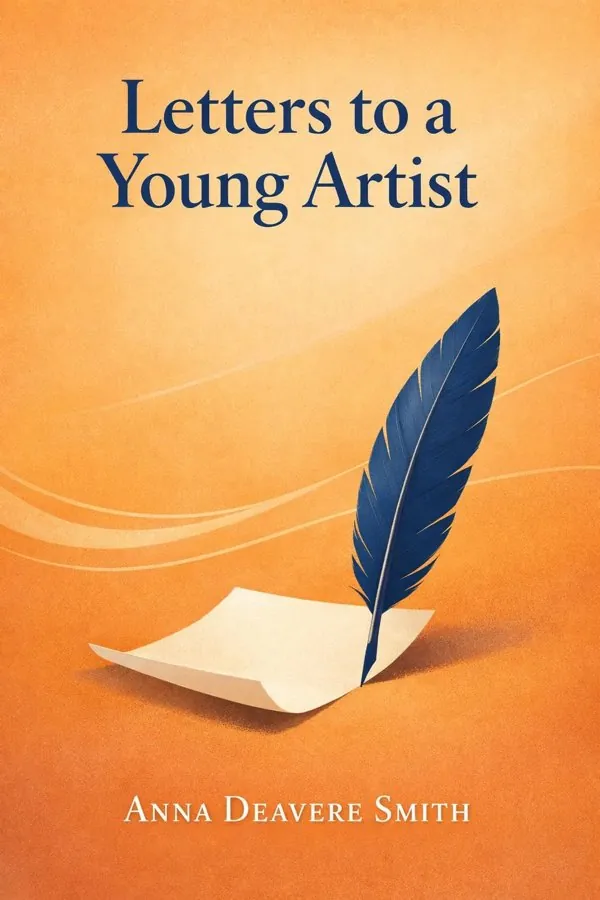
Letters to a Young Artist: Summary & Key Insights
 10 min13 chaptersAudio available
What Is Letters to a Young Artist About?
Letters to a Young Artist by Anna Deavere Smith is a creativity book spanning 13 pages. In this collection of letters, Anna Deavere Smith offers candid and inspiring advice to aspiring artists. Drawing from her own experiences as an actor, playwright, and educator, she explores themes of creativity, authenticity, perseverance, and the social responsibilities of artists. The book encourages readers to find their own voice and to engage deeply with the world through their art.
This FizzRead summary covers all 13 key chapters of Letters to a Young Artist in approximately 10 minutes, distilling the most important ideas, arguments, and takeaways from Anna Deavere Smith's work. Also available as an audio summary and Key Quotes Podcast.
Letters to a Young Artist
In this collection of letters, Anna Deavere Smith offers candid and inspiring advice to aspiring artists. Drawing from her own experiences as an actor, playwright, and educator, she explores themes of creativity, authenticity, perseverance, and the social responsibilities of artists. The book encourages readers to find their own voice and to engage deeply with the world through their art.
Who Should Read Letters to a Young Artist?
This book is perfect for anyone interested in creativity and looking to gain actionable insights in a short read. Whether you're a student, professional, or lifelong learner, the key ideas from Letters to a Young Artist by Anna Deavere Smith will help you think differently.
- ✓Readers who enjoy creativity and want practical takeaways
- ✓Professionals looking to apply new ideas to their work and life
- ✓Anyone who wants the core insights of Letters to a Young Artist in just 10 minutes
Want the full summary?
Get instant access to this book summary and 100K+ more with Fizz Moment.
Get Free SummaryAvailable on App Store • Free to download
Key Chapters
When I speak about the role of the artist, I do not mean a title bestowed by others. It’s a stance, a way of seeing that insists on curiosity. To be an artist is to notice—to notice what others overlook, to name what others hesitate to name. Art emerges from engagement, and that engagement carries responsibility. The artist cannot stand apart from the world because art thrives on the friction between self and society.
I learned this through my interviews and documentary performances. When I entered a community torn by conflict, my task was not simply to gather stories—it was to listen without judgment and reveal the humanity inside them. That act taught me that art must be porous, responsive, alive to the moment. You, as a young artist, must learn this porousness, this willingness to be changed by what you witness. The world you create will reflect the world you allow yourself to see.
Being an artist also means seeing beyond categories. We live in a society eager to separate, label, and define. The artist’s job is to question these divisions and invite others to look beneath them. It’s not always comfortable—it means confronting your own assumptions daily. But it is necessary. If your art doesn’t disturb complacency, if it doesn’t wake someone’s deeper sense of self, it risks becoming decoration rather than revelation.
You have to believe, even in times of isolation or doubt, that your voice can matter. It starts with integrity—a quiet agreement between you and your work—that you will not betray what you see, even if what you see is painful. The artist’s responsibility is, ultimately, an act of love: love for complexity, for voices that have not been heard, and for the possibility of change.
Finding your voice is not about volume—it’s about resonance. Every artist begins by learning the sounds of others: teachers, influences, traditions. But eventually, you must recognize the echo that certain truths awaken inside you. That resonance becomes your path. Too many young artists mistake style for voice. Style is surface; voice is spirit. Style shifts with time. Voice endures.
My voice began to form when I realized that imitation only dulls the urgency of experience. As an actor, I spent years refining techniques, but the technique only became meaningful when it served the truth of a moment. Your voice emerges when you allow technique to surrender to truth. It may come through words, movement, silence—whatever medium you claim—but it must be yours. To develop your own voice is not to isolate yourself from influences, but to weave them through your own consciousness until they sound unmistakably like you.
And understand, your voice will change. It is alive. It grows as you grow, shifts as you encounter new people, new places, new questions. Authenticity doesn’t mean rigidity—it means evolving with honesty. Every time you speak, write, paint, perform, you are asking the world to meet you where you are now. Let that meeting be open-hearted. Trust the unfinishedness of your own sound.
+ 11 more chapters — available in the FizzRead app
All Chapters in Letters to a Young Artist
About the Author
Anna Deavere Smith is an American actress, playwright, and professor known for her pioneering work in documentary theater. She has received numerous awards for her performances and writings, including a MacArthur Fellowship. Her work often examines race, identity, and community in contemporary America.
Get This Summary in Your Preferred Format
Read or listen to the Letters to a Young Artist summary by Anna Deavere Smith anytime, anywhere. FizzRead offers multiple formats so you can learn on your terms — all free.
Available formats: App · Audio · PDF · EPUB — All included free with FizzRead
Download Letters to a Young Artist PDF and EPUB Summary
Key Quotes from Letters to a Young Artist
“When I speak about the role of the artist, I do not mean a title bestowed by others.”
“Finding your voice is not about volume—it’s about resonance.”
Frequently Asked Questions about Letters to a Young Artist
Letters to a Young Artist by Anna Deavere Smith is a creativity book that explores key ideas across 13 chapters. In this collection of letters, Anna Deavere Smith offers candid and inspiring advice to aspiring artists. Drawing from her own experiences as an actor, playwright, and educator, she explores themes of creativity, authenticity, perseverance, and the social responsibilities of artists. The book encourages readers to find their own voice and to engage deeply with the world through their art.
You Might Also Like
Dimensions Of Creativity
Margaret A. Boden
10 min
How to Fly a Horse: The Secret History of Creation, Invention, and Discovery
Kevin Ashton
10 min
Imagine: How Creativity Works
Jonah Lehrer
10 min
The Accidental Creative: How to Be Brilliant at a Moment's Notice
Todd Henry
10 min
The Origins of Creativity
Edward O. Wilson
10 min
Wired to Create: Unraveling the Mysteries of the Creative Mind
Scott Barry Kaufman, Carolyn Gregoire
10 minBrowse by Category
Ready to read Letters to a Young Artist?
Get the full summary and 100K+ more books with Fizz Moment.