
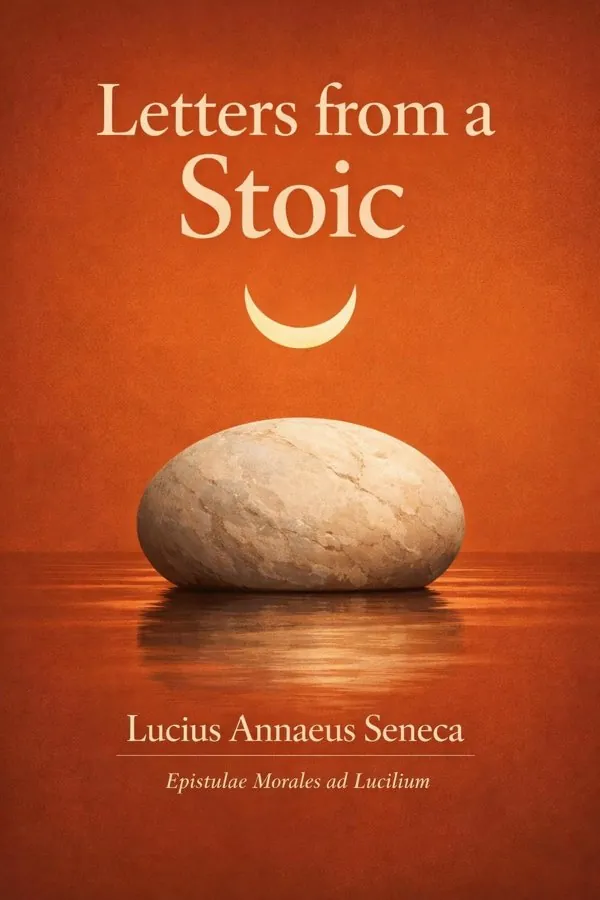
Letters from a Stoic: Epistulae Morales ad Lucilium: Summary & Key Insights
 10 min12 chaptersAudio available
What Is Letters from a Stoic: Epistulae Morales ad Lucilium About?
Letters from a Stoic: Epistulae Morales ad Lucilium by Lucius Annaeus Seneca is a western_phil book spanning 12 pages. Letters from a Stoic is a collection of moral letters written by the Roman Stoic philosopher Seneca to his friend Lucilius. In these letters, Seneca discusses virtue, wisdom, death, fortune, and tranquility of mind, applying Stoic philosophy to everyday life. The work is considered a cornerstone of Stoic ethics in Latin literature.
This FizzRead summary covers all 12 key chapters of Letters from a Stoic: Epistulae Morales ad Lucilium in approximately 10 minutes, distilling the most important ideas, arguments, and takeaways from Lucius Annaeus Seneca's work. Also available as an audio summary and Key Quotes Podcast.
Letters from a Stoic: Epistulae Morales ad Lucilium
Letters from a Stoic is a collection of moral letters written by the Roman Stoic philosopher Seneca to his friend Lucilius. In these letters, Seneca discusses virtue, wisdom, death, fortune, and tranquility of mind, applying Stoic philosophy to everyday life. The work is considered a cornerstone of Stoic ethics in Latin literature.
Who Should Read Letters from a Stoic: Epistulae Morales ad Lucilium?
This book is perfect for anyone interested in western_phil and looking to gain actionable insights in a short read. Whether you're a student, professional, or lifelong learner, the key ideas from Letters from a Stoic: Epistulae Morales ad Lucilium by Lucius Annaeus Seneca will help you think differently.
- ✓Readers who enjoy western_phil and want practical takeaways
- ✓Professionals looking to apply new ideas to their work and life
- ✓Anyone who wants the core insights of Letters from a Stoic: Epistulae Morales ad Lucilium in just 10 minutes
Want the full summary?
Get instant access to this book summary and 100K+ more with Fizz Moment.
Get Free SummaryAvailable on App Store • Free to download
Key Chapters
When I write of the good, Lucilius, I am not speaking of what the crowd calls good. They mean wealth, fame, pleasure, the applause of others; I mean that which depends upon the soul alone—virtue. The Stoic measure of happiness is built upon an impregnable foundation: that which fortune can neither give nor take. If you place your contentment upon externals, you have built a tower upon sand. Virtue alone endures.
In these letters, I have told you again and again: the only life worthy of a wise man is the life in harmony with reason. Wisdom does not adorn itself with luxury; nor does it shrink from poverty. The philosopher who governs his desires is a king without a crown, whereas the one who serves them is poorer than the beggar at his gates. What difference does it make whether gold or mud fills the purse, if the mind is diseased? He who possesses virtue possesses all that is truly his.
I do not deny the body, the household, or the realm of affairs—they too have their place. But we err when we call them good. They are indifferent, instruments to be used rightly or wrongly. A wise man may use wealth without loving it; he may face death without fearing it. He treats fortune as a guest, not as a master.
The Stoic understanding of goodness thus liberates. It frees us from the torment of comparison and envy. It teaches that the good life is within reach of all, for it depends upon self-command and just reasoning. I crave not that you withdraw from the world, Lucilius, but that you cease to be tossed about by it. When you have found virtue, you have found peace. This is the sole treasure that time and tyranny cannot seize.
Time, Lucilius, is the one possession which each man can squander but never recover. We are not misers of our money yet squanderers of our days. Nothing is more perishable, yet nothing is more precious. I urged you: count your hours as if they were gold coins dropped one by one into the abyss. Time is the matter of life—when it is gone, everything else ceases to have meaning.
In our haste we become idle. Men plan for the future as if they will live forever, yet tremble as if they would die tomorrow. I ask you to reverse the pattern: live each day as if it might be your last, but build your mind as if it would endure for eternity. To live well is not to live long; it is to live wisely. We should devote our brief span not to petty hopes but to the cultivation of character.
Procrastination is the thief of life. How many say, "I will begin next year; I will study philosophy when my duties permit!" But fortune gives no guarantees. We cling to tomorrow as if it were our property; yet it belongs to fate. To use time well requires discipline—learn to measure it not by the clock but by purpose. Have you spent this hour in the pursuit of virtue or of vanity? If the former, it is yours forever. If the latter, you have lost it.
I tell you plainly, Lucilius: the great error is to think that leisure waits upon retirement, wealth, or age. The wise man finds leisure in the midst of affairs, for he possesses mastery of his own mind. Let every evening be an audit—ask yourself what you have gained in wisdom. For life is not short, if it is rightly lived; it is only wasted when we sleepwalk through it.
+ 10 more chapters — available in the FizzRead app
All Chapters in Letters from a Stoic: Epistulae Morales ad Lucilium
About the Author
Lucius Annaeus Seneca (c. 4 BCE–65 CE) was a Roman Stoic philosopher, writer, and statesman. Born in Corduba, Hispania, and educated in Rome, he became tutor and later advisor to Emperor Nero. His works, including tragedies and moral letters, have had a lasting influence on Western philosophy.
Get This Summary in Your Preferred Format
Read or listen to the Letters from a Stoic: Epistulae Morales ad Lucilium summary by Lucius Annaeus Seneca anytime, anywhere. FizzRead offers multiple formats so you can learn on your terms — all free.
Available formats: App · Audio · PDF · EPUB — All included free with FizzRead
Download Letters from a Stoic: Epistulae Morales ad Lucilium PDF and EPUB Summary
Key Quotes from Letters from a Stoic: Epistulae Morales ad Lucilium
“When I write of the good, Lucilius, I am not speaking of what the crowd calls good.”
“Time, Lucilius, is the one possession which each man can squander but never recover.”
Frequently Asked Questions about Letters from a Stoic: Epistulae Morales ad Lucilium
Letters from a Stoic: Epistulae Morales ad Lucilium by Lucius Annaeus Seneca is a western_phil book that explores key ideas across 12 chapters. Letters from a Stoic is a collection of moral letters written by the Roman Stoic philosopher Seneca to his friend Lucilius. In these letters, Seneca discusses virtue, wisdom, death, fortune, and tranquility of mind, applying Stoic philosophy to everyday life. The work is considered a cornerstone of Stoic ethics in Latin literature.
Compare Letters from a Stoic: Epistulae Morales ad Lucilium

You Might Also Like
A Little History of Philosophy
Nigel Warburton
10 min
Areopagitica
John Milton
10 min
How To Think Like A Philosopher: Essential Principles For Clear Thinking
Peter Cave
10 min
Language, Truth and Logic
A. J. Ayer
10 min
The Age of Reason
Thomas Paine
10 min
The Essays
Michel De Montaigne
10 minBrowse by Category
Ready to read Letters from a Stoic: Epistulae Morales ad Lucilium?
Get the full summary and 100K+ more books with Fizz Moment.