
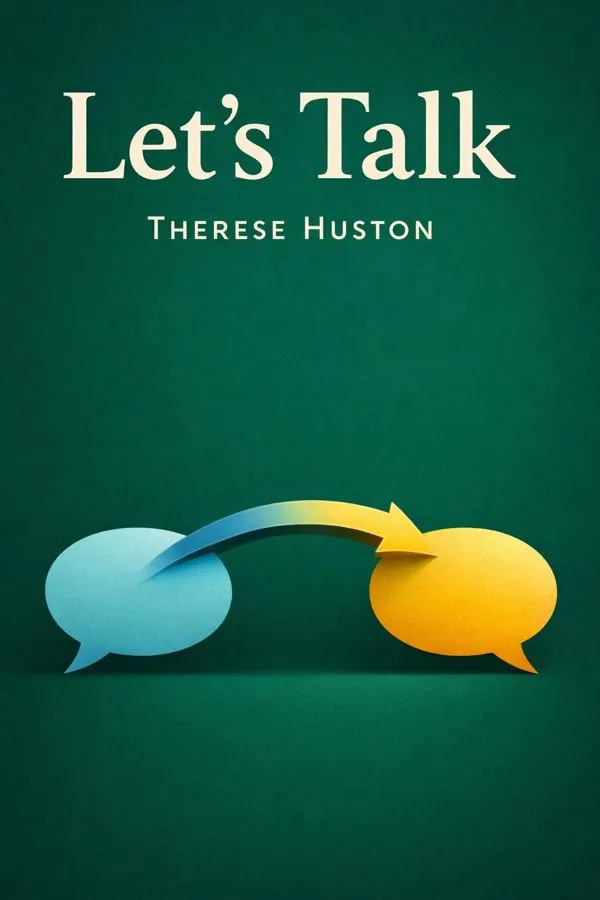
Let's Talk: Make Effective Feedback Your Superpower: Summary & Key Insights
 10 min10 chaptersAudio available
What Is Let's Talk: Make Effective Feedback Your Superpower About?
Let's Talk: Make Effective Feedback Your Superpower by Therese Huston is a communication book spanning 10 pages. In 'Let's Talk: Make Effective Feedback Your Superpower', cognitive scientist Therese Huston offers a practical guide to giving and receiving feedback that motivates, builds trust, and drives performance. Drawing on research in psychology and communication, Huston provides actionable strategies for managers and professionals to navigate difficult conversations with empathy and clarity.
This FizzRead summary covers all 10 key chapters of Let's Talk: Make Effective Feedback Your Superpower in approximately 10 minutes, distilling the most important ideas, arguments, and takeaways from Therese Huston's work. Also available as an audio summary and Key Quotes Podcast.
Let's Talk: Make Effective Feedback Your Superpower
In 'Let's Talk: Make Effective Feedback Your Superpower', cognitive scientist Therese Huston offers a practical guide to giving and receiving feedback that motivates, builds trust, and drives performance. Drawing on research in psychology and communication, Huston provides actionable strategies for managers and professionals to navigate difficult conversations with empathy and clarity.
Who Should Read Let's Talk: Make Effective Feedback Your Superpower?
This book is perfect for anyone interested in communication and looking to gain actionable insights in a short read. Whether you're a student, professional, or lifelong learner, the key ideas from Let's Talk: Make Effective Feedback Your Superpower by Therese Huston will help you think differently.
- ✓Readers who enjoy communication and want practical takeaways
- ✓Professionals looking to apply new ideas to their work and life
- ✓Anyone who wants the core insights of Let's Talk: Make Effective Feedback Your Superpower in just 10 minutes
Want the full summary?
Get instant access to this book summary and 100K+ more with Fizz Moment.
Get Free SummaryAvailable on App Store • Free to download
Key Chapters
Before we can talk about giving feedback effectively, we must understand why it feels so hard. Every time we prepare to offer feedback, we are confronting a deeply human fear—the fear of rejection or of damaging a relationship. Psychological research shows that when we anticipate negative feedback, our bodies and brains register it as a threat. Our amygdala, the part of the brain responsible for threat detection, lights up, making it harder to stay objective or empathic. I explore the social dynamics behind this phenomenon: we are wired to seek belonging, and feedback conversations can feel like moments where that belonging is at risk.
Feedback anxiety affects both sides. The person giving feedback worries about coming off too harsh or too vague, while the person receiving it worries about judgment or failure. I invite readers to see these reactions not as character flaws, but as universal cognitive responses. The key is reframing anxiety as a signal, not a stop sign. Anxiety tells us that something important is happening—it reminds us that feedback matters because our relationships matter. Through stories from managers, teachers, and executives, I show how acknowledging this anxiety aloud often diffuses it. When you start a feedback conversation by saying, “This might feel uncomfortable, but I’m saying this because I care about your growth,” you shift the emotional tone dramatically. You invite mutual vulnerability, which is the first step toward genuine dialogue.
Most of us have been trained to think of feedback as either positive or negative—praise or criticism. But I suggest a more useful distinction: judgmental versus developmental feedback. Judgmental feedback focuses on evaluation, on labeling performance as good or bad. Developmental feedback, in contrast, centers on improvement, on what’s possible next. I encourage readers to pivot their mindset from 'I need to correct something wrong' to 'I want to help you grow stronger.'
This reframing draws on research from growth mindset theory, popularized by psychologist Carol Dweck. When we see intelligence, skill, and performance as malleable, feedback becomes a tool for improvement rather than a verdict. I provide practical examples—from software teams to classrooms—illustrating how phrasing and tone can invite openness. For instance, rather than saying, 'You’re not organized,' you might say, 'I’ve noticed you’re juggling a lot of tasks; how can we find a system that supports your priorities better?' The same information is conveyed, but the focus shifts from judgment to partnership.
This chapter asks readers to embrace curiosity as a guiding principle. Developmental feedback works best when it comes from genuine interest in another person’s process. Ask questions that open conversation: 'What do you think worked best here?' or 'What felt most challenging?' These questions generate insight and mutual respect. Once you see feedback as collaboration rather than confrontation, its emotional charge begins to fade, and you start to realize how energizing it can be to help others learn.
+ 8 more chapters — available in the FizzRead app
All Chapters in Let's Talk: Make Effective Feedback Your Superpower
About the Author
Therese Huston is a cognitive scientist and founding director of the Center for Excellence in Teaching and Learning at Seattle University. She is known for her research on decision-making, gender bias, and effective communication in the workplace.
Get This Summary in Your Preferred Format
Read or listen to the Let's Talk: Make Effective Feedback Your Superpower summary by Therese Huston anytime, anywhere. FizzRead offers multiple formats so you can learn on your terms — all free.
Available formats: App · Audio · PDF · EPUB — All included free with FizzRead
Download Let's Talk: Make Effective Feedback Your Superpower PDF and EPUB Summary
Key Quotes from Let's Talk: Make Effective Feedback Your Superpower
“Before we can talk about giving feedback effectively, we must understand why it feels so hard.”
“Most of us have been trained to think of feedback as either positive or negative—praise or criticism.”
Frequently Asked Questions about Let's Talk: Make Effective Feedback Your Superpower
Let's Talk: Make Effective Feedback Your Superpower by Therese Huston is a communication book that explores key ideas across 10 chapters. In 'Let's Talk: Make Effective Feedback Your Superpower', cognitive scientist Therese Huston offers a practical guide to giving and receiving feedback that motivates, builds trust, and drives performance. Drawing on research in psychology and communication, Huston provides actionable strategies for managers and professionals to navigate difficult conversations with empathy and clarity.
You Might Also Like

Magic Words: The Science and Secrets Behind Seven Words That Motivate, Engage, and Influence
Tim David
10 min
Talking Across The Divide: How to Communicate with People You Disagree with and Maybe Even Change the World
Justin Lee
10 min
The Exceptional Presenter: A Proven Formula to Open Up! and Own the Room
Timothy J. Koegel
10 min
4 Essential Keys to Effective Communication in Love, Life, Work--Anywhere!: Including the 12-Day Communication Challenge!
Bento C. Leal III
10 min
Active Listening Techniques: 30 Practical Tools to Hone Your Communication Skills
Nisha Gupta
10 min
Bargaining for Advantage: Negotiation Strategies for Reasonable People
G. Richard Shell
10 minBrowse by Category
Ready to read Let's Talk: Make Effective Feedback Your Superpower?
Get the full summary and 100K+ more books with Fizz Moment.