
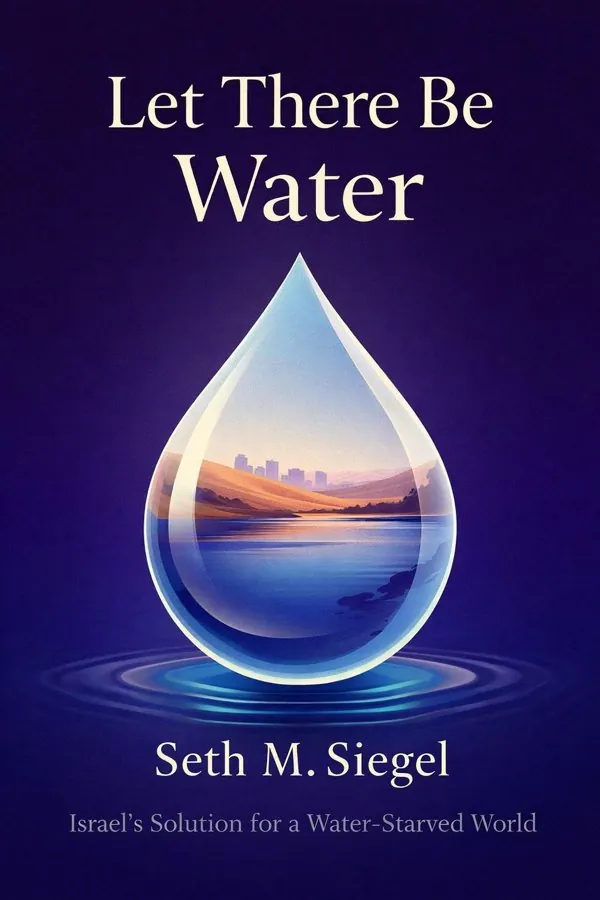
Let There Be Water: Israel's Solution for a Water-Starved World: Summary & Key Insights
 10 min9 chaptersAudio available
What Is Let There Be Water: Israel's Solution for a Water-Starved World About?
Let There Be Water: Israel's Solution for a Water-Starved World by Seth M. Siegel is a environment book spanning 9 pages. Let There Be Water explains how Israel, a country with limited natural water resources, became a global leader in water technology and management. Seth M. Siegel explores the policies, innovations, and entrepreneurial spirit that enabled Israel to achieve water security and export its expertise worldwide. The book highlights lessons that other nations can adopt to address global water scarcity.
This FizzRead summary covers all 9 key chapters of Let There Be Water: Israel's Solution for a Water-Starved World in approximately 10 minutes, distilling the most important ideas, arguments, and takeaways from Seth M. Siegel's work. Also available as an audio summary and Key Quotes Podcast.
Let There Be Water: Israel's Solution for a Water-Starved World
Let There Be Water explains how Israel, a country with limited natural water resources, became a global leader in water technology and management. Seth M. Siegel explores the policies, innovations, and entrepreneurial spirit that enabled Israel to achieve water security and export its expertise worldwide. The book highlights lessons that other nations can adopt to address global water scarcity.
Who Should Read Let There Be Water: Israel's Solution for a Water-Starved World?
This book is perfect for anyone interested in environment and looking to gain actionable insights in a short read. Whether you're a student, professional, or lifelong learner, the key ideas from Let There Be Water: Israel's Solution for a Water-Starved World by Seth M. Siegel will help you think differently.
- ✓Readers who enjoy environment and want practical takeaways
- ✓Professionals looking to apply new ideas to their work and life
- ✓Anyone who wants the core insights of Let There Be Water: Israel's Solution for a Water-Starved World in just 10 minutes
Want the full summary?
Get instant access to this book summary and 100K+ more with Fizz Moment.
Get Free SummaryAvailable on App Store • Free to download
Key Chapters
Israel’s water story begins before the founding of the nation. The early Zionist pioneers who arrived in Ottoman and then British-mandate Palestine faced lands that were largely dry, saline, and hostile to traditional agriculture. For them, water was not a luxury—it was survival. The dream of returning to the land and making it thrive required not just access to water but the ability to transport it from where it was to where the people would live. From the earliest settlements, water use and planning were communal. The kibbutzim and moshavim understood that independence meant mastering water. When Israel declared statehood in 1948, water infrastructure became one of its very first policy priorities. The most ambitious project of all was the National Water Carrier—an engineering marvel that would carry water from the Sea of Galilee in the north to the parched Negev Desert in the south. Built during the 1950s and inaugurated in 1964, it connected the country’s disparate water sources into a national grid. Every decision was guided by an awareness that there was no room for waste or inefficiency. This project set the tone for Israel’s entire water ethos: planning ahead, centrally managing resources, and ensuring that water served national development rather than political expediency. It was a triumph of vision against physical constraint, and it laid the foundation for the decades of innovation that followed.
Israel’s remarkable track record in water management did not happen by chance. It was built through deliberate policy design that combined centralization, accountability, and public trust. From the earliest years, water in Israel was declared a public resource—owned by the state but managed for the benefit of all. This principle ensured that no individual or group could monopolize access. The Water Law of 1959 formalized this approach, creating the legal structure for national planning, regulation, and equitable distribution. Every drop of water—whether from rain, surface, or groundwater—was subject to allocation and tracking. The government’s role was not only to regulate consumption but to create the right incentives for conservation. Farmers paid below-market rates, but pricing still reflected usage. Urban consumers were charged progressively higher rates for excess consumption. This instilled a sense of discipline across all sectors. At the same time, policy encouraged innovation. The state funded research institutions and pilot projects to improve water efficiency. Engineers, scientists, and farmers worked together to develop more intelligent irrigation systems and crop varieties suited for water-limited environments. The success of these policies demonstrates that governance, rather than wealth, defines water prosperity. Israel’s policymakers grasped early on that technology without policy is chaos, but policy without innovation is stagnation. They built a system that balanced both.
+ 7 more chapters — available in the FizzRead app
All Chapters in Let There Be Water: Israel's Solution for a Water-Starved World
About the Author
Seth M. Siegel is an American entrepreneur, writer, and activist known for his work on water policy and innovation. He has written extensively on environmental sustainability and has advised governments and organizations on water management strategies.
Get This Summary in Your Preferred Format
Read or listen to the Let There Be Water: Israel's Solution for a Water-Starved World summary by Seth M. Siegel anytime, anywhere. FizzRead offers multiple formats so you can learn on your terms — all free.
Available formats: App · Audio · PDF · EPUB — All included free with FizzRead
Download Let There Be Water: Israel's Solution for a Water-Starved World PDF and EPUB Summary
Key Quotes from Let There Be Water: Israel's Solution for a Water-Starved World
“Israel’s water story begins before the founding of the nation.”
“Israel’s remarkable track record in water management did not happen by chance.”
Frequently Asked Questions about Let There Be Water: Israel's Solution for a Water-Starved World
Let There Be Water: Israel's Solution for a Water-Starved World by Seth M. Siegel is a environment book that explores key ideas across 9 chapters. Let There Be Water explains how Israel, a country with limited natural water resources, became a global leader in water technology and management. Seth M. Siegel explores the policies, innovations, and entrepreneurial spirit that enabled Israel to achieve water security and export its expertise worldwide. The book highlights lessons that other nations can adopt to address global water scarcity.
You Might Also Like

A Life on Our Planet: My Witness Statement and a Vision for the Future
David Attenborough
10 min
A Sky Full Of Birds
Matt Merritt
10 min
Carbon Zero: Imagining Cities That Can Save the Planet
Alex Steffen
10 min
Eaarth: Making a Life on a Tough New Planet
Bill McKibben
10 min
The Social Contract and Environmental Governance
Various Editors
10 min
The Wild Places
Robert Macfarlane
10 minBrowse by Category
Ready to read Let There Be Water: Israel's Solution for a Water-Starved World?
Get the full summary and 100K+ more books with Fizz Moment.