
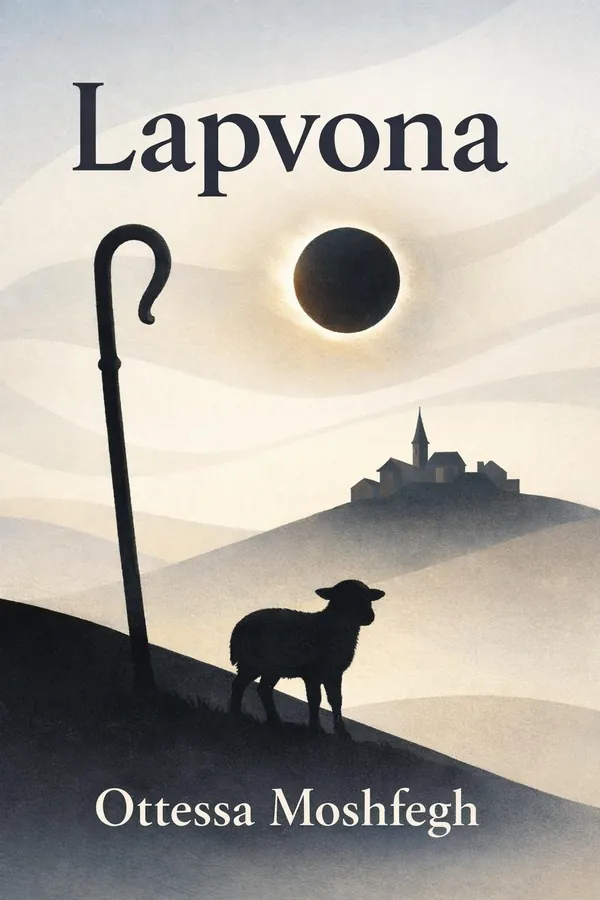
Lapvona: Summary & Key Insights
 10 min9 chaptersAudio available
Key Takeaways from Lapvona
Suffering does not automatically make people noble; sometimes it exposes how fragile morality really is.
A child’s first religion is often the emotional climate of the home.
In a world organized around possession and punishment, compassion can feel almost supernatural.
The farther rulers stand from suffering, the easier it becomes for them to imagine they deserve their comfort.
When disaster strikes, people search desperately for meaning.
What Is Lapvona About?
Lapvona by Ottessa Moshfegh is a fiction book. What happens when hunger, superstition, and power become the true rulers of a society? In Lapvona, Ottessa Moshfegh builds a grim medieval fiefdom where suffering is ordinary, mercy is scarce, and faith is as likely to justify cruelty as to relieve it. At the center of the novel is Marek, a motherless shepherd boy whose life is shaped by deformity, neglect, and a violent social order he barely understands. As drought, famine, and shifting loyalties destabilize the village, Marek becomes entangled with peasants, mystics, and the lord whose authority rests on vanity and force. The result is a darkly comic, grotesque, and deeply unsettling story about how people survive when nature and hierarchy strip them to their rawest selves. Lapvona matters because it refuses comforting illusions. It examines the stories humans tell about God, family, class, innocence, and justice—and shows how easily those stories can become tools of domination. Moshfegh, celebrated for her psychologically incisive and unnerving fiction, brings her singular voice to a medieval landscape that feels both ancient and disturbingly timeless.
This FizzRead summary covers all 9 key chapters of Lapvona in approximately 10 minutes, distilling the most important ideas, arguments, and takeaways from Ottessa Moshfegh's work. Also available as an audio summary and Key Quotes Podcast.
Lapvona
What happens when hunger, superstition, and power become the true rulers of a society? In Lapvona, Ottessa Moshfegh builds a grim medieval fiefdom where suffering is ordinary, mercy is scarce, and faith is as likely to justify cruelty as to relieve it. At the center of the novel is Marek, a motherless shepherd boy whose life is shaped by deformity, neglect, and a violent social order he barely understands. As drought, famine, and shifting loyalties destabilize the village, Marek becomes entangled with peasants, mystics, and the lord whose authority rests on vanity and force. The result is a darkly comic, grotesque, and deeply unsettling story about how people survive when nature and hierarchy strip them to their rawest selves. Lapvona matters because it refuses comforting illusions. It examines the stories humans tell about God, family, class, innocence, and justice—and shows how easily those stories can become tools of domination. Moshfegh, celebrated for her psychologically incisive and unnerving fiction, brings her singular voice to a medieval landscape that feels both ancient and disturbingly timeless.
Who Should Read Lapvona?
This book is perfect for anyone interested in fiction and looking to gain actionable insights in a short read. Whether you're a student, professional, or lifelong learner, the key ideas from Lapvona by Ottessa Moshfegh will help you think differently.
- ✓Readers who enjoy fiction and want practical takeaways
- ✓Professionals looking to apply new ideas to their work and life
- ✓Anyone who wants the core insights of Lapvona in just 10 minutes
Want the full summary?
Get instant access to this book summary and 100K+ more with Fizz Moment.
Get Free SummaryAvailable on App Store • Free to download
Key Chapters
Suffering does not automatically make people noble; sometimes it exposes how fragile morality really is. That is one of the central provocations of Lapvona, a novel that opens not with heroic struggle but with the routine harshness of peasant life. In Moshfegh’s medieval village, pain is everywhere: in bodies, in weather, in labor, in religion, and in the social structure itself. Rather than romanticizing hardship, the book asks what people become when their world offers little comfort, little fairness, and almost no protection.
This is what gives the novel its force. Lapvona is not simply a story about a poor village under stress. It is an experiment in human behavior under extreme conditions. The characters are trapped inside systems they did not choose: feudal rule, inherited poverty, bodily weakness, superstition, and dependence on the land. Yet Moshfegh is not interested in neat moral categories. The oppressed can be cruel, the powerful can be pathetic, and the devout can be spiritually hollow. Hunger, fear, and desire distort everyone.
The novel matters because it turns medieval life into a mirror for modern anxieties. We may not live in a fiefdom, but we still live inside hierarchies that reward power, excuse hypocrisy, and leave vulnerable people to absorb the consequences. Lapvona invites readers to notice how quickly language about virtue, order, and tradition can mask violence.
A practical way to apply this insight is to look skeptically at any system that claims suffering is natural, deserved, or spiritually useful. Whether in workplaces, institutions, or families, hardship often reveals who has power and who is asked to sanctify their own pain. Actionable takeaway: when you encounter a story that glorifies endurance, ask who benefits from that narrative and whose suffering it hides.
A child’s first religion is often the emotional climate of the home. In Lapvona, Marek’s early life is shaped less by doctrine than by neglect, fear, and confusion. He is raised by Jude, a shepherd whose religious guilt makes him severe, self-absorbed, and emotionally inaccessible. Marek’s physical deformity sets him apart from the beginning, and Jude’s treatment of him deepens that estrangement. Instead of tenderness, Marek receives control. Instead of guidance, he gets punishment and superstition.
This relationship is crucial because it shows how faith can become corrupted when it is severed from care. Jude is preoccupied with sin and divine judgment, but his spirituality does not make him wiser or kinder. On the contrary, it gives him a language for rationalizing emotional damage. Marek, who is too young and dependent to separate God from fatherhood, absorbs a worldview in which authority is mysterious, punishing, and often arbitrary.
Moshfegh uses this family structure to explore a larger social truth: institutions of belief are often learned through intimate relationships long before they are understood intellectually. If your first experience of authority is harsh, then the sacred itself may come to feel threatening. If your first lessons about love include humiliation, then loyalty becomes entangled with fear.
In real life, this insight applies well beyond religion. Families often transmit values not through sermons but through habits: who gets listened to, who gets blamed, whose pain is ignored. Lapvona reminds us that emotional inheritance can be as powerful as material inheritance.
Actionable takeaway: examine the beliefs you treat as unquestionable and ask whether they came from genuine conviction—or from early survival strategies shaped by fear, shame, or the need for approval.
In a world organized around possession and punishment, compassion can feel almost supernatural. That is why Ina stands apart in Lapvona. A mysterious old woman with deep ties to the land, the body, and forgotten forms of care, she embodies an alternative to the village’s dominant logic. She once nursed Marek as an infant, though Jude has obscured that history, and her presence introduces a radically different understanding of nourishment, time, and human connection.
Ina matters because she represents memory outside official power. The lord rules by decree, priests rule by interpretation, and fathers rule by force, but Ina holds another kind of authority: lived experience, bodily knowledge, and practical compassion. She understands hunger not as a moral lesson but as a material fact. She recognizes dependence not as weakness but as the basis of life. Where others divide people into pure and impure, worthy and unworthy, Ina responds first to need.
Her role complicates any simple reading of the novel as uniformly hopeless. Lapvona remains brutal, but Ina suggests that another moral order is still imaginable—one rooted in care rather than hierarchy. Yet Moshfegh does not sentimentalize her. Ina is strange, earthy, and unsettling in her own right. Compassion here is not polished or idealized. It is messy, bodily, and entangled with survival.
The practical application is powerful: in times of crisis, abstract authority often fails first, while local care networks become indispensable. The people who know how to feed, tend, remember, and endure may matter more than the people who issue commands.
Actionable takeaway: invest in forms of care that are concrete and relational—feeding, listening, tending, remembering—because humane systems are built less by ideology than by repeated acts of embodied responsibility.
The farther rulers stand from suffering, the easier it becomes for them to imagine they deserve their comfort. In Lapvona, the feudal lord presides over a starving village with vanity, appetite, and astonishing detachment. His authority rests not on wisdom but on inherited rank, theatrical control, and the willingness of others to accept hierarchy as natural. Moshfegh turns him into more than a villain; he is a study in how power isolates people from reality while making them feel central to it.
This matters because the novel shows that domination is sustained not only through violence but through spectacle. Titles, rituals, luxury, and public performance help convert inequality into common sense. The lord’s desires seem weightier than peasant suffering because the system has been built to magnify his moods and minimize everyone else’s pain. In such a world, injustice does not always need justification. It only needs repetition.
Lapvona’s medieval setting makes this dynamic vivid, but the pattern is modern. Leaders in politics, business, or culture often occupy insulated environments where consequences arrive filtered and delayed. When status creates distance, empathy weakens. The powerful begin to read private appetite as public necessity.
A practical example can be seen in organizations where executives make decisions about layoffs, workloads, or safety without direct experience of frontline conditions. Metrics replace human reality. Ceremony replaces accountability. The lesson of Lapvona is that systems become cruel when they are designed to protect authority from contact with the people it governs.
Actionable takeaway: wherever you have influence, reduce the distance between decision-making and lived reality. Seek firsthand knowledge, listen below the top layer of reporting, and distrust any structure that makes leaders more visible than they are accountable.
When disaster strikes, people search desperately for meaning. Lapvona confronts that impulse through drought, famine, and environmental instability that devastate the village. The characters interpret these calamities through religion, guilt, blame, and fantasy, but the natural world in the novel remains stubbornly indifferent. Crops fail, bodies weaken, animals suffer, and the land does not explain itself.
This is one of Moshfegh’s sharpest ideas. Human beings are deeply uncomfortable with randomness, especially when survival is at stake. So they create narratives: God is punishing us, someone has sinned, the wrong person has been elevated, the old ways have been violated. These stories provide emotional order, but they also create scapegoats. When nature is transformed into a moral message, communities often respond not with wisdom but with persecution.
The novel suggests that environmental crisis reveals the limits of human self-importance. People want the universe to speak in human terms, but nature is not a courtroom. Drought does not confirm innocence or guilt. Famine does not distribute itself according to virtue. Yet because people need explanation, they often turn uncertainty into ideology.
This insight has immediate relevance today. Modern societies also moralize disaster, whether by blaming victims, oversimplifying climate events, or treating systemic crises as personal failures. We look for culprits because ambiguity is frightening.
A practical response is to distinguish between causes and meanings. Some events demand scientific, material, and political analysis rather than spiritual narrative. We can still search for values in how we respond, but we should be cautious about projecting intention onto indifferent forces.
Actionable takeaway: when facing crisis, resist the urge to assign cosmic meaning too quickly. Focus first on evidence, material realities, and compassionate response rather than blame-driven explanations.
Societies often reveal their deepest values in how they treat vulnerable bodies. In Lapvona, bodies are never just bodies. They are judged, exploited, disciplined, desired, starved, and interpreted. Marek’s deformity makes him visible as different from childhood, and that difference shapes how others read his worth. Illness, fertility, aging, hunger, and physical dependence all carry social meaning in the village. The body becomes a text onto which the culture writes holiness, disgust, usefulness, and power.
Moshfegh uses this bodily focus to dismantle the illusion that morality is purely abstract. Social hierarchy is enforced materially: who eats, who labors, who reproduces, who receives care, who is hidden, who is touched, who is denied touch. Religious language may frame these realities, but the body bears the consequences. Shame is not just emotional; it is enacted through deprivation and control.
This is especially important in a novel where class and faith are so entangled. Those with power can convert bodily comfort into proof of deservedness, while those without power are taught to interpret their suffering as fate, punishment, or natural inferiority. The body becomes evidence in a rigged trial.
The modern application is easy to recognize. We still attach moral meaning to bodies through beauty standards, disability stigma, assumptions about health, and judgments about productivity. People are rewarded or excluded based on physical traits that are then dressed up as indicators of character.
Lapvona urges readers to notice how quickly physical difference becomes social destiny when institutions reinforce prejudice. Actionable takeaway: challenge any habit of reading a person’s body as a measure of virtue, competence, or worth, and instead ask what systems shape the conditions under which that body is being judged.
One of the most unsettling things about Lapvona is that it is often darkly funny. That humor is not a break from the horror; it is part of how the horror works. Moshfegh places absurdity beside starvation, vanity beside suffering, and grotesque desire beside spiritual confusion. The result is a tone that keeps readers off balance. You are never allowed the clean emotional distance of tragedy alone.
This tonal complexity matters because it reflects something true about human life under pressure. Cruel systems are not solemn all the time. They are often ridiculous. Power can be theatrical. Dogma can be petty. Self-importance can look bizarre when set against real human need. By highlighting absurdity, Moshfegh does not diminish suffering; she exposes the irrationality embedded in systems that claim legitimacy.
Dark comedy also prevents the novel from becoming morally simplistic. If readers responded only with pity or disgust, the book might feel too easy to decode. But humor implicates us. We laugh, then recoil, then realize the laugh came from recognizing vanity, denial, and delusion that are not confined to medieval peasants and lords.
In practical terms, this offers a useful interpretive tool: when something seems both ridiculous and harmful, take the combination seriously. Institutions often protect themselves through forms of absurdity that seem too petty to challenge, even while producing real damage.
Whether in bureaucracy, politics, or culture, nonsense can coexist with cruelty. Actionable takeaway: do not dismiss a harmful system because it looks ridiculous; absurdity is often one of the masks power wears to normalize itself and evade scrutiny.
To survive is necessary, but survival alone does not guarantee dignity, truth, or moral clarity. Throughout Lapvona, characters are driven by basic needs: food, shelter, protection, status, and bodily relief. In a world of scarcity, these needs dominate. Yet Moshfegh keeps asking a harder question: what happens when life becomes so reduced to endurance that people can no longer imagine a meaningful way to live?
This is where the novel becomes more than a portrait of medieval misery. It examines the psychological cost of existing inside conditions that constantly narrow human possibility. Scarcity makes people reactive. They cling, hoard, submit, deceive, and rationalize. Their world shrinks to appetite and fear. The tragedy is not only that people suffer, but that suffering erodes their capacity to recognize better forms of relation.
And still, Lapvona leaves space for a difficult kind of hope. Not optimism, not redemption in a neat sense, but the possibility that meaning survives in small acts of attention, nourishment, memory, and refusal. Ina embodies this most clearly, but the idea extends beyond her. Human value emerges whenever someone treats life as more than an instrument.
This insight applies broadly today, especially in cultures organized around burnout, precarity, and endless productivity. Many people are technically surviving while losing contact with purpose, care, and community. The novel asks us to notice when endurance has become a prison.
Actionable takeaway: if your life has narrowed to pure coping, identify one practice that restores meaning beyond survival—care for someone, make something, tell the truth, or reconnect with the material realities that remind you life is more than managing deprivation.
All Chapters in Lapvona
About the Author
Ottessa Moshfegh is an American novelist and short story writer known for her distinctive blend of psychological precision, dark humor, and emotional unease. Born in Boston in 1981, she studied at Barnard College and later earned an MFA from Brown University. Her fiction often explores alienation, desire, shame, embodiment, and the hidden absurdities of ordinary life. She rose to major prominence with Eileen, which was shortlisted for the Booker Prize, and further expanded her readership with My Year of Rest and Relaxation, Death in Her Hands, and Lapvona. Moshfegh’s work is notable for its uncompromising characters and its refusal to offer easy moral comfort. Whether writing contemporary realism or historical grotesque, she brings a singular voice that is fearless, funny, and deeply attentive to human contradiction.
Get This Summary in Your Preferred Format
Read or listen to the Lapvona summary by Ottessa Moshfegh anytime, anywhere. FizzRead offers multiple formats so you can learn on your terms — all free.
Available formats: App · Audio · PDF · EPUB — All included free with FizzRead
Download Lapvona PDF and EPUB Summary
Key Quotes from Lapvona
“Suffering does not automatically make people noble; sometimes it exposes how fragile morality really is.”
“A child’s first religion is often the emotional climate of the home.”
“In a world organized around possession and punishment, compassion can feel almost supernatural.”
“The farther rulers stand from suffering, the easier it becomes for them to imagine they deserve their comfort.”
“When disaster strikes, people search desperately for meaning.”
Frequently Asked Questions about Lapvona
Lapvona by Ottessa Moshfegh is a fiction book that explores key ideas across 9 chapters. What happens when hunger, superstition, and power become the true rulers of a society? In Lapvona, Ottessa Moshfegh builds a grim medieval fiefdom where suffering is ordinary, mercy is scarce, and faith is as likely to justify cruelty as to relieve it. At the center of the novel is Marek, a motherless shepherd boy whose life is shaped by deformity, neglect, and a violent social order he barely understands. As drought, famine, and shifting loyalties destabilize the village, Marek becomes entangled with peasants, mystics, and the lord whose authority rests on vanity and force. The result is a darkly comic, grotesque, and deeply unsettling story about how people survive when nature and hierarchy strip them to their rawest selves. Lapvona matters because it refuses comforting illusions. It examines the stories humans tell about God, family, class, innocence, and justice—and shows how easily those stories can become tools of domination. Moshfegh, celebrated for her psychologically incisive and unnerving fiction, brings her singular voice to a medieval landscape that feels both ancient and disturbingly timeless.
More by Ottessa Moshfegh
You Might Also Like

Browse by Category
Ready to read Lapvona?
Get the full summary and 100K+ more books with Fizz Moment.