
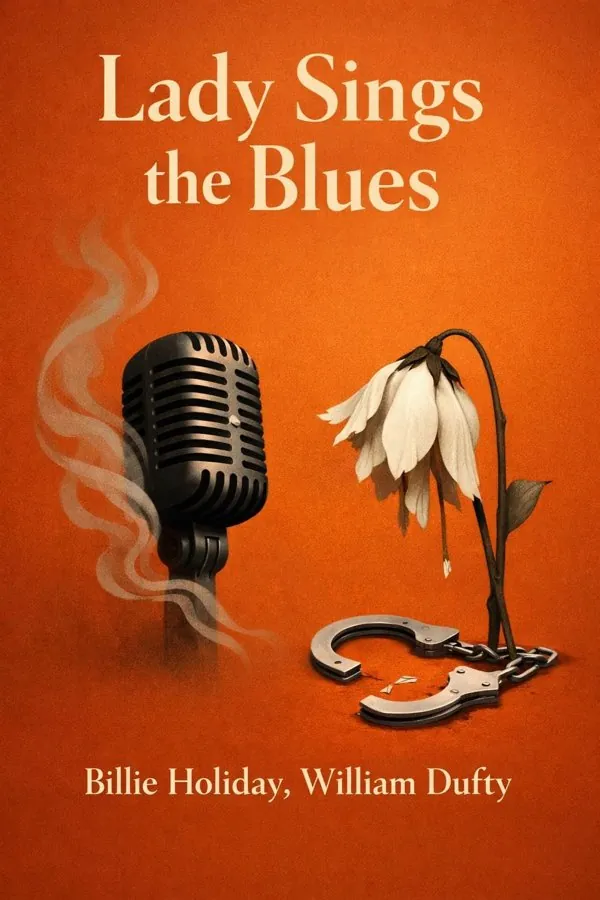
Lady Sings the Blues: Summary & Key Insights
by Billie Holiday, William Dufty
 10 min10 chaptersAudio available
What Is Lady Sings the Blues About?
Lady Sings the Blues by Billie Holiday, William Dufty is a biographies book spanning 10 pages. Autobiografía de la legendaria cantante de jazz Billie Holiday, escrita con la colaboración del periodista William Dufty. El libro narra su vida desde la infancia en la pobreza hasta su ascenso a la fama, abordando también el racismo, la adicción y las dificultades personales que marcaron su carrera.
This FizzRead summary covers all 10 key chapters of Lady Sings the Blues in approximately 10 minutes, distilling the most important ideas, arguments, and takeaways from Billie Holiday, William Dufty's work. Also available as an audio summary and Key Quotes Podcast.
Lady Sings the Blues
Autobiografía de la legendaria cantante de jazz Billie Holiday, escrita con la colaboración del periodista William Dufty. El libro narra su vida desde la infancia en la pobreza hasta su ascenso a la fama, abordando también el racismo, la adicción y las dificultades personales que marcaron su carrera.
Who Should Read Lady Sings the Blues?
This book is perfect for anyone interested in biographies and looking to gain actionable insights in a short read. Whether you're a student, professional, or lifelong learner, the key ideas from Lady Sings the Blues by Billie Holiday, William Dufty will help you think differently.
- ✓Readers who enjoy biographies and want practical takeaways
- ✓Professionals looking to apply new ideas to their work and life
- ✓Anyone who wants the core insights of Lady Sings the Blues in just 10 minutes
Want the full summary?
Get instant access to this book summary and 100K+ more with Fizz Moment.
Get Free SummaryAvailable on App Store • Free to download
Key Chapters
I was born Eleanora Fagan in 1915, in a rundown part of Baltimore where the streets smelled of coal and cheap cooking oil. My father was mostly gone, chasing his own dreams with his guitar, and my mother was barely more than a child trying to get by. We didn’t have much. Luxury wasn’t even a word I knew. What I did know was hunger—real hunger that gnaws at your insides and makes everything else fade away—and the kind of loneliness that follows you even in a crowded room. I grew up learning hard lessons early: that the world wouldn’t hand me anything and that, somehow, I’d have to make my own way. The poverty wasn’t just in the pocket; it was in the way people looked at you, as if your life was already written out before you had a chance to pick up the pen.
When I was a girl, I saw things no child should see. The brothels, the street fights, the humiliation—all of it shaped me long before I ever set foot on a stage. But even in those days there was always some sound, some bit of music pouring out of a doorway that made the air a little easier to breathe. Blues was always around, comforting and cutting in equal measure. It was a language I understood before I ever learned to read properly. That’s why, when the world refused to listen, I found my own way to talk through song.
You can’t tell my story without talking about color. I was a Black woman in America singing songs for mostly white audiences, and that meant every night was a kind of test. Jim Crow wasn’t just a law down South—it was a shadow that followed us into every club, every hotel, every recording session. I remember standing outside fancy venues where I was the headliner but had to use the service entrance. That kind of thing burns into your bones. People loved my voice, but too many of them couldn’t see past my skin.
I learned early that even fame couldn’t buy freedom. Traveling with bands through the South, there were places that wouldn’t serve me food, wouldn’t let me sleep in the same building as the white musicians. It wasn’t just humiliation—it was danger. Every day you watched yourself, careful not to step out of line. But those same experiences gave my music its truth. When I sang about sorrow or loss, it wasn’t an act. It was life filtered through melody, pain turned into survival. Later, when I sang songs that spoke directly about injustice, it wasn’t politics—it was testament. The world I lived in gave me the blues, and I made them sing back.
+ 8 more chapters — available in the FizzRead app
All Chapters in Lady Sings the Blues
About the Authors
Billie Holiday (1915–1959) fue una de las voces más influyentes del jazz estadounidense. Conocida por su estilo vocal único y su profunda expresividad, dejó una huella imborrable en la música del siglo XX. William Dufty (1916–2002) fue periodista, escritor y activista estadounidense, conocido por su trabajo en temas sociales y de salud.
Get This Summary in Your Preferred Format
Read or listen to the Lady Sings the Blues summary by Billie Holiday, William Dufty anytime, anywhere. FizzRead offers multiple formats so you can learn on your terms — all free.
Available formats: App · Audio · PDF · EPUB — All included free with FizzRead
Download Lady Sings the Blues PDF and EPUB Summary
Key Quotes from Lady Sings the Blues
“I was born Eleanora Fagan in 1915, in a rundown part of Baltimore where the streets smelled of coal and cheap cooking oil.”
“You can’t tell my story without talking about color.”
Frequently Asked Questions about Lady Sings the Blues
Lady Sings the Blues by Billie Holiday, William Dufty is a biographies book that explores key ideas across 10 chapters. Autobiografía de la legendaria cantante de jazz Billie Holiday, escrita con la colaboración del periodista William Dufty. El libro narra su vida desde la infancia en la pobreza hasta su ascenso a la fama, abordando también el racismo, la adicción y las dificultades personales que marcaron su carrera.
You Might Also Like
An American Marriage
Tayari Jones
10 min
Benjamin Franklin: An American Life
Walter Isaacson
10 min
I Know Why The Caged Bird Sings
Maya Angelou
10 min
Long Walk to Freedom
Nelson Mandela
10 min
Persepolis
Marjane Satrapi
10 min
Surely You're Joking, Mr. Feynman!
Richard P. Feynman
10 minBrowse by Category
Ready to read Lady Sings the Blues?
Get the full summary and 100K+ more books with Fizz Moment.