
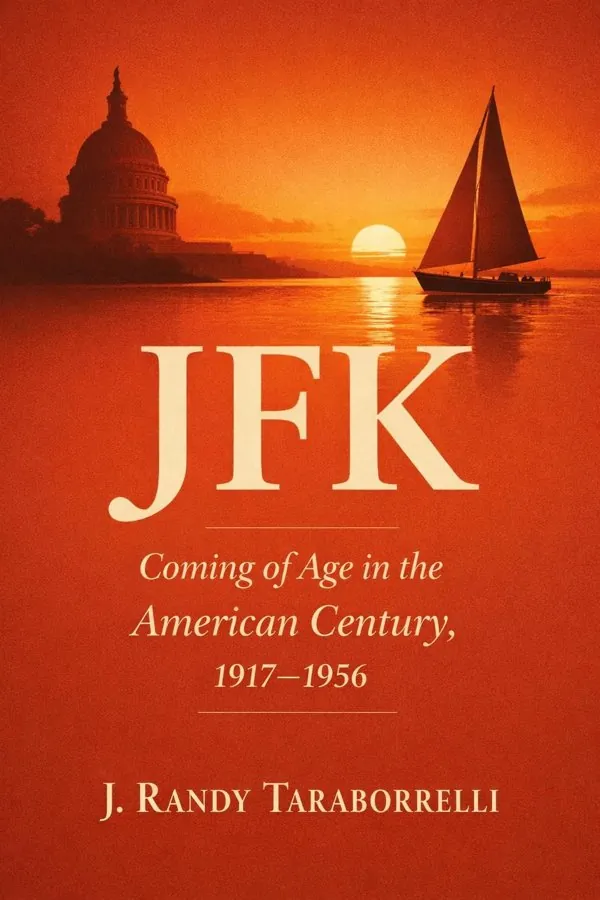
JFK: Coming of Age in the American Century, 1917–1956: Summary & Key Insights
 10 min9 chaptersAudio available
What Is JFK: Coming of Age in the American Century, 1917–1956 About?
JFK: Coming of Age in the American Century, 1917–1956 by J. Randy Taraborrelli is a biographies book spanning 9 pages. A comprehensive biography of John F. Kennedy that explores his early life, family background, education, and political rise before becoming President of the United States. Taraborrelli draws on newly uncovered sources to present a nuanced portrait of Kennedy’s formative years and the influences that shaped his character and ambitions.
This FizzRead summary covers all 9 key chapters of JFK: Coming of Age in the American Century, 1917–1956 in approximately 10 minutes, distilling the most important ideas, arguments, and takeaways from J. Randy Taraborrelli's work. Also available as an audio summary and Key Quotes Podcast.
JFK: Coming of Age in the American Century, 1917–1956
A comprehensive biography of John F. Kennedy that explores his early life, family background, education, and political rise before becoming President of the United States. Taraborrelli draws on newly uncovered sources to present a nuanced portrait of Kennedy’s formative years and the influences that shaped his character and ambitions.
Who Should Read JFK: Coming of Age in the American Century, 1917–1956?
This book is perfect for anyone interested in biographies and looking to gain actionable insights in a short read. Whether you're a student, professional, or lifelong learner, the key ideas from JFK: Coming of Age in the American Century, 1917–1956 by J. Randy Taraborrelli will help you think differently.
- ✓Readers who enjoy biographies and want practical takeaways
- ✓Professionals looking to apply new ideas to their work and life
- ✓Anyone who wants the core insights of JFK: Coming of Age in the American Century, 1917–1956 in just 10 minutes
Want the full summary?
Get instant access to this book summary and 100K+ more with Fizz Moment.
Get Free SummaryAvailable on App Store • Free to download
Key Chapters
The story begins with the Kennedys, a family whose name had already become synonymous with ambition by the early twentieth century. Joseph P. Kennedy Sr., a self-made millionaire from East Boston, had married Rose Fitzgerald, daughter of a powerful Boston mayor. Together they raised their children not merely to succeed, but to dominate. The family’s aura of privilege masked a relentless culture of competition, secrecy, and perfectionism. In this atmosphere, young Jack learned early that love often took the form of expectation.
Joseph Sr. embodied the energy of the American Century: a man driven by wealth and power, a master manipulator of markets and politics. Yet he also handed his children a peculiar burden—the idea that personal identity mattered only insofar as it served family glory. For Jack, who was sickly and introspective, this environment was both a crucible and a curse. His father admired winners and dismissed excuses; his mother, disciplined and devout, offered emotional distance rather than consolation. Between them, they forged a household in which success was the only acceptable outcome.
As I delved into the Kennedys’ letters and diaries, I discovered that Jack’s lifelong empathy for the underdog often came from feeling like one within his own home. While his elder brother Joe Jr. was deemed the golden child destined for greatness, Jack quietly endured repeated hospitalizations and focused inward. These early years set the stage for the duality that would define him: the confident public figure who privately wrestled with vulnerability.
At Choate, the exclusive prep school in Connecticut, Jack’s wit and irreverence flourished even as his frail health continued to plague him. He was no conformist; his sharp humor and questioning spirit sometimes irritated his teachers, yet they marked him as brilliant in unconventional ways. He organized pranks and arguments with equal vigor, never content with the easy answer. What impressed me most, as I traced his correspondence, was his early fascination with history and the moral questions behind power—why nations rise and fall, why individuals act bravely or cowardly in public life.
Harvard expanded that curiosity. His thesis, later published as *Why England Slept*, revealed a mind grappling with the causes of war and the responsibilities of leadership. He was reading deeply about democracy and appeasement, trying to understand how societies lose their moral bearings. Behind the polished student lay a man already haunted by the prospect that America, too, might one day face its moment of truth. These years were not just academic; they were a rehearsal for statesmanship.
But Jack’s intellect developed amid constant physical suffering. He was repeatedly hospitalized with what doctors misdiagnosed for years, enduring collapses of energy that would plague him throughout his life. Yet illness gave him a strange advantage—it forced him to cultivate inner discipline. Each recovery strengthened a will that later impressed even his political rivals. Pain, for Kennedy, became a teacher of patience and empathy.
+ 7 more chapters — available in the FizzRead app
All Chapters in JFK: Coming of Age in the American Century, 1917–1956
About the Author
J. Randy Taraborrelli is an American journalist and biographer known for his detailed works on prominent figures in politics, entertainment, and culture. His biographies are recognized for their depth of research and narrative clarity.
Get This Summary in Your Preferred Format
Read or listen to the JFK: Coming of Age in the American Century, 1917–1956 summary by J. Randy Taraborrelli anytime, anywhere. FizzRead offers multiple formats so you can learn on your terms — all free.
Available formats: App · Audio · PDF · EPUB — All included free with FizzRead
Download JFK: Coming of Age in the American Century, 1917–1956 PDF and EPUB Summary
Key Quotes from JFK: Coming of Age in the American Century, 1917–1956
“The story begins with the Kennedys, a family whose name had already become synonymous with ambition by the early twentieth century.”
“At Choate, the exclusive prep school in Connecticut, Jack’s wit and irreverence flourished even as his frail health continued to plague him.”
Frequently Asked Questions about JFK: Coming of Age in the American Century, 1917–1956
JFK: Coming of Age in the American Century, 1917–1956 by J. Randy Taraborrelli is a biographies book that explores key ideas across 9 chapters. A comprehensive biography of John F. Kennedy that explores his early life, family background, education, and political rise before becoming President of the United States. Taraborrelli draws on newly uncovered sources to present a nuanced portrait of Kennedy’s formative years and the influences that shaped his character and ambitions.
You Might Also Like

An American Marriage
Tayari Jones
10 min
Benjamin Franklin: An American Life
Walter Isaacson
10 min
I Know Why The Caged Bird Sings
Maya Angelou
10 min
Long Walk to Freedom
Nelson Mandela
10 min
Persepolis
Marjane Satrapi
10 min
Surely You're Joking, Mr. Feynman!
Richard P. Feynman
10 minBrowse by Category
Ready to read JFK: Coming of Age in the American Century, 1917–1956?
Get the full summary and 100K+ more books with Fizz Moment.