
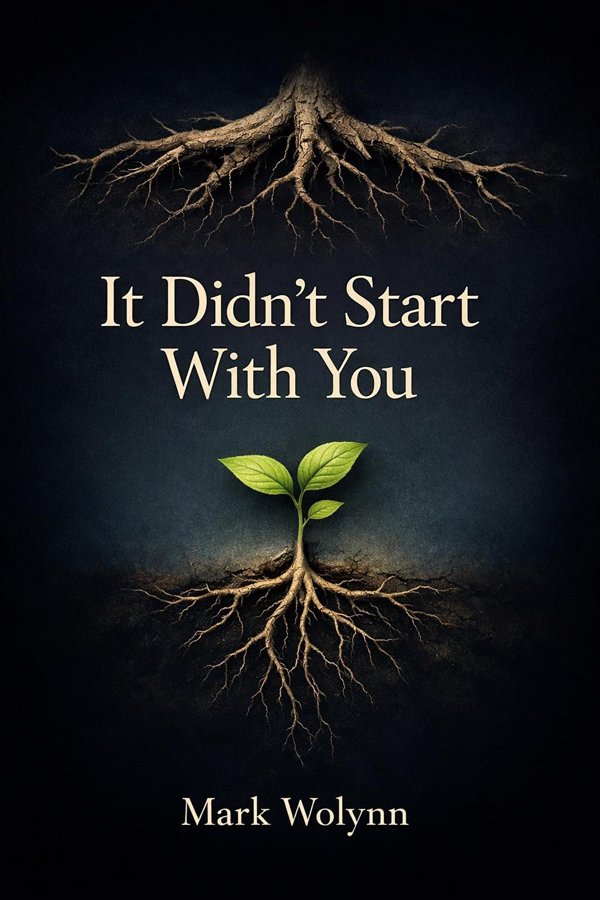
It Didn't Start With You: How Inherited Family Trauma Shapes Who We Are and How to End the Cycle: Summary & Key Insights
by Mark Wolynn
 10 min5 chaptersAudio available
What Is It Didn't Start With You: How Inherited Family Trauma Shapes Who We Are and How to End the Cycle About?
It Didn't Start With You: How Inherited Family Trauma Shapes Who We Are and How to End the Cycle by Mark Wolynn is a mental_health book spanning 5 pages. This book explores the concept of inherited family trauma, proposing that unresolved traumas from previous generations can influence our emotional and physical well-being. Drawing on research in epigenetics and psychology, Mark Wolynn offers practical tools and exercises to help readers identify and break free from destructive family patterns, fostering healing and personal growth.
This FizzRead summary covers all 5 key chapters of It Didn't Start With You: How Inherited Family Trauma Shapes Who We Are and How to End the Cycle in approximately 10 minutes, distilling the most important ideas, arguments, and takeaways from Mark Wolynn's work. Also available as an audio summary and Key Quotes Podcast.
It Didn't Start With You: How Inherited Family Trauma Shapes Who We Are and How to End the Cycle
This book explores the concept of inherited family trauma, proposing that unresolved traumas from previous generations can influence our emotional and physical well-being. Drawing on research in epigenetics and psychology, Mark Wolynn offers practical tools and exercises to help readers identify and break free from destructive family patterns, fostering healing and personal growth.
Who Should Read It Didn't Start With You: How Inherited Family Trauma Shapes Who We Are and How to End the Cycle?
This book is perfect for anyone interested in mental_health and looking to gain actionable insights in a short read. Whether you're a student, professional, or lifelong learner, the key ideas from It Didn't Start With You: How Inherited Family Trauma Shapes Who We Are and How to End the Cycle by Mark Wolynn will help you think differently.
- ✓Readers who enjoy mental_health and want practical takeaways
- ✓Professionals looking to apply new ideas to their work and life
- ✓Anyone who wants the core insights of It Didn't Start With You: How Inherited Family Trauma Shapes Who We Are and How to End the Cycle in just 10 minutes
Want the full summary?
Get instant access to this book summary and 100K+ more with Fizz Moment.
Get Free SummaryAvailable on App Store • Free to download
Key Chapters
To heal what we do not remember, we must first learn to recognize how deeply the past can live within us. Many people assume their pain arises solely from their own lives, from their own experiences. But as I’ve seen through decades of clinical practice, there are patterns of fear, guilt, anxiety, or unexplainable grief that defy personal history. These patterns often lead back to a parent, grandparent, or great‑grandparent who suffered a traumatic loss—a child who died young, a war that tore loved ones apart, an exile, an abandonment, an injustice lingering without resolution.
Research in the emerging field of epigenetics supports what therapists have long observed: traumatic experiences can alter how genes express themselves, influencing the stress-response systems of subsequent generations. The descendants may never know why they become highly reactive to certain situations or emotionally shut down in others. Yet, through diligent inner work and compassionate curiosity, we can start to decipher these biological and emotional legacies.
My goal is not to convince you that every symptom you have stems from ancestral pain, but to open a space in which you can examine your life with a wider lens. When a person says, “It’s like something inside me is always waiting for disaster,” it is often the voice of an ancestor whose world once collapsed. Recognizing this does not diminish personal responsibility—it deepens it, because awareness gives us choice. We can choose to relive the past or to complete what remained unfinished so that we and our children can live with greater freedom.
One of the keys to uncovering inherited trauma lies in our words—the spontaneous language we use in moments of emotional intensity. I call this the Core Language Approach. When someone describes their problem, certain words, phrases, or images stand out with a particular charge, as though they contain a secret. Those words can lead us back to the original wound, even if it occurred generations earlier.
For example, a woman might repeatedly say, “I’ll be left behind,” though her own relationships are stable. On exploration, we discover that her grandmother lost her family during wartime evacuation. The phrase reveals the persistence of an ancestral fear. By becoming attuned to our core language—our nightmares, our life metaphors, the repeated scripts of our relationships—we begin to trace the emotional inheritance that underlies them.
In therapy, I guide individuals to speak freely about their pain while we listen for these linguistic clues. Then we map them against known family events, searching for resonance. It’s a process of revealing what the body and unconscious already know. This approach offers a profound invitation: to listen to ourselves as though decoding a song written generations ago, its melody humming beneath our daily lives. Once we can hear it clearly, we can begin to change its rhythm.
+ 3 more chapters — available in the FizzRead app
All Chapters in It Didn't Start With You: How Inherited Family Trauma Shapes Who We Are and How to End the Cycle
About the Author
Mark Wolynn is the director of The Family Constellation Institute in San Francisco and a leading expert in the field of inherited family trauma. He has trained therapists and individuals worldwide in methods to identify and resolve intergenerational trauma.
Get This Summary in Your Preferred Format
Read or listen to the It Didn't Start With You: How Inherited Family Trauma Shapes Who We Are and How to End the Cycle summary by Mark Wolynn anytime, anywhere. FizzRead offers multiple formats so you can learn on your terms — all free.
Available formats: App · Audio · PDF · EPUB — All included free with FizzRead
Download It Didn't Start With You: How Inherited Family Trauma Shapes Who We Are and How to End the Cycle PDF and EPUB Summary
Key Quotes from It Didn't Start With You: How Inherited Family Trauma Shapes Who We Are and How to End the Cycle
“To heal what we do not remember, we must first learn to recognize how deeply the past can live within us.”
“One of the keys to uncovering inherited trauma lies in our words—the spontaneous language we use in moments of emotional intensity.”
Frequently Asked Questions about It Didn't Start With You: How Inherited Family Trauma Shapes Who We Are and How to End the Cycle
It Didn't Start With You: How Inherited Family Trauma Shapes Who We Are and How to End the Cycle by Mark Wolynn is a mental_health book that explores key ideas across 5 chapters. This book explores the concept of inherited family trauma, proposing that unresolved traumas from previous generations can influence our emotional and physical well-being. Drawing on research in epigenetics and psychology, Mark Wolynn offers practical tools and exercises to help readers identify and break free from destructive family patterns, fostering healing and personal growth.
You Might Also Like
Big Feelings: How to Be Okay When Things Are Not Okay
Liz Fosslien, Mollie West Duffy
10 min
Creative Arts Therapies Handbook: Art, Music and Dance Therapy Practices for Wellbeing
Susan I. Buchalter
10 min
Emotional First Aid: Healing Rejection, Guilt, Failure, and Other Everyday Hurts
Guy Winch
10 min
Lost Connections: Why You're Depressed and How to Find Hope
Johann Hari
10 min
No Time to Panic: How to Stop Worrying and Embrace Life
Matt Gutman
10 min
Overcoming Mobbing: A Recovery Guide for Workplace Aggression and Bullying
Maureen Duffy, Len Sperry
10 minBrowse by Category
Ready to read It Didn't Start With You: How Inherited Family Trauma Shapes Who We Are and How to End the Cycle?
Get the full summary and 100K+ more books with Fizz Moment.