
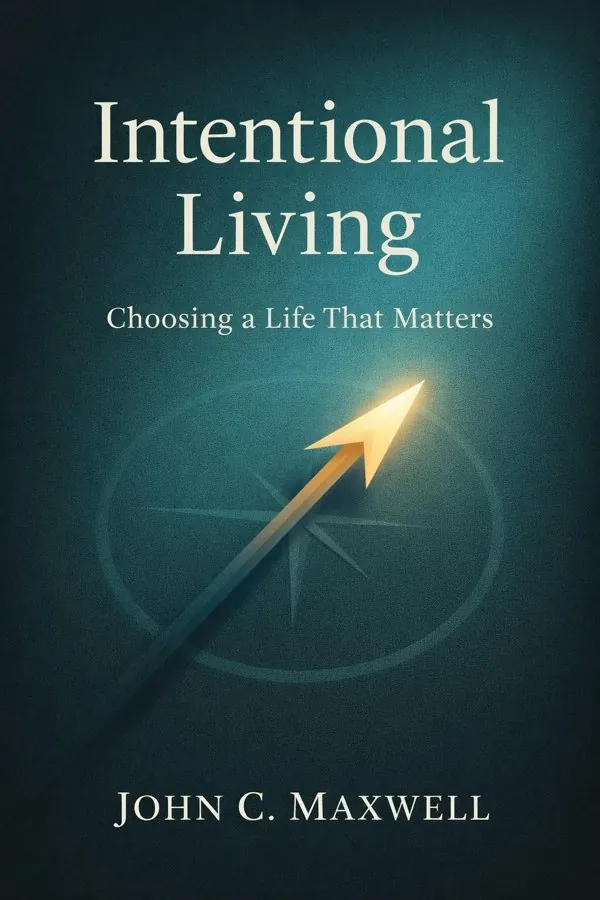
Intentional Living: Choosing a Life That Matters: Summary & Key Insights
 10 min10 chaptersAudio available
Key Takeaways from Intentional Living: Choosing a Life That Matters
A person can be successful and still feel unfinished.
You cannot live intentionally if you are disconnected from who you are.
Lives of impact are rarely built through one grand gesture.
A meaningful life is built decision by decision.
Good intentions become meaningful only when they are organized into a plan.
What Is Intentional Living: Choosing a Life That Matters About?
Intentional Living: Choosing a Life That Matters by John C. Maxwell is a leadership book spanning 10 pages. In "Intentional Living," John C. Maxwell argues that a meaningful life does not happen by accident. Many people have admirable desires—to help others, grow personally, contribute more, and leave a positive mark—but they never turn those desires into consistent action. Maxwell’s core message is simple and challenging: good intentions are common, but intentional living is rare. The difference between the two is what determines whether a life becomes merely busy or truly significant. This book matters because it addresses a quiet dissatisfaction many successful people feel. Achievement, status, and productivity can fill a calendar, but they do not automatically create purpose. Maxwell invites readers to shift from asking, "How can I get ahead?" to "How can I add value?" That change in perspective transforms leadership, relationships, and daily choices. Maxwell writes with the authority of one of the world’s most respected leadership teachers. Drawing from decades of coaching leaders, building organizations, and mentoring people across industries, he combines personal stories, leadership wisdom, and practical guidance. The result is an encouraging, action-oriented book for anyone who wants to live on purpose and make their life count.
This FizzRead summary covers all 10 key chapters of Intentional Living: Choosing a Life That Matters in approximately 10 minutes, distilling the most important ideas, arguments, and takeaways from John C. Maxwell's work. Also available as an audio summary and Key Quotes Podcast.
Intentional Living: Choosing a Life That Matters
In "Intentional Living," John C. Maxwell argues that a meaningful life does not happen by accident. Many people have admirable desires—to help others, grow personally, contribute more, and leave a positive mark—but they never turn those desires into consistent action. Maxwell’s core message is simple and challenging: good intentions are common, but intentional living is rare. The difference between the two is what determines whether a life becomes merely busy or truly significant.
This book matters because it addresses a quiet dissatisfaction many successful people feel. Achievement, status, and productivity can fill a calendar, but they do not automatically create purpose. Maxwell invites readers to shift from asking, "How can I get ahead?" to "How can I add value?" That change in perspective transforms leadership, relationships, and daily choices.
Maxwell writes with the authority of one of the world’s most respected leadership teachers. Drawing from decades of coaching leaders, building organizations, and mentoring people across industries, he combines personal stories, leadership wisdom, and practical guidance. The result is an encouraging, action-oriented book for anyone who wants to live on purpose and make their life count.
Who Should Read Intentional Living: Choosing a Life That Matters?
This book is perfect for anyone interested in leadership and looking to gain actionable insights in a short read. Whether you're a student, professional, or lifelong learner, the key ideas from Intentional Living: Choosing a Life That Matters by John C. Maxwell will help you think differently.
- ✓Readers who enjoy leadership and want practical takeaways
- ✓Professionals looking to apply new ideas to their work and life
- ✓Anyone who wants the core insights of Intentional Living: Choosing a Life That Matters in just 10 minutes
Want the full summary?
Get instant access to this book summary and 100K+ more with Fizz Moment.
Get Free SummaryAvailable on App Store • Free to download
Key Chapters
A person can be successful and still feel unfinished. That tension sits at the heart of John C. Maxwell’s message. He begins with the idea that many people eventually hear an inner call telling them that achievement alone is not enough. Titles, income, awards, and comfort may create an impressive life from the outside, yet still leave a sense that something essential is missing. Maxwell describes this as the difference between success and significance: success is often measured by what we accomplish for ourselves, while significance is measured by the positive difference we make in the lives of others.
This insight is important because modern life rewards busyness and visible results. It is easy to spend years climbing a ladder only to realize it was leaning against the wrong wall. Maxwell challenges readers to pause and ask harder questions: What am I building? Who benefits from my life? If my routines continue unchanged, what kind of legacy will they produce? These questions move the conversation from ambition to contribution.
In leadership, this shift changes everything. A manager focused only on performance may drive results, but a leader focused on significance develops people, strengthens culture, and leaves others better than they found them. In personal life, significance may look like mentoring a younger colleague, being fully present with family, volunteering skills, or choosing generosity over self-protection.
Maxwell does not suggest abandoning success. Instead, he reframes it as a platform for service. The goal is not less excellence, but a more meaningful reason for pursuing it. A career, business, or talent becomes most powerful when it is used intentionally to add value beyond oneself.
Actionable takeaway: Set aside time this week to write your own definition of significance, then identify one way your current success could be redirected to serve someone else more intentionally.
You cannot live intentionally if you are disconnected from who you are. Maxwell emphasizes that purpose begins with awareness: awareness of your values, strengths, passions, limitations, and opportunities. Many people drift because they never stop long enough to examine what truly matters to them. They react to demands, expectations, and social pressure rather than building a life aligned with their deepest convictions.
Purpose is not usually discovered in a dramatic flash. More often, it emerges through honest reflection. Maxwell encourages readers to ask questions such as: What energizes me? What burdens in the world move me emotionally? What abilities come naturally to me? Where do others consistently seek my help? These questions help reveal the intersection of gifting and need, which is often where purposeful living begins.
Awareness also requires facing uncomfortable truths. You may realize you are spending your best energy on activities that do not reflect your values. You may be saying yes to things out of fear, approval-seeking, or habit. Maxwell’s approach is practical: the more clearly you understand yourself, the easier it becomes to make decisions that are intentional instead of accidental.
For example, a professional who values mentoring but spends all day in isolated technical work may decide to train junior staff. A parent who values connection may realize that constant digital distraction is undermining family relationships. An entrepreneur may recognize that growth goals have eclipsed the original mission of helping customers.
Self-awareness is not selfish. It is stewardship. You cannot give your best to the world if you do not understand what your best actually is. Clarity creates alignment, and alignment creates momentum.
Actionable takeaway: Make a two-column list—"What matters most to me" and "How I currently spend my time"—then circle the biggest mismatch and plan one change to reduce it.
Lives of impact are rarely built through one grand gesture. Maxwell reminds readers that intentional living starts small, often in moments that appear ordinary. This is encouraging because many people postpone significance until they feel more prepared, influential, wealthy, or free. They imagine that one day they will do something important. Maxwell argues the opposite: significance grows from repeated small choices made today.
A kind word to an exhausted coworker, a thoughtful note to a friend, fifteen minutes spent mentoring someone younger, a decision to listen deeply instead of rushing—these actions may seem minor, but they create relational trust and long-term influence. Intentionality does not require fame or scale. It requires willingness. The person who consistently adds value in everyday settings often has more impact than the person waiting for a perfect opportunity.
This principle matters because small actions are sustainable. Big promises can be emotionally satisfying, but habits are what shape character and outcomes. A teacher who daily encourages one struggling student, a team leader who regularly expresses appreciation, or a neighbor who checks in on someone isolated is practicing intentional living in concrete form. Over time, these acts accumulate into a life marked by service rather than self-absorption.
Maxwell’s leadership lens is clear here: influence is earned in the ordinary. People remember how you made them feel, whether you noticed them, and whether your values showed up when no audience was present. Intentionality means treating every interaction as an opportunity to add value.
The beauty of starting small is that it removes excuses. You may not control your position or circumstances, but you can control your next action. Significance begins the moment you stop waiting.
Actionable takeaway: Choose one simple daily habit of contribution—send encouragement, offer help, or express gratitude—and practice it consistently for the next seven days.
A meaningful life is built decision by decision. Maxwell stresses that intentional living is not a personality trait or a lucky outcome; it is the result of choices. Every day presents a quiet series of decisions about attention, attitude, relationships, generosity, discipline, and courage. Those choices may feel small in the moment, but over time they form the architecture of a life.
This idea is powerful because it shifts responsibility back to the individual. Many people speak as if their life is mostly happening to them. Maxwell acknowledges that circumstances matter, but he insists that personal agency matters too. You may not choose every situation, but you always choose your response. Intentional people stop surrendering their future to convenience, mood, or external pressure.
In practical terms, this means choosing long-term meaning over short-term ease. It means saying no to opportunities that are impressive but misaligned. It means deciding to have difficult but necessary conversations, to keep commitments, to protect time for what matters, and to act on convictions before feelings fully cooperate. Leaders especially need this discipline because every choice sets an example. A leader who chooses integrity in private, humility in conflict, and generosity in success creates a culture that reflects those decisions.
Maxwell also highlights the compounding nature of choice. One skipped conversation may weaken a relationship. One repeated act of procrastination may erode a dream. One recurring decision to invest in people may transform a team. Intentionality requires seeing present choices in light of future consequences.
The empowering truth is that change does not begin with a dramatic reinvention. It begins with the next right decision. Better choices create better habits, and better habits create a better life.
Actionable takeaway: Identify one recurring decision that is pulling you away from your purpose, replace it with a clear alternative behavior, and commit to practicing that choice every day this week.
Good intentions become meaningful only when they are organized into a plan. Maxwell argues that if you want to live intentionally, you must move beyond vague desires and design a life structure that supports your values. Many people sincerely want to make a difference, but because they never define what that difference looks like, their days get consumed by urgency, distraction, and other people’s priorities.
A life plan does not need to be rigid or overly complex. Its purpose is to create clarity. Maxwell encourages readers to think deliberately about the kind of person they want to become, the people they want to influence, the causes they want to support, and the habits they need to sustain that mission. A personal plan may include goals for growth, relationships, service, work, health, and spiritual life. The key is alignment: your calendar, energy, and commitments should increasingly reflect what you claim matters most.
For example, someone who says family is their highest value but never schedules meaningful family time is living reactively, not intentionally. A leader who wants to develop others but spends no time coaching has inspiration without implementation. Maxwell’s approach pushes readers to put purpose on paper, because written intentions are far more likely to shape behavior than mental wishes.
This planning also builds resilience. When life becomes hectic, a written framework helps you return to your priorities. It gives you a way to evaluate invitations, opportunities, and demands. Instead of asking only, "Can I do this?" you begin asking, "Does this fit the life I am trying to build?"
Actionable takeaway: Write a one-page intentional living plan that includes your top values, the people you most want to impact, and three weekly actions that will bring those priorities into your actual schedule.
Significance is always relational. Maxwell repeatedly emphasizes that intentional living is not mainly about self-fulfillment; it is about adding value to people. Our greatest opportunities to matter come through relationships—family, friends, colleagues, neighbors, mentees, and even brief encounters with strangers. A person may accumulate accomplishments alone, but lasting significance is measured by human impact.
This matters because many people search for purpose in abstract ideas while neglecting the people right in front of them. Maxwell redirects attention to influence. Leadership, in his broader definition, is influence, and everyone exercises it. The question is not whether you influence others, but whether you do so intentionally. Do people become stronger, wiser, more hopeful, and more capable because they are around you?
Intentional relationships require presence. They also require curiosity, empathy, and initiative. Instead of waiting to be needed, intentional people look for ways to encourage, serve, connect, and develop others. A team leader may hold regular one-on-one conversations not just about tasks, but about growth. A friend may choose to listen without trying to control. A parent may communicate belief in a child’s potential. A seasoned professional may open doors for someone with less experience.
Maxwell’s principle of adding value is practical because it can be applied anywhere. In meetings, ask how to help others succeed. In conflict, seek understanding before defensiveness. In community, notice who is overlooked. Influence grows when people feel seen and supported.
The hidden power of this idea is that a life centered on contribution becomes richer, not poorer. When you invest in people, you create trust, deepen purpose, and multiply your impact beyond what you could accomplish alone.
Actionable takeaway: Think of three people in your current circle and identify one specific way to add value to each of them this week through encouragement, help, or intentional time.
Purpose sounds inspiring until it meets resistance. Maxwell is realistic about the fact that intentional living faces obstacles: fear, insecurity, busyness, comfort, past failure, self-doubt, and the demands of everyday life. Many people do not lack desire; they lack perseverance when the path becomes inconvenient. That is why obstacles are not just interruptions to intentional living—they are part of the process that reveals how serious we really are.
Fear is one of the biggest barriers. People fear rejection, inadequacy, criticism, and the possibility that their efforts may not matter. Maxwell counters this by reminding readers that significance rarely begins with certainty. It begins with obedience to a small conviction. Waiting until you feel fully confident usually means waiting forever. Courage is developed through action, not before it.
Another obstacle is overload. A crowded schedule can make purpose feel impossible. Maxwell’s answer is not simply to work harder, but to become more selective. Intentional living requires eliminating what is merely urgent in order to make room for what is deeply important. This may mean disappointing some people, simplifying commitments, or letting go of activities that no longer fit your mission.
Past mistakes can also create paralysis. Some readers may feel they have wasted too much time or missed their best opportunities. Maxwell’s message is hopeful: significance can begin at any stage. What matters is not whether your past was perfect, but whether you choose to live on purpose now.
Obstacles can become teachers if you let them. They clarify values, deepen character, and train discipline. The challenge is to treat resistance as a signal to recommit, not retreat.
Actionable takeaway: Name the single biggest obstacle keeping you from living more intentionally, then write one concrete step you can take this week to reduce its power.
A single inspired moment does not create a significant life; consistency does. Maxwell highlights the importance of steady growth and repeated action over time. Intentional living is not a dramatic declaration but a disciplined pattern. Anyone can feel motivated after reading a strong book or hearing a powerful speech. The real question is whether that motivation becomes habit.
Consistency matters because character is built in repetition. If you regularly choose generosity, you become generous. If you repeatedly show up for people, you become dependable. If you continually seek growth, reflection, and service, those qualities become part of your identity. Maxwell’s emphasis here aligns with his broader leadership philosophy: people trust what they see practiced consistently, not what they hear stated occasionally.
This principle also protects against all-or-nothing thinking. Many people quit after a setback, assuming inconsistency means failure. Maxwell encourages a long view. Missing a day, making a mistake, or drifting temporarily does not erase your purpose. What matters is returning to your commitments and continuing forward. Intentionality is strengthened by resilience.
In practice, consistency may look like keeping a weekly reflection habit, scheduling regular mentoring, preserving time for family dinners, reading for growth each morning, or maintaining a budget line for generosity. These routines may seem ordinary, but they anchor values in daily life. Without systems, even strong convictions fade under pressure.
Growth is part of consistency too. As you live intentionally, your understanding deepens. You become better at recognizing where your gifts are most useful and where your energy has the greatest impact. Momentum grows when values and habits reinforce each other.
Actionable takeaway: Choose one meaningful practice that supports your purpose and schedule it at a specific recurring time each week so your values move from aspiration into routine.
The most significant lives do more than help people directly—they equip people to help others. Maxwell argues that intentional living reaches its fullest expression when your influence becomes multiplying rather than merely personal. If you only focus on what you can do alone, your impact will always remain limited by your time and capacity. But if you invest in developing others, your values and contribution extend far beyond your own reach.
This is a core leadership idea. Great leaders do not just solve problems; they build people who can solve problems. Great parents do not just provide; they prepare children to live wisely and serve others. Great mentors do not create dependence; they create confidence and capability. Maxwell invites readers to ask not only, "How can I help?" but also, "How can I empower someone else to help?"
Practical multiplication can happen in many ways. A supervisor might train emerging leaders instead of holding all authority personally. A community volunteer might teach newcomers how to organize projects. A business owner might share knowledge generously rather than guarding it. A teacher might identify future mentors among students and encourage them to support peers.
Multiplication also reflects humility. It acknowledges that a meaningful life is not about being the hero at the center of every story. It is about creating conditions where many people can flourish and contribute. This perspective protects against ego and expands legacy.
Maxwell’s insight is especially relevant for anyone in leadership, education, ministry, coaching, or parenting. Developing others requires time and patience, but it is one of the highest forms of intentionality because it transforms isolated good deeds into a chain reaction of influence.
Actionable takeaway: Identify one person with potential and invest in their growth this month through coaching, encouragement, shared opportunity, or teaching a skill you have already learned.
People often think of legacy as something considered near the end of life, but Maxwell frames it as a present-tense responsibility. Legacy is not what you wish to leave behind someday; it is what your current choices are already creating. Every day you are writing the story others will remember. Intentional living therefore requires reflection: the discipline of stepping back, evaluating your direction, and making sure your life is aligned with the impact you hope to have.
Reflection matters because activity can easily disguise drift. A person can be productive, admired, and exhausted while slowly moving away from what matters most. Maxwell encourages readers to ask questions such as: Am I becoming the person I want to be? Are my closest relationships stronger because of me? Is my work serving a larger purpose? What am I teaching others through my example? These questions turn legacy from an abstract dream into an ongoing practice of course correction.
Reflection also creates gratitude and humility. When you review your life honestly, you recognize both progress and unfinished work. You see where others have helped you, where you need to grow, and where new opportunities for contribution may be emerging. This keeps intentional living fresh rather than mechanical.
In practical terms, reflection can be built into a weekly review, journaling practice, annual retreat, or regular conversation with a trusted friend or mentor. The goal is not self-criticism but recalibration. A life that matters is not created by perfection; it is shaped by awareness and adjustment over time.
Legacy is ultimately relational and moral. What people remember most is not how busy you were, but how you lived, what you stood for, and how they were changed by knowing you.
Actionable takeaway: Schedule a monthly reflection session and use it to ask whether your recent choices are moving you toward the legacy you want to leave.
All Chapters in Intentional Living: Choosing a Life That Matters
About the Author
John C. Maxwell is one of the world’s most recognized voices in leadership and personal development. A bestselling author, speaker, and coach, he has spent decades teaching individuals and organizations how to grow in influence, character, and effectiveness. His books on leadership have reached millions of readers and are used widely in business, education, ministry, and nonprofit settings. Maxwell is the founder of The John Maxwell Company, The John Maxwell Team, and EQUIP, organizations dedicated to leadership training and development around the world. Known for his clear communication and practical wisdom, he consistently emphasizes that leadership is not just about position, but about influence and service. "Intentional Living" reflects many of his core themes: personal responsibility, purposeful growth, and the importance of adding value to others.
Get This Summary in Your Preferred Format
Read or listen to the Intentional Living: Choosing a Life That Matters summary by John C. Maxwell anytime, anywhere. FizzRead offers multiple formats so you can learn on your terms — all free.
Available formats: App · Audio · PDF · EPUB — All included free with FizzRead
Download Intentional Living: Choosing a Life That Matters PDF and EPUB Summary
Key Quotes from Intentional Living: Choosing a Life That Matters
“A person can be successful and still feel unfinished.”
“You cannot live intentionally if you are disconnected from who you are.”
“Lives of impact are rarely built through one grand gesture.”
“A meaningful life is built decision by decision.”
“Good intentions become meaningful only when they are organized into a plan.”
Frequently Asked Questions about Intentional Living: Choosing a Life That Matters
Intentional Living: Choosing a Life That Matters by John C. Maxwell is a leadership book that explores key ideas across 10 chapters. In "Intentional Living," John C. Maxwell argues that a meaningful life does not happen by accident. Many people have admirable desires—to help others, grow personally, contribute more, and leave a positive mark—but they never turn those desires into consistent action. Maxwell’s core message is simple and challenging: good intentions are common, but intentional living is rare. The difference between the two is what determines whether a life becomes merely busy or truly significant. This book matters because it addresses a quiet dissatisfaction many successful people feel. Achievement, status, and productivity can fill a calendar, but they do not automatically create purpose. Maxwell invites readers to shift from asking, "How can I get ahead?" to "How can I add value?" That change in perspective transforms leadership, relationships, and daily choices. Maxwell writes with the authority of one of the world’s most respected leadership teachers. Drawing from decades of coaching leaders, building organizations, and mentoring people across industries, he combines personal stories, leadership wisdom, and practical guidance. The result is an encouraging, action-oriented book for anyone who wants to live on purpose and make their life count.
More by John C. Maxwell
Developing the Leader Within You
John C. Maxwell
10 min
Failing Forward: Turning Mistakes into Stepping Stones for Success
John C. Maxwell
10 min
How Successful People Lead: Taking Your Influence to the Next Level
John C. Maxwell
10 min
The Leader's Greatest Return: Attracting, Developing, and Multiplying Leaders
John C. Maxwell
10 minYou Might Also Like

Extreme Ownership
Jocko Willink
10 min
Dare to Lead
Brene Brown
10 min
Leaders Eat Last
Simon Sinek
10 min
The 21 Irrefutable Laws of Leadership
John Maxwell
10 min
Start With Why
Simon Sinek
10 min
How to Lead When You're Not in Charge
Clay Scroggins
10 minBrowse by Category
Ready to read Intentional Living: Choosing a Life That Matters?
Get the full summary and 100K+ more books with Fizz Moment.