
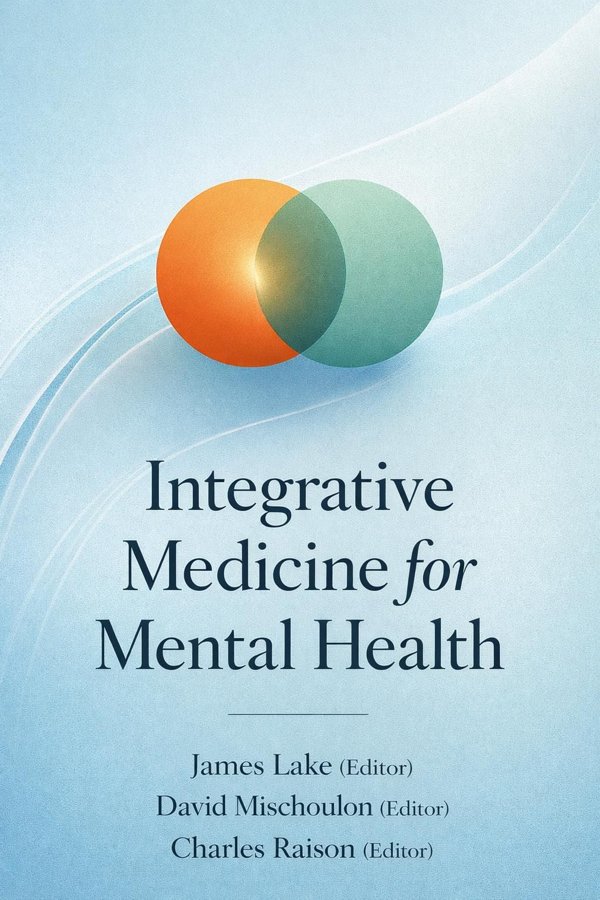
Integrative Medicine for Mental Health: Summary & Key Insights
by James Lake (Editor), David Mischoulon (Editor), Charles Raison (Editor)
 10 min9 chaptersAudio available
Key Takeaways from Integrative Medicine for Mental Health
A powerful shift occurs when we stop asking, “Which drug matches this diagnosis?
One of the book’s most important contributions is its refusal to romanticize complementary treatments.
The brain is a metabolically demanding organ, and the book makes a compelling case that mental health cannot be separated from nutritional status.
Herbal medicines are often marketed as gentle solutions for stress, low mood, and insomnia, but the book insists they be approached with the same seriousness as pharmaceuticals.
Many psychiatric symptoms are amplified by a nervous system that has learned to stay on alert.
What Is Integrative Medicine for Mental Health About?
Integrative Medicine for Mental Health by James Lake (Editor), David Mischoulon (Editor), Charles Raison (Editor) is a mental_health book spanning 8 pages. Mental health care is most effective when it stops treating the brain as if it exists in isolation. Integrative Medicine for Mental Health argues that depression, anxiety, bipolar disorder, schizophrenia, trauma-related symptoms, and cognitive disturbances are shaped not only by psychology and neurochemistry, but also by inflammation, sleep, nutrition, hormones, social stress, lifestyle, and meaning. This clinically grounded reference brings together evidence-based complementary therapies and conventional psychiatric treatment into a broader, more personalized model of care. Edited by three respected leaders in the field—James Lake, a pioneer in integrative psychiatry, David Mischoulon, a major researcher in nutritional and complementary treatments for depression, and Charles Raison, known for his work on resilience, inflammation, and mind-body medicine—the book combines scientific rigor with practical relevance. Rather than promoting alternatives for their own sake, it asks a better question: what combination of treatments best serves the individual patient? That makes this book especially valuable today, when many people seek safer, more holistic, and more effective ways to improve mental well-being without rejecting the benefits of modern medicine.
This FizzRead summary covers all 9 key chapters of Integrative Medicine for Mental Health in approximately 10 minutes, distilling the most important ideas, arguments, and takeaways from James Lake (Editor), David Mischoulon (Editor), Charles Raison (Editor)'s work. Also available as an audio summary and Key Quotes Podcast.
Integrative Medicine for Mental Health
Mental health care is most effective when it stops treating the brain as if it exists in isolation. Integrative Medicine for Mental Health argues that depression, anxiety, bipolar disorder, schizophrenia, trauma-related symptoms, and cognitive disturbances are shaped not only by psychology and neurochemistry, but also by inflammation, sleep, nutrition, hormones, social stress, lifestyle, and meaning. This clinically grounded reference brings together evidence-based complementary therapies and conventional psychiatric treatment into a broader, more personalized model of care.
Edited by three respected leaders in the field—James Lake, a pioneer in integrative psychiatry, David Mischoulon, a major researcher in nutritional and complementary treatments for depression, and Charles Raison, known for his work on resilience, inflammation, and mind-body medicine—the book combines scientific rigor with practical relevance. Rather than promoting alternatives for their own sake, it asks a better question: what combination of treatments best serves the individual patient? That makes this book especially valuable today, when many people seek safer, more holistic, and more effective ways to improve mental well-being without rejecting the benefits of modern medicine.
Who Should Read Integrative Medicine for Mental Health?
This book is perfect for anyone interested in mental_health and looking to gain actionable insights in a short read. Whether you're a student, professional, or lifelong learner, the key ideas from Integrative Medicine for Mental Health by James Lake (Editor), David Mischoulon (Editor), Charles Raison (Editor) will help you think differently.
- ✓Readers who enjoy mental_health and want practical takeaways
- ✓Professionals looking to apply new ideas to their work and life
- ✓Anyone who wants the core insights of Integrative Medicine for Mental Health in just 10 minutes
Want the full summary?
Get instant access to this book summary and 100K+ more with Fizz Moment.
Get Free SummaryAvailable on App Store • Free to download
Key Chapters
A powerful shift occurs when we stop asking, “Which drug matches this diagnosis?” and start asking, “What biological, psychological, social, and lifestyle forces are shaping this person’s suffering?” That shift defines integrative psychiatry. The book presents it not as a rejection of conventional care, but as a broader clinical framework that recognizes mental disorders as whole-person conditions. Mood, cognition, behavior, immunity, endocrine balance, inflammation, nutrition, trauma history, relationships, and environment all interact.
In practical terms, integrative psychiatry still values diagnosis, medication, and psychotherapy. But it also examines sleep quality, diet, exercise, substance use, spiritual distress, chronic pain, toxic exposures, and metabolic dysfunction. A patient with anxiety, for example, may also have caffeine overuse, poor sleep hygiene, blood sugar instability, and chronic gut symptoms. A patient with depression may be facing unresolved grief, inflammation, vitamin deficiencies, and social isolation alongside distorted thinking patterns. Treatment becomes layered rather than one-dimensional.
The editors emphasize individualized care. Two patients with the same diagnosis may need very different treatment plans. One might benefit most from medication stabilization plus omega-3 supplementation and structured exercise. Another might need trauma therapy, mindfulness training, sleep restoration, and correction of nutritional deficiencies before medication can work optimally.
This model also encourages collaboration. Psychiatrists, psychologists, nutritionists, primary care clinicians, and complementary practitioners can work together if guided by evidence, safety, and clear communication. The result is not “alternative” medicine, but medicine that aims to be more complete.
Actionable takeaway: When evaluating any mental health problem, broaden the assessment to include sleep, diet, exercise, medical conditions, substance use, stress load, and social context—not just symptoms and diagnosis.
One of the book’s most important contributions is its refusal to romanticize complementary treatments. The central message is simple: a treatment should be judged by evidence, safety, and clinical fit—not by whether it is conventional or natural. This is crucial in mental health, where desperate patients are often vulnerable to exaggerated promises.
The editors review the research base for nutritional supplements, herbal medicines, mind-body interventions, and lifestyle therapies with a clinical lens. Some interventions show meaningful support for specific conditions or symptom clusters. Others have mixed evidence, weak evidence, or safety concerns. That balanced approach gives the book credibility. It reminds readers that “natural” does not automatically mean effective, and “medical” does not automatically mean sufficient.
The evidence also varies by outcome. A therapy may help mild anxiety but not severe psychosis; it may improve sleep without changing core depressive symptoms; it may work best as an adjunct to medication rather than as a replacement. This nuance matters. For example, some supplements may reduce side effects or improve treatment response in depression, but they are not interchangeable with evidence-based care for suicidal depression or acute mania. Similarly, meditation may reduce stress reactivity, but it is not a standalone substitute for crisis treatment.
The book advocates an informed hierarchy: prioritize interventions with stronger evidence and lower risk, tailor them to patient preference and diagnosis, and monitor results carefully. This helps clinicians avoid both dismissiveness and gullibility.
Actionable takeaway: Before trying any complementary treatment, ask three questions: What is the evidence for my specific condition, what are the risks or interactions, and how will I know whether it is helping?
The brain is a metabolically demanding organ, and the book makes a compelling case that mental health cannot be separated from nutritional status. What we eat influences neurotransmitter synthesis, inflammation, oxidative stress, blood sugar regulation, mitochondrial function, and the gut microbiome—all of which can affect mood, energy, attention, and emotional resilience.
This does not mean there is a single “antidepressant diet.” Instead, the editors show how nutritional psychiatry works through patterns and mechanisms. Diets high in refined carbohydrates, ultra-processed foods, and inflammatory fats may worsen mood instability and fatigue in vulnerable individuals. In contrast, nutrient-dense eating patterns rich in vegetables, legumes, whole grains, fish, nuts, olive oil, and quality protein may support steadier mood and cognition. Specific deficiencies—such as low folate, vitamin D, B12, zinc, magnesium, or omega-3 fatty acids—can also contribute to psychiatric symptoms or poor treatment response.
The clinical implications are highly practical. A patient with treatment-resistant depression may be evaluated for nutrient insufficiencies, insulin resistance, alcohol overuse, or erratic eating habits. Someone with panic symptoms may benefit from stabilizing caffeine intake and blood sugar swings. Adolescents with attention or mood issues may need closer review of dietary quality and sleep rather than immediate symptom-based labeling alone.
The book also encourages realistic implementation. Small dietary changes can matter: adding protein at breakfast, reducing late-night sugar intake, increasing omega-3-rich foods, or correcting identified deficiencies. Nutrition is rarely a complete psychiatric treatment by itself, but it often improves the terrain on which other treatments work.
Actionable takeaway: Treat food as part of your mental health plan by reviewing dietary patterns, testing for likely deficiencies when appropriate, and making one sustainable upgrade at a time.
Herbal medicines are often marketed as gentle solutions for stress, low mood, and insomnia, but the book insists they be approached with the same seriousness as pharmaceuticals. Plants contain biologically active compounds that can alter neurotransmission, liver metabolism, cardiovascular function, and hormone balance. That gives them potential value—but also real risk.
The editors discuss botanicals used for conditions such as depression, anxiety, sleep disturbance, and cognitive symptoms, while emphasizing that evidence and safety vary greatly. Some herbs have modest support for particular symptoms and may be useful in carefully selected patients. Others are poorly studied, inconsistently manufactured, or prone to contamination and dosing variability. Even when a botanical appears effective, interactions remain a major concern. Certain herbal products can interfere with antidepressants, anticoagulants, contraceptives, seizure medications, or antipsychotics. For patients with bipolar disorder, stimulating supplements may increase the risk of agitation or mood destabilization.
Quality control is another key issue. Unlike prescription medications, supplements may differ widely across brands. A label may not guarantee purity, potency, or consistency. This makes clinician guidance essential, especially when patients are already taking psychotropic medication or have multiple health conditions.
The broader lesson is not to fear botanicals, but to integrate them responsibly. A patient with mild insomnia, for example, may benefit from a carefully chosen herbal option alongside sleep hygiene and stress reduction. But someone with severe major depression, suicidality, psychosis, or bipolar symptoms requires close psychiatric management and should not rely on over-the-counter remedies alone.
Actionable takeaway: Never add an herbal product to a mental health regimen without checking evidence, dosage, product quality, and medication interactions with a qualified clinician.
Many psychiatric symptoms are amplified by a nervous system that has learned to stay on alert. The book highlights mind-body interventions as tools for changing that pattern from the inside out. Practices such as mindfulness meditation, yoga, breathing exercises, tai chi, relaxation training, and biofeedback help regulate autonomic arousal, reduce stress reactivity, and improve emotional self-awareness.
Their value lies partly in physiology. Chronic stress can dysregulate cortisol, increase inflammation, disrupt sleep, impair attention, and intensify anxiety and depression. Mind-body practices can interrupt this cascade by shifting the body out of persistent threat mode. Over time, people may become better able to notice intrusive thoughts without fusing with them, tolerate discomfort without panic, and recover more quickly from stress.
The book presents these interventions as clinically useful across a wide range of settings. Patients with generalized anxiety may use slow breathing and body awareness to reduce baseline hyperarousal. People with recurrent depression may use mindfulness to recognize rumination earlier. Those with trauma histories may benefit from carefully adapted somatic and grounding practices, though the editors also imply the need for caution: not every technique is suitable for every person, especially when dissociation or severe instability is present.
Importantly, these approaches are skills, not quick fixes. Their effects often build through repetition. Five to ten minutes of daily practice may be more helpful than occasional long sessions. They can also strengthen psychotherapy and medication adherence by increasing self-regulation.
Actionable takeaway: Choose one evidence-based mind-body practice—such as ten minutes of slow breathing, mindfulness, or gentle yoga daily—and track whether it improves sleep, stress, or mood over four weeks.
A major strength of the book is its refusal to treat integrative care as a generic wellness package. Different psychiatric disorders require different levels of caution, urgency, and therapeutic emphasis. The integrative approach must be diagnosis-sensitive, symptom-sensitive, and severity-sensitive.
For depression, adjunctive strategies may include nutritional assessment, omega-3 fatty acids, exercise, sleep restoration, light exposure, psychotherapy, and selected supplements with evidence. For anxiety disorders, treatment may focus on caffeine reduction, mind-body practices, cognitive behavioral therapy, sleep optimization, and in some cases targeted nutraceuticals. Bipolar disorder requires much more caution: stabilizing routines, protecting sleep, managing substance use, monitoring metabolic health, and avoiding activating supplements that may trigger mania are central. In schizophrenia and other psychotic disorders, the priority remains safety, antipsychotic treatment, psychosocial support, and careful use of adjunctive interventions only when they do not interfere with core care.
The editors also underscore that integrative treatment should adapt over time. Acute phases often require stabilization and symptom control. Recovery phases can broaden toward relapse prevention, resilience, physical health, and quality of life. A patient with severe depression may initially need medication and structured psychotherapy; only later may they have the energy to improve diet, exercise regularly, and establish contemplative practices.
This staging mindset prevents a common error: offering gentle lifestyle advice to someone in psychiatric crisis as if it were enough. Integrative care works best when it is layered appropriately to the illness context.
Actionable takeaway: Match interventions to diagnosis and severity—use complementary strategies to strengthen care, but never let them delay urgent treatment for mania, psychosis, suicidality, or severe functional decline.
Mental illness is not only a disorder of thoughts and feelings; it can also reflect disturbances in immune and metabolic signaling. One of the book’s most forward-looking themes is the role of inflammation, the gut microbiome, oxidative stress, and neuroendocrine imbalance in psychiatric symptoms. This does not reduce depression or anxiety to laboratory markers, but it expands our understanding of why some cases become chronic, treatment-resistant, or physically intertwined.
Inflammatory processes may contribute to low mood, fatigue, cognitive slowing, anhedonia, and reduced stress tolerance in some individuals. Gut health may influence mood through immune signaling, microbial metabolites, vagal pathways, and nutrient absorption. Hormonal systems, including the stress axis, can shape sleep, appetite, energy, and emotional regulation. The editors suggest that psychiatric assessment increasingly benefits from medical curiosity: What if persistent symptoms reflect not only psychological distress, but also chronic inflammation, metabolic dysregulation, gastrointestinal dysfunction, or endocrine imbalance?
This perspective has practical consequences. Patients with depression and chronic pain, obesity, autoimmune conditions, or gastrointestinal symptoms may warrant a more integrated medical workup. Lifestyle interventions such as anti-inflammatory dietary patterns, exercise, sleep repair, and stress reduction can then serve double duty—supporting both physical and mental health. In some cases, targeted biological treatments may also be considered, though the book remains cautious about oversimplifying emerging science.
The key is systems thinking. A patient is not just a set of psychiatric symptoms but a living organism whose immune, endocrine, digestive, and neural networks influence one another continuously.
Actionable takeaway: If mental health symptoms coexist with fatigue, pain, gut issues, obesity, or autoimmune problems, explore whether underlying inflammatory or metabolic factors are being overlooked.
Some of the most powerful psychiatric interventions are also the least glamorous. The book repeatedly points toward sleep, exercise, routine, sunlight, substance reduction, and social connection as foundational regulators of mental health. These factors may sound basic, but they influence nearly every pathway discussed elsewhere in the text: circadian timing, neurotransmitters, inflammation, stress hormones, cognition, and emotional stability.
Sleep is especially central. Poor sleep can worsen anxiety, depression, irritability, attention problems, cravings, and relapse risk in bipolar disorder. Regular exercise improves mood, cognitive function, sleep quality, and stress resilience, while also benefiting cardiovascular and metabolic health—major concerns in psychiatric populations. Daily structure matters too. Irregular schedules, social withdrawal, and sedentary behavior can deepen hopelessness and dysregulation, especially during depressive episodes.
The book’s broader insight is that lifestyle medicine is not moral advice. It is treatment. Telling a depressed patient to “exercise more” without support is often ineffective. But helping them begin with a ten-minute walk, scheduled wake time, reduced alcohol intake, and morning light exposure can create measurable change. Similarly, relapse prevention may depend as much on preserved daily rhythms and community connection as on medication adherence alone.
These interventions are often most successful when clinicians treat them as specific, trackable prescriptions rather than vague encouragement. What time will the patient wake up? How many walks per week? What is the plan for reducing evening screen exposure or stimulant use?
Actionable takeaway: Build mental health around non-negotiable basics—consistent sleep and wake times, regular movement, morning light, and reduced substance use—before chasing more complex solutions.
The promise of integrative psychiatry can be realized only if it is practiced ethically. The book closes this gap by emphasizing informed consent, professional boundaries, safety monitoring, and interdisciplinary collaboration. Mental health patients often try supplements, restrictive diets, detox plans, or energy-based therapies on their own, sometimes without telling their doctors. This creates avoidable risks, especially when severe illness, polypharmacy, pregnancy, medical comorbidity, or financial vulnerability is involved.
Ethical integrative care requires transparency. Clinicians should be honest about what is known, what is uncertain, and where evidence is limited. They should avoid overstating benefits, discouraging necessary medication without justification, or implying that patients are responsible for their illness because they have not optimized their lifestyle enough. The editors promote a compassionate, reality-based approach: empower patients, but do not burden them with magical thinking.
Collaboration also protects quality. A psychiatrist may identify when a supplement interacts with medication. A primary care physician may recognize thyroid disease or anemia masquerading as depression. A therapist may help implement behavioral changes and monitor emotional effects. A nutrition professional may translate broad dietary goals into sustainable action. The more complex the case, the more important coordinated care becomes.
This principle is especially important in severe conditions. Integrative methods can enrich treatment, but they should not become a rationale for rejecting hospitalization, mood stabilizers, antipsychotics, or evidence-based psychotherapy when these are clearly indicated.
Actionable takeaway: Use integrative treatments within a coordinated care plan, disclose everything you are taking or trying, and prioritize approaches that are both evidence-informed and clinically supervised.
All Chapters in Integrative Medicine for Mental Health
About the Authors
James Lake, M.D., is a psychiatrist known for pioneering work in integrative mental health and for helping bridge conventional psychiatry with evidence-based complementary treatments. David Mischoulon, M.D., Ph.D., is a psychiatrist and researcher at Massachusetts General Hospital whose work has focused extensively on depression, nutritional psychiatry, and adjunctive therapies such as omega-3s and other natural treatments. Charles Raison, M.D., is a psychiatrist, professor, and researcher recognized for his studies of resilience, inflammation, stress biology, and mind-body medicine. Together, these editors bring a rare combination of clinical psychiatry, biological research, and integrative care expertise. Their collaboration gives the book both scientific credibility and practical depth, making it a significant resource for readers interested in whole-person approaches to mental health treatment.
Get This Summary in Your Preferred Format
Read or listen to the Integrative Medicine for Mental Health summary by James Lake (Editor), David Mischoulon (Editor), Charles Raison (Editor) anytime, anywhere. FizzRead offers multiple formats so you can learn on your terms — all free.
Available formats: App · Audio · PDF · EPUB — All included free with FizzRead
Download Integrative Medicine for Mental Health PDF and EPUB Summary
Key Quotes from Integrative Medicine for Mental Health
“A powerful shift occurs when we stop asking, “Which drug matches this diagnosis?”
“One of the book’s most important contributions is its refusal to romanticize complementary treatments.”
“The brain is a metabolically demanding organ, and the book makes a compelling case that mental health cannot be separated from nutritional status.”
“Herbal medicines are often marketed as gentle solutions for stress, low mood, and insomnia, but the book insists they be approached with the same seriousness as pharmaceuticals.”
“Many psychiatric symptoms are amplified by a nervous system that has learned to stay on alert.”
Frequently Asked Questions about Integrative Medicine for Mental Health
Integrative Medicine for Mental Health by James Lake (Editor), David Mischoulon (Editor), Charles Raison (Editor) is a mental_health book that explores key ideas across 9 chapters. Mental health care is most effective when it stops treating the brain as if it exists in isolation. Integrative Medicine for Mental Health argues that depression, anxiety, bipolar disorder, schizophrenia, trauma-related symptoms, and cognitive disturbances are shaped not only by psychology and neurochemistry, but also by inflammation, sleep, nutrition, hormones, social stress, lifestyle, and meaning. This clinically grounded reference brings together evidence-based complementary therapies and conventional psychiatric treatment into a broader, more personalized model of care. Edited by three respected leaders in the field—James Lake, a pioneer in integrative psychiatry, David Mischoulon, a major researcher in nutritional and complementary treatments for depression, and Charles Raison, known for his work on resilience, inflammation, and mind-body medicine—the book combines scientific rigor with practical relevance. Rather than promoting alternatives for their own sake, it asks a better question: what combination of treatments best serves the individual patient? That makes this book especially valuable today, when many people seek safer, more holistic, and more effective ways to improve mental well-being without rejecting the benefits of modern medicine.
You Might Also Like

Big Feelings: How to Be Okay When Things Are Not Okay
Liz Fosslien, Mollie West Duffy
10 min
Creative Arts Therapies Handbook: Art, Music and Dance Therapy Practices for Wellbeing
Susan I. Buchalter
10 min
Emotional First Aid: Healing Rejection, Guilt, Failure, and Other Everyday Hurts
Guy Winch
10 min
Lost Connections: Why You're Depressed and How to Find Hope
Johann Hari
10 min
No Time to Panic: How to Stop Worrying and Embrace Life
Matt Gutman
10 min
Overcoming Mobbing: A Recovery Guide for Workplace Aggression and Bullying
Maureen Duffy, Len Sperry
10 minBrowse by Category
Ready to read Integrative Medicine for Mental Health?
Get the full summary and 100K+ more books with Fizz Moment.